内容导读
内容导读内容提要
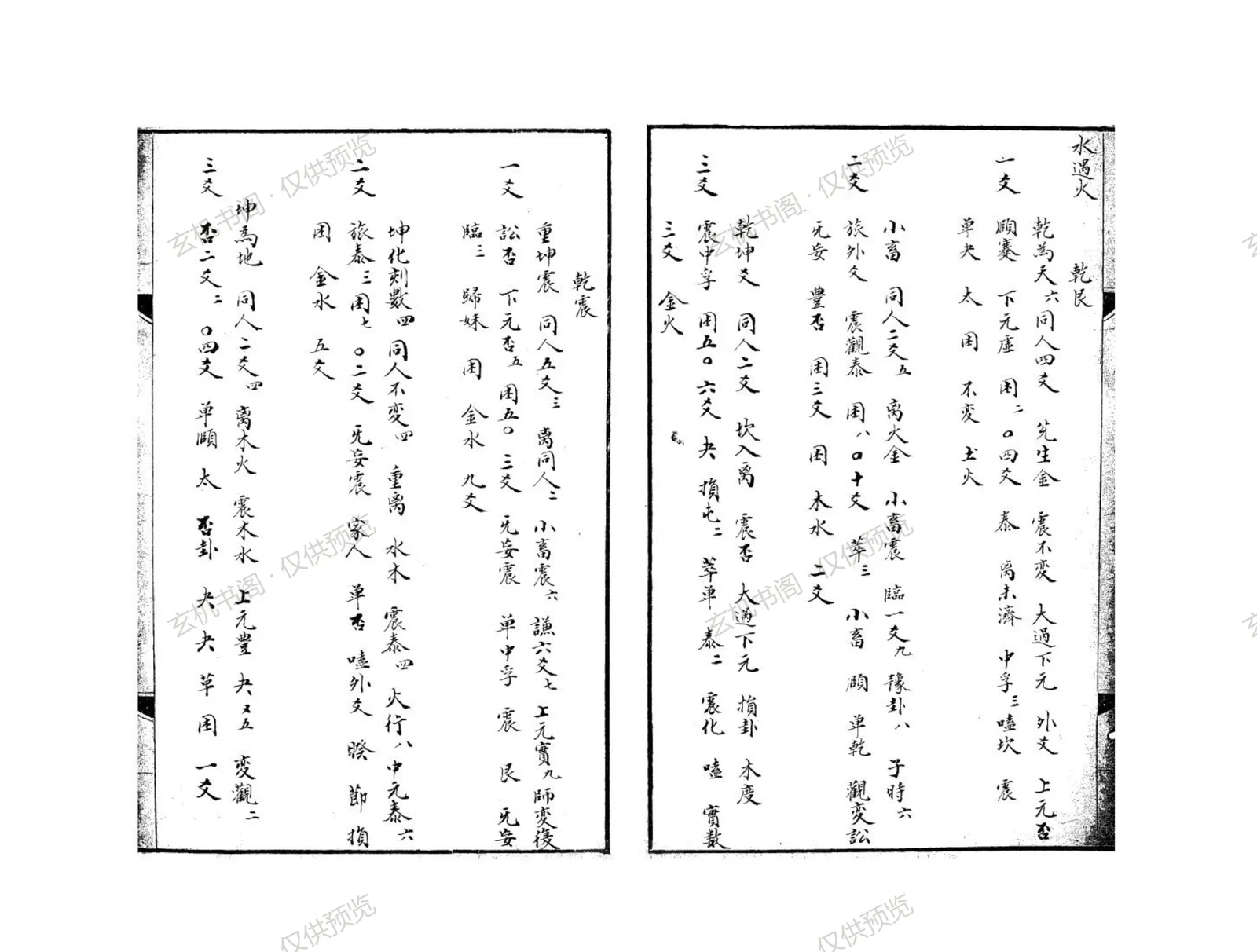
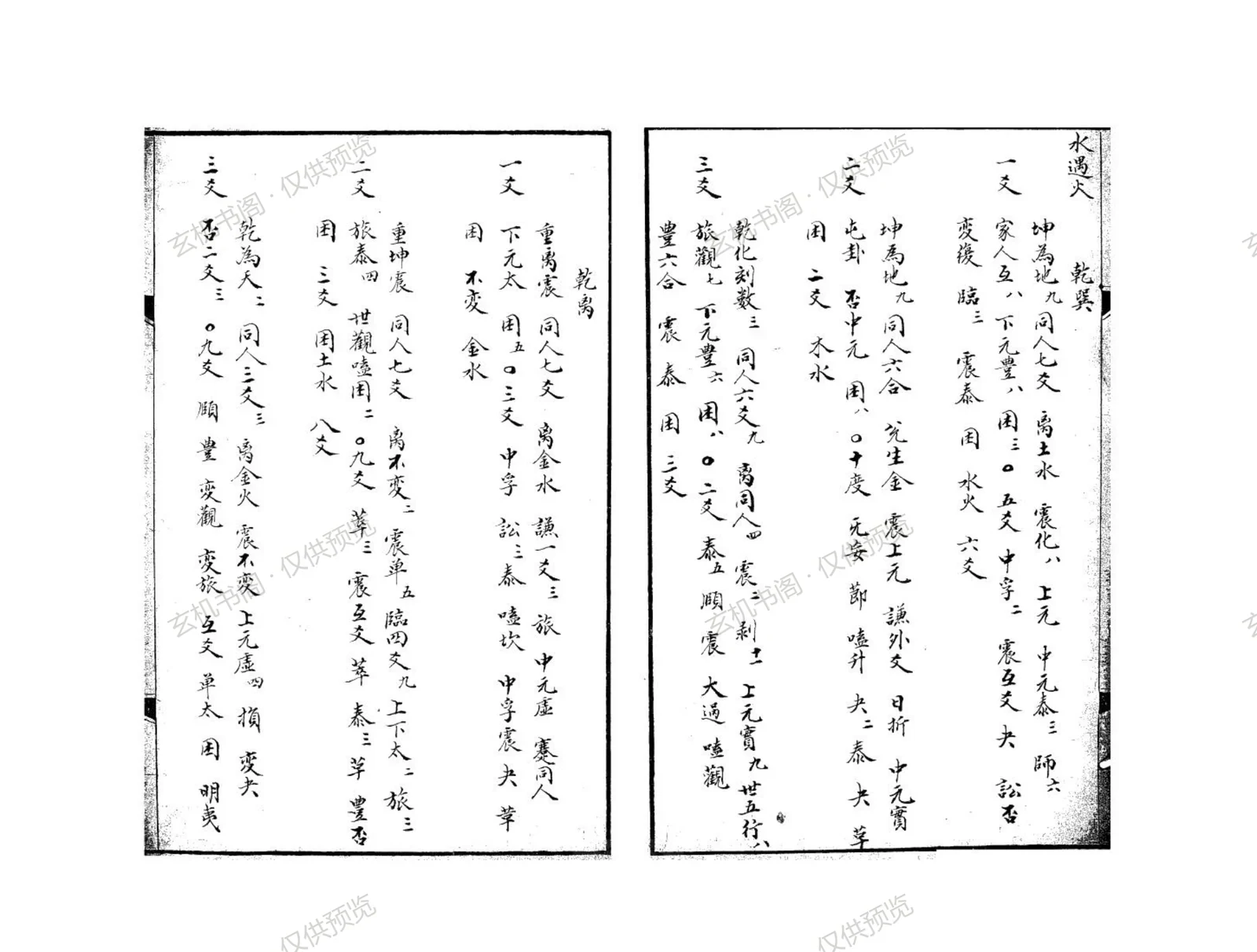
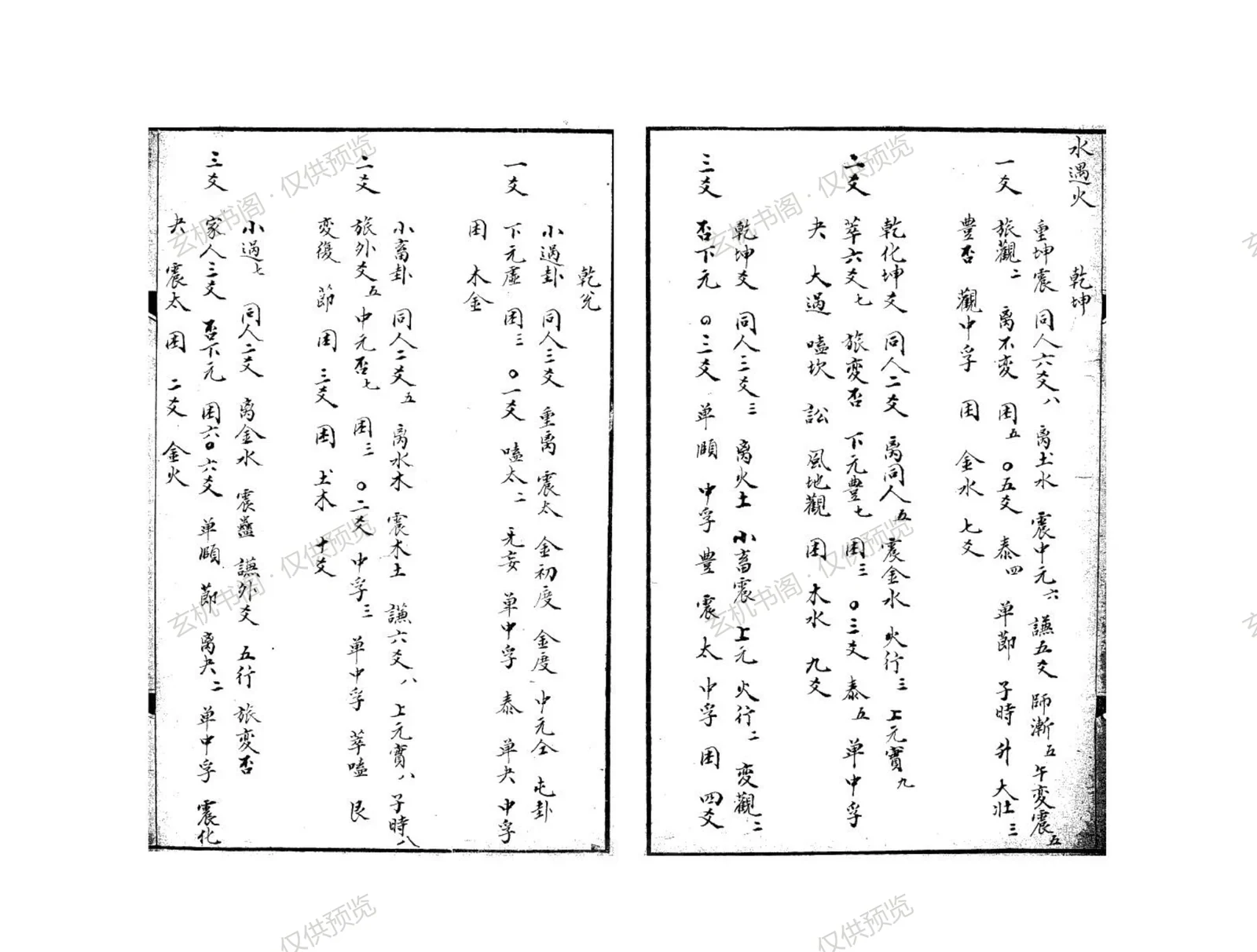
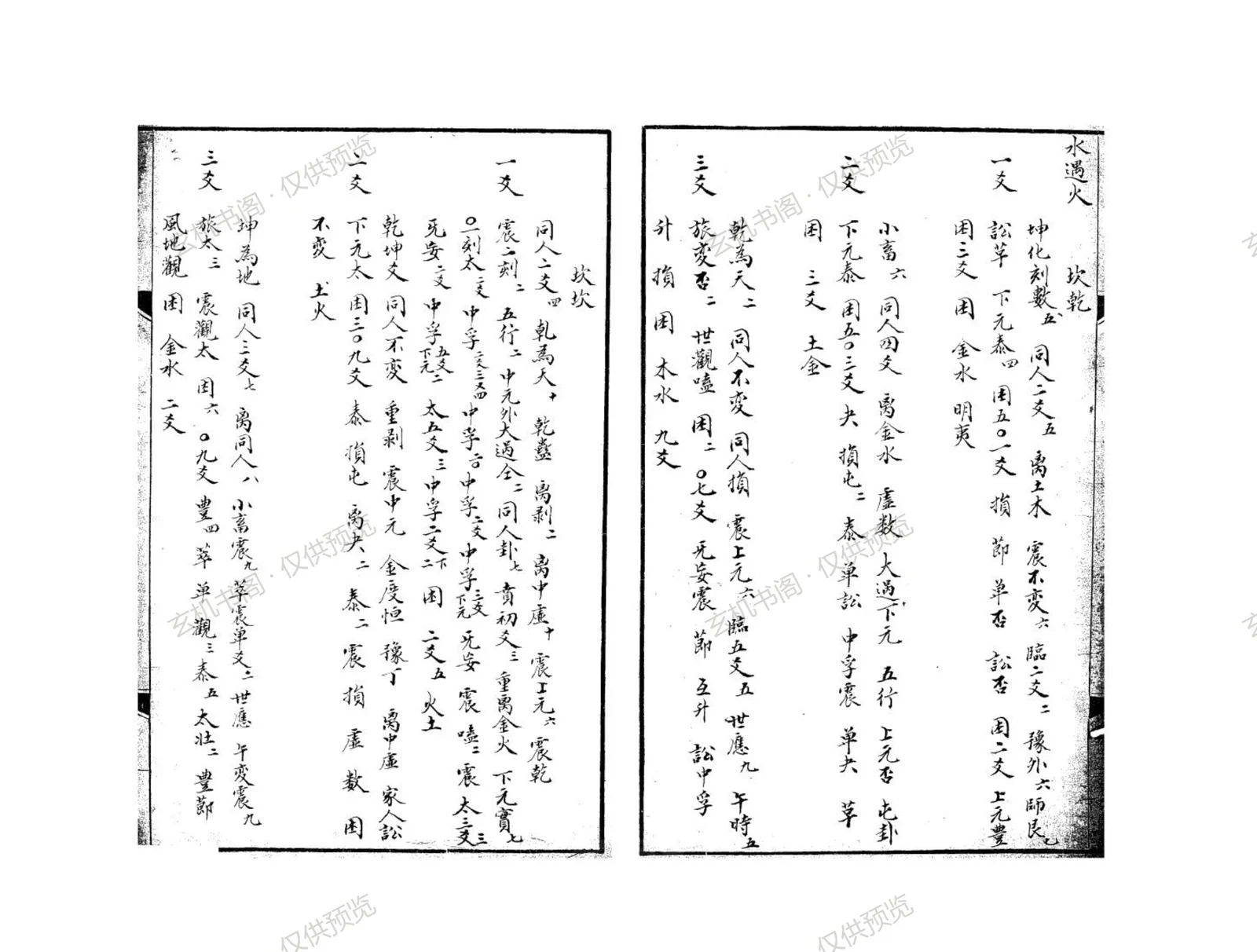
本书封面仅见一方朱印,正文页面以毛笔行草书写,将干、坤、坎、离、震、艮、巽、兑等卦名与六爻、五行、干支、纳音、时令等并排罗列,如“干为天”“坤为地”“水遇火”等条目,并附“大过”“中孚”“小畜”等卦象,构成一种以卦爻配干支五行的数术排盘格式。页面没有目录和序言,内容更接近口诀或排盘举例,而非逐卦详解。从“希夷数”书名和排布特征看,它属于以陈抟(希夷)为名的象数术数传统,可能用于推演卦气、占断吉凶或配合历数。读者可借此了解古代术数抄本的书写格式、卦爻排布逻辑和术语习惯,但因页面残缺、字迹草率,阅读和比对需要一定的术数基础。
目录概览
封面朱印与书影
乾卦六爻排布示例
坤卦及八卦五行对应
坎离震艮巽兑各卦条目
干支、时令与卦象互参
重点
以八卦为纲,逐爻配五行与干支。
每条列出卦名、爻位、五行属性及对应时令。
出现“水遇火”“干为天”等占测术语。
页面为草书抄写,非刻本排版。
内容零散,更像口诀或排盘手稿。
书名指向陈抟希夷数传统,但正文未署作者。
前置知识
Basic knowledge of the eight trigrams and six-line positions.
Familiarity with heavenly stems, earthly branches and Five Phase interactions.
Some awareness of traditional divination manuscript formats.
难点
Cursive script is hard to read, and some characters are unclear.
No table of contents or preface makes the overall structure difficult to reconstruct.
The rules linking hexagrams and line positions require comparison with similar divination texts.