Reading guide
Content guideOverview
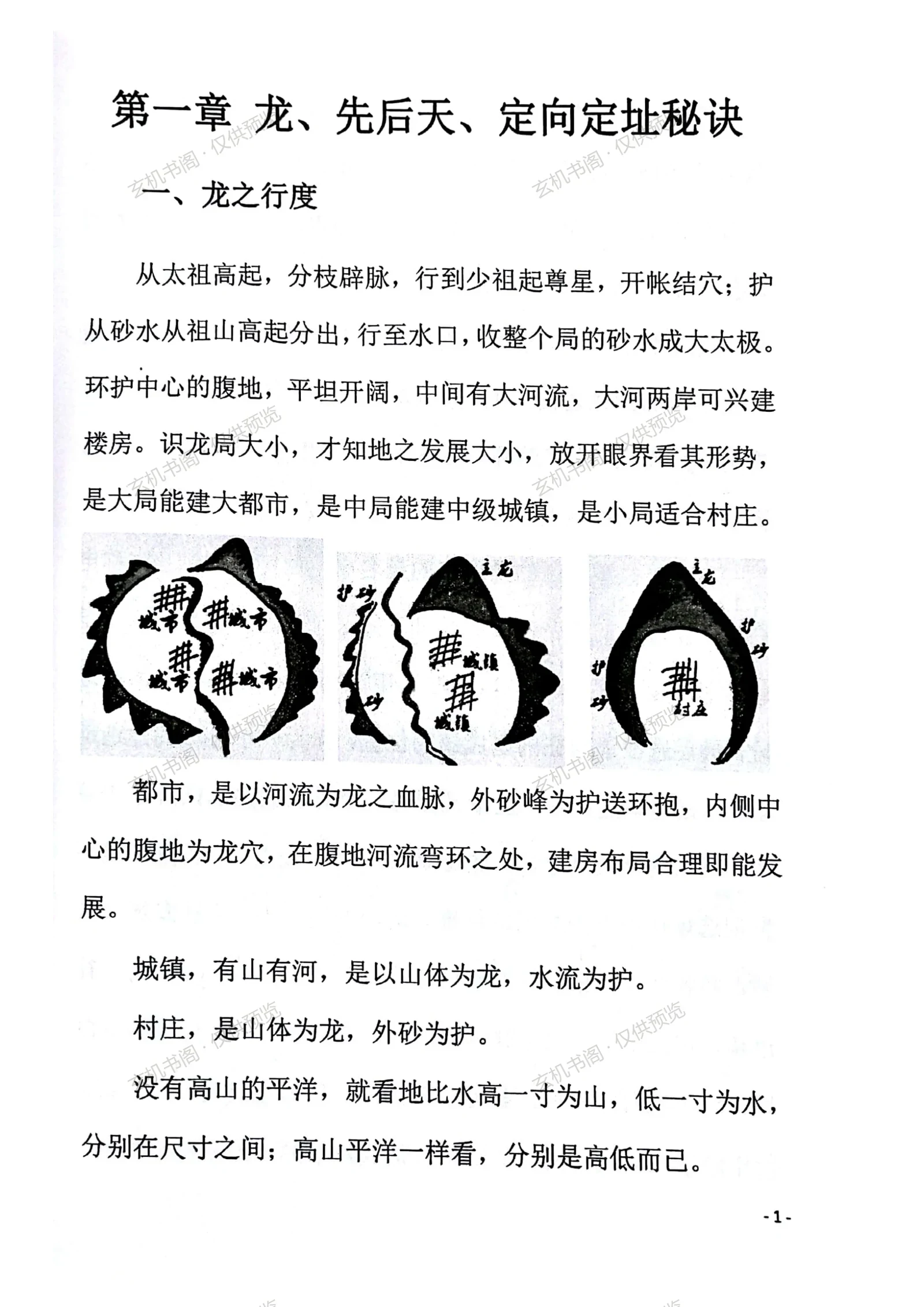
This book presents a feng shui workflow built around bagua layout, integrating landform (luantou) observation with Earlier and Later Heaven bagua and five-element theory. The five chapters cover dragon-vein movement and judging the scale of a site, the application and interactions of Earlier and Later Heaven bagua with methods for orientation and siting, the operational secrets of five-element great hexagram layout including the use of yongshen and the six relations, and practical layouts for promoting offspring, wealth, status, longevity, marriage harmony, and for factories, shops, homes, cities, villages and residential compounds. Later chapters address form-qi diagnosis (door, main hall, stove, stairs, host-guest, coming and going, terrain), remedy methods such as drawing-in, dismantling-and-patching and direction adjustment, and integrated judgment covering wealth, status, poverty, illness and premature death, yin-yang strength, floor numbers, seating by gender, six-relation and bagua correspondences, timing, annual flow charts, the nine-period eight-palace rise and fall, and the characteristics of each of the eight trigrams. Local anecdotes, such as the siting of the old Dianbai county town, illustrate how the scale of the dragon formation relates to actual development.
Contents
Ch.1 Dragon veins, Earlier/Later Heaven bagua, orientation and siting
Ch.2 Five-element great hexagram layout operations
Ch.3 Form-qi diagnosis
Ch.4 Remedy and adjustment methods
Ch.5 Integrated judgment and application
Bagua characteristics: Zhen, Dui, Qian, Li, Gen, Kun, Kan, Xun
Key Points
Uses Earlier and Later Heaven bagua with five-element interactions as the layout backbone, combined with landform judgment of dragon-formation scale.
Gives concrete layout directions for offspring, wealth, status, longevity and marriage harmony.
Diagnosis covers door, main hall, stove, stairs, floor numbers, seating order and timing.
Remedies fall into drawing-in, dismantling-and-patching, and direction adjustment.
Lists the characteristics of each trigram one by one.