Reading guide
Content guideOverview
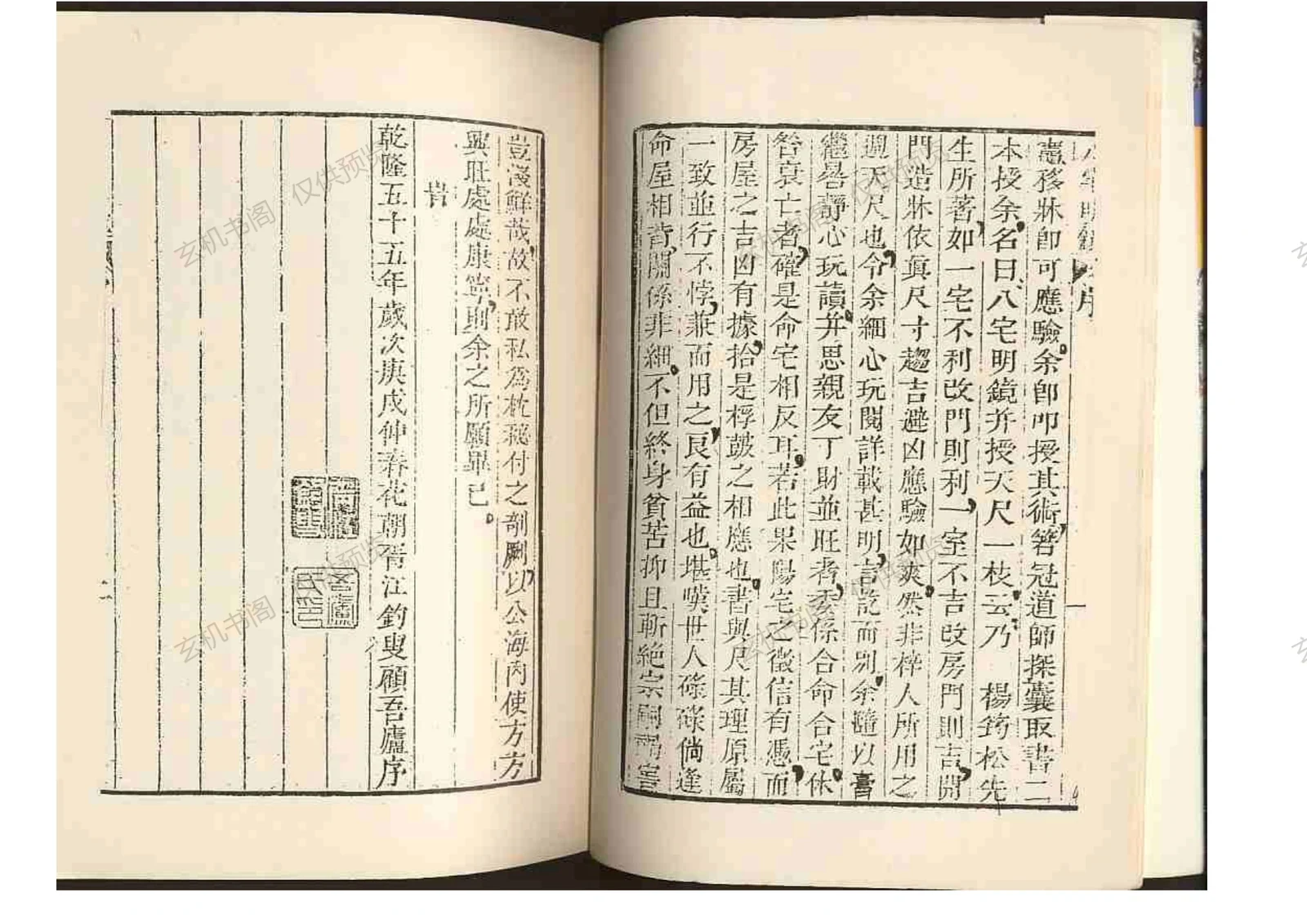
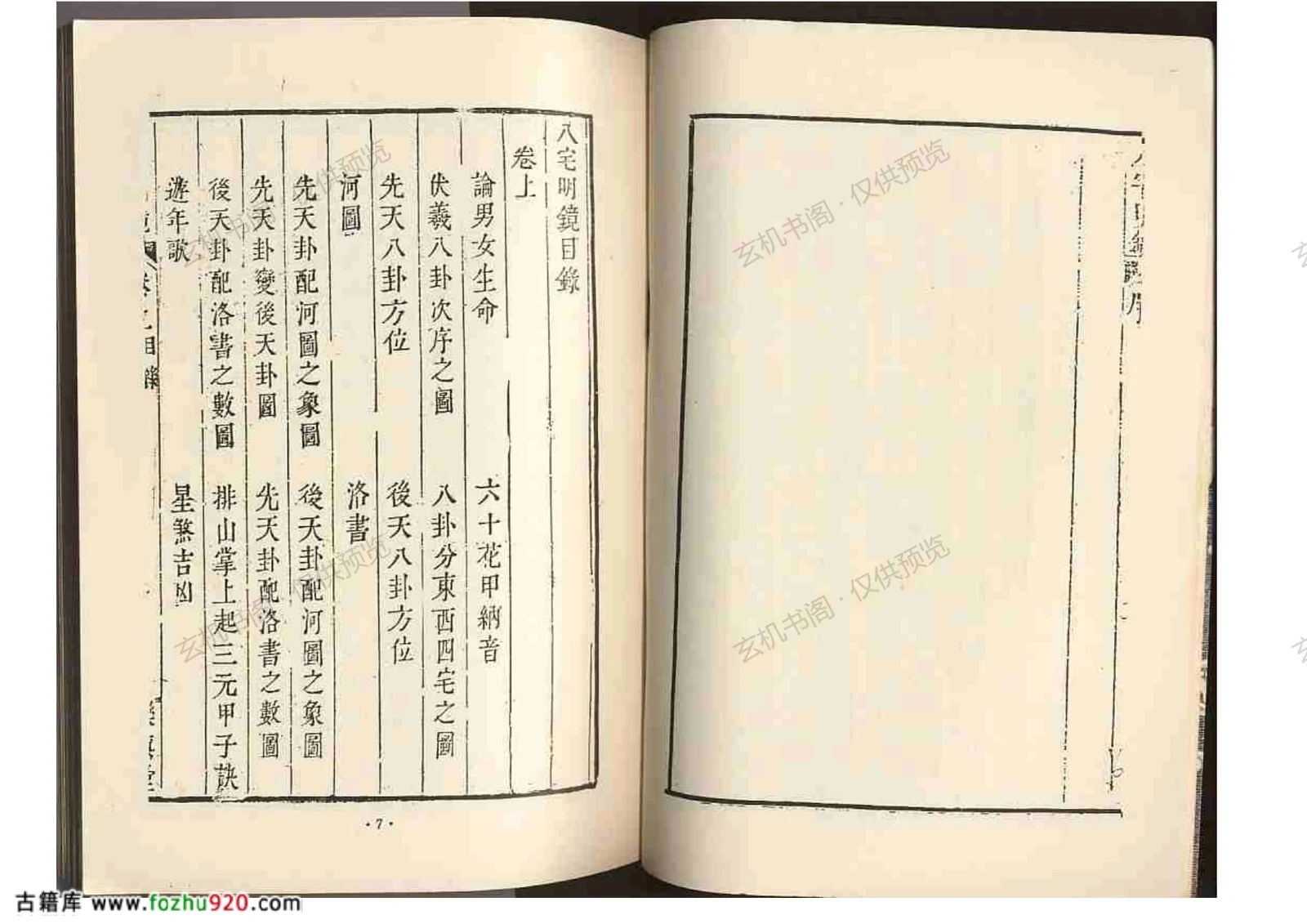
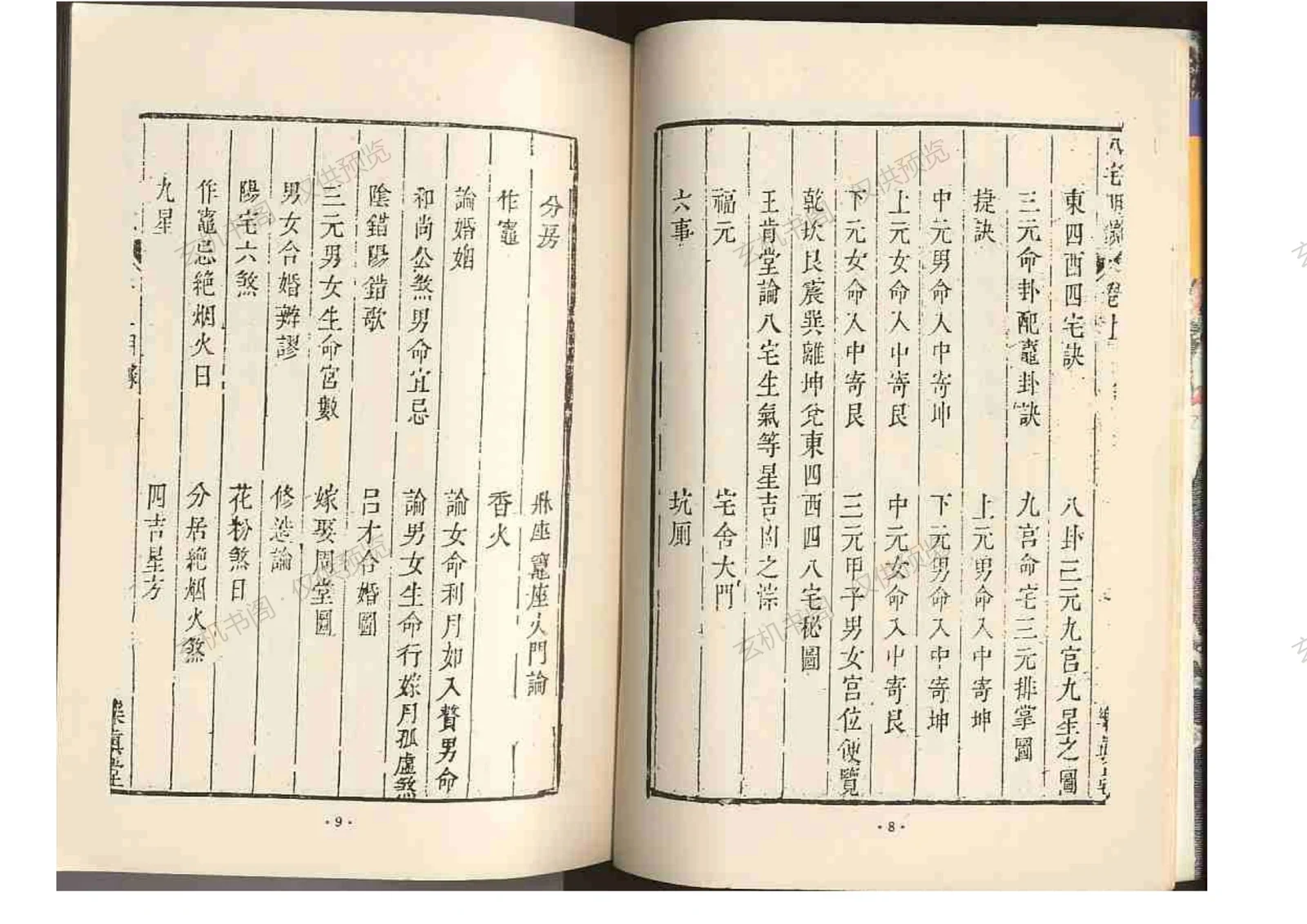
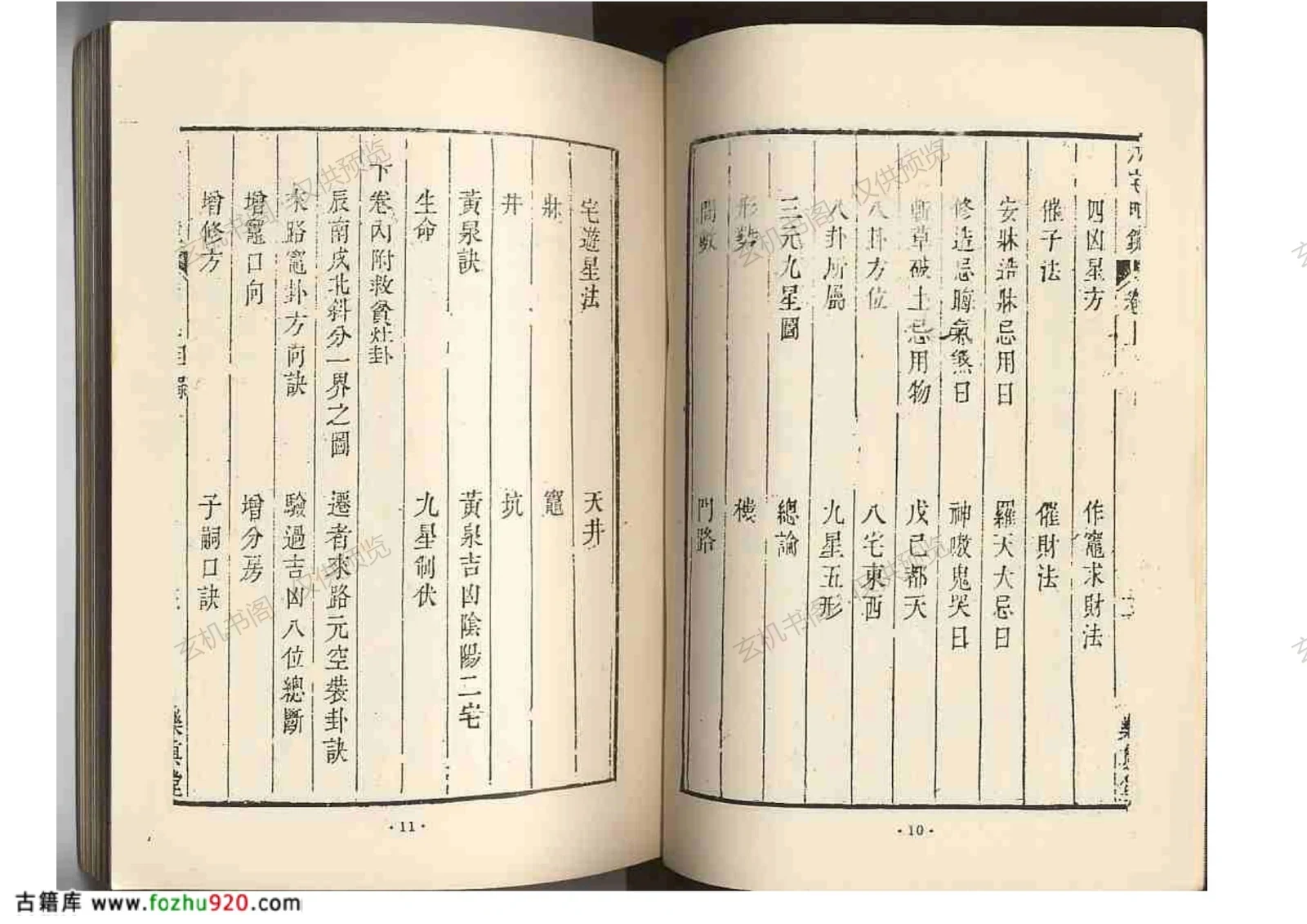
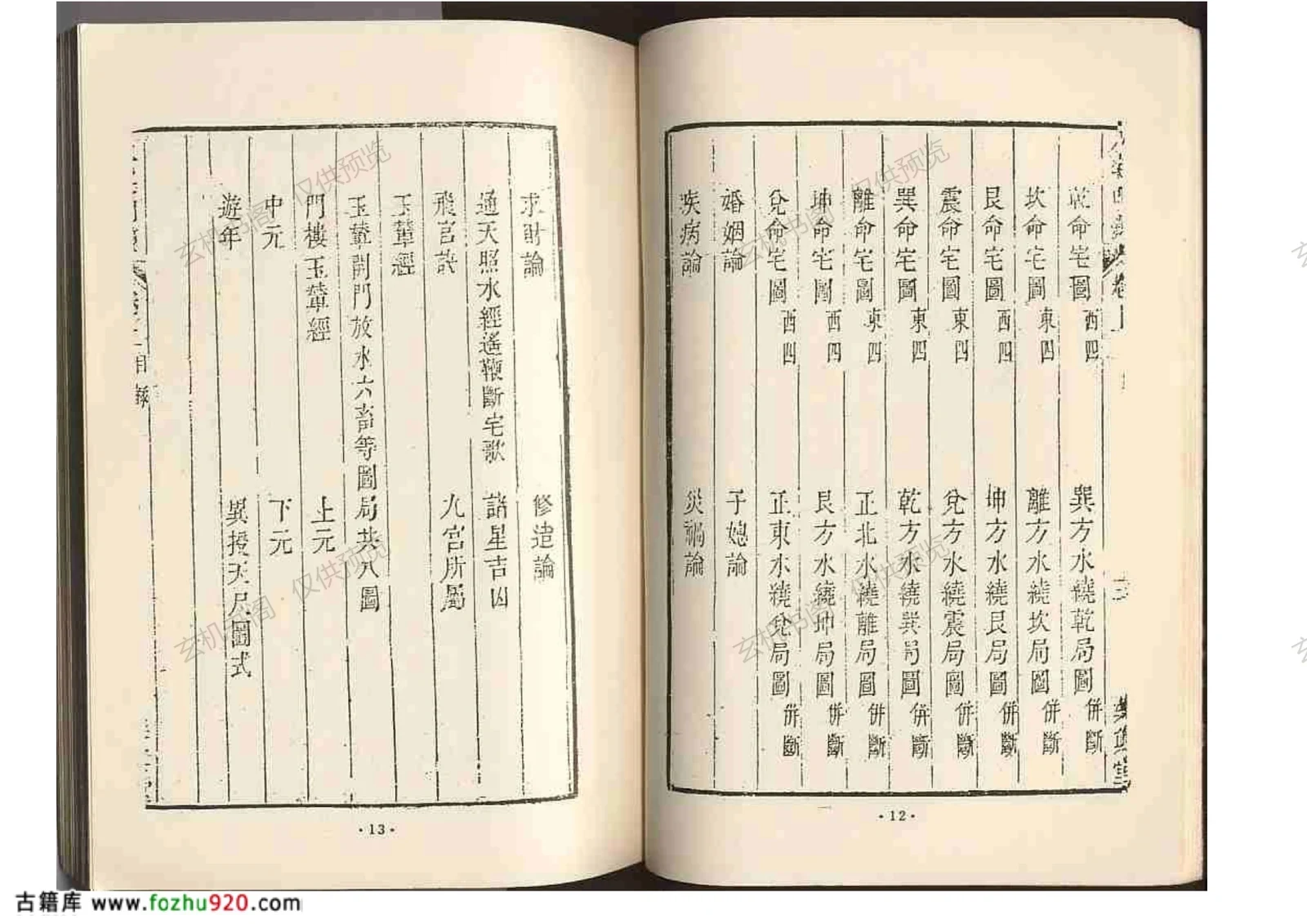
The Ba Zhai Ming Jing is a key text of the Eight Mansions school of feng shui. This volume, the first part, opens with a preface dated 1790 by Gu Wulu, which states that the Eight Mansions method derives from Yang Junsong and that the auspicious or inauspicious nature of a dwelling can be verified through the heavenly ruler and the arrangement of doors and paths. The main text then discusses male and female life destinies and the sixty-jiazi nayin, followed by diagrams of the Fu Xi eight trigrams, the pre-heaven and post-heaven arrangements, the Hetu and Luoshu, and the method of arranging the three yuans and nine palaces on the palm. The table of contents covers the East and West Four Mansions, life hexagram and stove hexagram combinations, the nine palaces chart, Wang Kentang's discourse on the eight mansions and the nine stars, secret diagrams of the four mansions, and detailed sections on gates, latrines, the six household matters, ancestral shrines, stoves, bed placement, marriage, offspring, illness, and misfortunes. The book combines theoretical exposition with practical guidance, making it a comprehensive reference for residential feng shui.
Contents
Preface by Gu Wulu, dated 1790
Male and female life destinies and sixty-jiazi nayin
Fu Xi, pre-heaven and post-heaven trigrams, Hetu and Luoshu diagrams
Three yuans, nine palaces, and life hexagram palm arrangement
East and West Four Mansions and the nine stars
Gates, latrines, six household matters, shrines, stoves
Marriage, offspring, illness, and misfortunes
Key Points
Uses three yuans, nine palaces, and life hexagrams to determine East and West Four Mansions
Emphasizes the layout of gates, paths, stoves, wells, and latrines
Matches the nine stars to specific household concerns
Prefaces stress verifying Eight Mansions theory with the heavenly ruler