Reading guide
Content guideOverview
Written by Ning Shixing, this book works through the fundamentals of BaZi—stems and branches, chart construction, luck cycles—before turning to useful-god selection, structure, voidness and the interactions of the five phases, with a dedicated section on the official star. Its distinctive approach organizes six-relations and life topics into nine palaces, covering grandparents, parents, siblings, spouse, children, self, wealth, education and official-career palaces. The later part presents the Thirteen Methods and related combinations such as void-solid, structural, passage, emergence, robbing wealth seizing seal, two-comparison return to zero, voidness, mutual rooting, hook-exchange, inversion, two-part, horizontal-vertical and repeated-chant combinations, followed by finding the birth hour, interpretation steps, entry points, and reading Feng Shui imagery from BaZi.
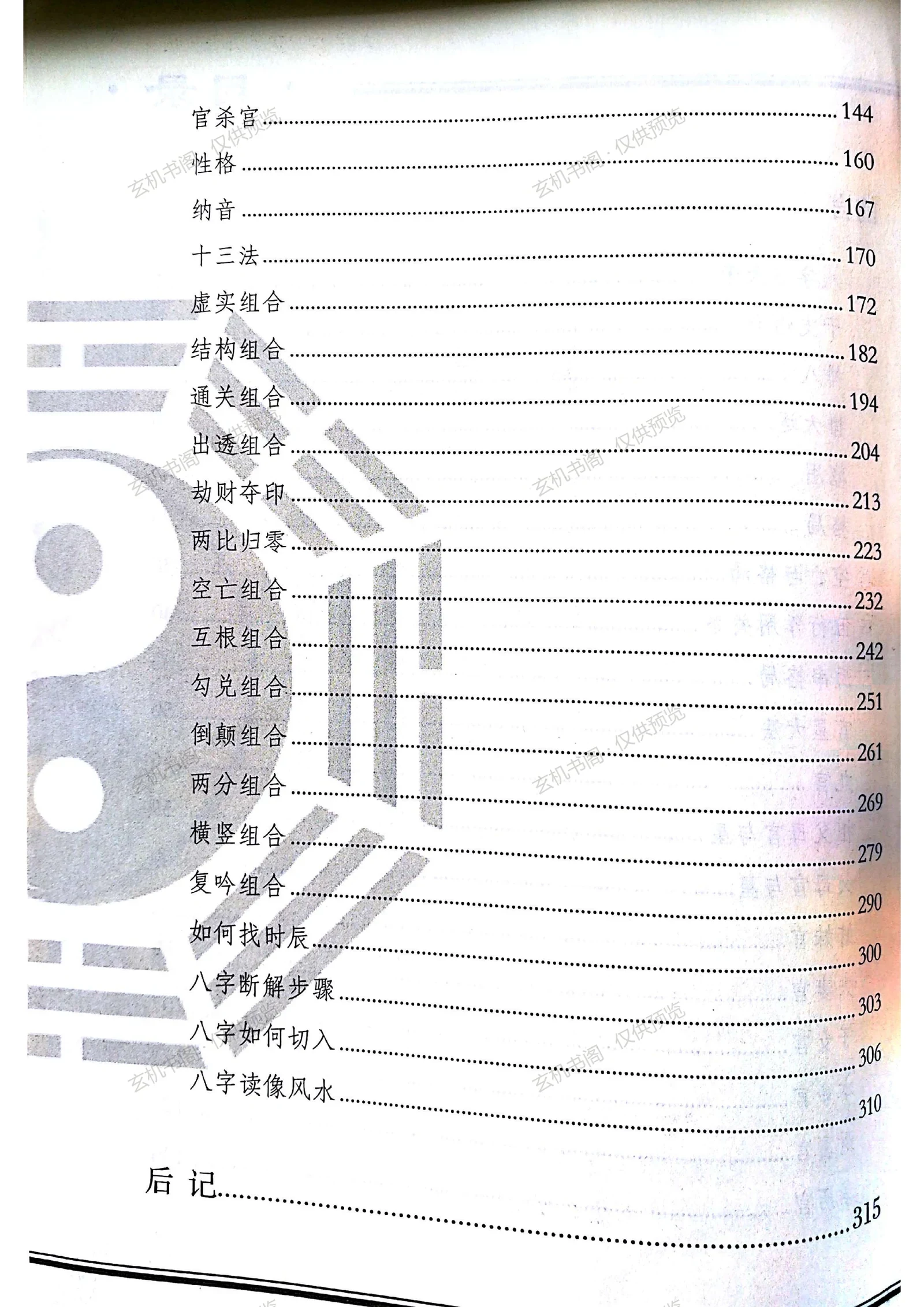
Contents
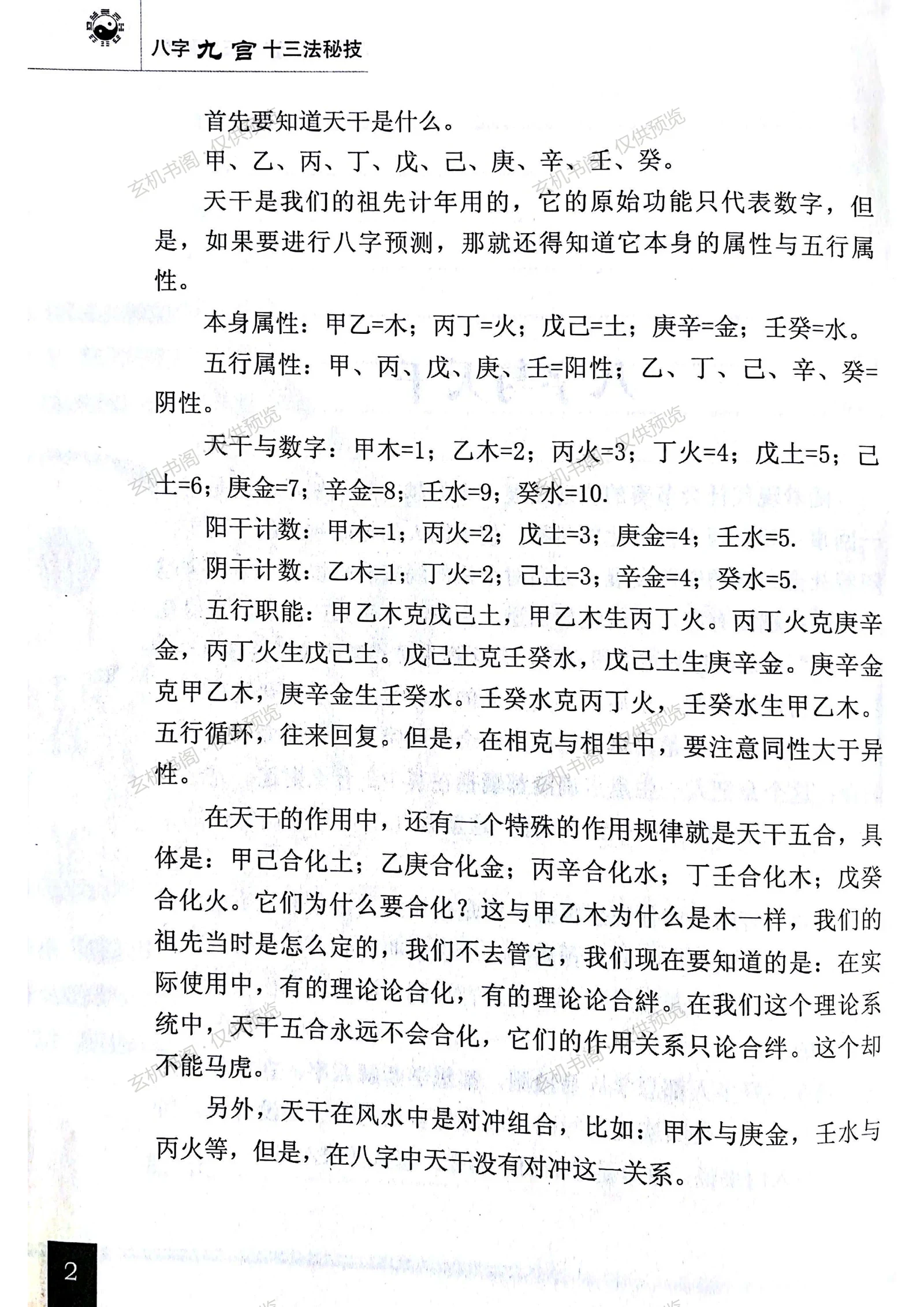
Stems and branches, chart construction and luck cycles
Useful god, structure, voidness and five-phase interactions
Official star method and the nine palaces
Six-relation palaces: grandparents, parents, siblings, spouse, children
Self, wealth, education and official-career palaces; character and nayin
Thirteen Methods and void-solid, structural, passage and emergence combinations
Robbing wealth seizing seal, two-comparison return to zero, voidness, mutual rooting, hook-exchange and other combinatio
Finding the hour, interpretation steps, entry methods and BaZi imagery Feng Shui
Key Points
Uses nine palaces to organize six relations and life topics, reading palace and star together.
The Thirteen Methods consist of combination categories such as void-solid, structural, passage and emergence.
A dedicated official-star section highlights its governing role in the chart.
Discusses voidness with structure, five-phase interactions and reverse-string structures.
Ends with interpretation steps and imagery Feng Shui for practical entry.