Reading guide
Content guideOverview
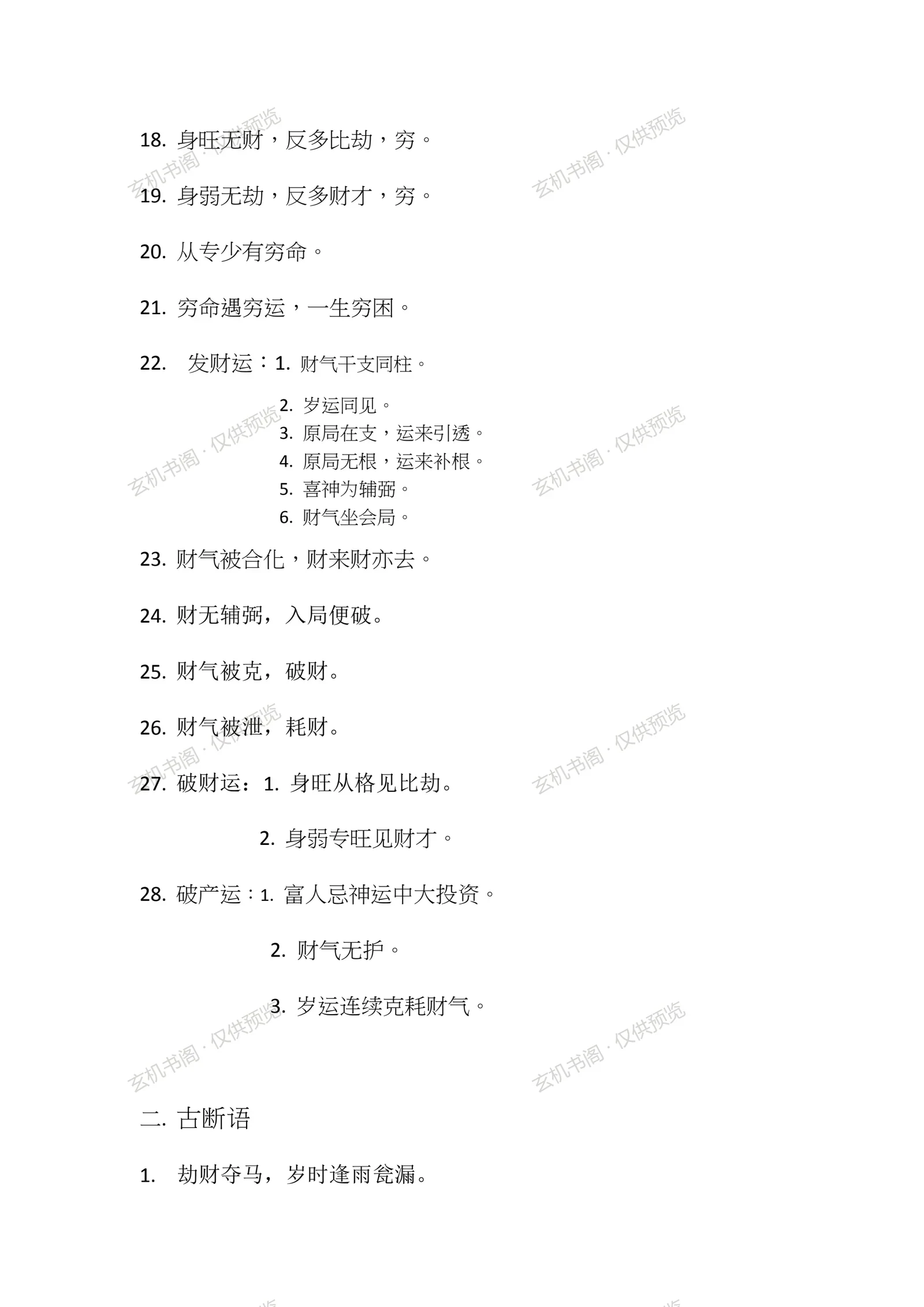
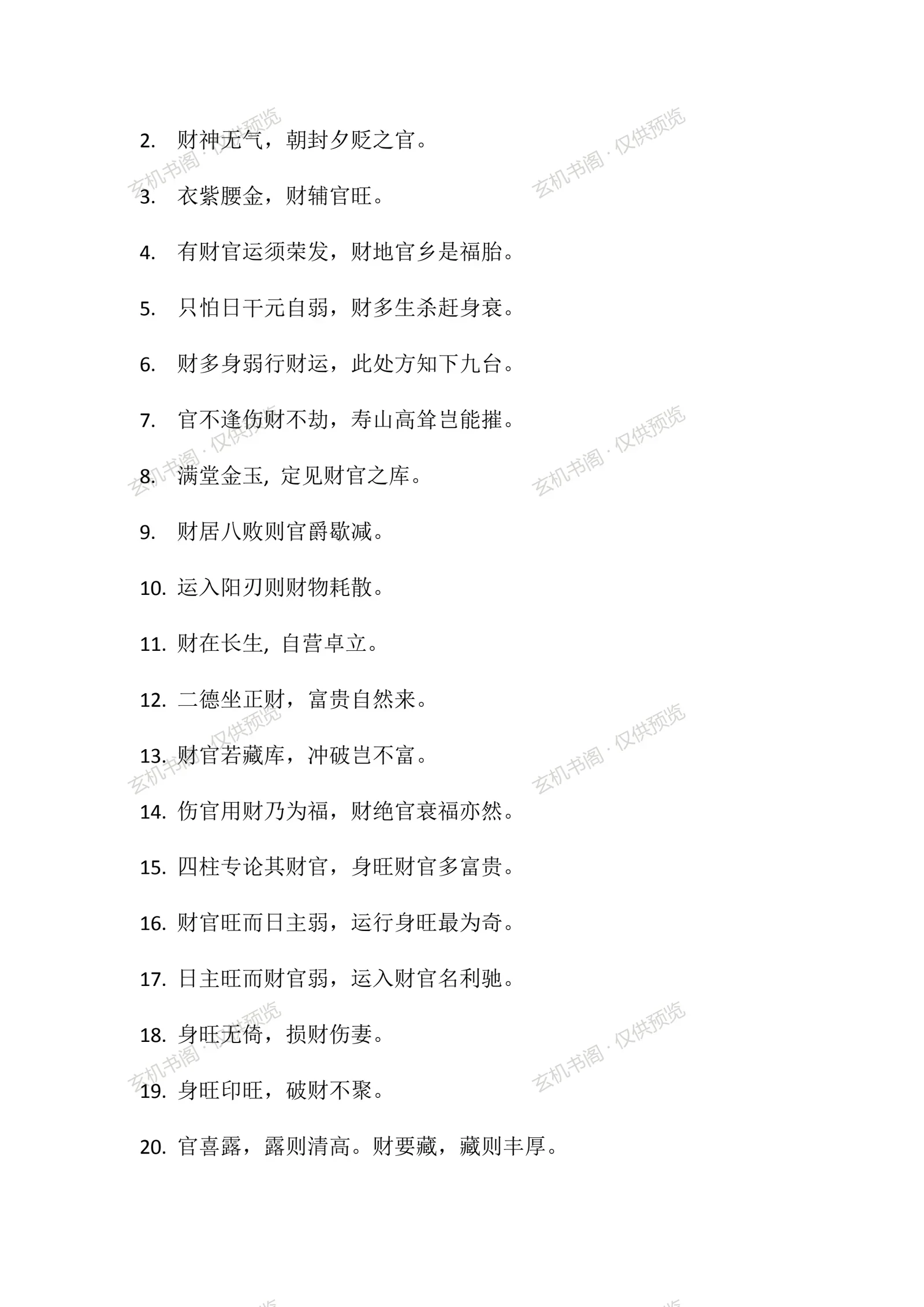
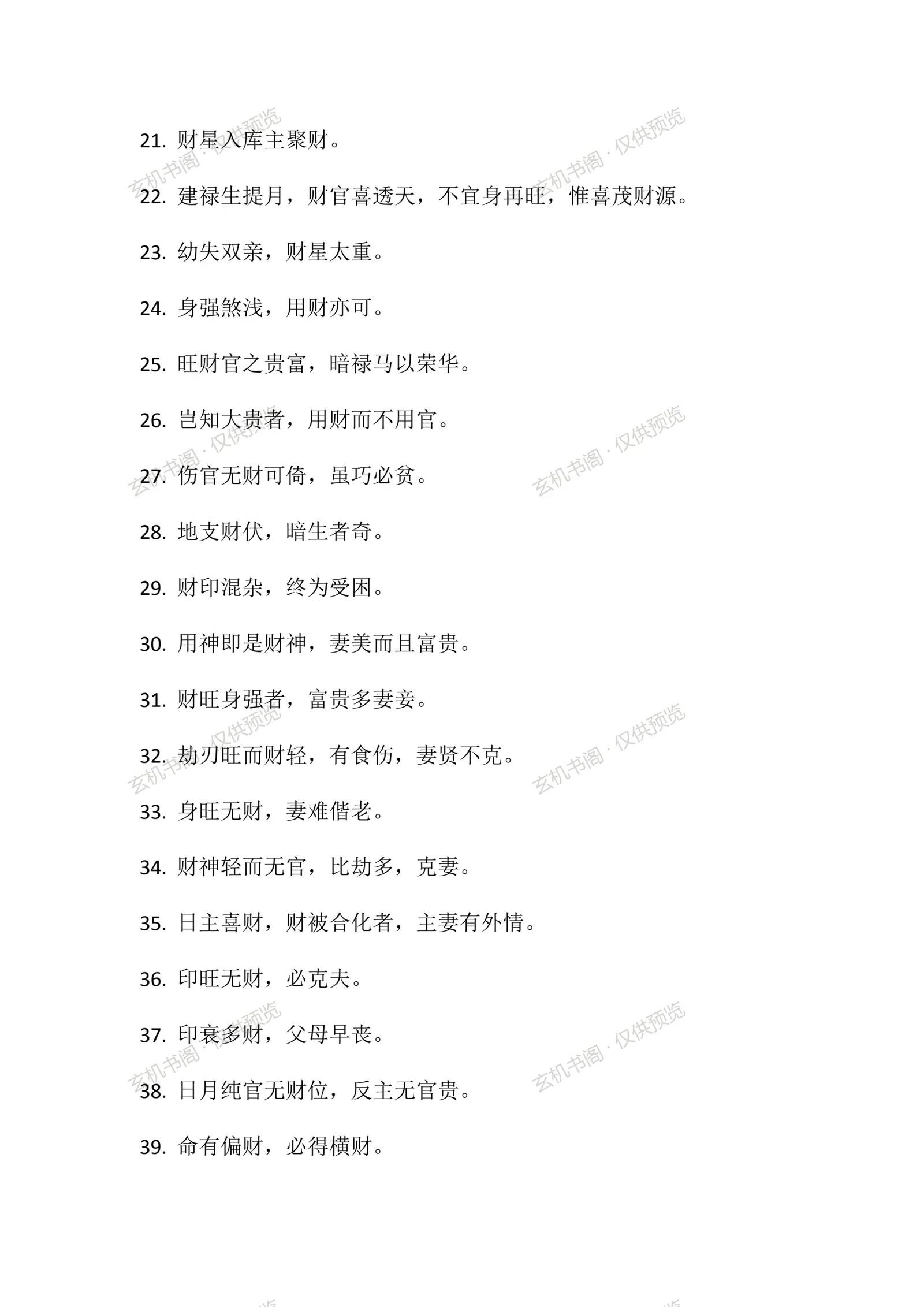
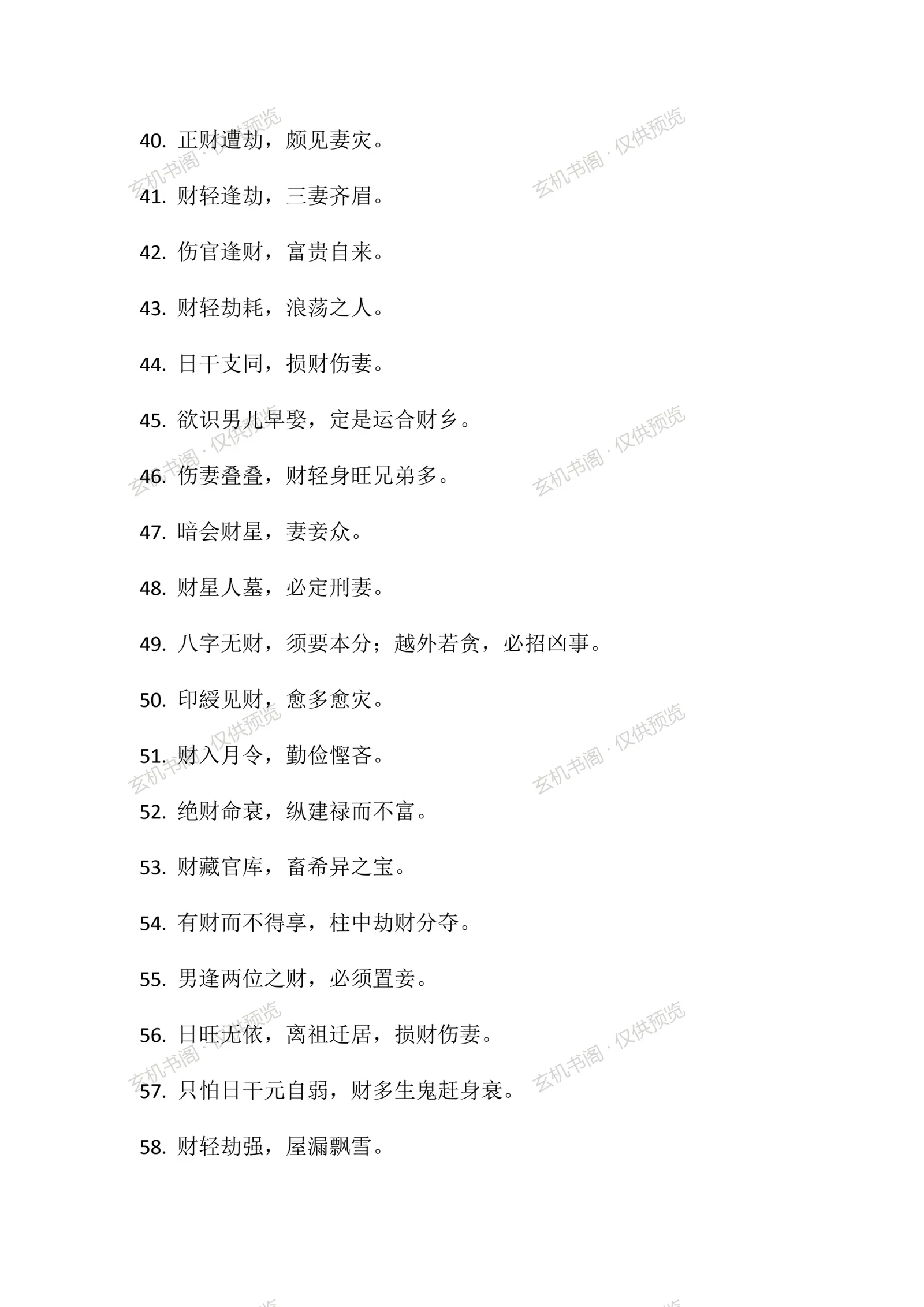
This short bazi text is a point-by-point digest on wealth. Part One, 'Principles of Wealth,' gives twenty-eight numbered rules: how a strong or weak day master pairs with the wealth star and with rivals, whether wealth qi is present at all, and how exposed or hidden, protected or unprotected wealth affects the size and durability of a fortune. It further assigns wealth to the year, month, day, and hour pillars as ancestral, natal-family, spouse, and late-life wealth, then lists conditions for loss through combination, clash, drain, or lack of support. Six 'wealth-fortune' indicators and several 'wealth-breaking' and 'bankruptcy' conditions follow. Part Two collects fifty-eight classical aphorisms in verse, covering wealth with officer, wealth mixed with resource, wealth stored in the tomb, light wealth under heavy rivals, output producing wealth, and resource protecting wealth, with many lines extending to spouse, parents, siblings, early marriage, relocation, and official trouble. The book offers conclusions rather than derivations and works best as a quick-reference outline for readers already familiar with the ten gods and strength assessment.
Contents
Part 1, Principles of Wealth (items 1–28): body–wealth fit
Six indicators of wealth-bringing luck cycles
Conditions for wealth loss and bankruptcy
Part 2, Classical Aphorisms (items 1–58): wealth, officer, resource, kin
Key Points
Strong day master or follow patterns favor wealth; weak ones favor rivals
Wealth should be rooted and protected; exposed and unprotected wealth is fragile
Year, month, day, and hour pillars map to ancestral, family, spouse, and late wealth
Wealth needs luck cycles to trigger it; a rootless chart may gain root in luck
Aphorisms treat the wealth star as both money and spouse or kin