Reading guide
Content guideOverview
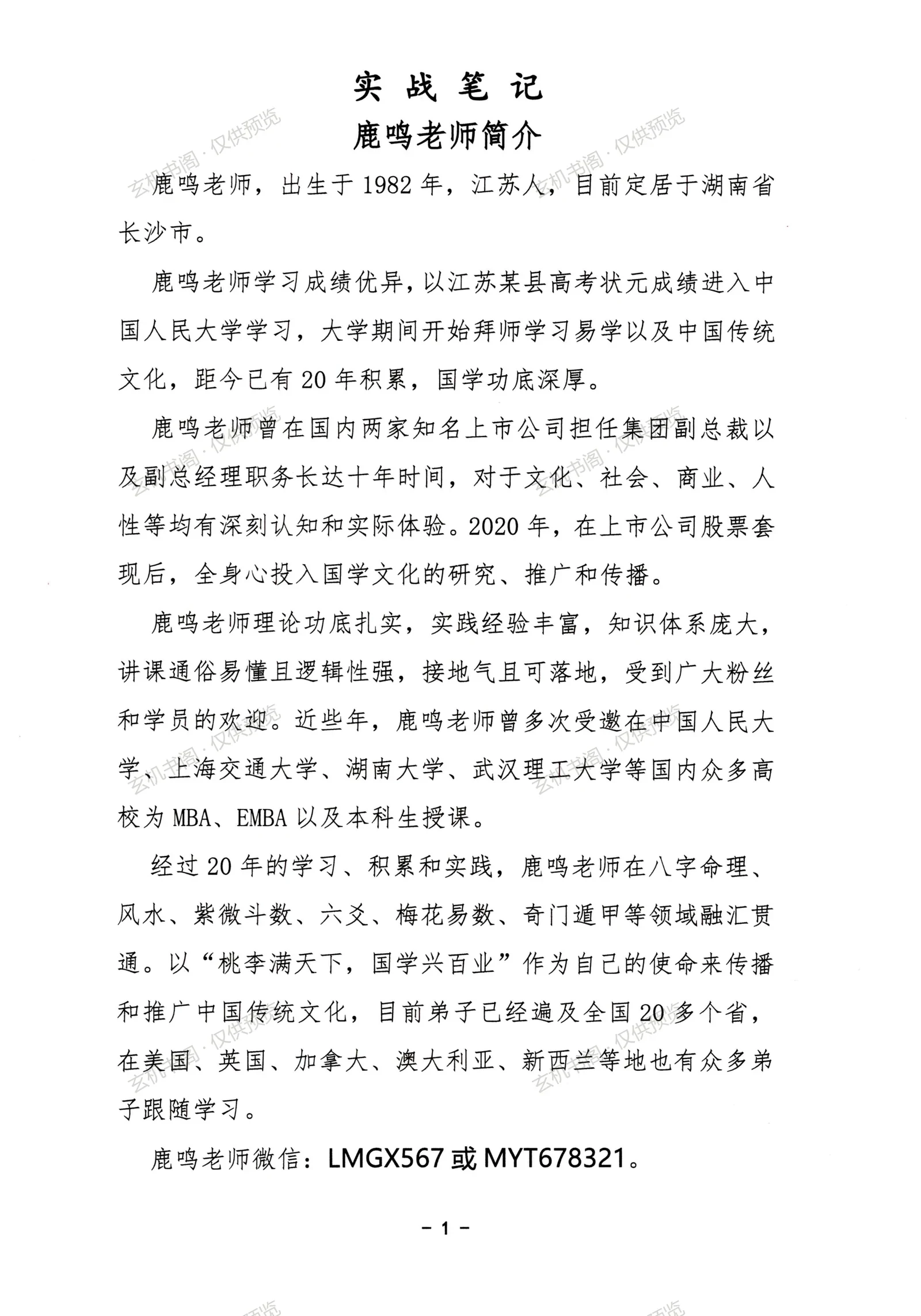
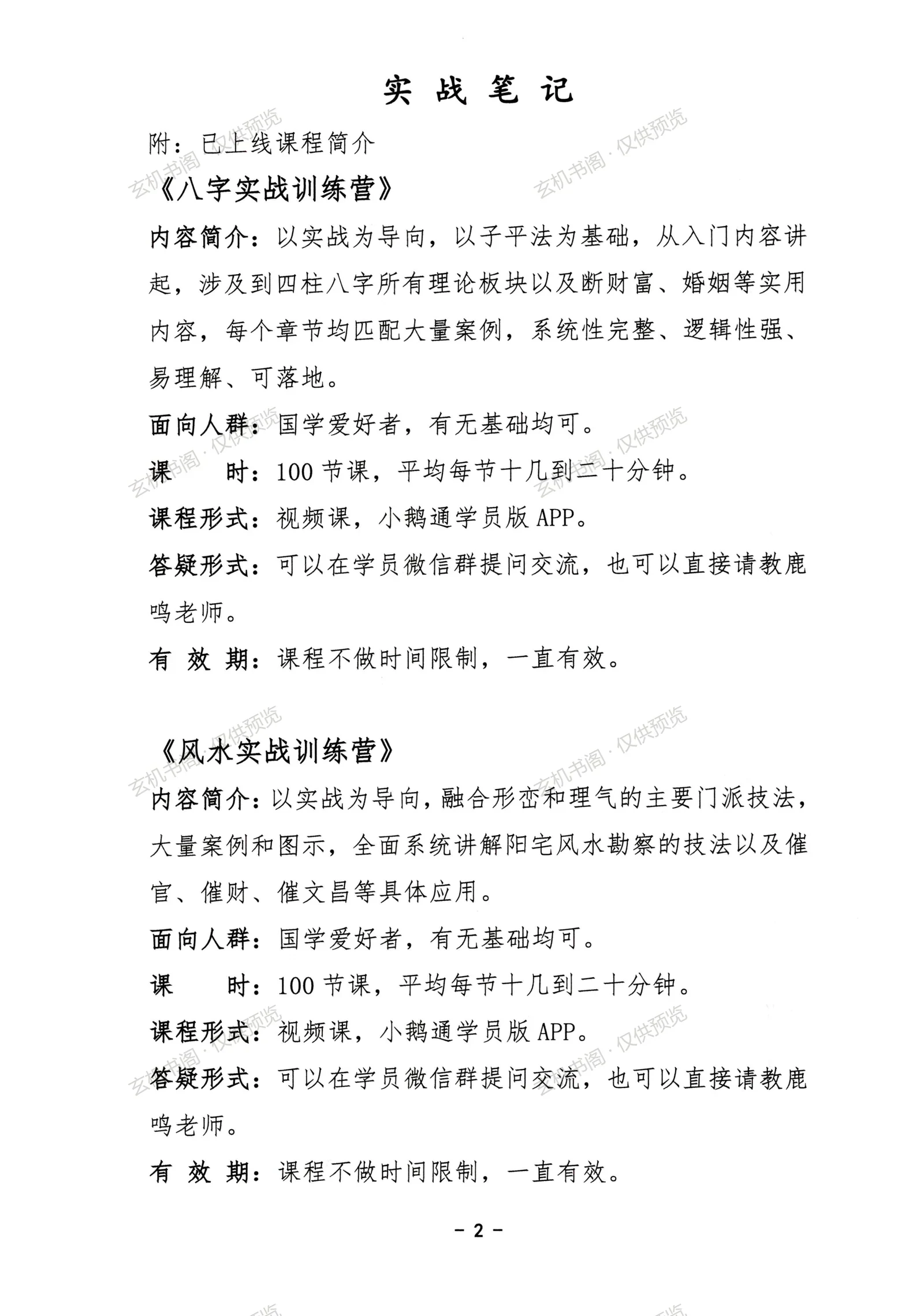
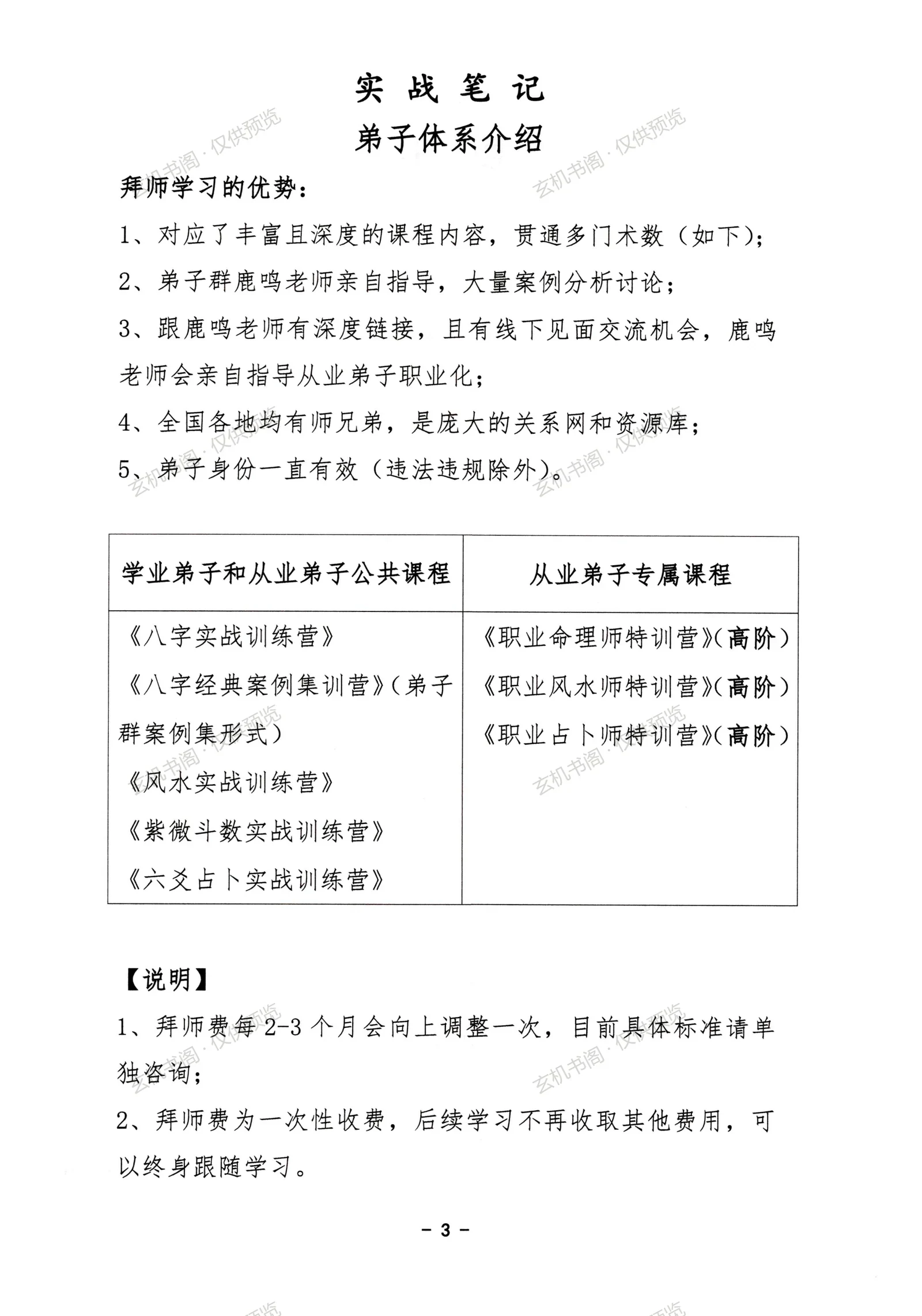
This is the lecture workbook of Lu Ming Guoxue's Practical Notes on Bazi, marked on the cover as a disciple-class edition. The opening pages contain the instructor's profile, a list of online courses, an introduction to the disciple system, and the table of contents. The instructor is described as having about twenty years of experience in Chinese metaphysics, spanning Bazi, feng shui, Zi Wei Dou Shu, Liu Yao, Mei Hua Yi Shu, and Qi Men Dun Jia, with an emphasis on practical, down-to-earth teaching. According to the contents, the book is organized into five parts: a preface; yin-yang, five phases, heavenly stems, earthly branches, and hidden stems; stem combinations and clashes together with branch combinations, clashes, punishments, and harms, including combination without transformation, clash effects in luck cycles, transformed patterns, six combinations used in marriage matching, three punishments, six harms, three meetings, and stem-branch relations; a section on day-master strength and palace positions for relatives, fortune, and marriage; and a section on chart patterns covering general principles, the eight regular patterns, the lu-ren pattern, and specialized dominant patterns. The text is a systematically arranged set of foundational concepts and judgment formulas, intended as course companion notes for repeated reference. Worked examples are tied to classroom explanations, so readers may need to fill in the reasoning when studying alone.
Contents
Preface
Five phases, ten stems, twelve branches
Hidden stems and stem-branch relations
Stem combinations, clashes, and transformed patterns
Branch combinations, clashes, punishments, harms
Day-master strength and palace positions
Chart patterns: general and eight regular patterns
Lu-ren and dominant patterns
Key Points
Built on the Ziping framework, moving from stem-branch basics to pattern identification
Combinations, clashes, punishments and harms are treated separately, with notes on marriage matching and luck cycles
Palace positions map relatives, marriage and fortune onto the four pillars
Patterns are grouped into eight regular, lu-ren, and dominant types
As a course workbook, many cases depend on classroom explanation