Reading guide
Content guideOverview
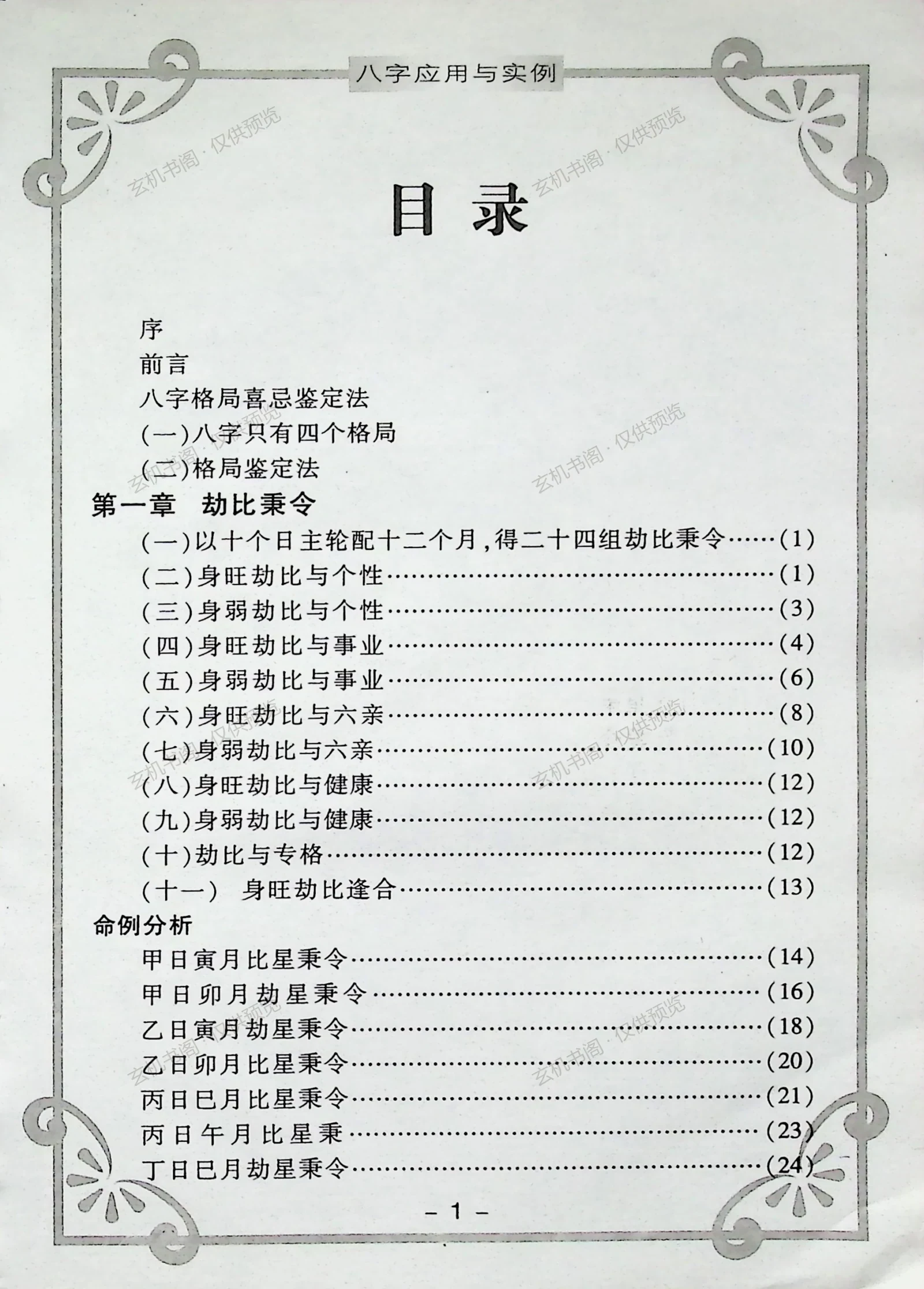
This book by Shao Weihua presents a practical approach to Four Pillars (Bazi) analysis. It opens with a method for determining chart patterns and their favorable elements, arguing that charts fall into four basic patterns. The main body is organized by which Ten God governs the month: Chapter One covers the Rival/Rob Wealth (jieb i) category, Chapter Two the Output/Hurting Officer (shangshi) category, and Chapter Three the Wealth (caicai) category. Each chapter first pairs the ten day masters with the twelve months to produce twenty-four combinations, then discusses each from both strong and weak day-master perspectives in relation to personality, career, relatives, and health, including special and follow patterns. Each chapter closes with extensive case analyses arranged by day master and month. The structure is clear and the theory is tied directly to concrete charts, making it useful for readers who already know the stems, branches, and Ten Gods and want to improve pattern judgment and practical analysis.
Contents
Preface and method for judging pattern preferences
Ch.1 Rival/Rob Wealth: 24 combinations, strong and weak charts
Case studies for Rival/Rob Wealth (Jia to Gui day masters)
Ch.2 Output/Hurting Officer: 24 combinations, strong and weak charts
Case studies for Output/Hurting Officer (Jia to Gui day masters)
Ch.3 Wealth: 24 combinations, personality and career
Key Points
Pattern preference serves as the guiding framework throughout
Chapters are organized by the Ten God governing the month
Each combination is read from strong and weak day-master angles
Personality, career, relatives, and health are discussed separately
Numerous cases follow each chapter, matched to day master and month