Reading guide
Content guideOverview
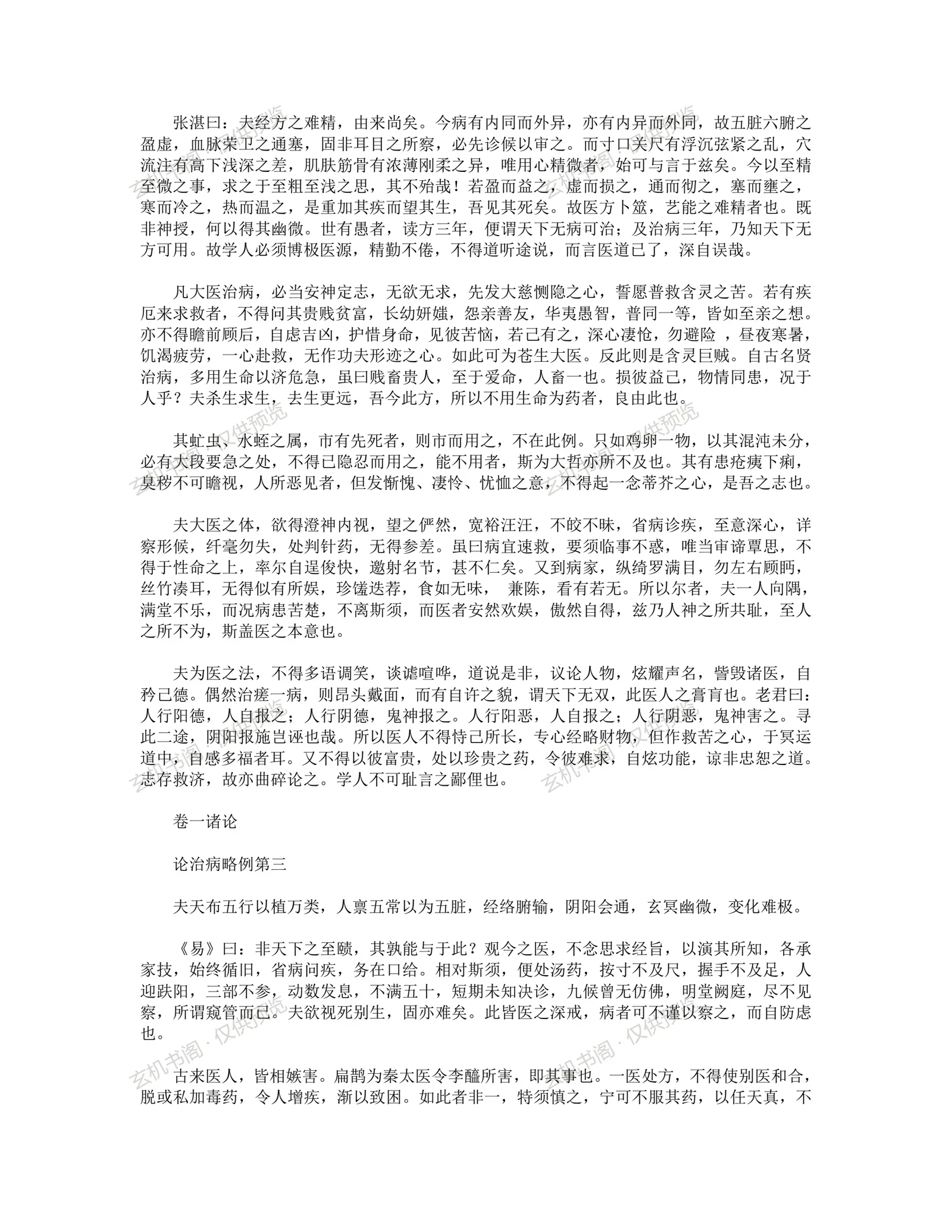
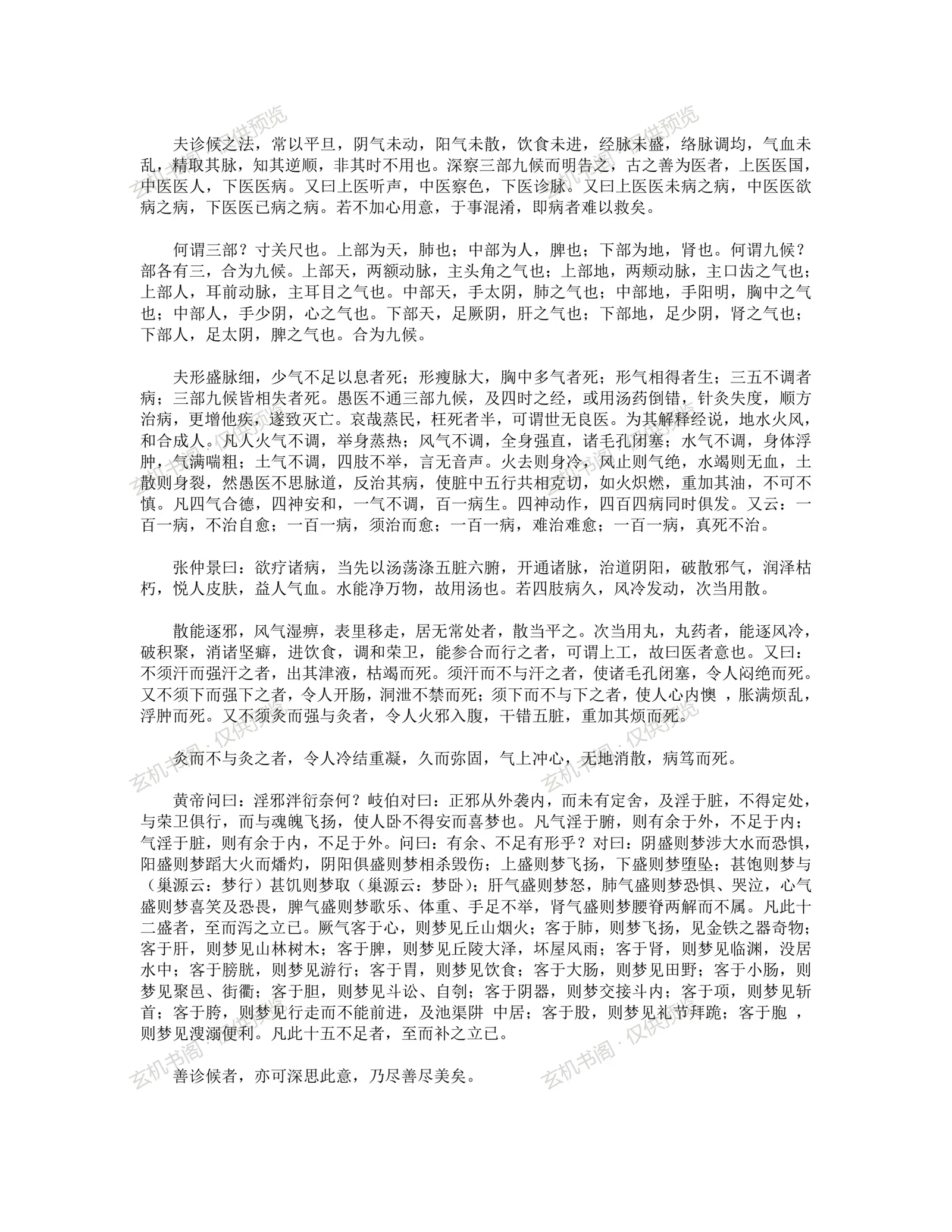
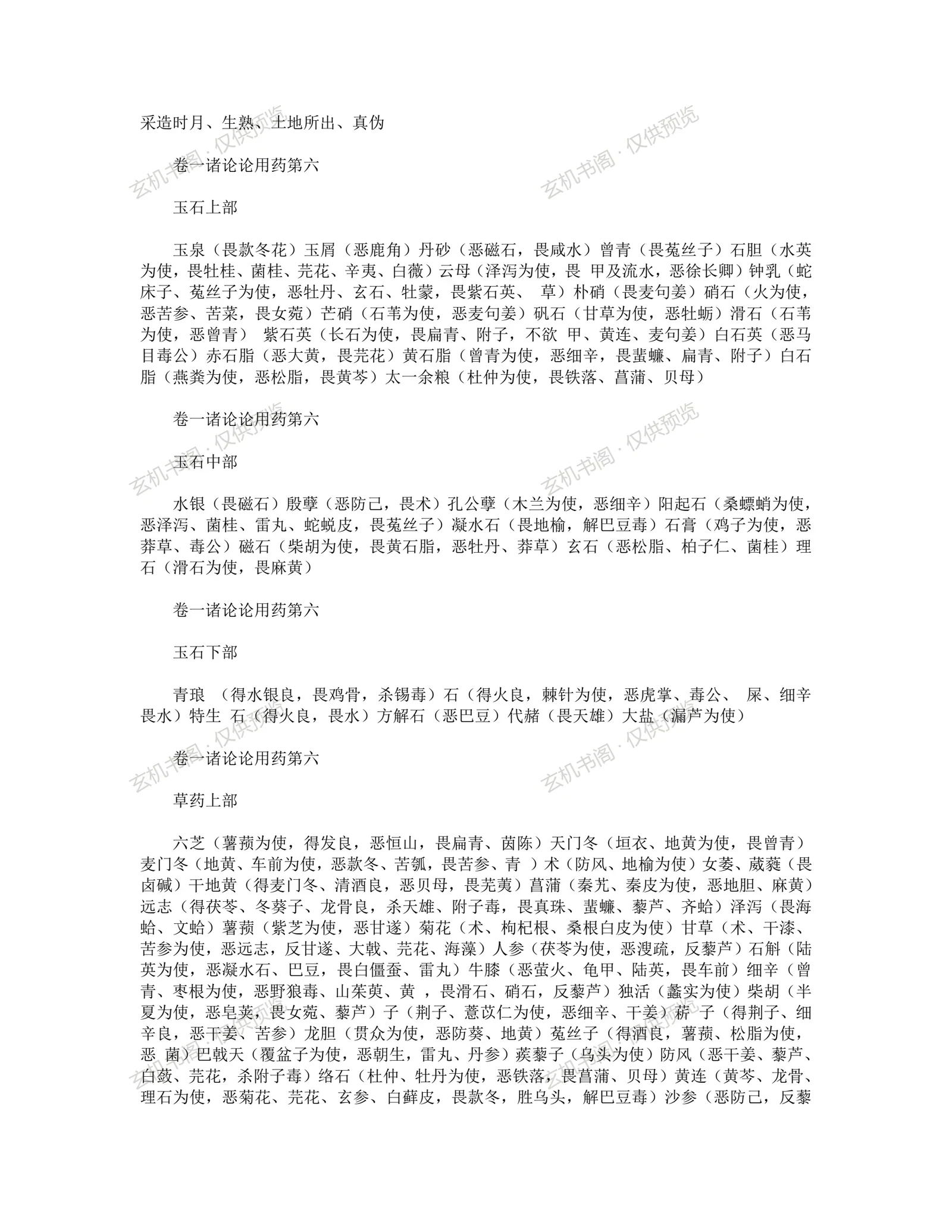
This is a single-page scan of the first juan ("General Discourses") of Sun Simiao's Bei Ji Qian Jin Yao Fang, attributed on the opening leaf to "Tang, Sun Simiao." It opens with the book's preface, which traces the origins of medicine and explains the title: human life is weightier than a thousand pieces of gold. The juan then presents a series of foundational essays: on what a great physician must study, on sincerity and compassion in practice, on the general principles of treatment, on diagnosis through the three regions and nine indicators, on composing prescriptions, and on the use of drugs. The essay on medical study requires mastery of the Suwen, Jiayi, Huangdi Zhenjing, the明堂 flow-lines, the twelve channels, the three regions and nine indicators, and materia medica, along with broader learning in the Yijing, calendar and divination arts. The essay on sincerity demands an unselfish, compassionate attitude regardless of a patient's wealth or status, and warns against hesitation and self-interest. Later sections discuss the sequence of decoctions, powders and pills, the correspondence of pulse sites to organs, the roles of sovereign, minister, assistant and envoy in a formula, and the classification of drugs into three grades with their mutual likes and dislikes. As a general introduction rather than a collection of recipes, this juan is a key entry point to Sun Simiao's medical thought and clinical principles.
Contents
Preface: origins of medicine and the purpose of the book
On what a great physician must study
On sincerity and compassion in medical practice
General principles of treatment: decoctions, powders, pills
Diagnosis: three regions and nine indicators
Composing prescriptions: roles and modifications
Using drugs: three grades and mutual interactions
Key Points
States the book's motto: human life is worth a thousand in gold
The essay on sincerity is a core text of Chinese medical ethics
Lists the classics and ancillary arts a physician should master
Explains three-region, nine-indicator pulse diagnosis and organ correspondence
Classifies drugs into three grades and records mutual likes and dislikes