Reading guide
Content guideOverview
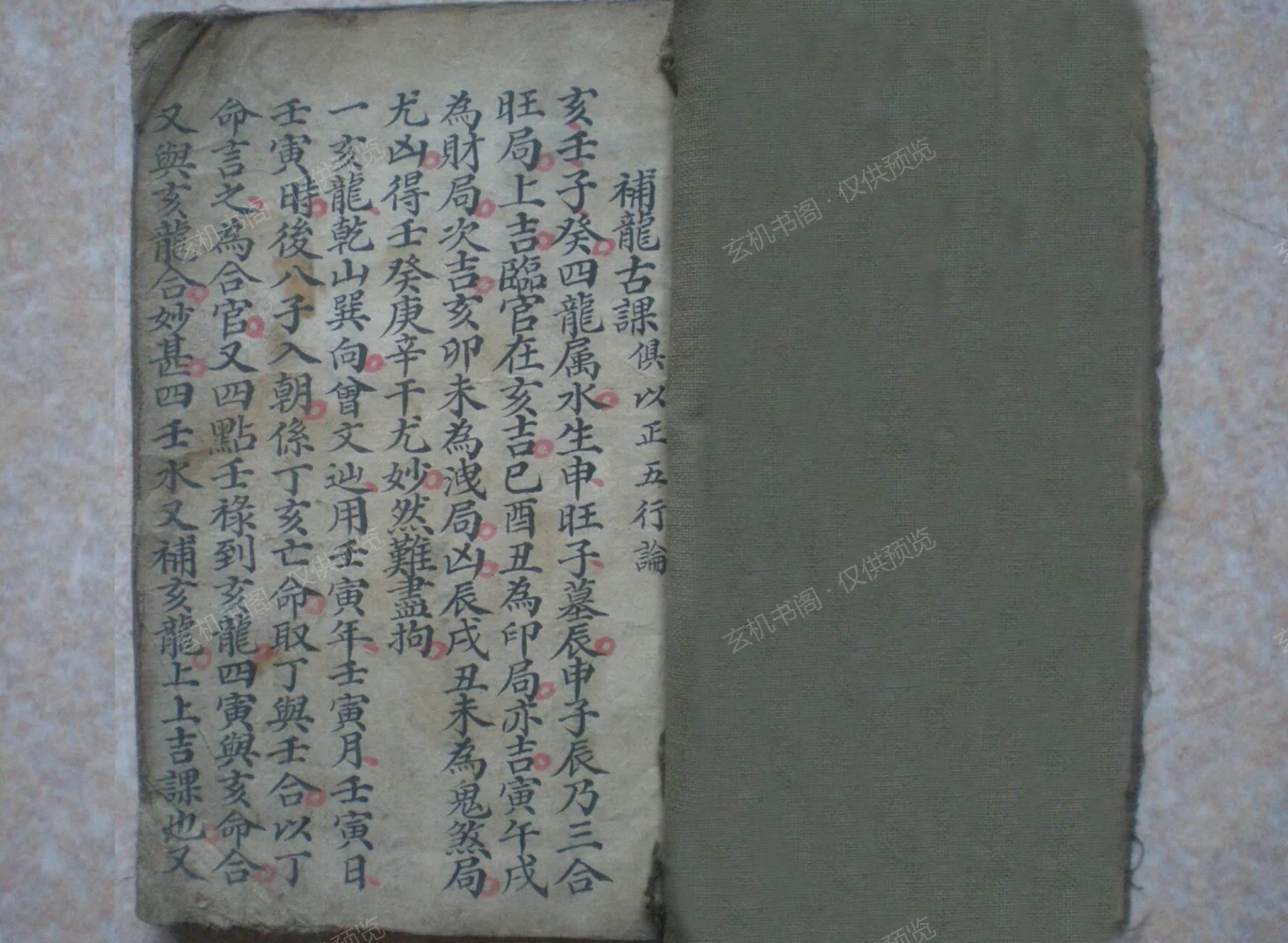
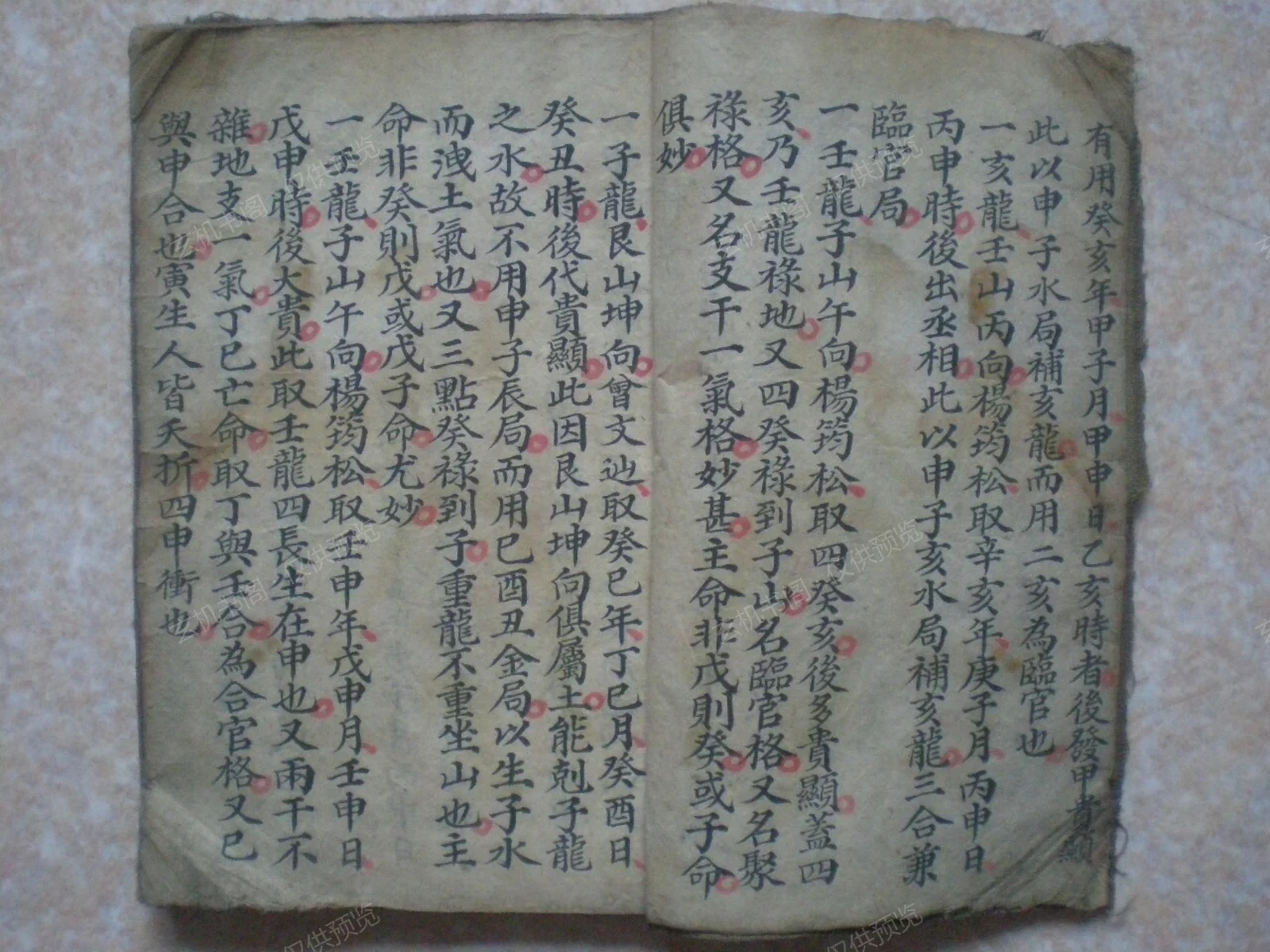
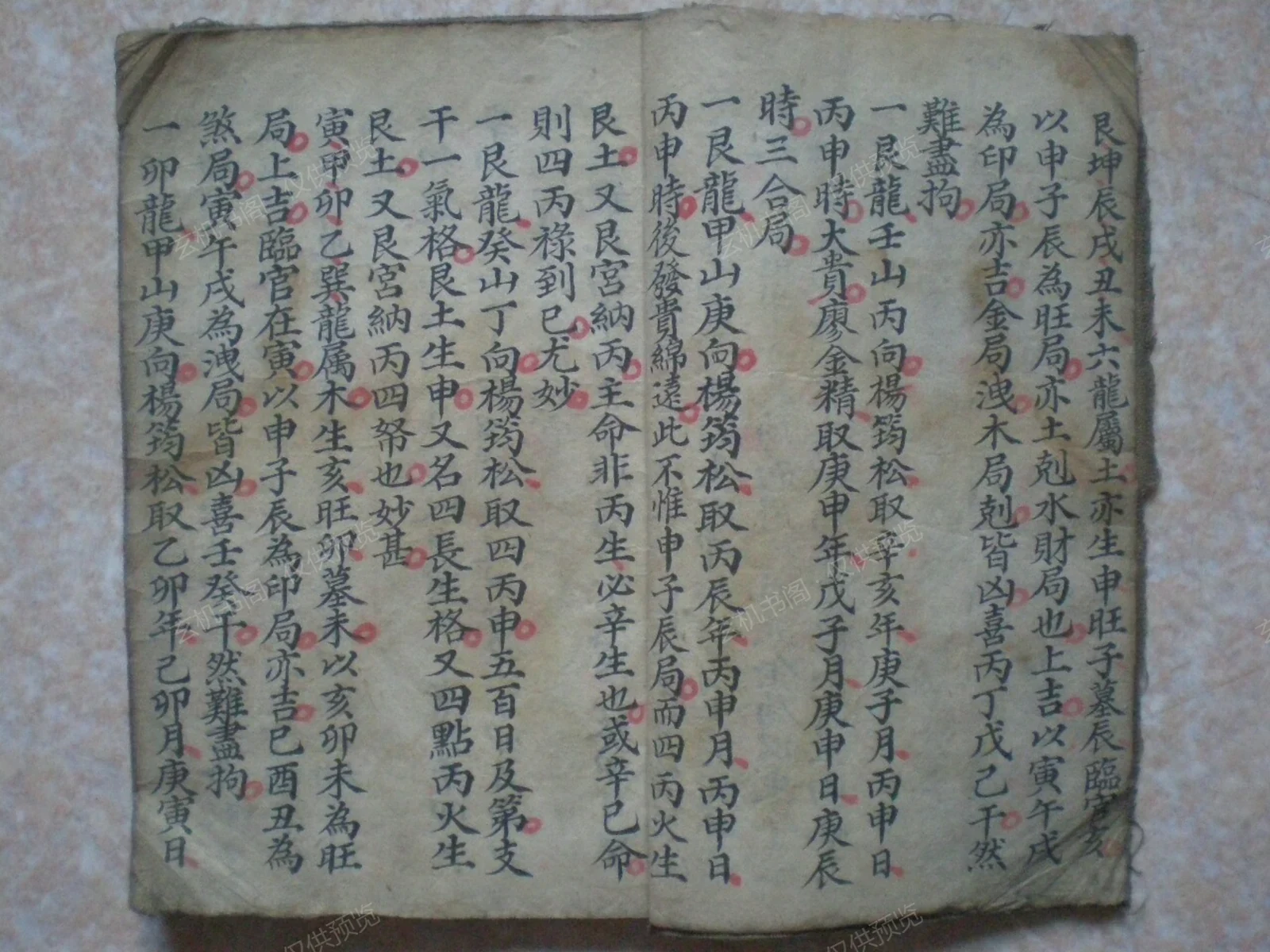
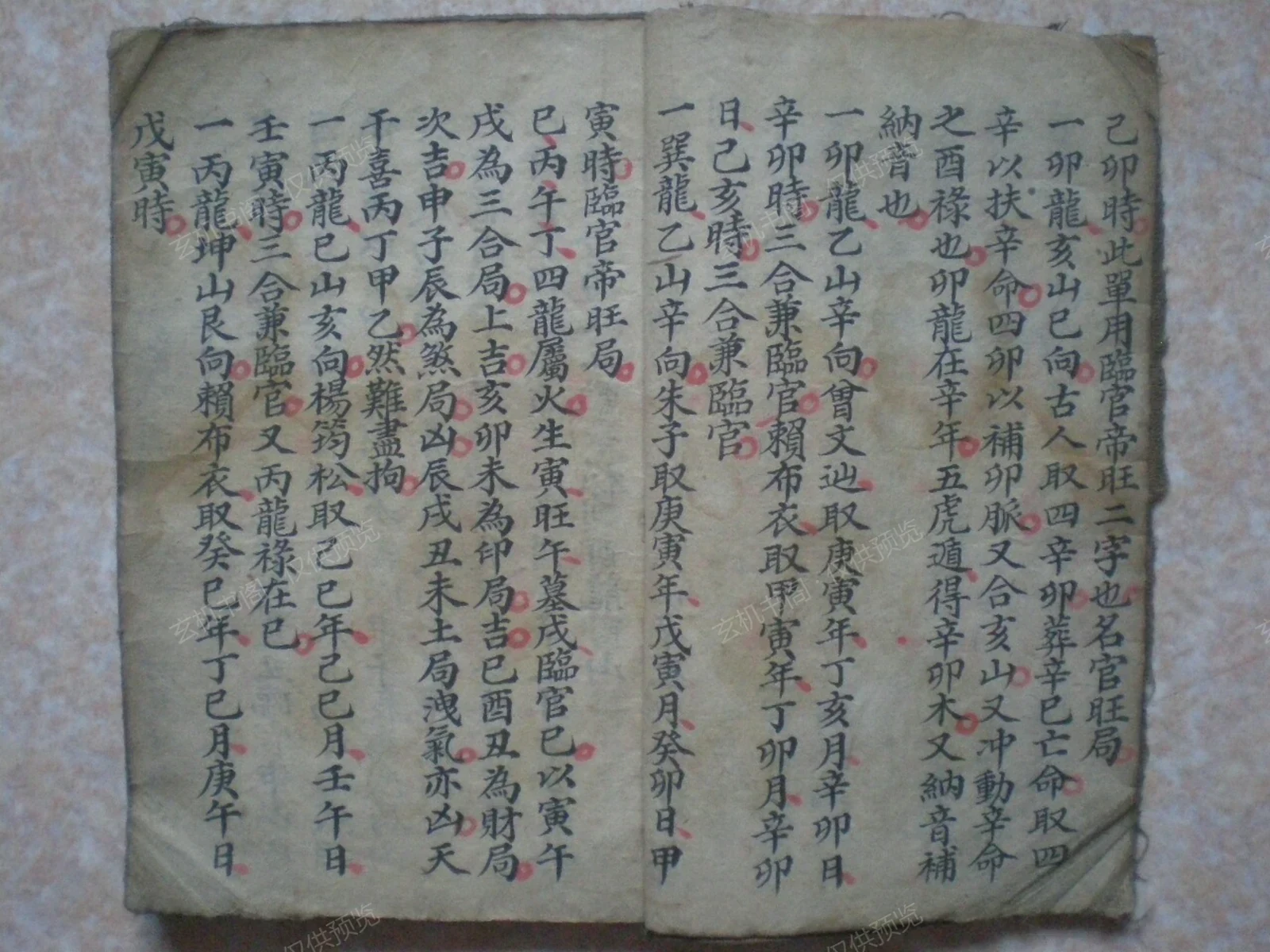
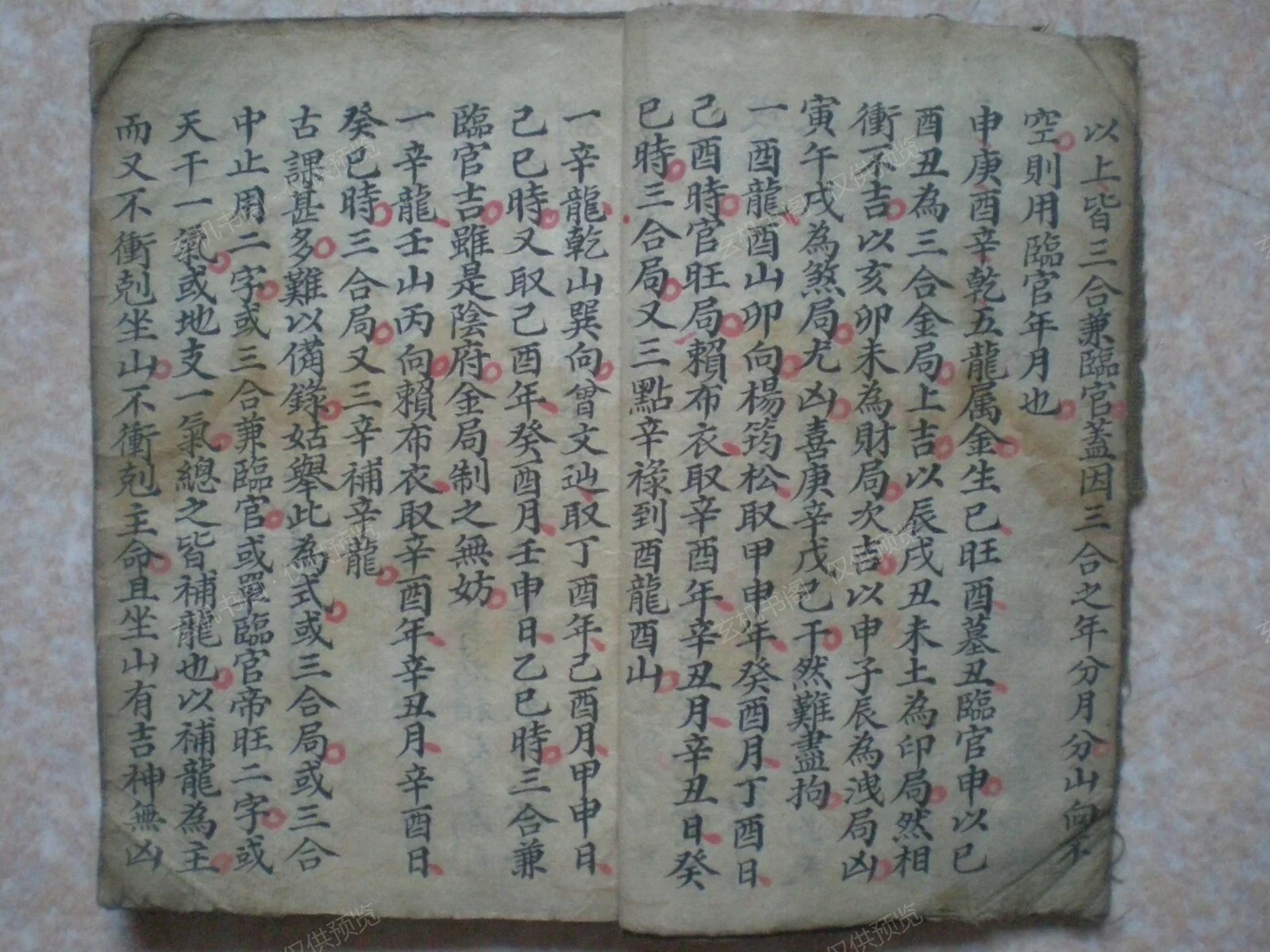
This manuscript, titled Ancient Lessons on Supplementing the Dragon, opens with the principle that dragon supplementing in day selection is based on the rectified Five Elements. Using the Hai-Ren-Zi-Gui water dragons as an example, it explains the auspicious and inauspicious assessments of Three Harmony flourishing, Official, and Seal configurations, then presents a series of ancient case lessons such as Hai Dragon with Qian Mountain facing Xun, Ren Dragon with Zi Mountain facing Wu, Gen Dragon with Kun Mountain facing, and Xun Dragon with Yi Mountain facing Xin. Each lesson analyzes the relationships among the year, month, day, and hour pillars, the sitting mountain, and the principal life, emphasizing the coordination of dragon, mountain, and life, the use of Three Harmony, Official and Prosperous positions, lu and noble stars, and na-yin supplementing. It also identifies inauspicious patterns such as four clashes, three sha, shallow configurations, and ghost-sha configurations. As a compilation of Yang Gong day-selection case lessons centered on the rectified Five Elements and Three Harmony configurations, it is suitable for readers studying construction and burial day selection and Yang Gong lesson examples.
Contents
Dragon supplementing discussed through rectified Five Elements
Hai-Ren-Zi-Gui water dragons and Three Harmony examples
Hai Dragon, Qian Mountain facing Xun: Ren-Yin year lesson
Ren Dragon, Zi Mountain facing Wu: four Gui-Hai lesson
Gen Dragon, Kun Mountain facing: Gui-Si year lesson
Xun Dragon, Yi Mountain facing Xin: Geng-Yin year lesson
Qian Dragon facing Xun: Ding-You year lesson
Key Points
Uses rectified Five Elements to classify dragons into water, earth, fire, and metal configurations.
Values Three Harmony flourishing, Official, Seal, and Wealth configurations.
Ancient lessons list year-month-day-hour pillars and discuss mountain and life relationships.
Emphasizes supplementing the dragon, supporting the mountain, and assisting the principal life while avoiding clashes, three sha, and ghost-sha.
Preserves ancient methods attributed to Yang Junsong within the Yang Gong day-selection tradition.
Red circles mark key lessons and auspicious or inauspicious judgments.