Reading guide
Content guideOverview
This is a teaching text on the najia method of six-line divination. The opening chapter traces the formation of the Zhouyi, the eight trigrams and sixty-four hexagrams, and presents divination as grounded in correlative-image theory, citing Wang Hongxu's Bushi Zhengzong as the systematizing work of the najia tradition. The second chapter forms the core: coin casting with three cash, the stems, branches and five phases, and the full construction of a hexagram—naming it within the eight palaces, placing the subject and object lines, assigning the najia stems and branches, the five phases, the six relations, the hexagram body, the day and month, the six animals, and changed lines—ending with a complete najia chart of the sixty-four hexagrams. Practical and rule-oriented, it suits beginners as a reference manual.
Contents
Ch.1 Overview of Zhouyi divination theory
Ch.2 Najia information of the Zhouyi
Sec.1 Methods of casting a hexagram
Sec.2 Heavenly stems and earthly branches
Sec.3 Constructing the hexagram
Sec.4 Complete najia chart of the sixty-four hexagrams
Key Points
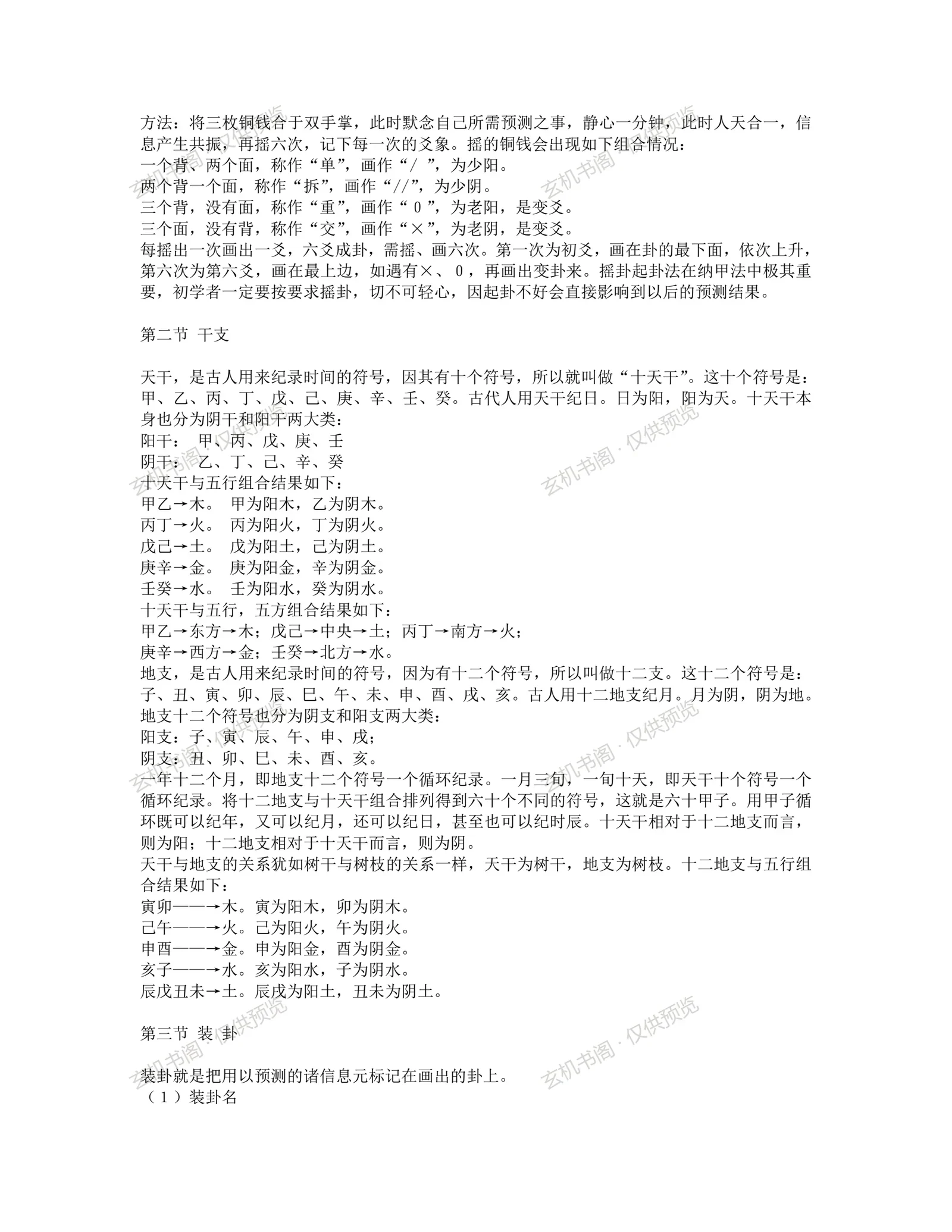
Casting with three coins, recording single, split, heavy and crossed lines
Tables of stems and branches with yin-yang, five phases and directions
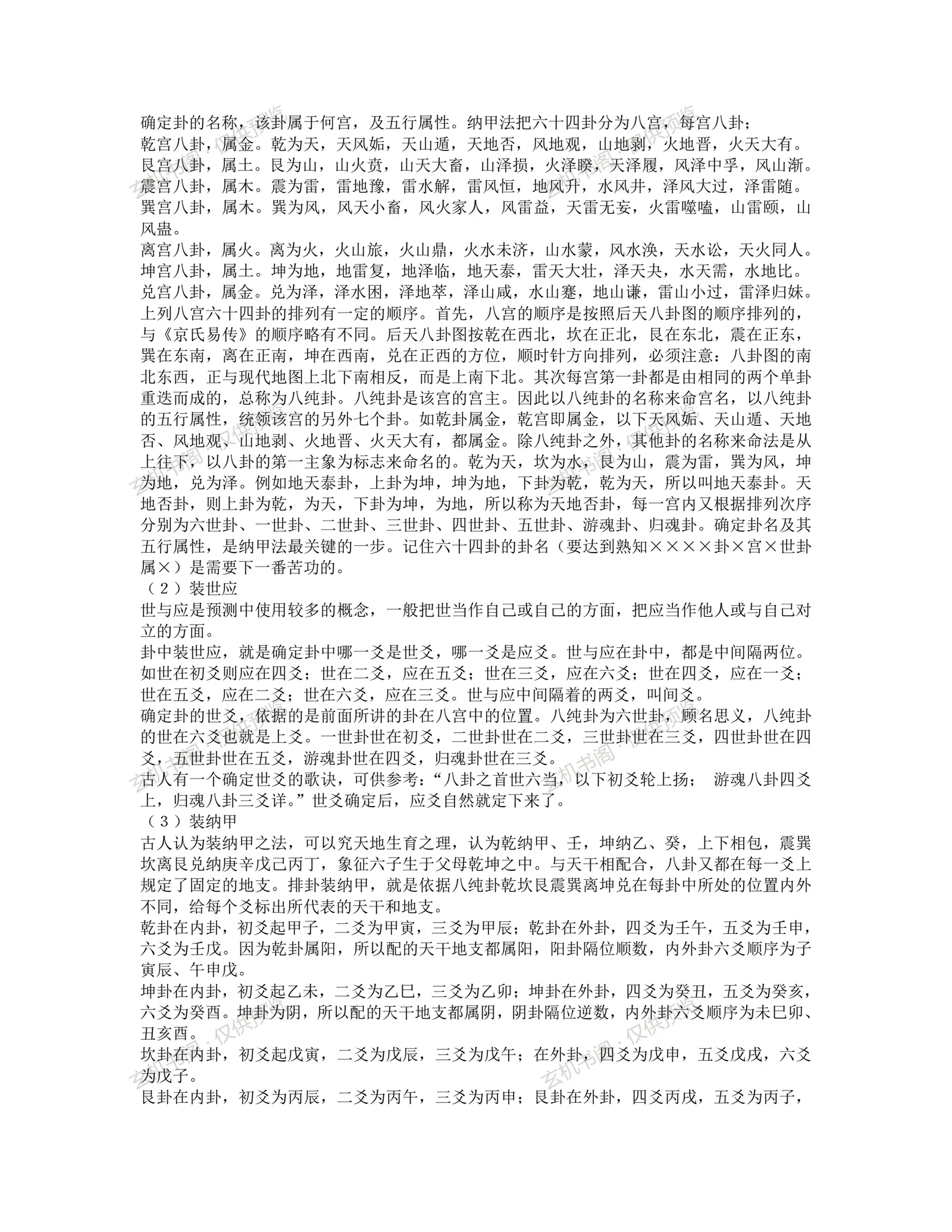
Palace attribution fixing hexagram name, subject/object lines and element
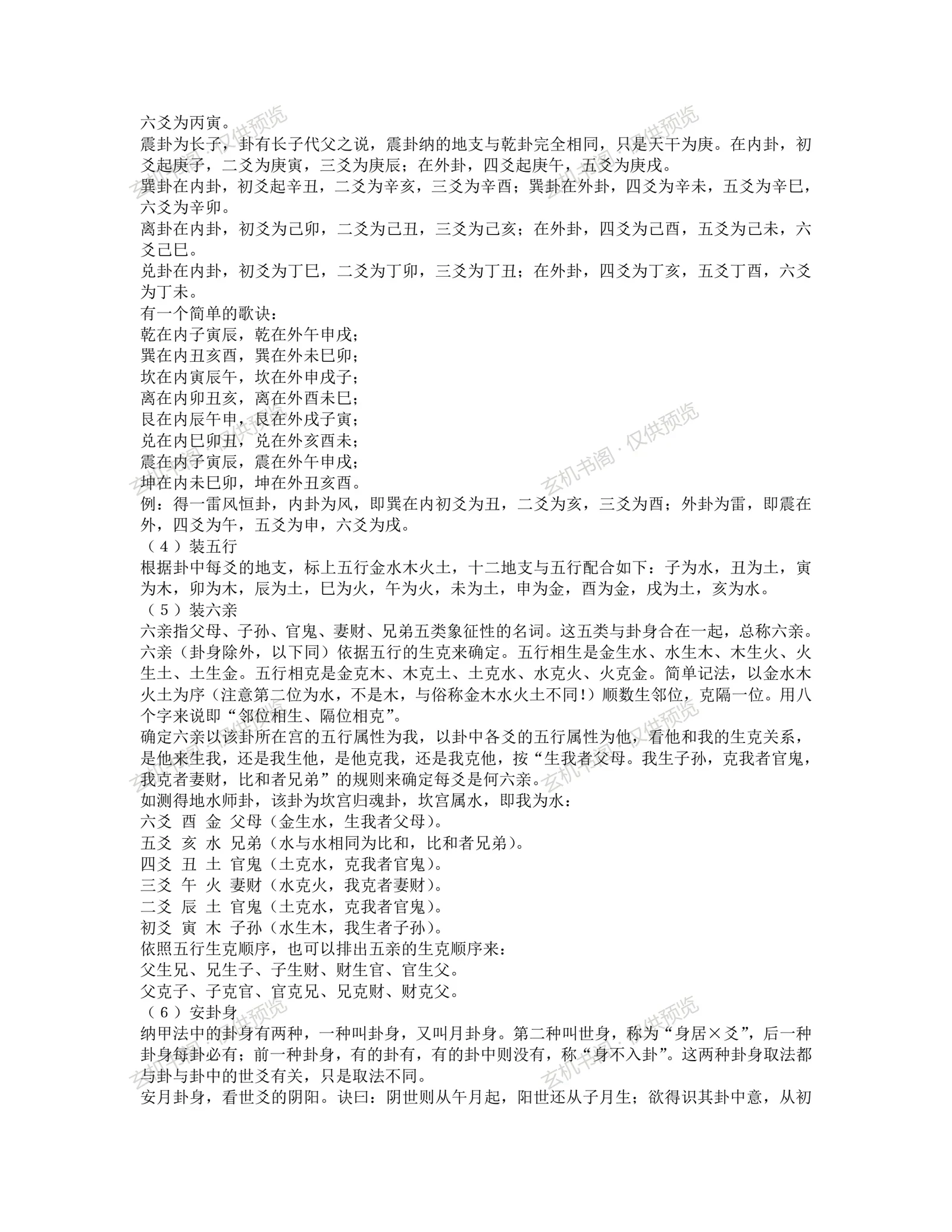
Najia mnemonics assigning stems and branches, then five phases and six relations
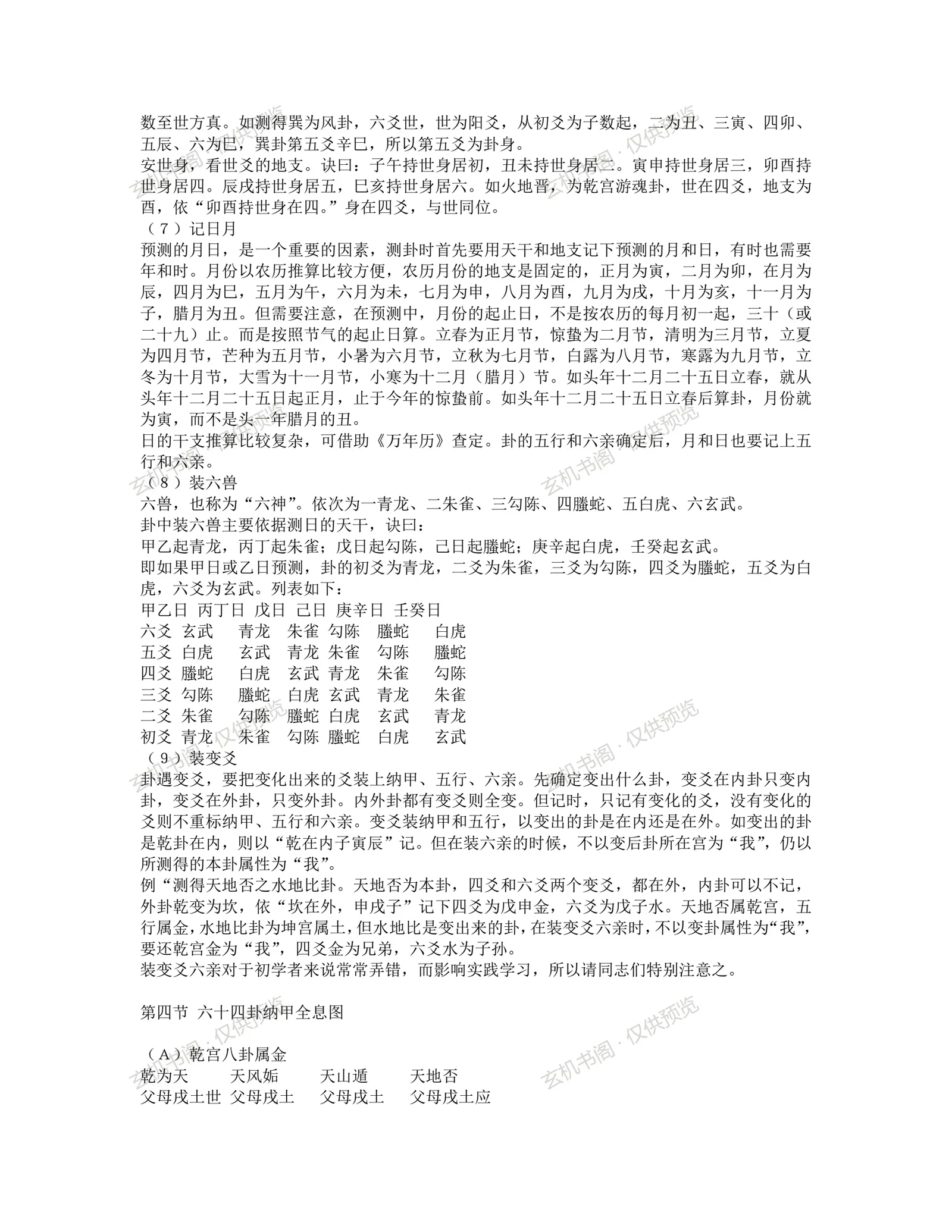
Month determined by solar terms; six animals keyed to the day stem
Changed lines keep the original palace for six relations