Reading guide
Content guideOverview
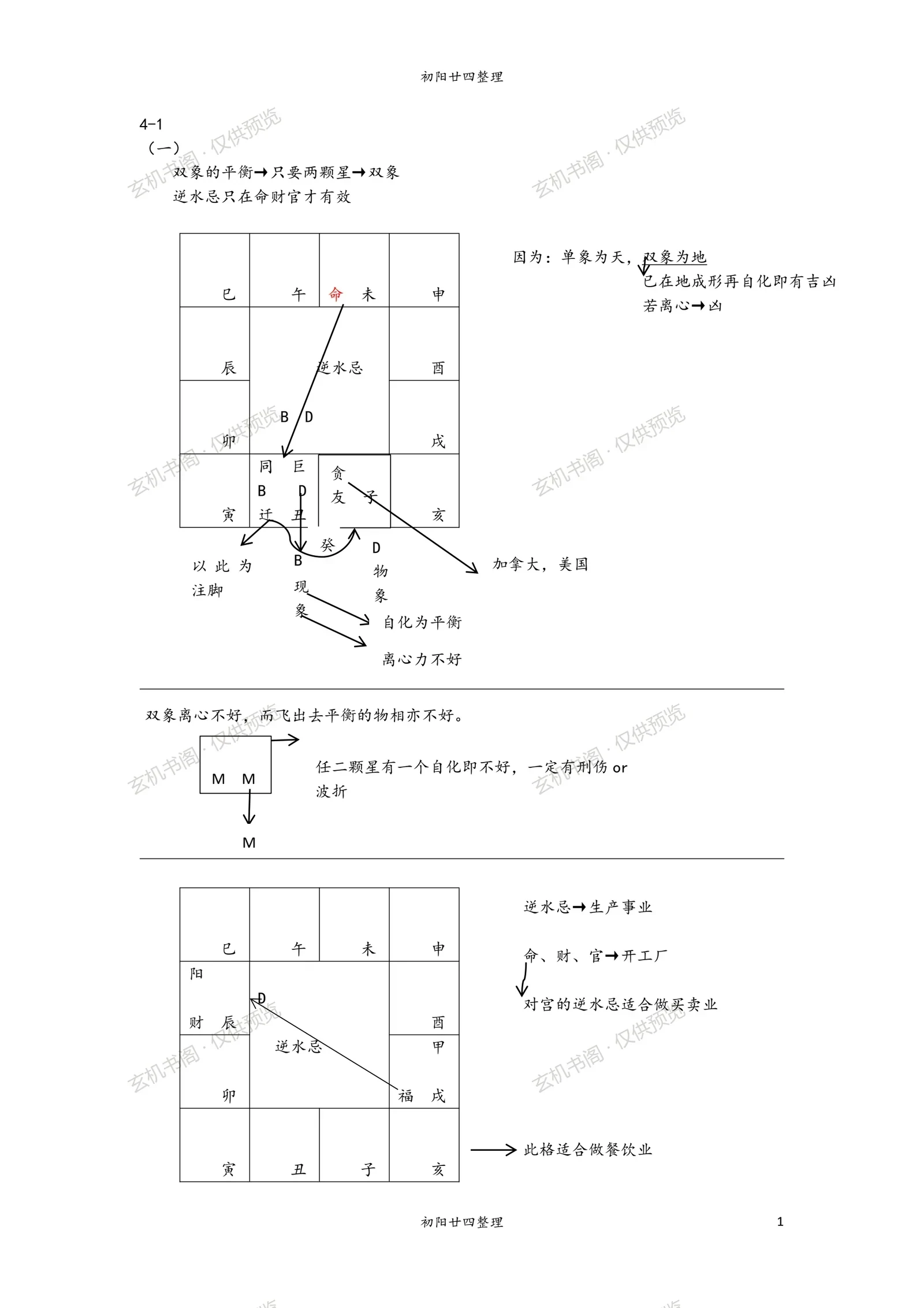
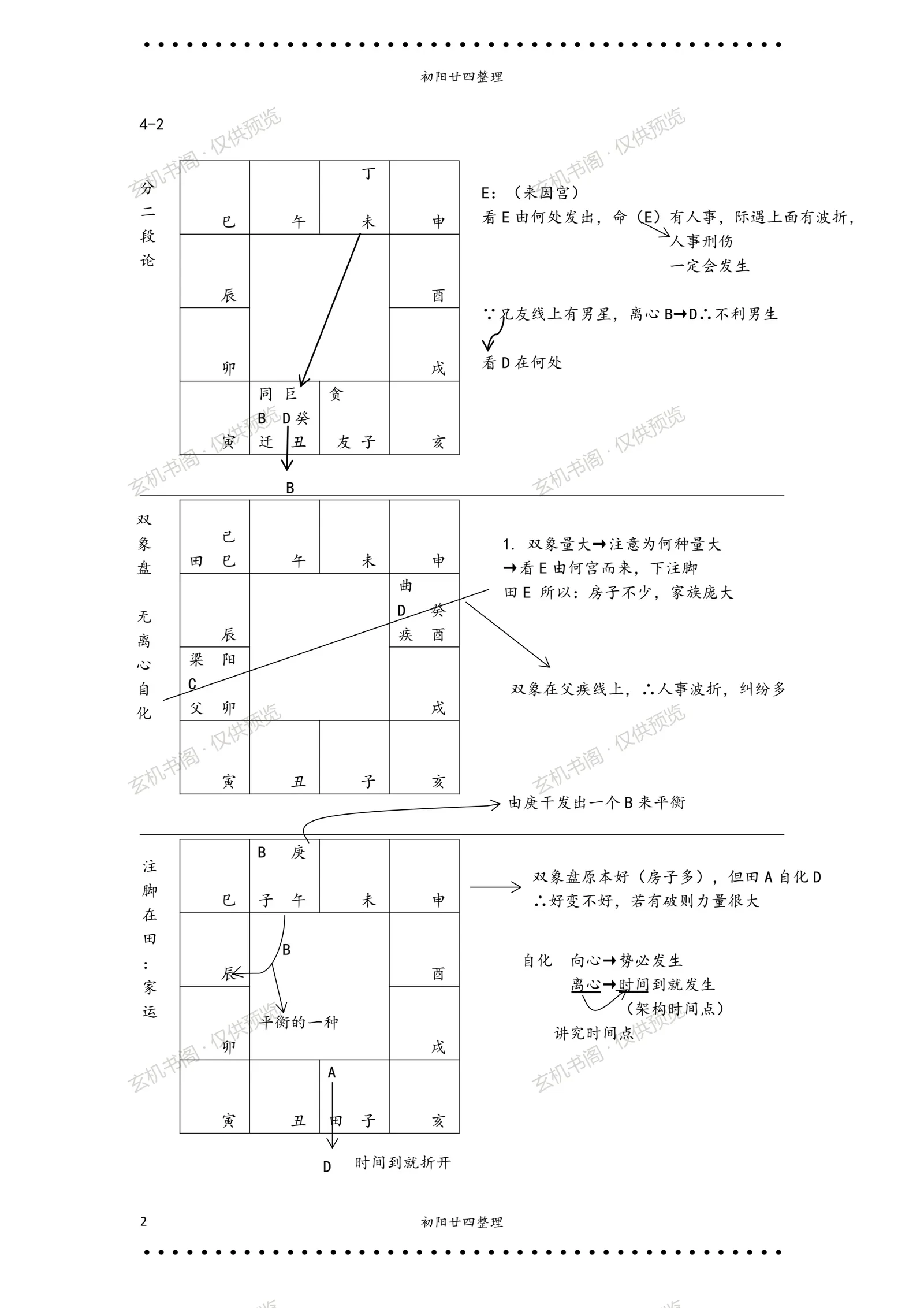
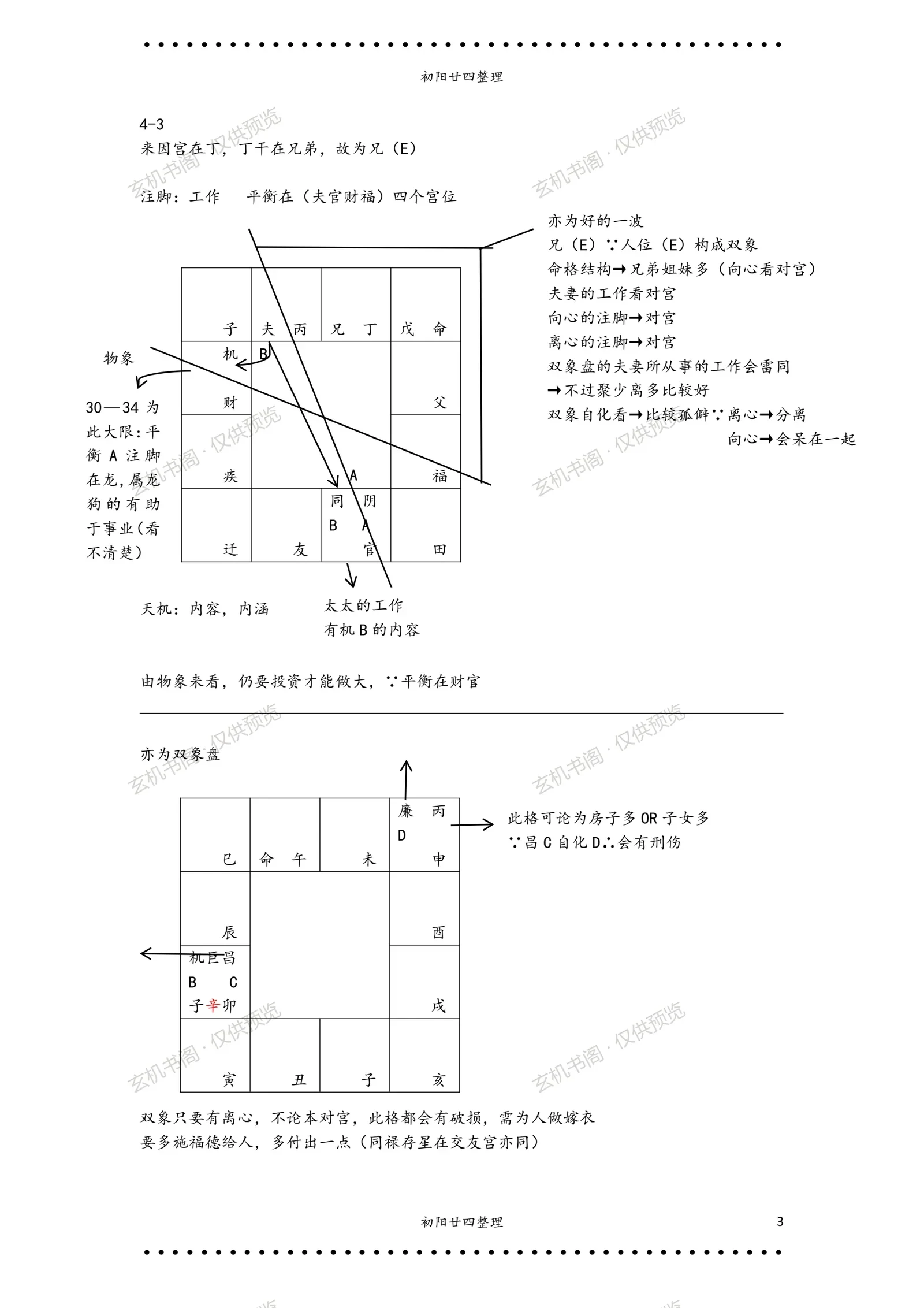
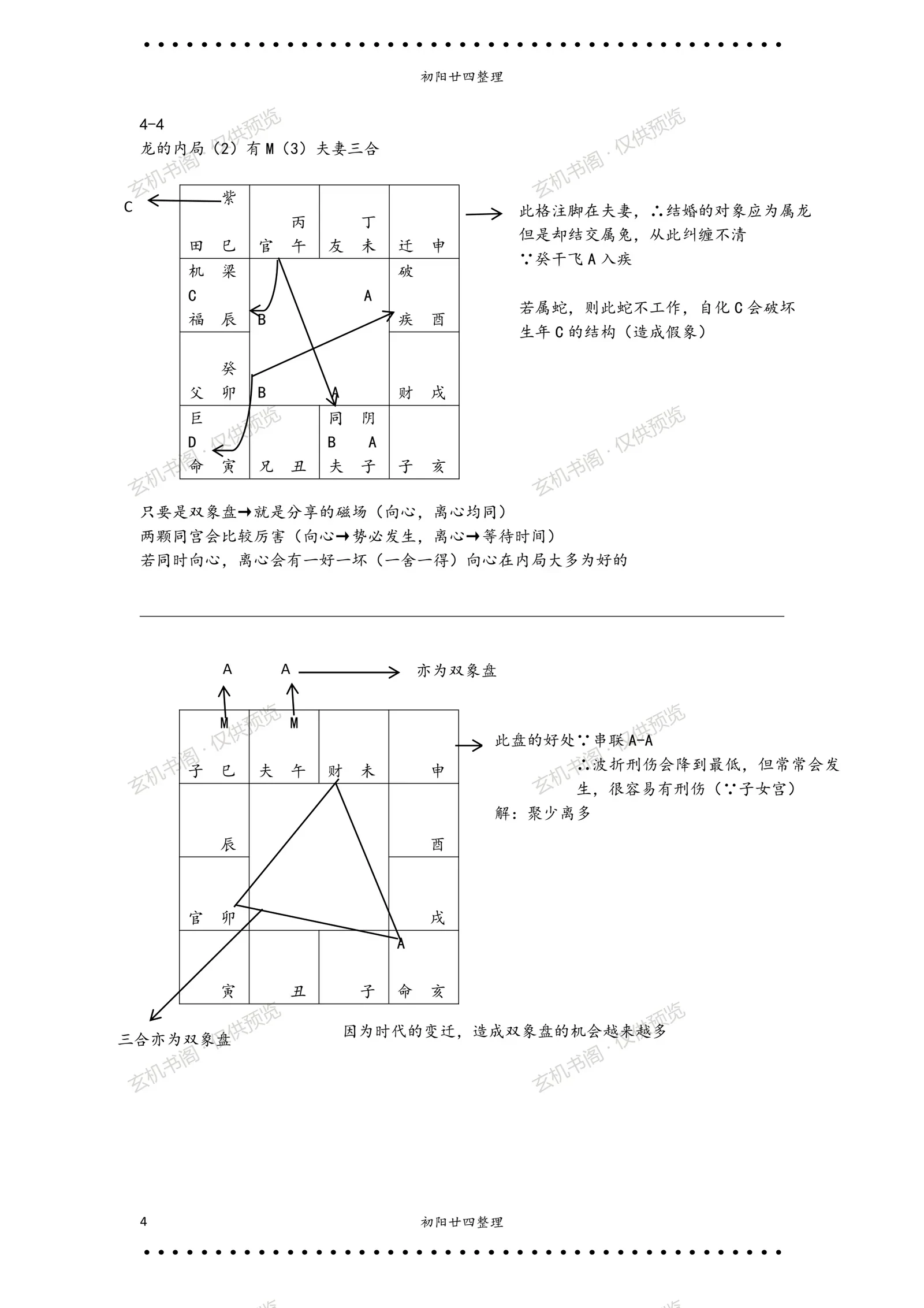
The cover reads Cai Minghong Advanced Class Notes (V6), while the inner title gives Cai Minghong's Zi Wei Dou Shu Advanced Class Manuscript, compiled by Chuyang Niansi. The visible pages are numbered 4-1 to 4-4 and deal with advanced chart methods rather than introductory star meanings. The central ideas are double-image charts, the lai yin palace, balance, centripetal and centrifugal forces, and the placement of footnotes in specific palaces. Twelve-palace diagrams are used to show how two stars in one palace create balance or disruption, how reverse-water taboos apply to the life, wealth and career palaces, how self-transformation relates to timing, and how flying stars land in palaces. There are also examples on career types, marriage partners' zodiac signs, family property, and human conflicts. The text is a class handout and manuscript compilation, terse and dense with terminology; it suits readers with prior Zi Wei Dou Shu knowledge and is best used together with the full 291-page PDF.
Contents
4-1 Double-image balance, reverse-water taboo, centrifugal omen
4-2 Lai yin palace, footnotes, self-transformation
4-3 Siblings palace, spouse's work, double-image self-transformation
4-4 Spouse trine, zodiac signs, double-image field
Chart examples: wealth-career-fortune-field
Key Points
Double-image charts focus on two stars in one palace and their balance.
The lai yin palace shows where an issue comes from; footnotes show where it lands.
Reverse-water taboo matters mainly in life, wealth and career palaces.
Self-transformation relates to timing: centripetal is certain, centrifugal waits for the moment.
Double-image charts often discuss separation, injury, objects and family property.