Reading guide
Content guideOverview
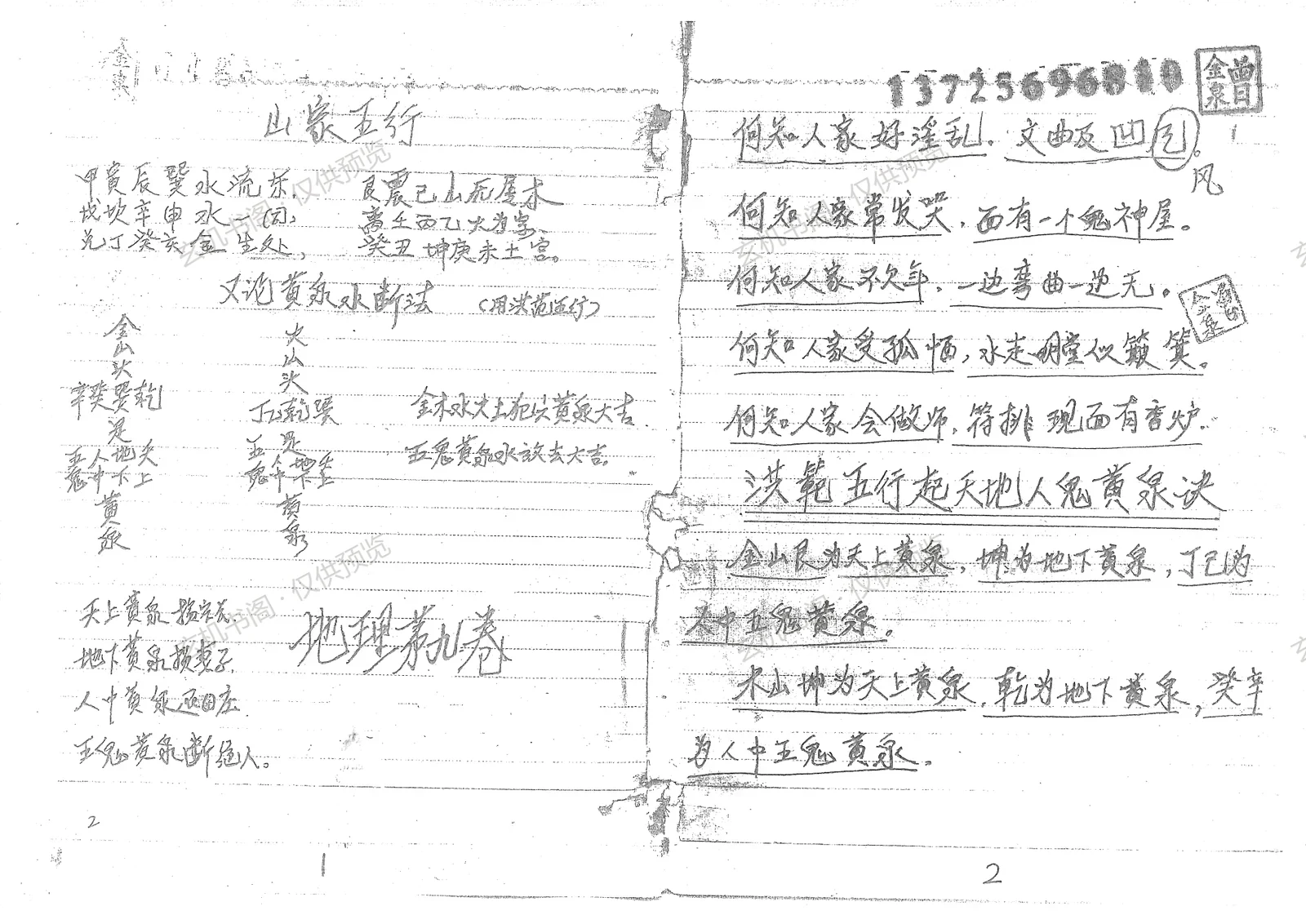
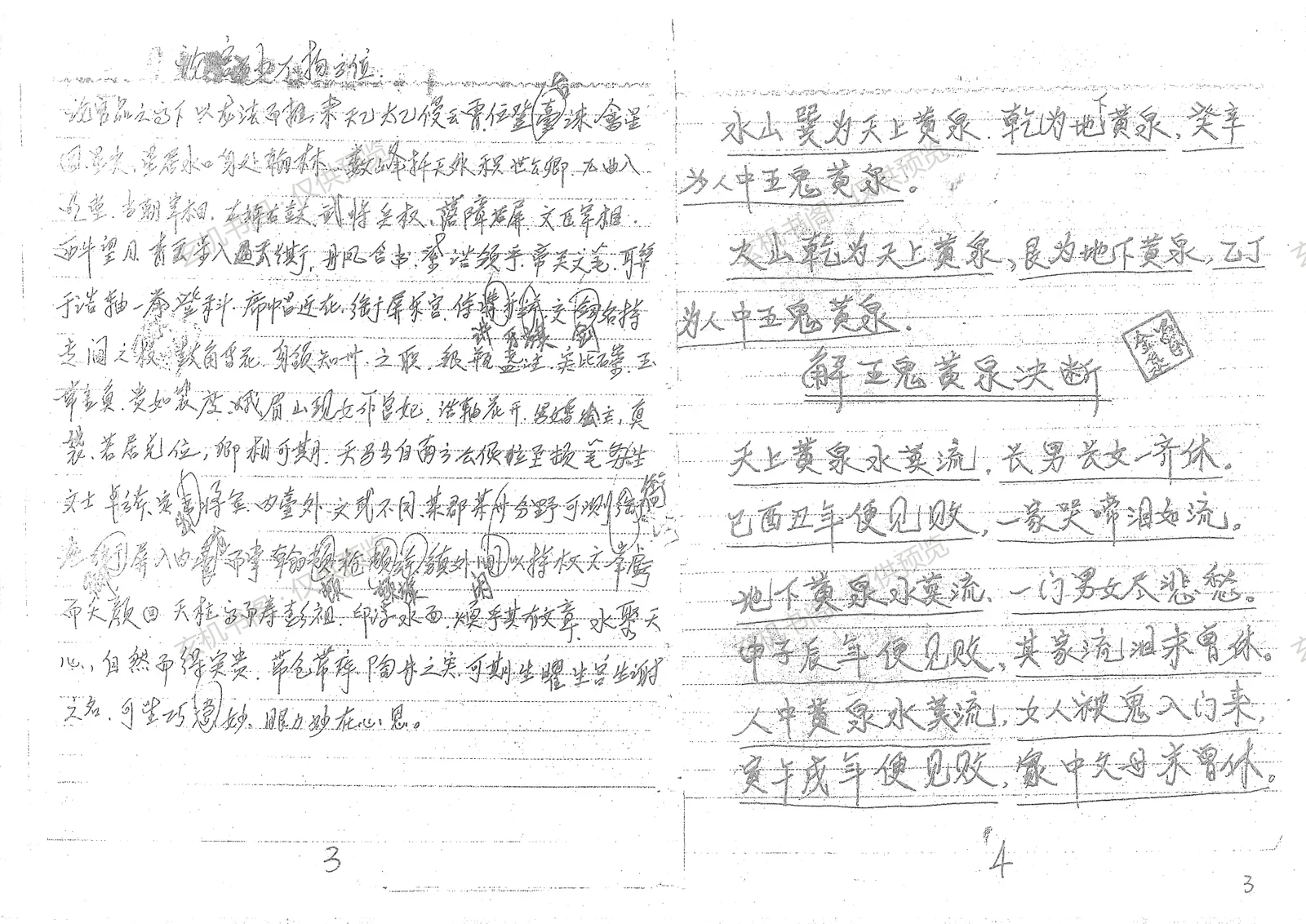
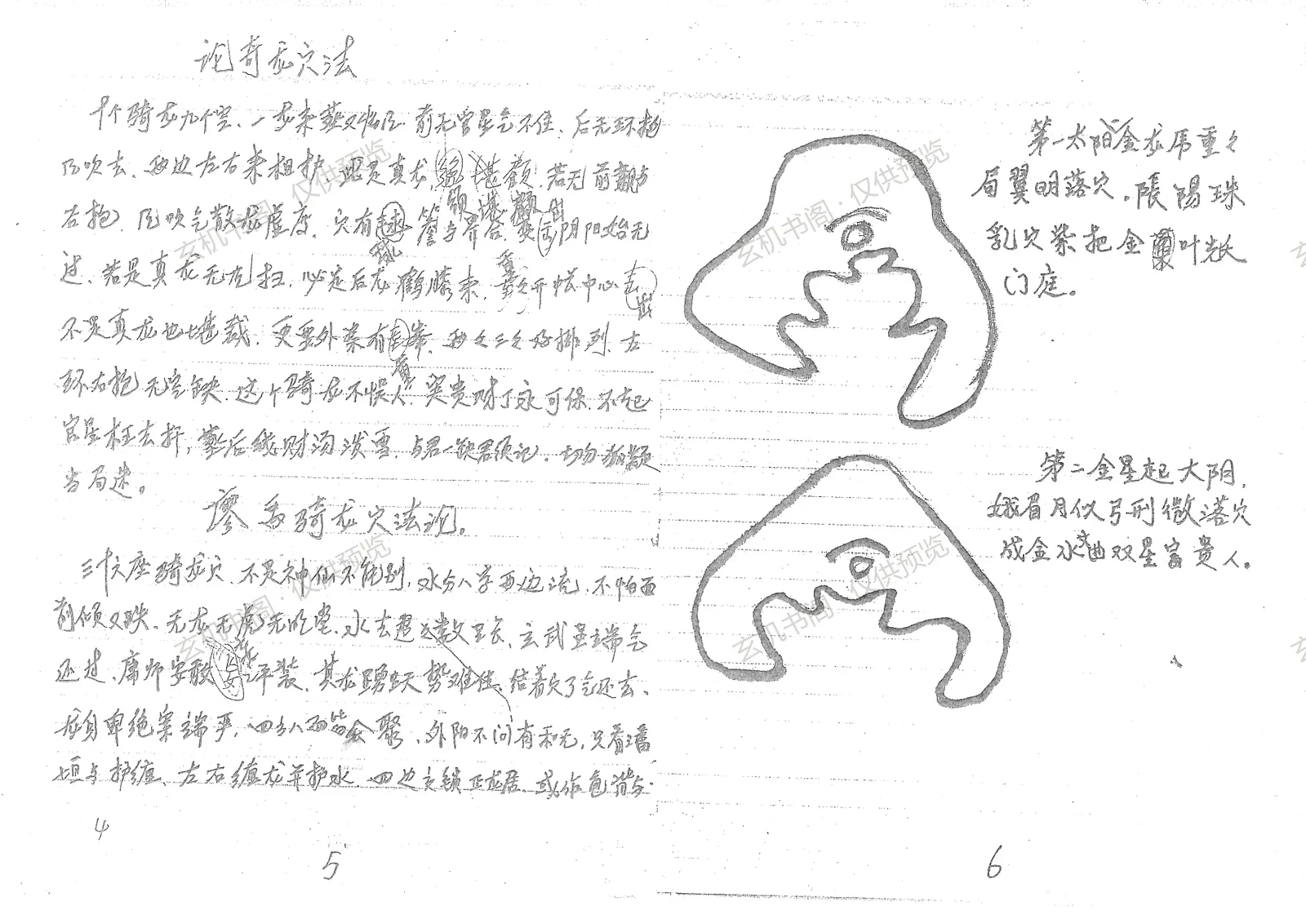
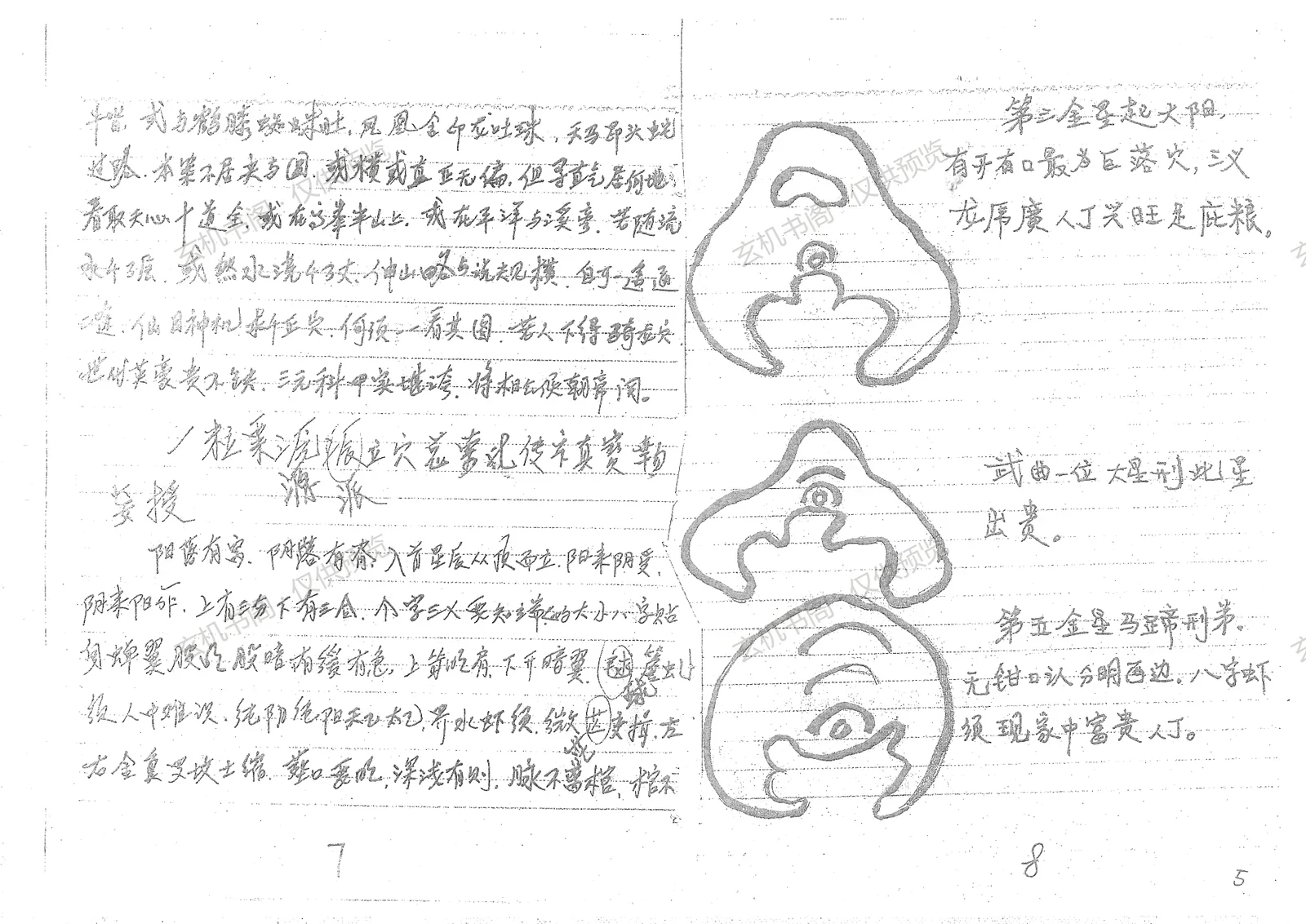
This is the combined ninth and tenth volumes of Zeng Jinquan's Zeng Gong Feng Shui (Qiong Bi Jiu), titled Luan Tou Wang. Presented as a handwritten manuscript facsimile, it belongs to the Sanhe school's landscape (luan tou) tradition. The text first sets out the Five Elements assigned to the twenty-four mountains and a method for judging Yellow Spring (huang quan) incoming and outgoing water, then presents the Hongfan Five-Element formula for classifying Yellow Spring water into heaven, earth, human, and five-ghost categories, with mnemonic verses for interpreting each. The latter half turns to the method of identifying auspicious dragon points and Liao Yu's dragon-riding point method, illustrated with hand-drawn mountain forms such as the sun, moon, and Wugu metal stars, stressing that a true dragon must be supported by encircling ridges, an open bright hall, and matching water courses. As a lineage manuscript of rhymes and diagrams, it is useful for studying Sanhe landscape and water methods.
Contents
Five Elements of mountains and the twenty-four mountains
Judging Yellow Spring water
Hongfan Five-Element Yellow Spring formula
Verses on the five-ghost Yellow Spring
Auspicious dragon points and star-form diagrams
Liao Yu's dragon-riding point method
Key Points
Assigns Five Elements to the twenty-four mountains to judge water
Classifies Yellow Spring water into four types with verses
Verses predict timing and family outcomes
Dragon-riding points require encircling ridges and water