Reading guide
Content guideOverview
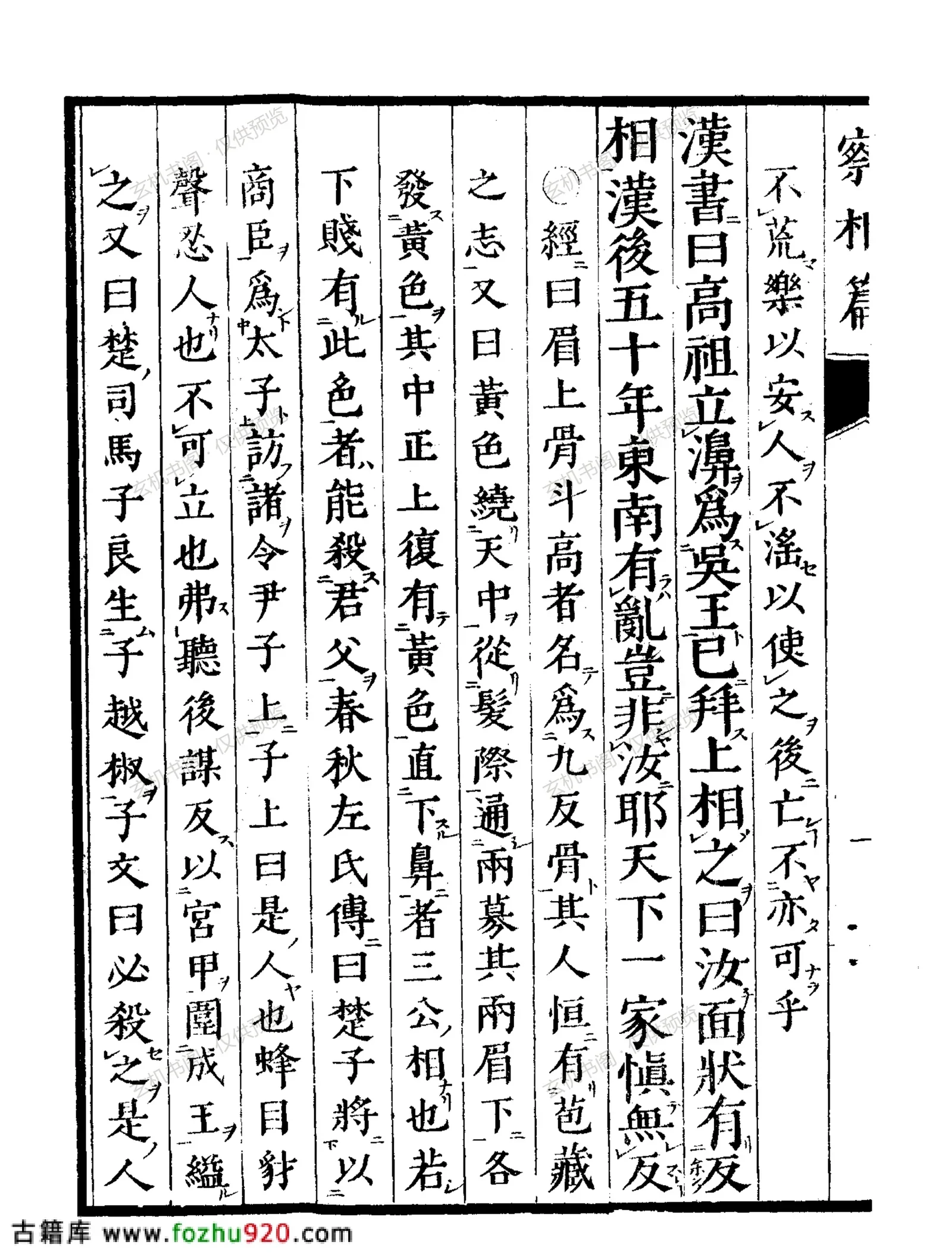
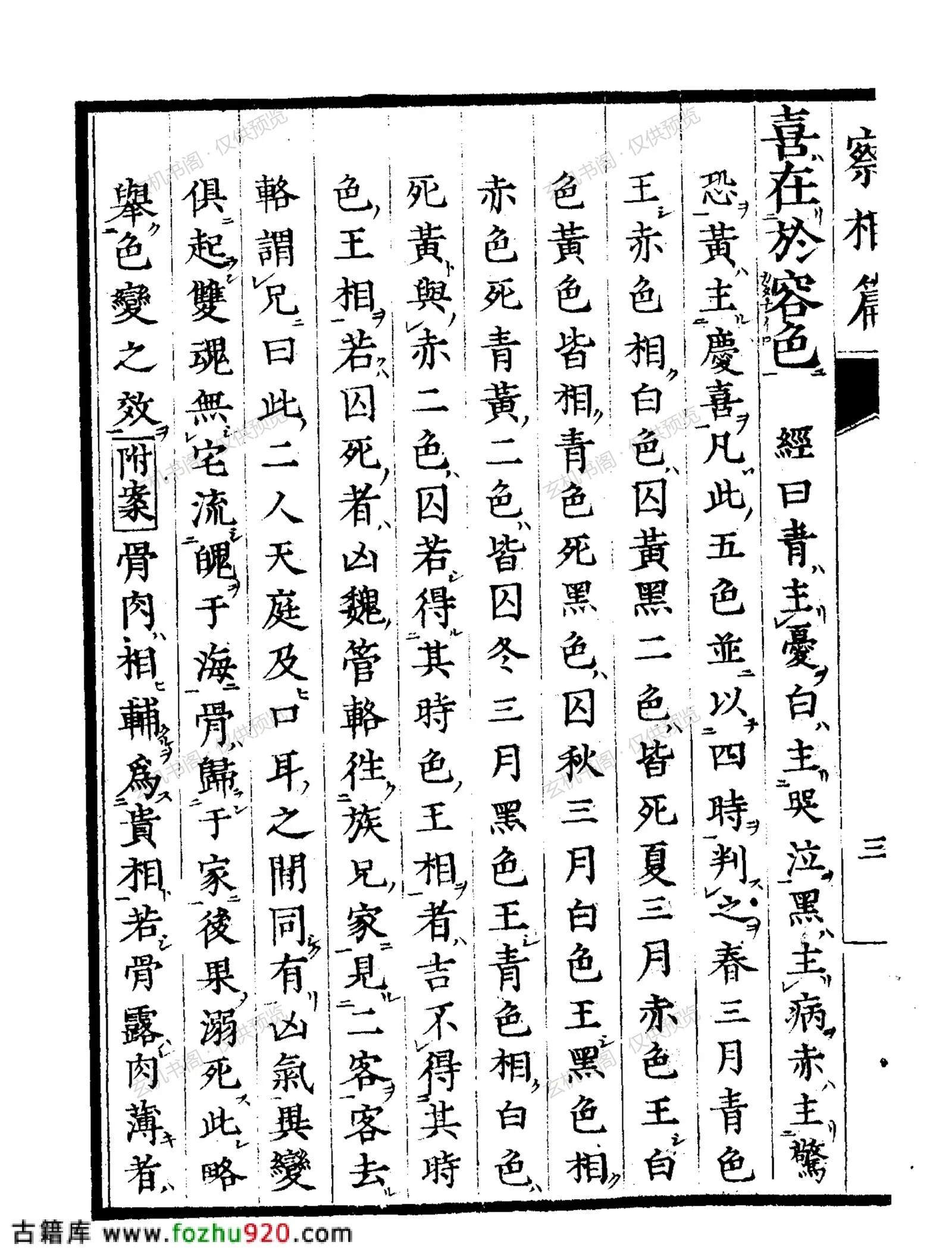
Attributed to Zhao Rui of the Tang dynasty, this text is presented here with an appended commentary by Shibata Koreyoshi of Japan. It draws on the Zuozhuan and Hanshu to illustrate how facial features, bone structure, voice, gait, and complexion can indicate a person's fate. The opening cites the story of Shufu reading the faces of Gongsun Ao's sons, then moves to Han Gaozu's physiognomy of Liu Bi and other historical examples. The core discussion centers on bone method and facial color: prominent brow bones, the so-called nine-reversal bone, and yellow light encircling the forehead are treated as noble signs, while wolf-like eyes, bear-tiger bearing, and jackal voices mark dangerous characters. Later passages use the meeting of Zheng Bo and Zhao Meng, and the observations of Shan Gong and Zi Qi, to argue that outward bearing corresponds to inner ambition. The final section states that wealth and honor lie in bone method while sorrow and joy appear in complexion, and lists the five colors with their seasonal auspicious and inauspicious readings. Flesh and bone in proportion indicates nobility; exposed bone and thin flesh indicate low status.
Contents
Title and appended commentary by Shibata Koreyoshi
Shufu's reading of Gongsun Ao's sons
Han Gaozu and Wei Qing physiognomy examples
Bone structure and noble versus base features
Voice, gait, and inner character
Five colors and the four seasons
Flesh-bone proportion as noble or base
Key Points
Uses historical anecdotes rather than bare formulas
Emphasizes bone method, complexion, voice, and gait
Maps five colors onto seasonal fortune
Noble signs require flesh and bone in proportion