Reading guide
Content guideOverview
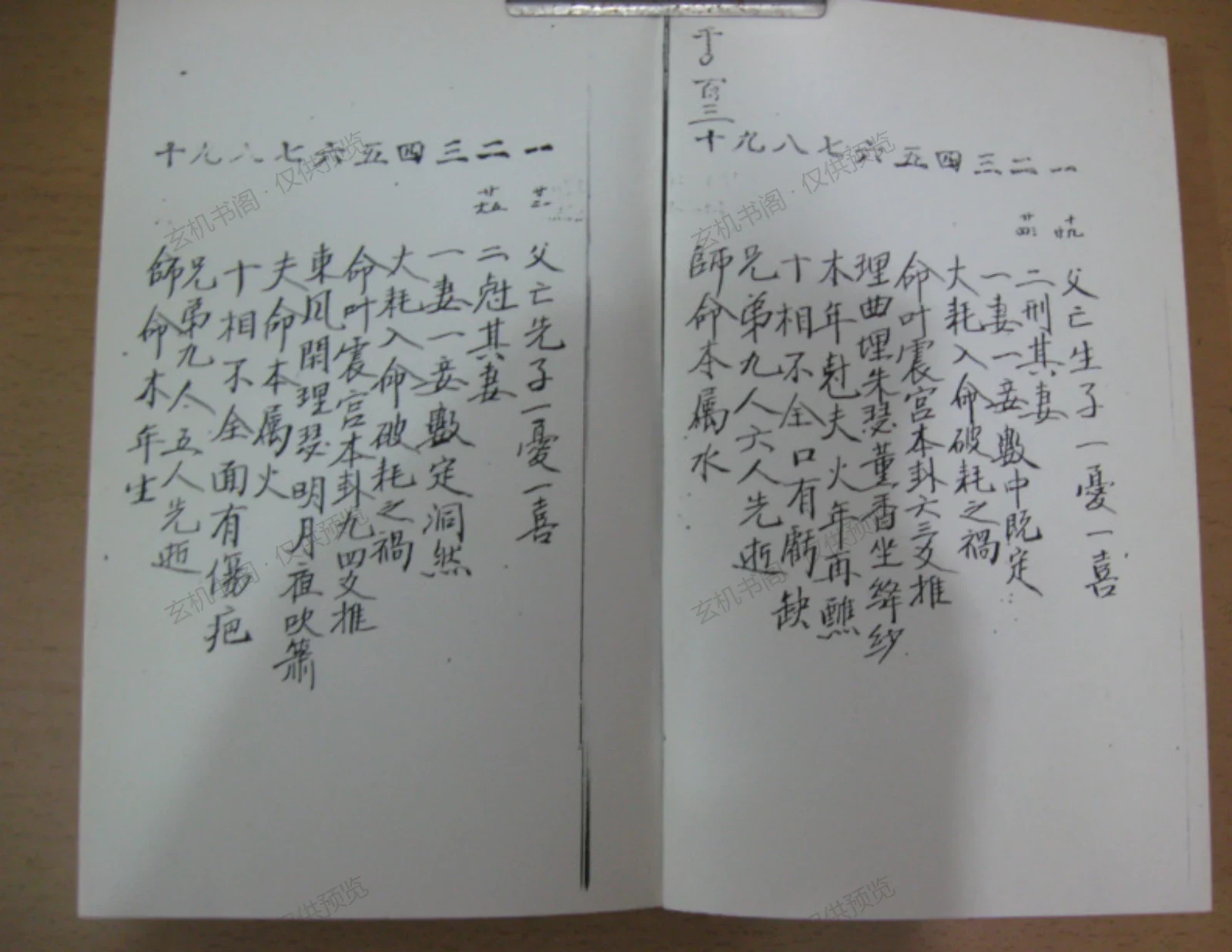
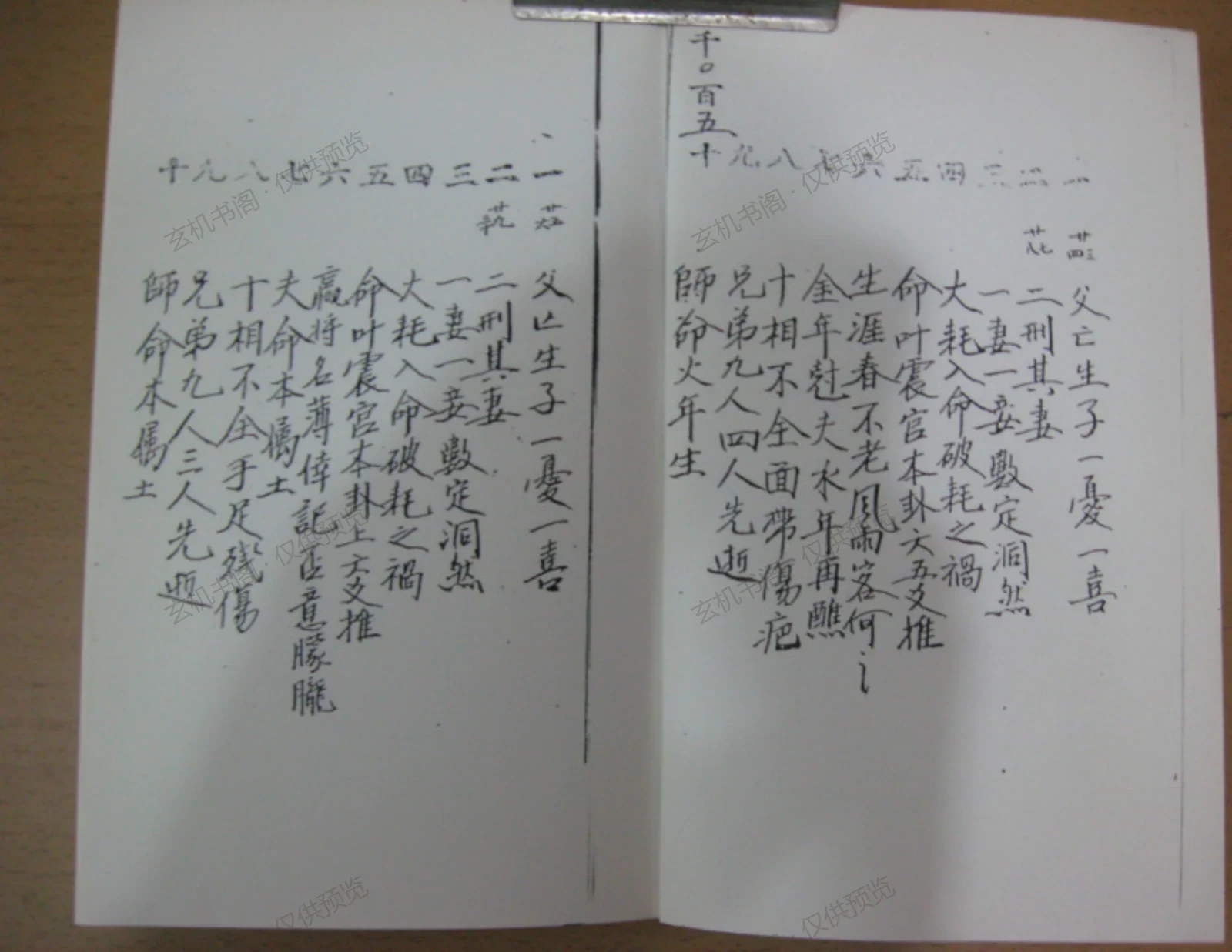
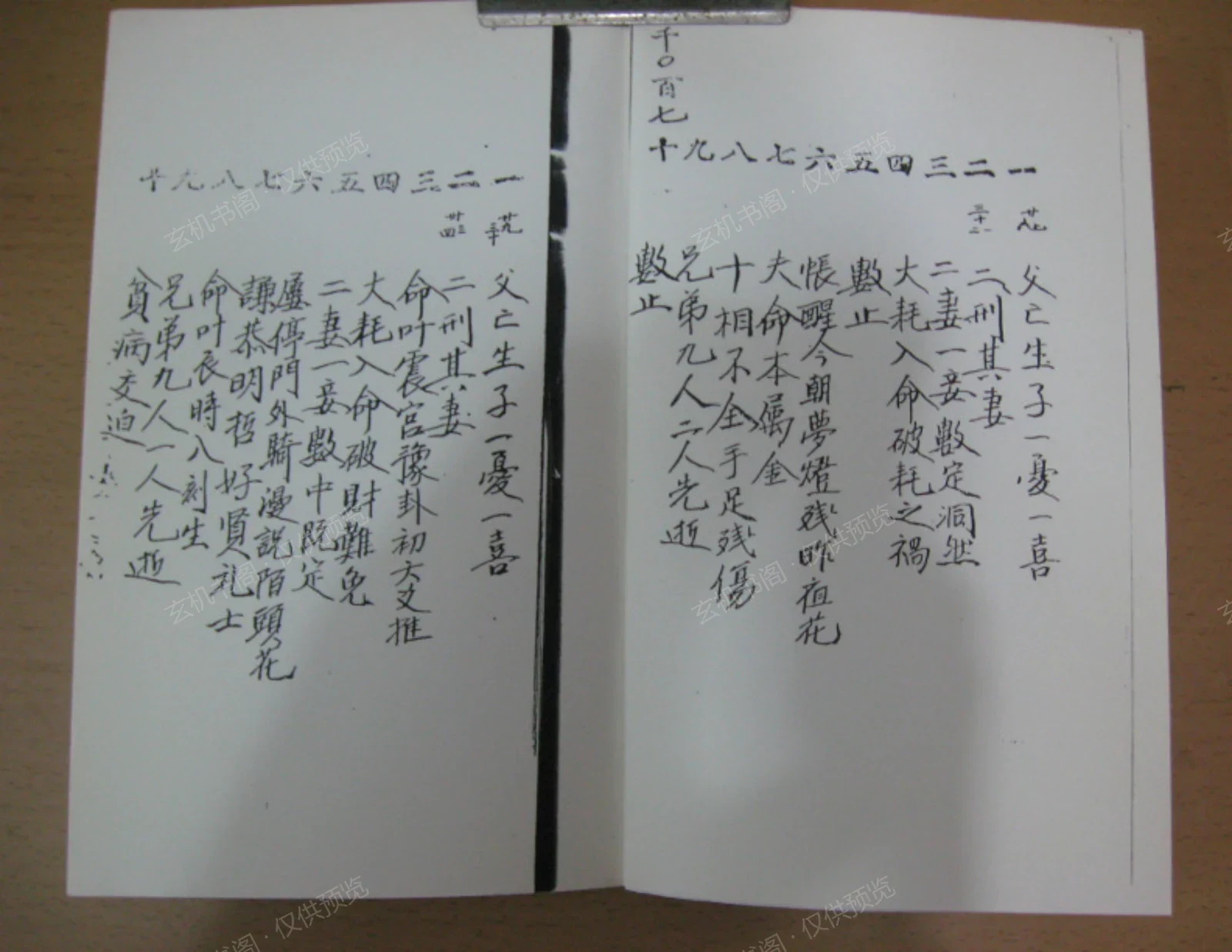
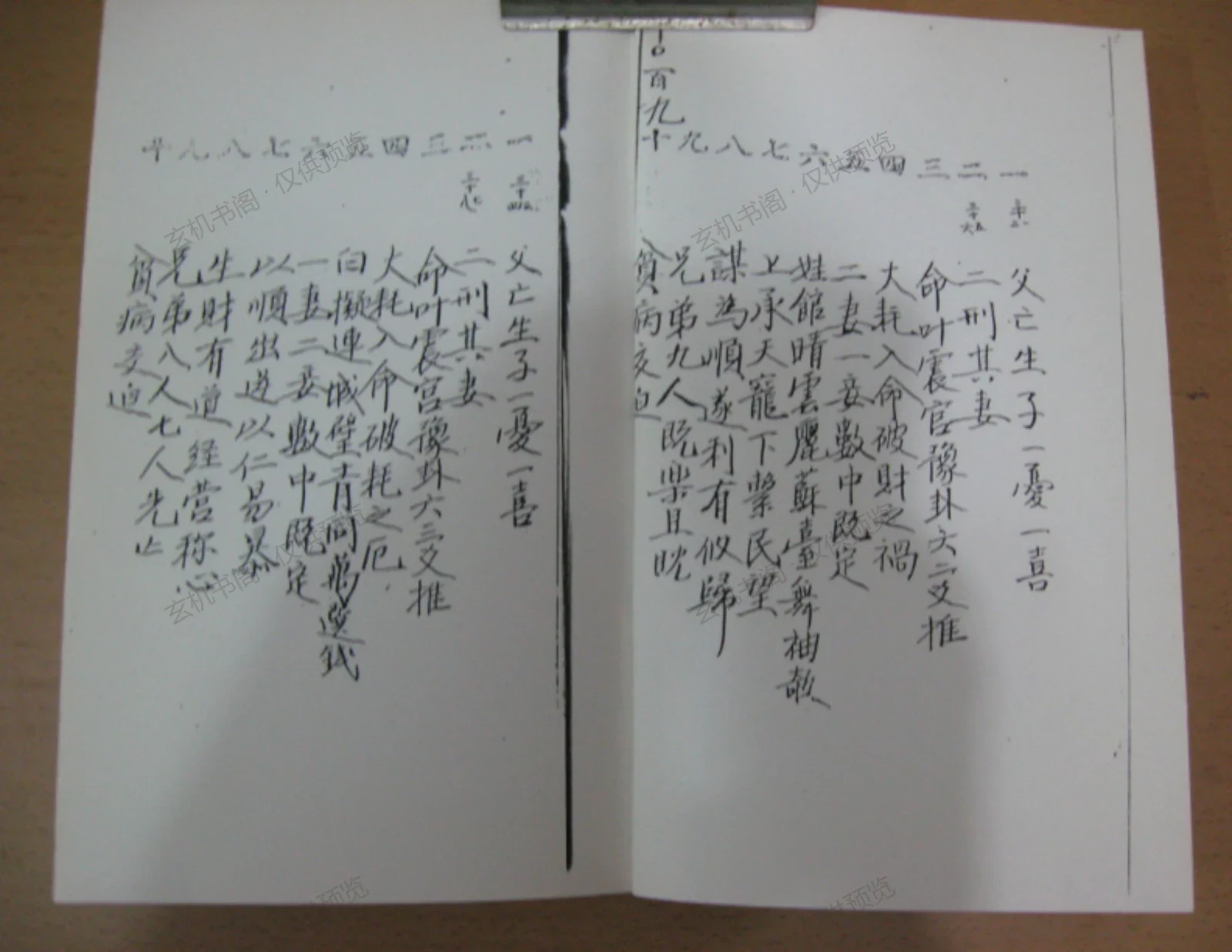
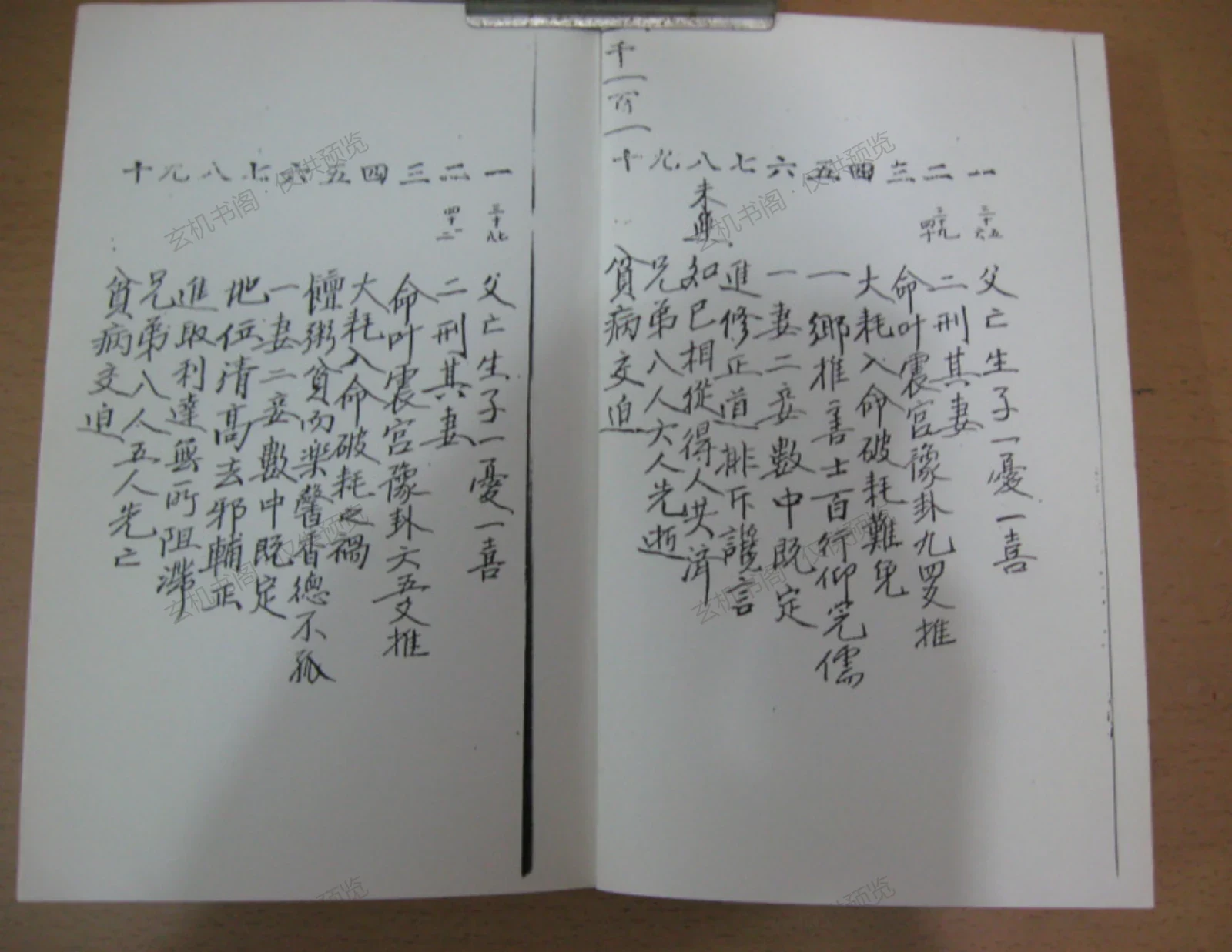
The manuscript fragment titled 'Chen Ji' appears to be a handwritten copy of esoteric divination or fate-calculation texts. The layout follows the traditional vertical right-to-left format, with consecutive Chinese numerals at the top of each page (e.g., 100, 101, 150), serving as item numbers or page markers. The main text consists of rhythmic verses, such as 'Father dies, child born, one sorrow one joy' or 'Great Consume enters the life, the disaster of depletion,' covering topics like family relations, fate, wealth, and illness. Terms like 'life in Zhen Palace' and 'Kun Hexagram' suggest a system involving the Eight Trigrams or Nine Stars. Such manuscripts were often used by folk diviners for practical consultation or recording secret oral traditions. This fragment offers insights into folk divination culture and the transmission of manuscript texts, though its exact school of thought requires further context due to the cursive handwriting and incomplete pages.
Contents
Page 100: Starting items with seven-character prognostic verses
Page 101: Continuation of fate-related verses
Page 150: Item numbering jumps; content involves hexagrams
Page 170: Continued judgments on family and fortune
Page 180: Verses concerning wealth and illness
Page 200: Final part of this image set, covering career or official luck
Key Points
Handwritten format: vertical right-to-left, cursive script, with item numbers.
Content nature: rhythmic prognostic verses judging fate, family, and fortune.
Technical terms: includes specific divination terms like 'Zhen Palace', 'Kun Hexagram', and 'Great Consume'.
Documentary value: reflects the transmission and written form of folk divination oral traditions.