Reading guide
Content guideOverview
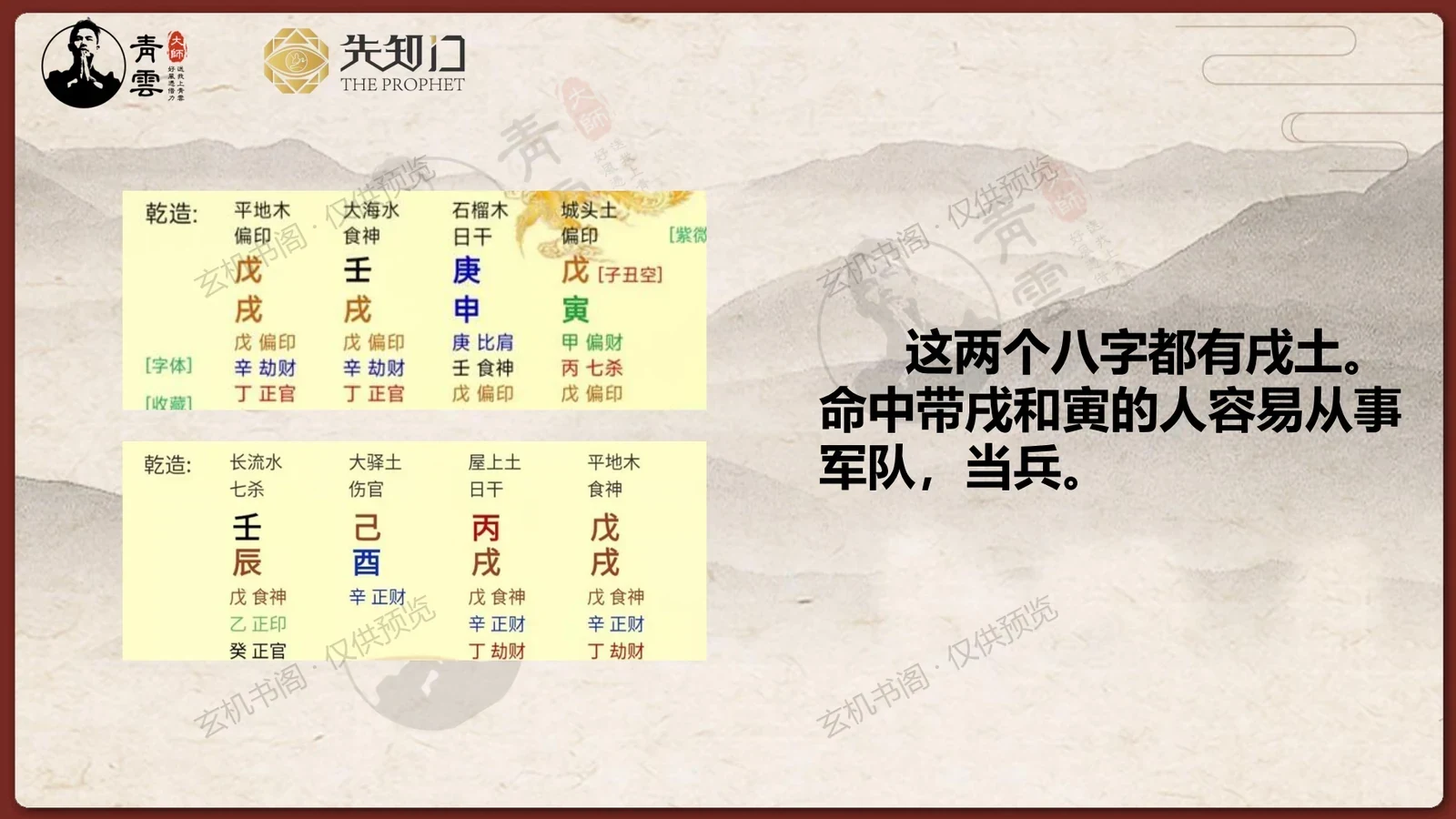
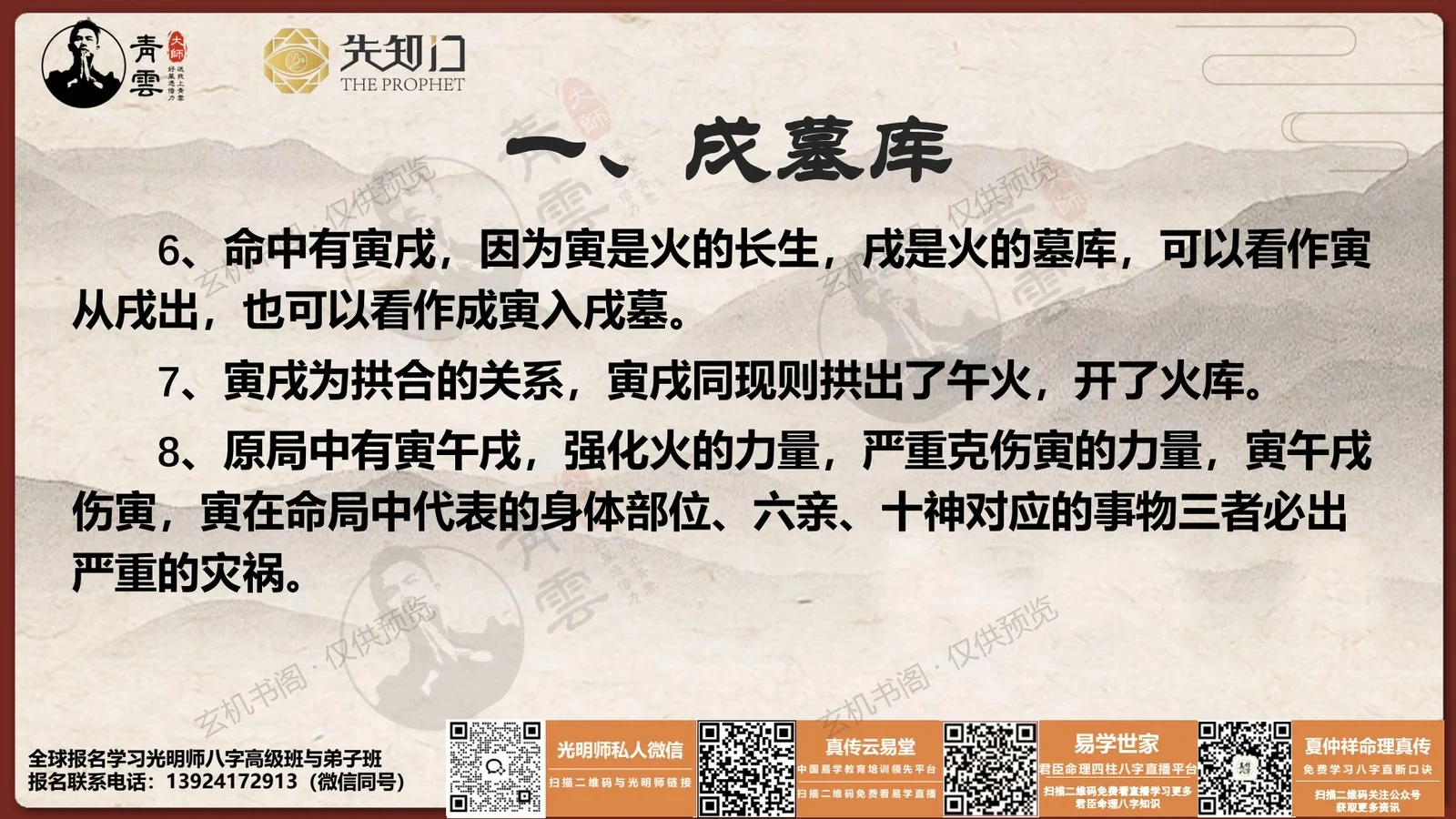
This opening section of the book concentrates on the Xu (戌) tomb storehouse within the broader framework of the four earthly branch storehouses. It presents Xu as a versatile symbol—bricks, temples, kilns, real estate, chemical industry, and military or educational settings—then explains its dry-earth nature, its tendency to weaken metal, and how the Wu-Xu half-combination damages the hidden Xin metal. Two male charts and one female chart illustrate occupational and family outcomes, including military service and early loss of a mother. The final page covers the Yin-Xu relationship and the Yin-Wu-Xu fire combination, noting how a strengthened fire element can harm Yin wood and affect health, relatives, and the ten gods.
Contents
Cover: overview and 131 storehouse rules
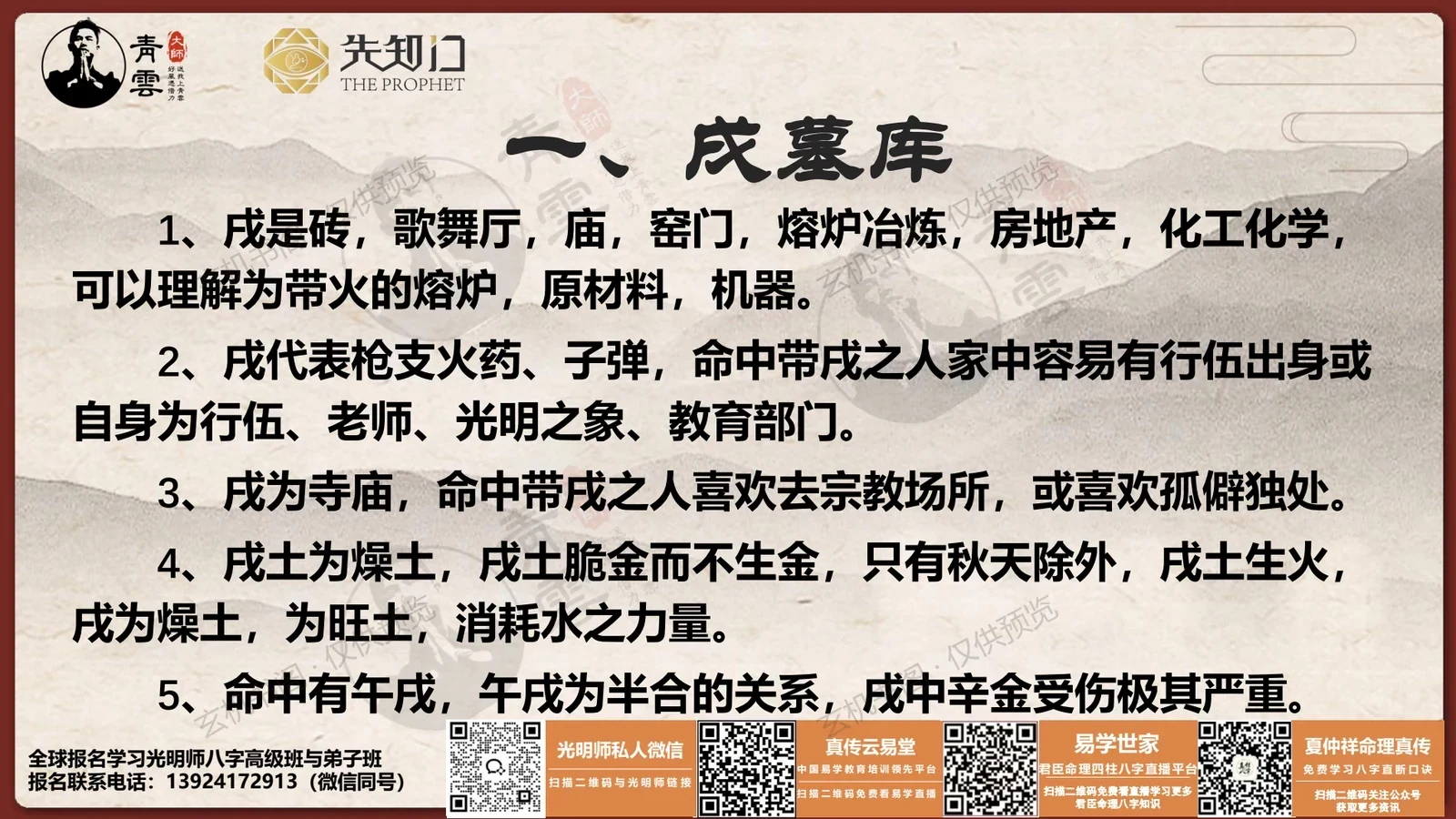
Xu imagery: bricks, temples, kilns, real estate
Xu nature: dry earth, weakening metal, Wu-Xu harm
Chart one: Xu with Yin, military inclination
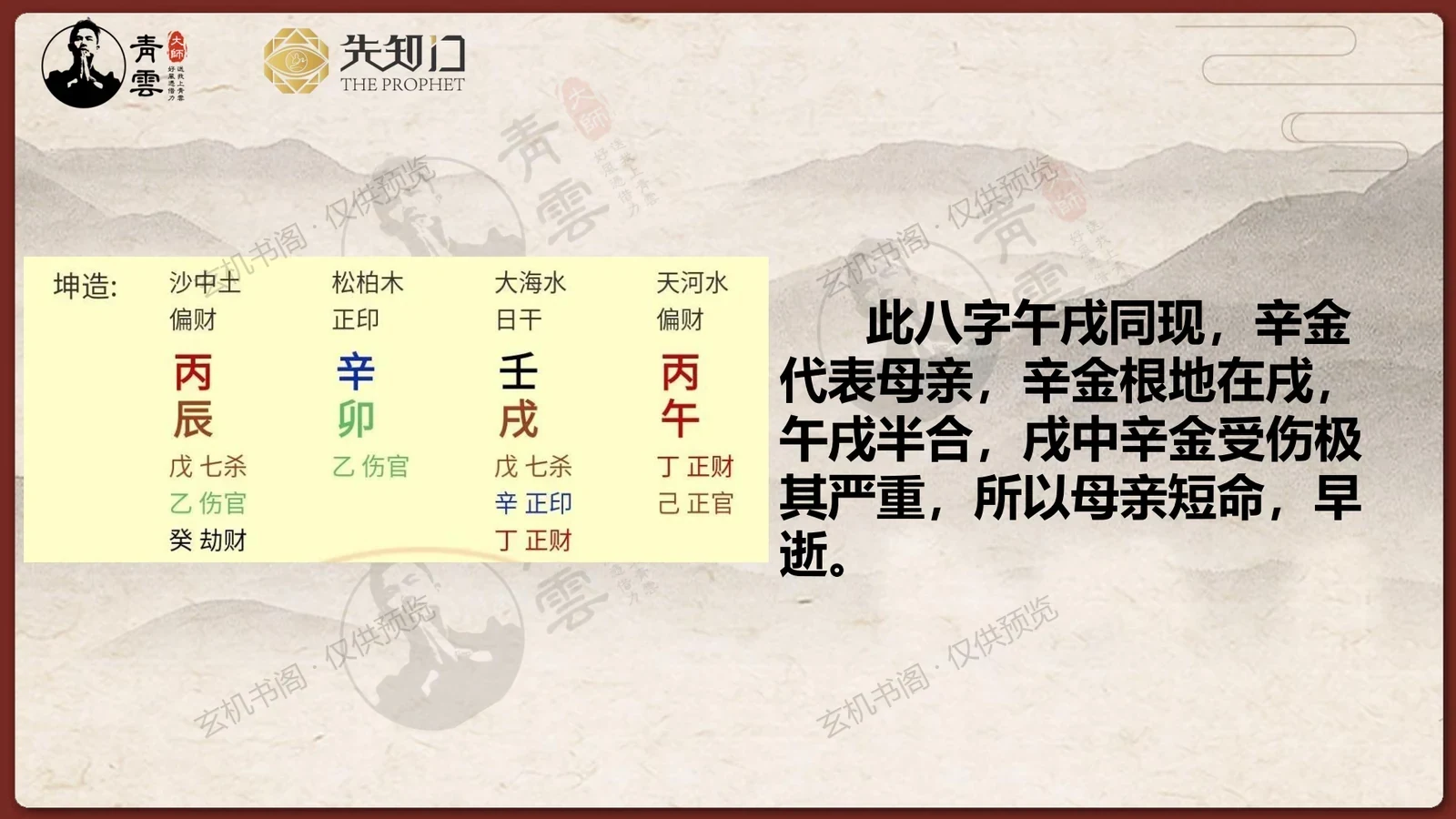
Chart two: Wu-Xu, Xin metal and mother's fate
Yin-Xu arching and Yin-Wu-Xu fire combination
Key Points
Xu has broad imagery across architecture, smelting, religion, and military
As dry earth, Xu weakens rather than generates metal, except in autumn
Wu-Xu half-combination severely damages hidden Xin metal
Yin-Xu can arch toward Wu fire; Yin-Wu-Xu creates strong fire that harms wood
Interpretations tie branch interactions to ten gods and relatives