Reading guide
Content guideOverview
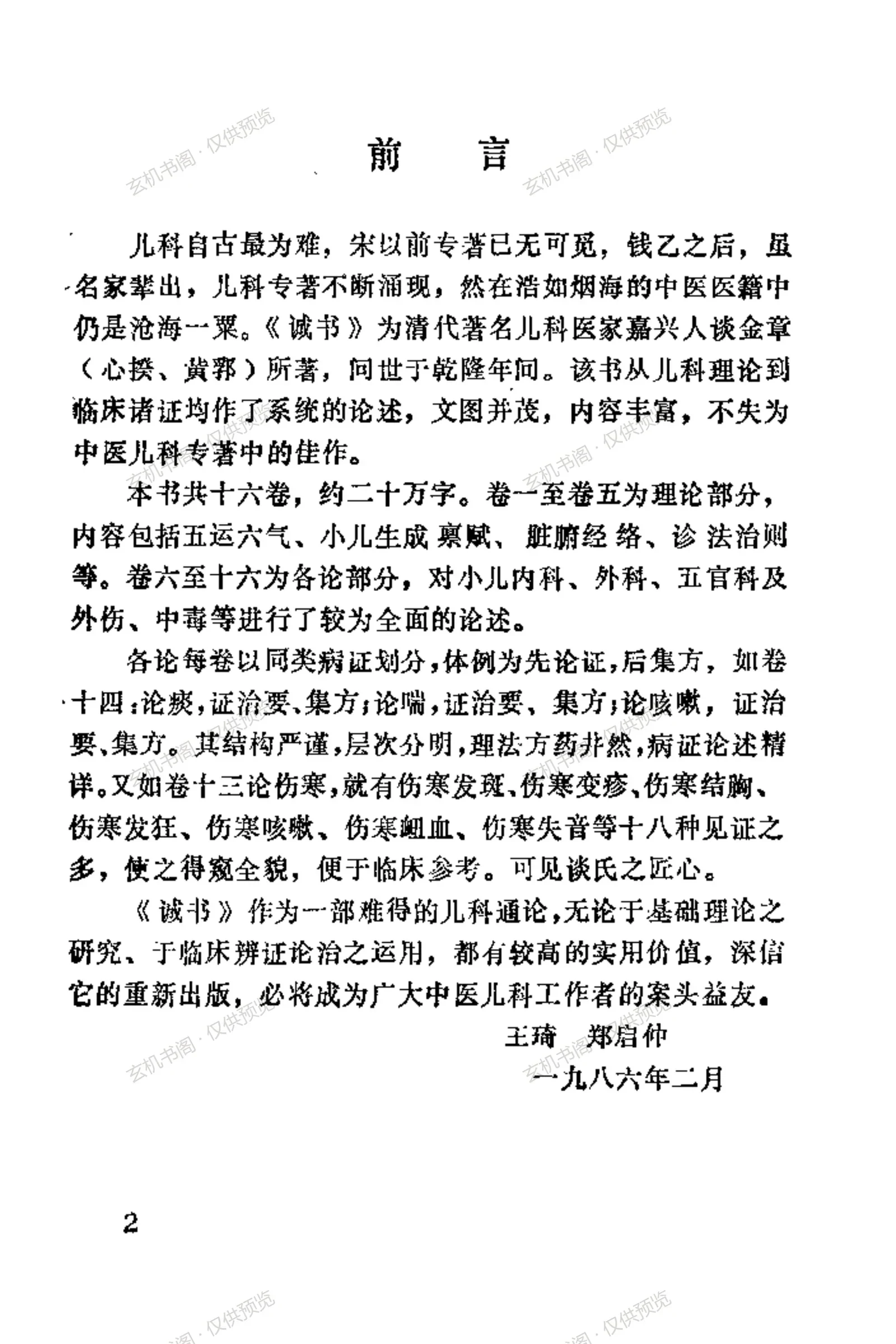
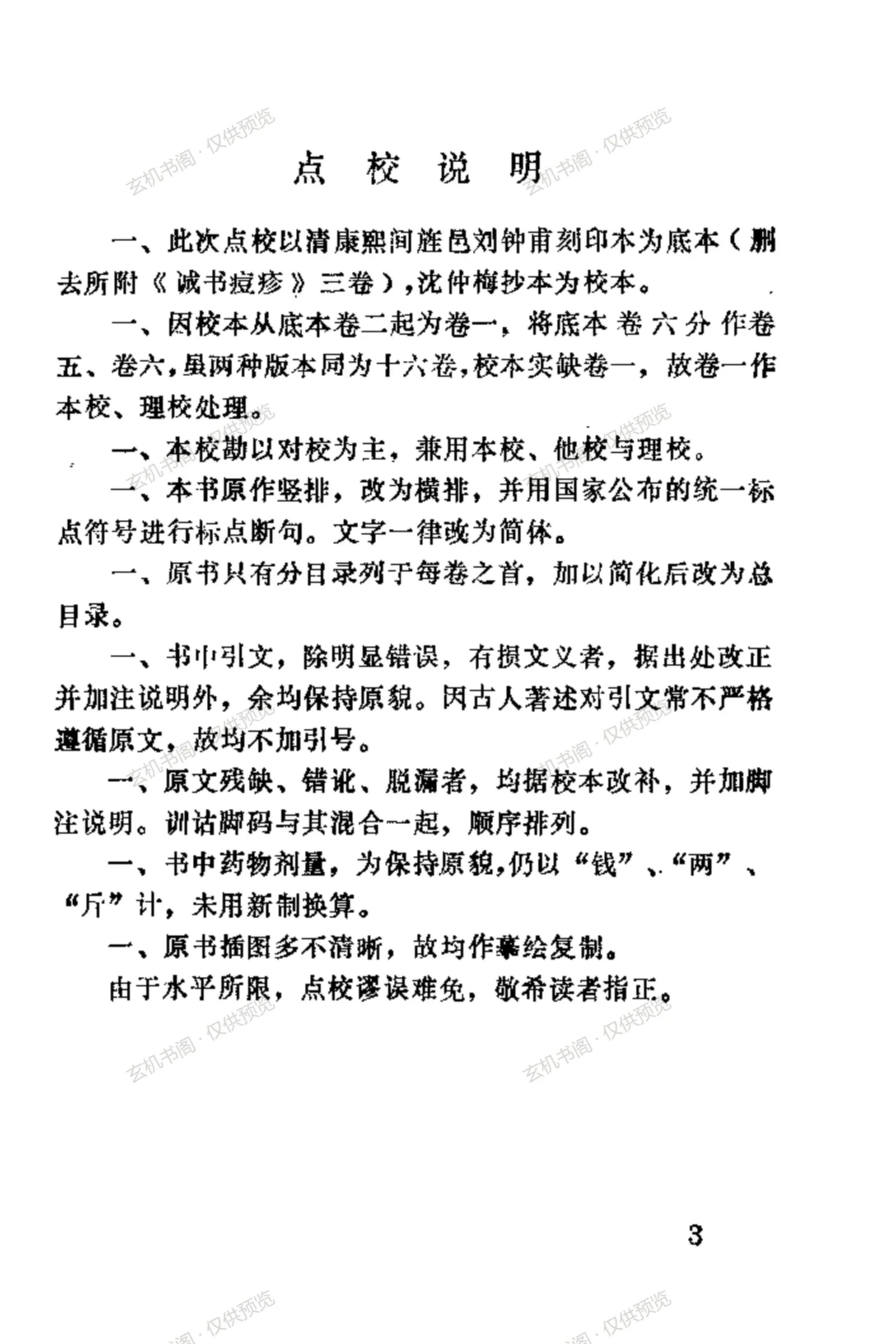
Cheng Shu is a comprehensive pediatric treatise by the Qing physician Tan Jinzhang, comprising sixteen juan and roughly 200,000 characters. The first five juan present theory: five movements and six qi, the formation and innate constitution of children, the viscera and channels, and diagnostic and therapeutic principles. The remaining eleven juan form a clinical section, treating pediatric internal medicine, surgery, the five sense organs, trauma and poisoning. Each topic is organized as argument first and formulas after; juan fourteen, for instance, discusses phlegm, wheezing and cough, while juan thirteen treats cold damage with eighteen presentations such as macules, measles-like eruptions, chest bind, mania, nosebleed and loss of voice. This 1986 edition from the Chinese Ancient Medical Texts Press is a punctuated, collated typeset edition based on the Kangxi-era block-printed edition of Liu Zhongfu of Jingyi, checked against Shen Zhongmei's manuscript copy.
Contents
Cover and title page: Cheng Shu, Rare Medical Texts Series
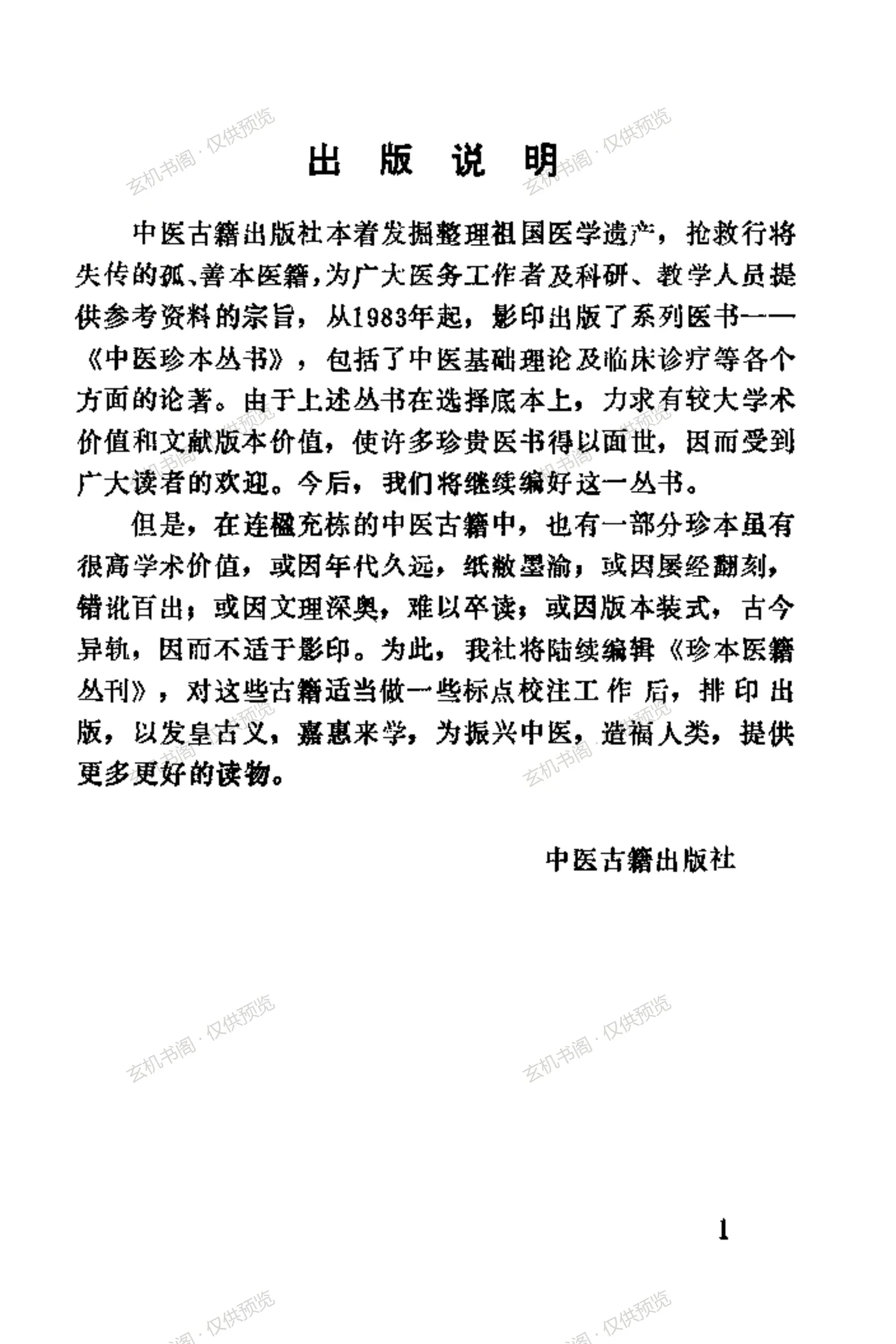
Publisher's note on reprinting rare medical works
Preface: Tan Jinzhang and the sixteen-juan structure
Editorial notes: base text, collation text and conventions
Juan 1-5: five movements and six qi, constitution, viscera, diagnosis
Juan 6-16: internal, surgical, sensory, trauma and poisoning disorders
Key Points
Sixteen juan and about 200,000 characters form a complete pediatric system
The first five juan stress theory, especially five-six and children's constitution
The last eleven juan discuss diseases with argument before formulas for clinical use
Juan 13 lists eighteen cold-damage presentations in children
The 1986 edition omits the appended three-juan Cheng Shu Douzhen