Reading guide
Content guideOverview
Written by Dr. Scott Baker with a foreword by Erle Montaigue, this book expands Wing Chun beyond physical techniques into the realm of internal energy (Qigong/Neigong). Across nine chapters, it introduces fundamental concepts of Chi Kung, methods for sensing and training chi (including relaxation, hard and soft Chi Kung), and views Wing Chun as an energy system. It details root training such as standing meditation, breathing techniques, and marrow washing; moving with chi (stepping, turning, kicking); using chi as a weapon (palm strikes, finger/toe energy release, short punch); the purpose and twelve progressive stages of Chi Sau; advanced energy training with the wooden dummy, long pole, and butterfly swords; and finally the relationship between Wing Chun and Dim Mak, including meridians, angle and direction, the 24-hour energy cycle, and point sequences within the dummy form. The author cautions readers not to attempt Dim Mak techniques without a qualified instructor.
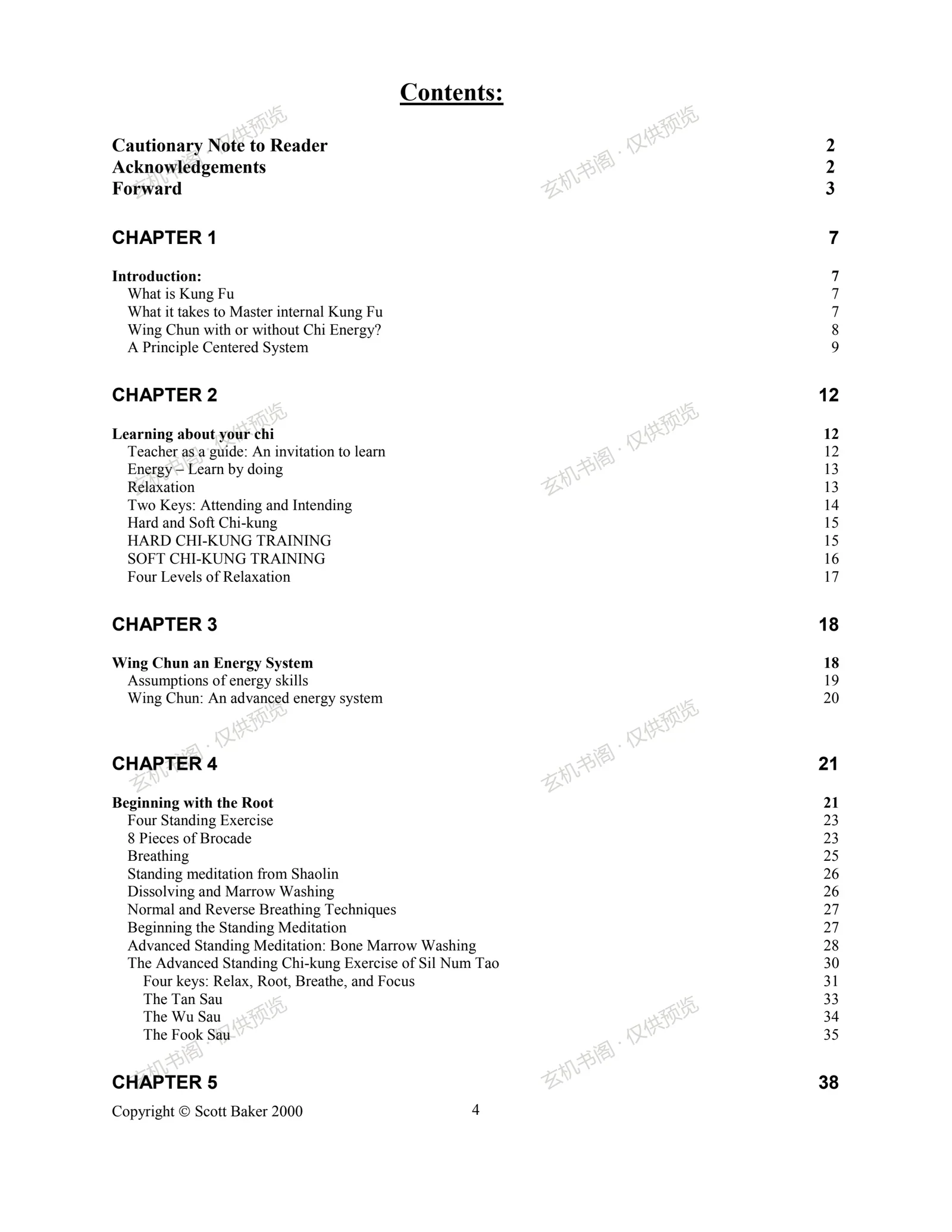
Contents
Chapter 1: Fundamentals of Kung Fu and Internal Power
Chapter 2: Learning About Your Chi (Relaxation, Hard/Soft Chi Kung)
Chapter 3: Wing Chun as an Energy System
Chapter 4: Beginning with the Root (Stance, Breathing, Marrow Washing)
Chapter 5: Learning to Move with Chi (Stepping, Kicking)
Chapter 6: Using Chi as a Weapon (Palm, Fingers, Short Punch)
Chapter 7: Chi Sau Purpose and the 12 Progressive Stages
Chapter 8: Advanced Energy Training with Dummy, Pole, and Swords
Chapter 9: Wing Chun and Dim Mak
Key Points
Integrates Wing Chun with Qigong internal training, emphasizing energy development.
Covers fundamental internal practices like standing meditation, breathing (including reverse breathing), and marrow washing.
Explains Wing Chun stepping, kicking, palm strikes, and power release through chi energy.
Details the twelve progressive stages of Chi Sau interaction (positioning, balancing, sticking, etc.).
Explores Dim Mak applications within the Wing Chun dummy form and meridian theory.