Reading guide
Content guideOverview
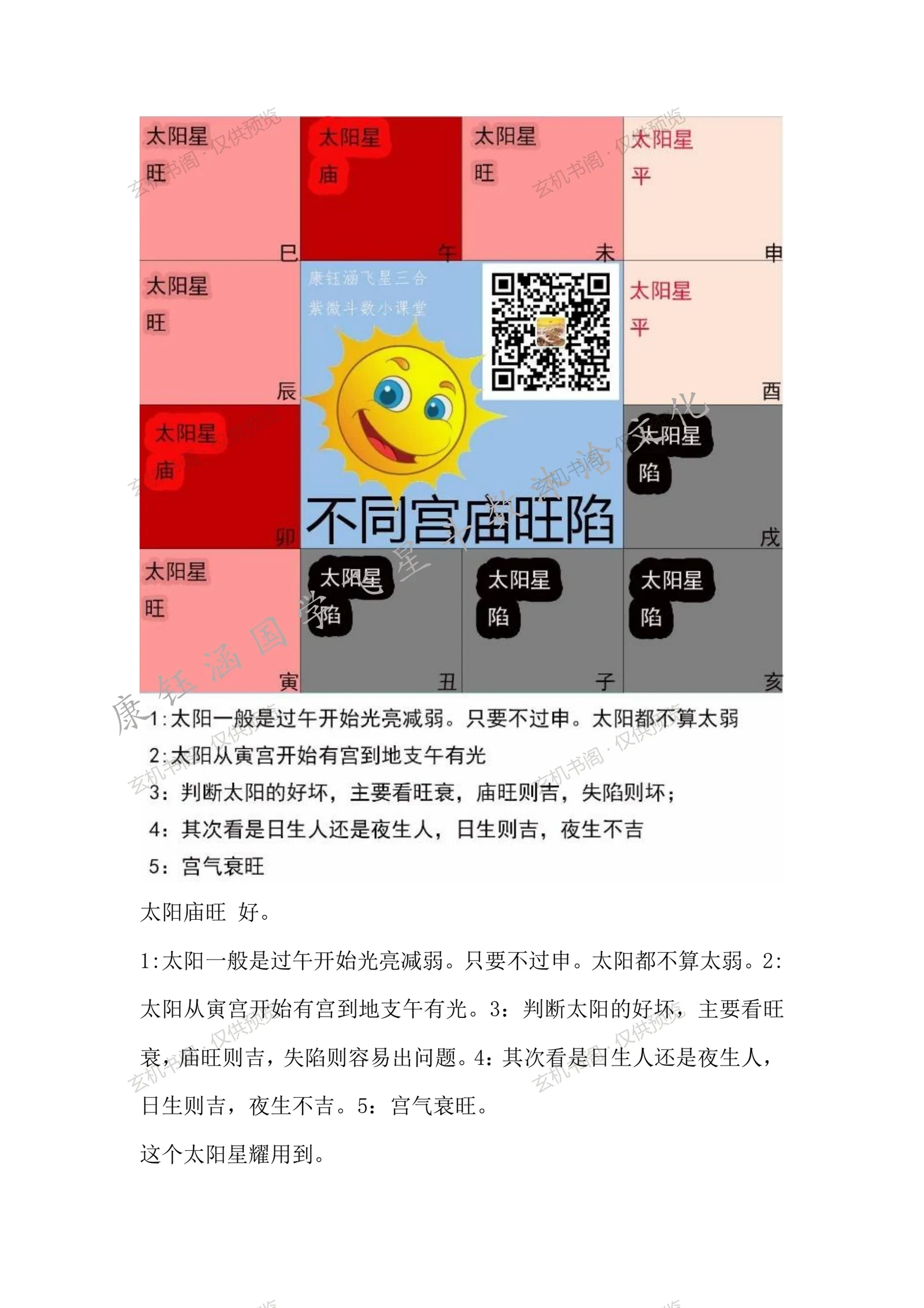
This is a beginner-level Zi Wei Dou Shu lecture handout focused on the Sun star. Starting from an astronomical image, it explains that the Sun sits at the center of the solar system and, in astrology, symbolizes authority, official rank, and life achievement. It then describes the Sun's qualities of radiating warmth and selfless benevolence, noting that people with the Sun in the Life Palace often feel warm and caring, while a fallen Sun is not necessarily all bad. The handout includes an example chart and a diagram showing the Sun's brightness grades across the twelve palaces, with strong positions in Si, Wu, and Wei, and weak ones from Shen onward. It also discusses possible links between the Sun and complexion or appearance, lists the six brightness states—Miao, Wang, De Di, Ping, Xian, and Xian—and summarizes five points for judging the Sun: brightness level, day or night birth, and the strength of the palace, stressing that the star, palace, and four transformations must be studied together.
Contents
Astronomical symbolism and central position of the Sun
The Sun as ruler of power, career, and achievement
Benevolence and radiating warmth
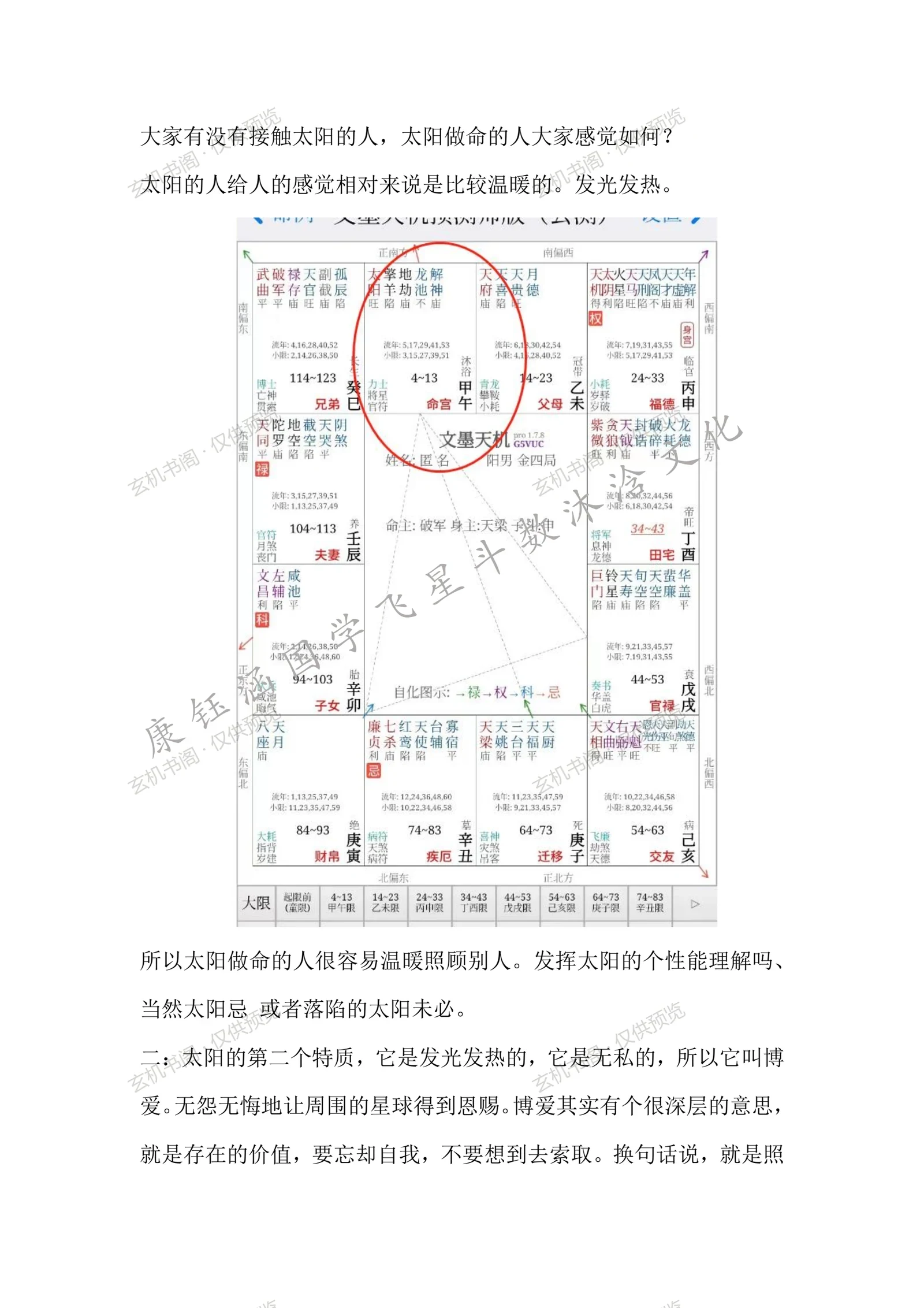
Personality and appearance of Sun in the Life Palace
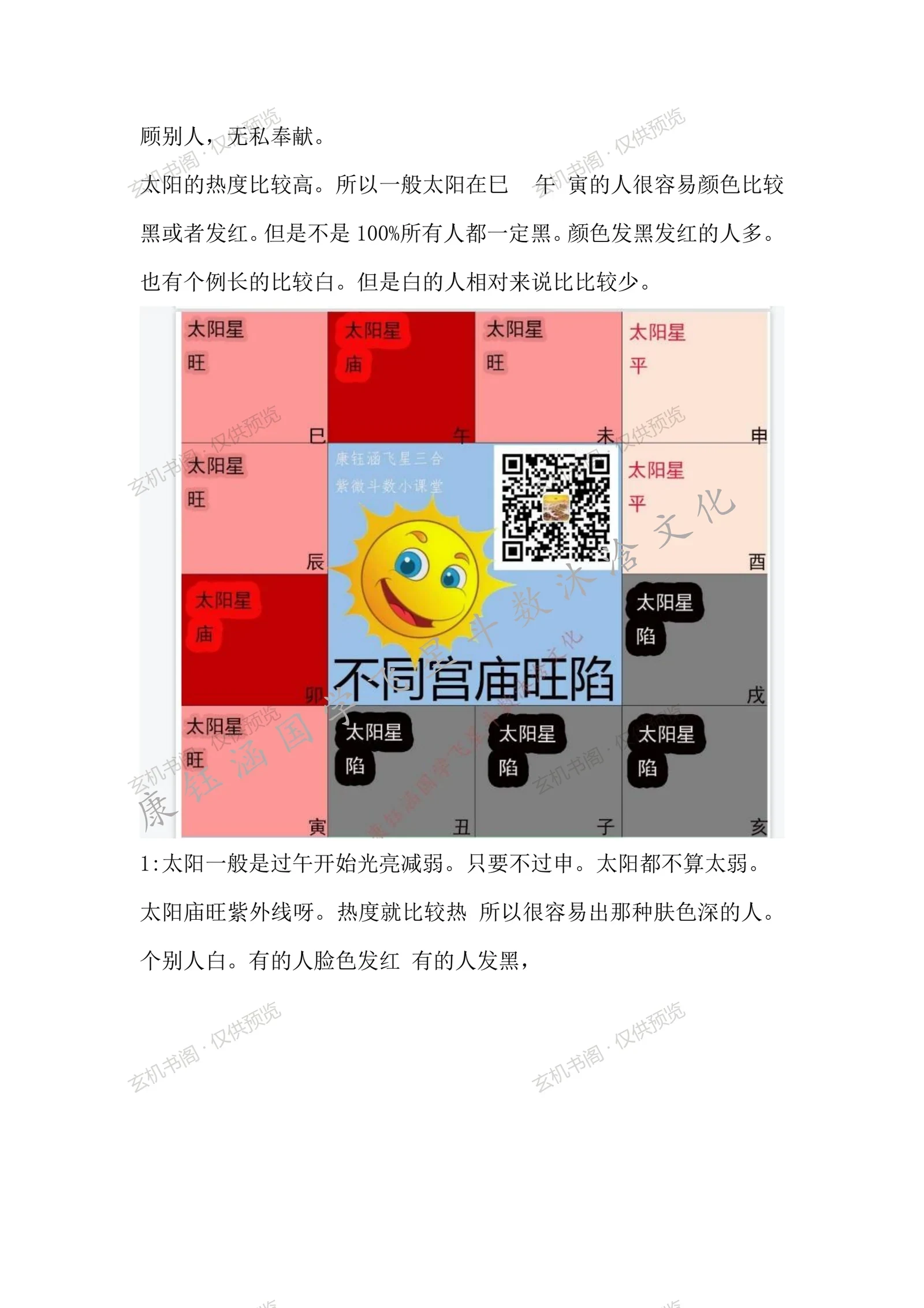
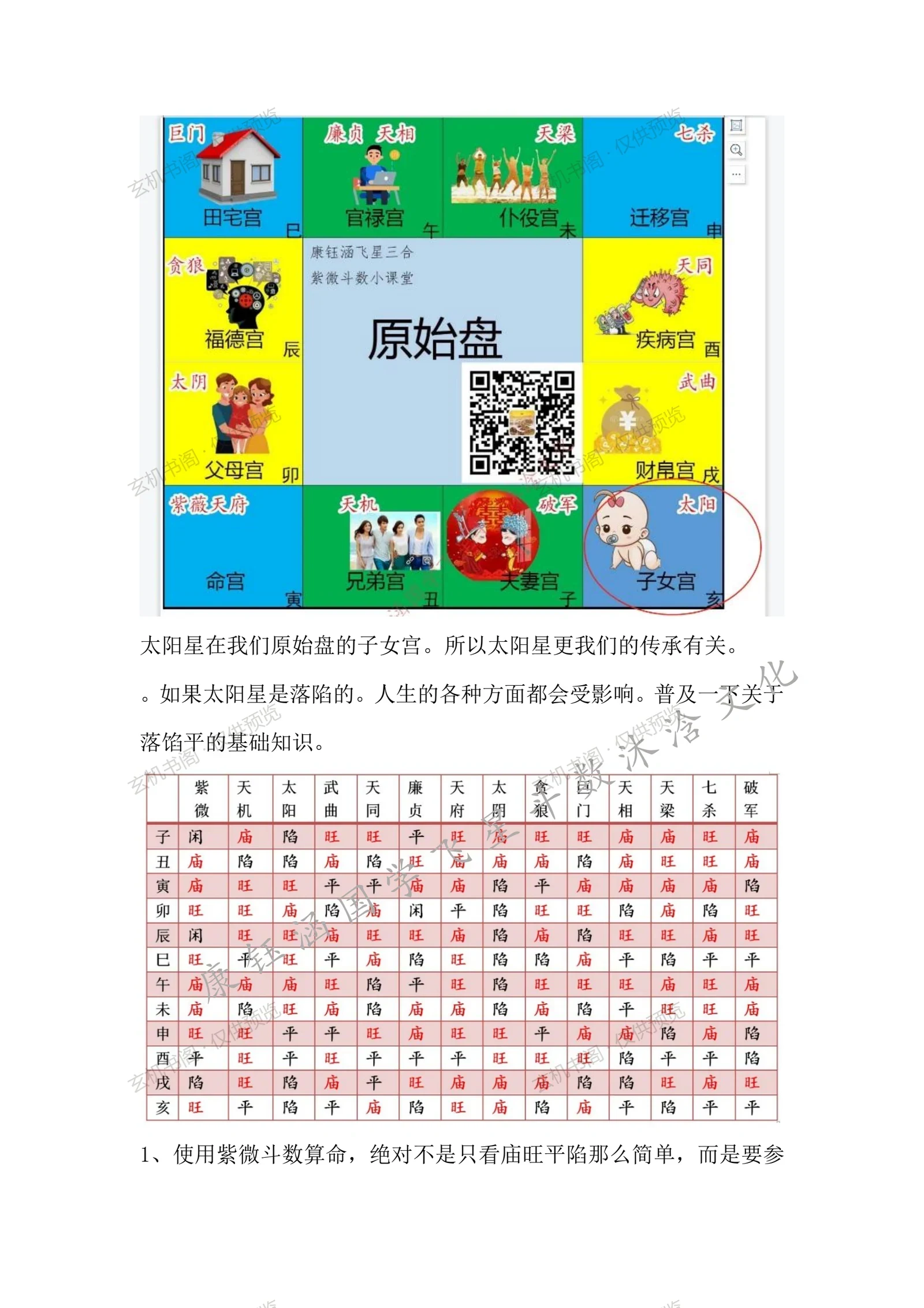
Brightness chart of the Sun across the twelve palaces
Definitions of the six brightness states
Five points for judging the Sun's fortune
Key Points
The Sun symbolizes a center of power and is closely tied to career, rank, and lifelong achievement.
People with the Sun in the Life Palace often seem warm and caring; a fallen Sun is not always negative.
The Sun is strong in Si, Wu, and Wei, weakens after noon, and turns weak from Shen onward.
The six brightness states rank from Miao, the strongest, to Xian, where strengths are hard to express.
Judging the Sun requires brightness, day or night birth, and palace strength—not brightness alone.