Reading guide
Content guideOverview
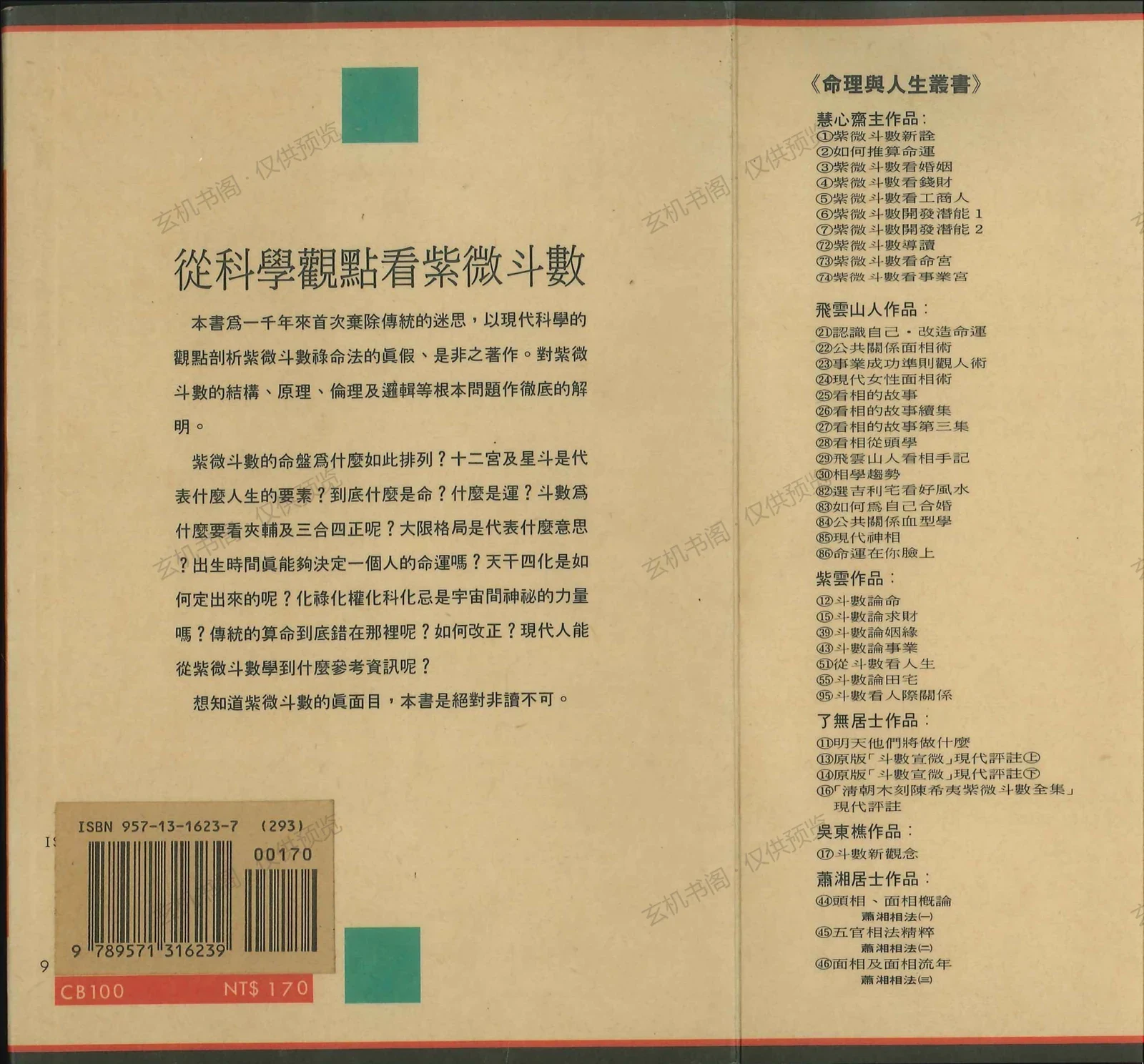
Written by Hsu Hsing-Chih, a pharmacology PhD, this book belongs to the Fate and Life series (No. 100). Drawing on a scientific background, the author attempts to move beyond the mystical aura of traditional fortune-telling and re-examine Zi Wei Dou Shu from a modern scientific viewpoint. The book explores why the chart is arranged as it is, what the twelve palaces and stars represent in human life, the nature of fate and destiny, the meaning of auxiliary stars and the three-directions-four-corners configuration, the significance of major limit cycles, whether birth time truly determines one's fate, the origin of heavenly stem four transformations, and where traditional fortune-telling may err and how it might be corrected. Balancing算命 ethics with logical analysis, it suits readers with basic knowledge of Zi Wei Dou Shu who wish to understand its theoretical framework and engage in critical thinking.
Contents
Author introduction and series list
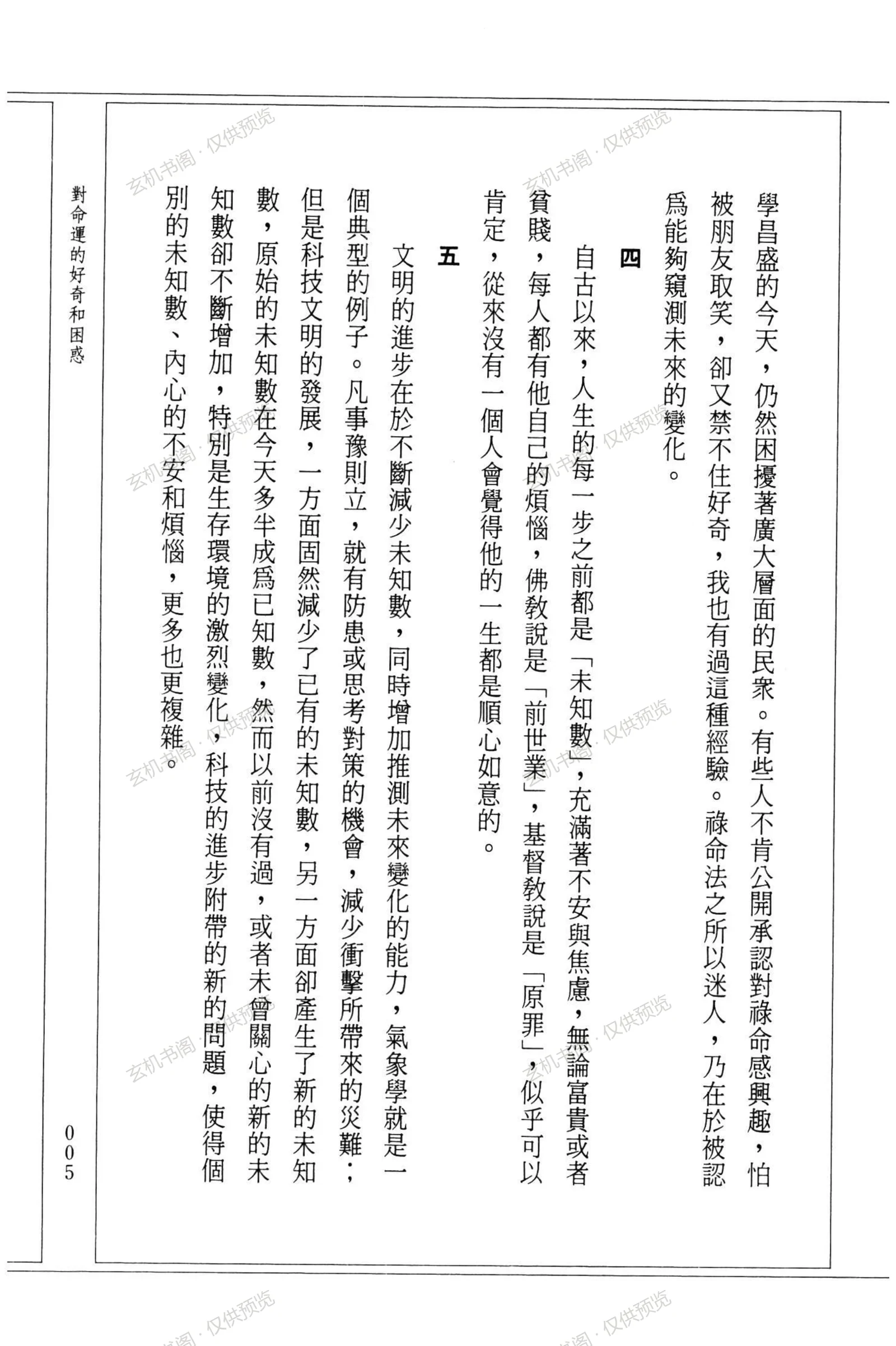
Preface: curiosity and confusion about fate
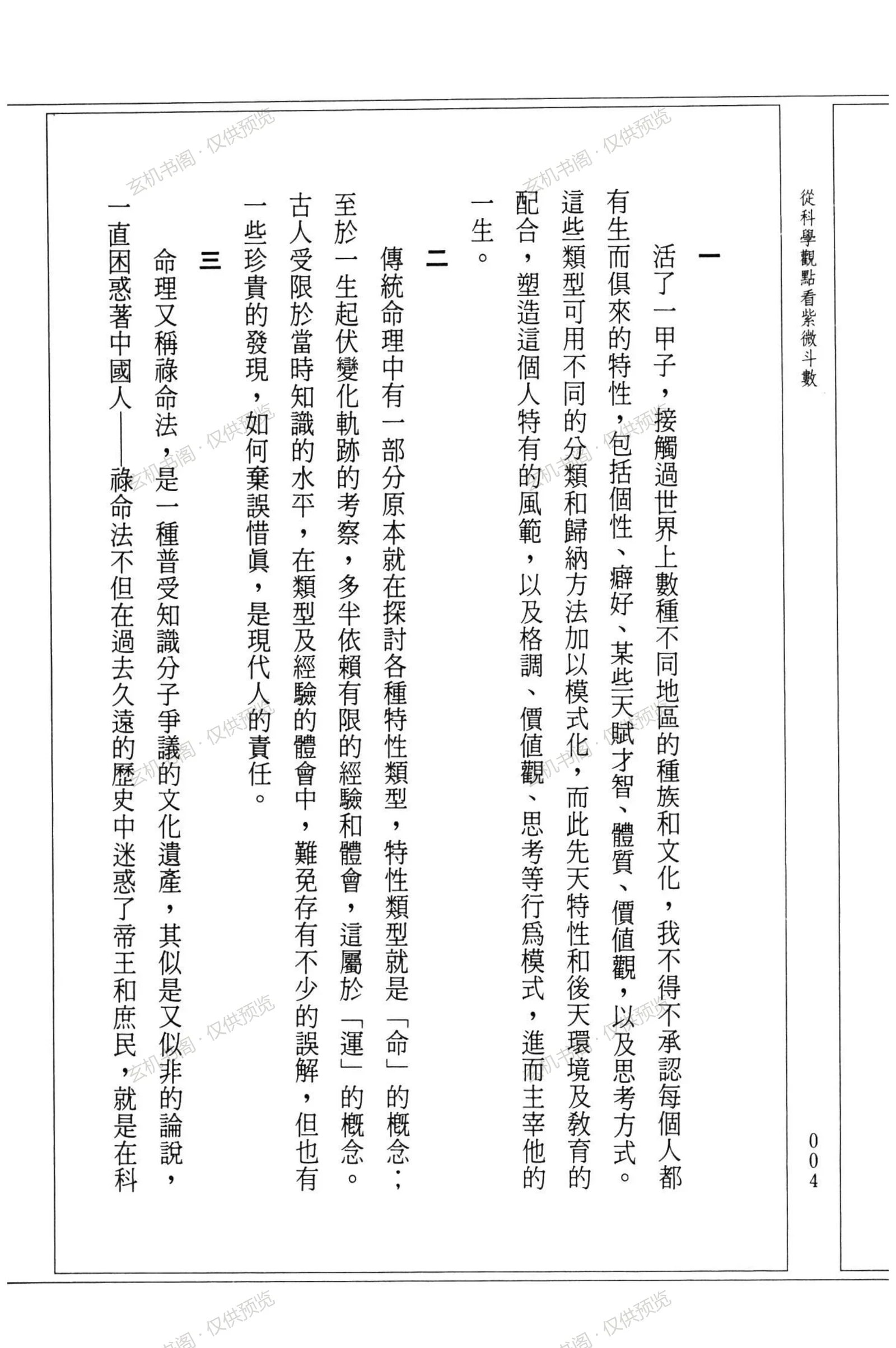
Types and empirical limits of traditional fate theory
Scientific civilization and unknown variables
Structural analysis of the Zi Wei Dou Shu chart
Symbolic meaning of the twelve palaces and stars
Four transformations and the logic of fate
Key Points
Examines the authenticity of Zi Wei Dou Shu scientifically
Analyzes chart arrangement, twelve palaces, and stars
Discusses auxiliary stars, three-directions-four-corners, and major limits
Questions birth time and heavenly stem four transformations
Reflects on errors in traditional fortune-telling and correction