Reading guide
Content guideOverview
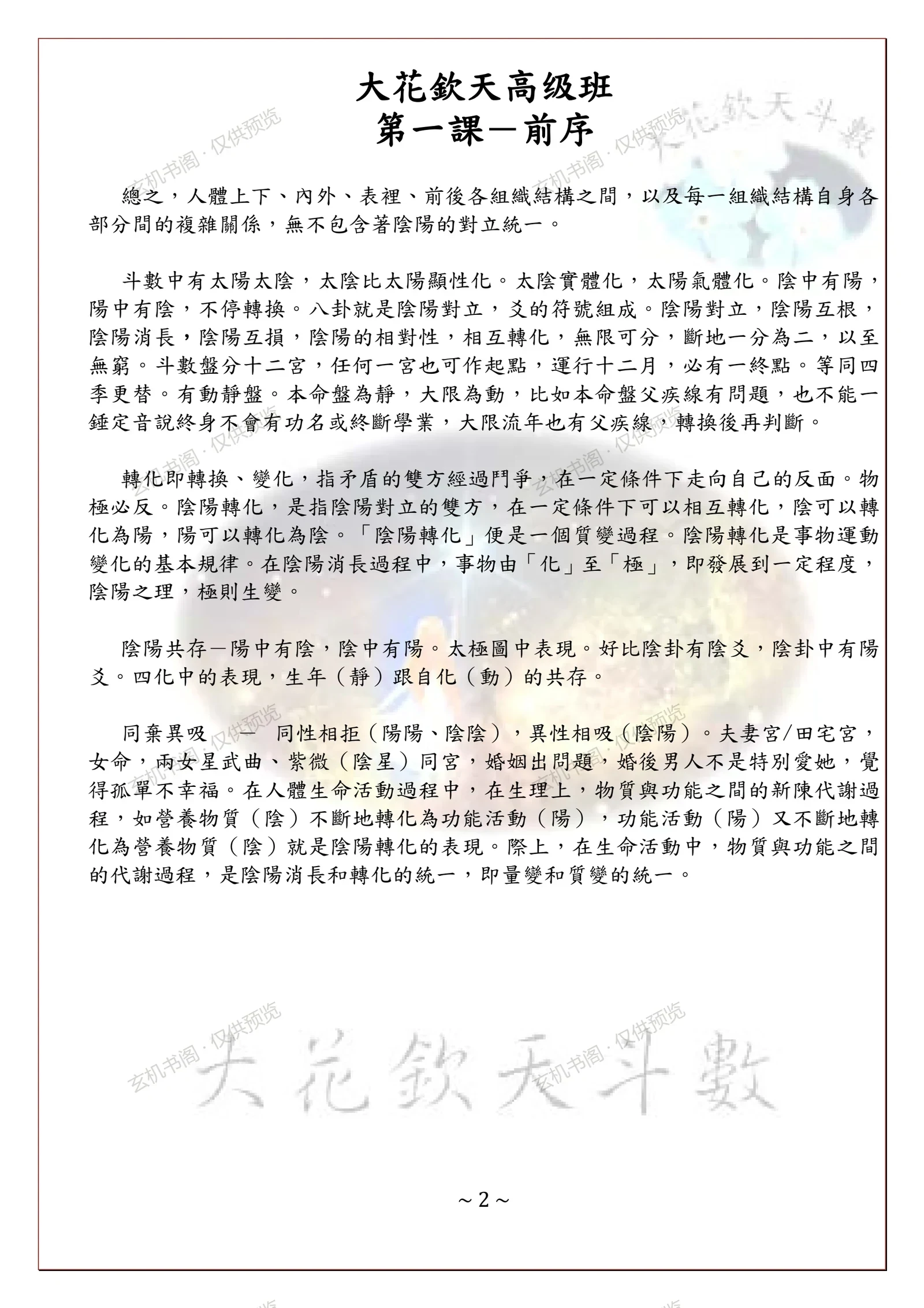
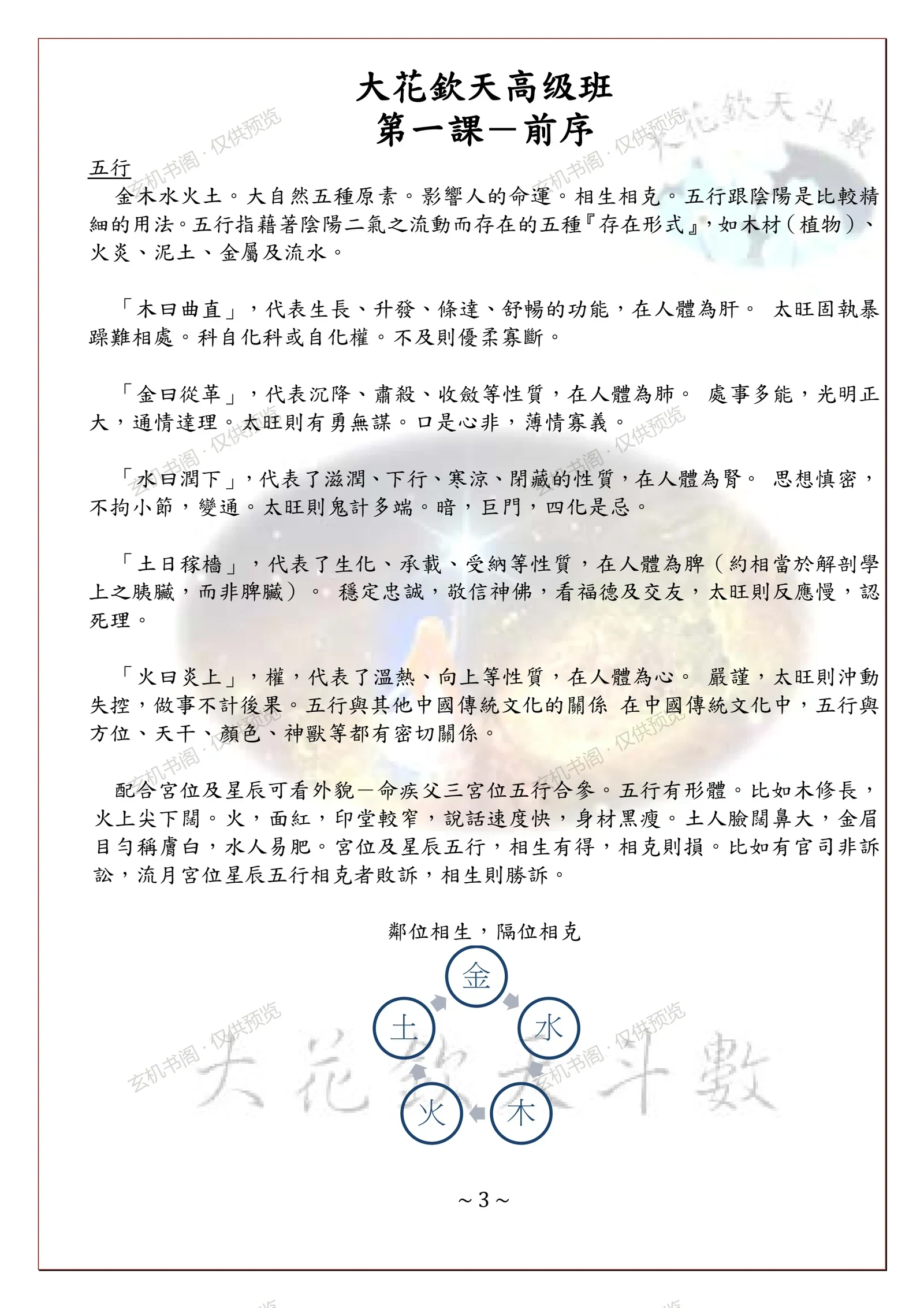
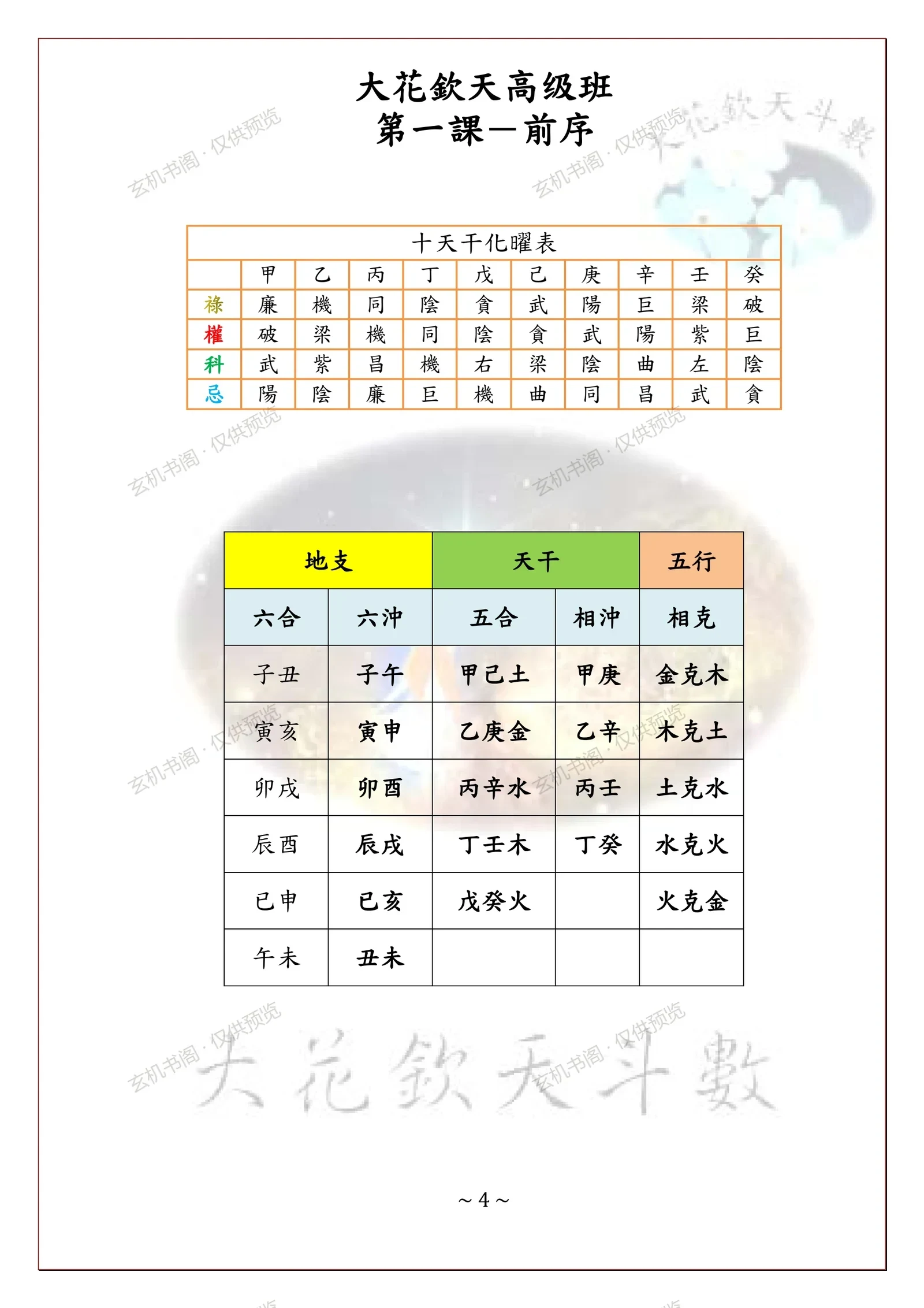
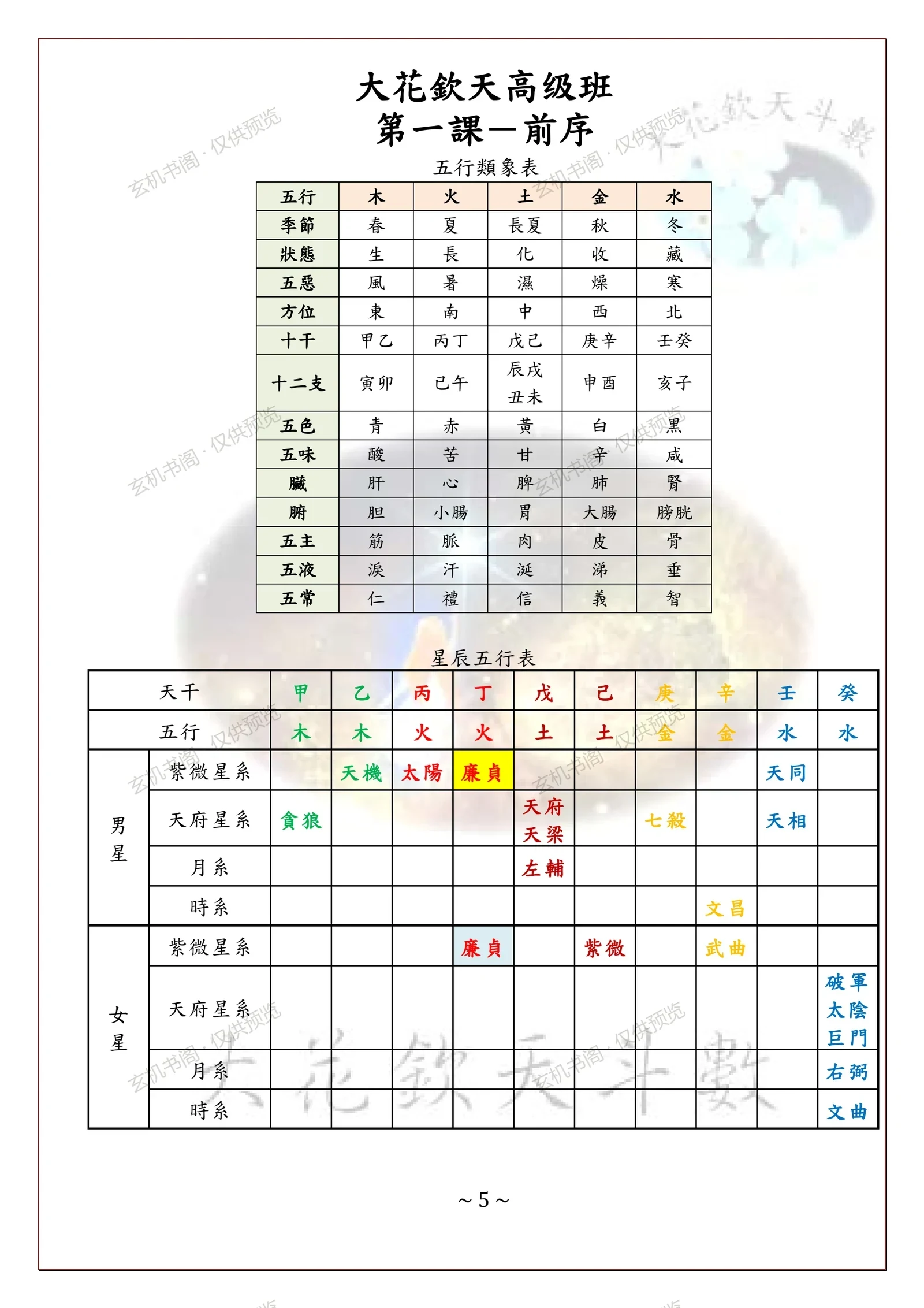
This six-page handout is Lesson One, 'Preliminary Remarks,' of the Dahua Qintian Advanced Class. It covers three main parts: yin-yang theory—opposition, mutual rootedness, waxing and waning, and transformation—with examples from the human body, organs, meridians, and the Dou Shu chart; the five phases, their natures, and their generating and overcoming relations as applied to palaces and stars for judging appearance, the ming-ji-fu palaces, and lawsuits; and several reference tables, including the ten heavenly stems transformation table, the earthly branches' six harmonies and six clashes, the stems' five harmonies, clashes, and conquests, the five-phase correspondence table, and the star five-phase table. It ends with a quick method for calculating nayin five phases by stem and branch number assignments, illustrated with the wu-xu example.
Contents
Yin-yang: categories and unity of opposites
Mutual rootedness and applications of yin-yang
Yin-yang transformation and Dou Shu examples
Five phases, their natures and palace-star combination
Ten stems transformation table; stem-branch harmony and clash tables
Five-phase correspondence and star five-phase tables
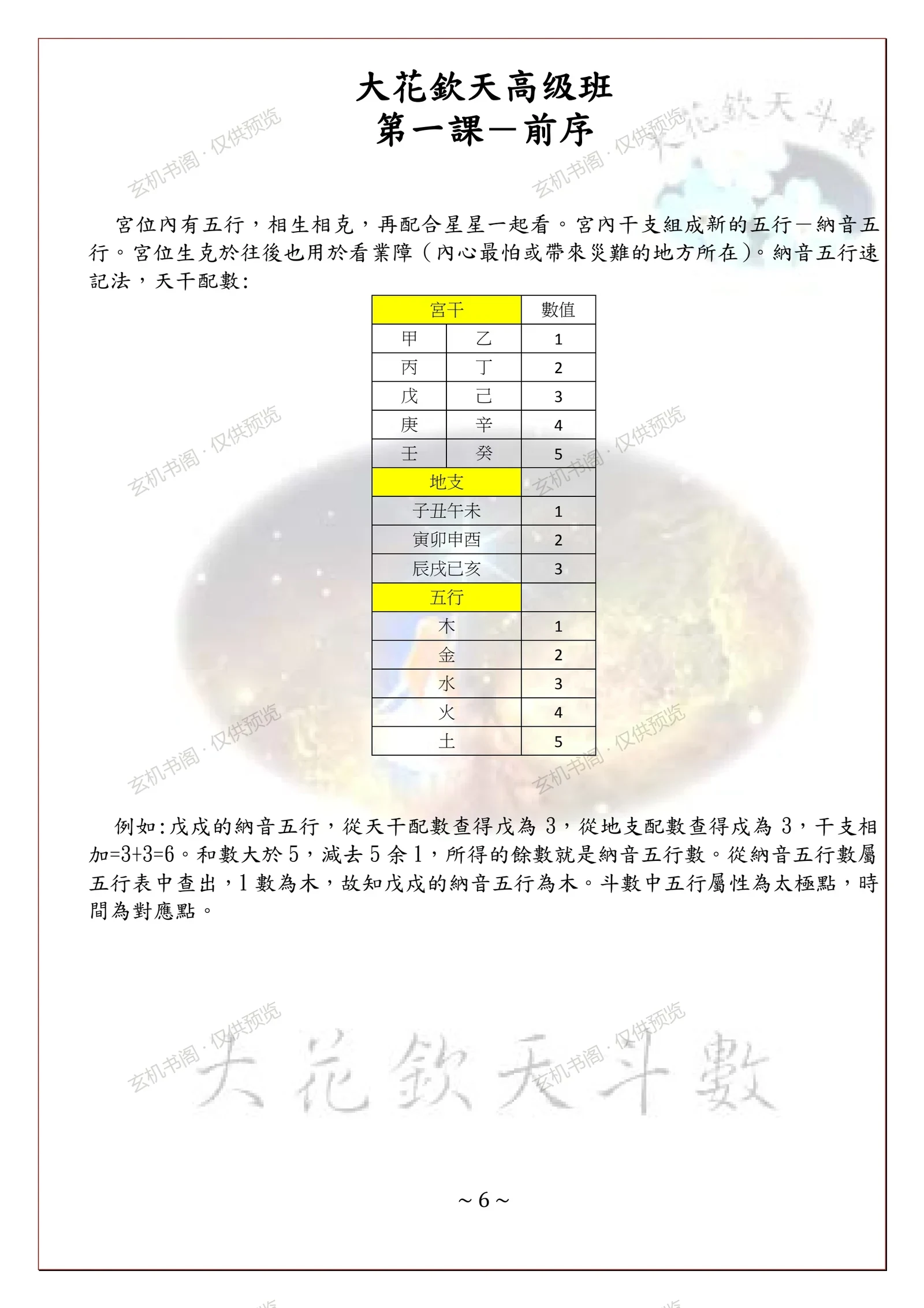
Quick nayin calculation method with example
Key Points
Yin-yang is the basic framework for analyzing a Dou Shu chart.
The five phases have specific natures and bodily correspondences; they must be read together with palace and star phases.
The ten-stem transformation table is foundational for judging the four transformations.
The star five-phase table lists stars by gender for easy lookup.
Nayin five phases can be quickly calculated by adding stem and branch numbers and taking the remainder.