Reading guide
Content guideOverview
This is a course handout for Lesson 7 of the Dahua Qintian Advanced Class, titled Heart Sutra of Self-Transformation (Part 2), focusing on self-transformation (zihua) in Qintian Zi Wei Dou Shu. It first defines self-transformation as qualitative change, a temporal process manifested as spatial phenomena. The text then covers: (1) the meanings of the four transformations—Lu, Quan, Ji, and Ke—in terms of objects, events, and people, with a comparison of Lu and Ji in the Fude palace; (2) the unity theory (yin-yang rule), treating the home palace and opposite palace as one body and grouping the four transformations into yang (Quan, Ke) and yin (Ji, Lu); (3) one body, two sides, using palace-star lines and the overlay of birth-year transformations with self-transformations to determine auspiciousness and the useful deity; (4) two annotated chart cases from Wenmo Tianji, demonstrating how to read first impressions from Lu and Ji, personality and career, decade luck, promotion timing, zodiac entry into palaces, and spouse attributes. The material suits advanced readers who already know basic Zi Wei Dou Shu and are studying Qintian four transformations.
Contents
Meanings of the four transformations: Lu, Quan, Ji, Ke
Unity theory: home and opposite palaces, yin-yang grouping
One body, two sides: palace lines and transformation overlays
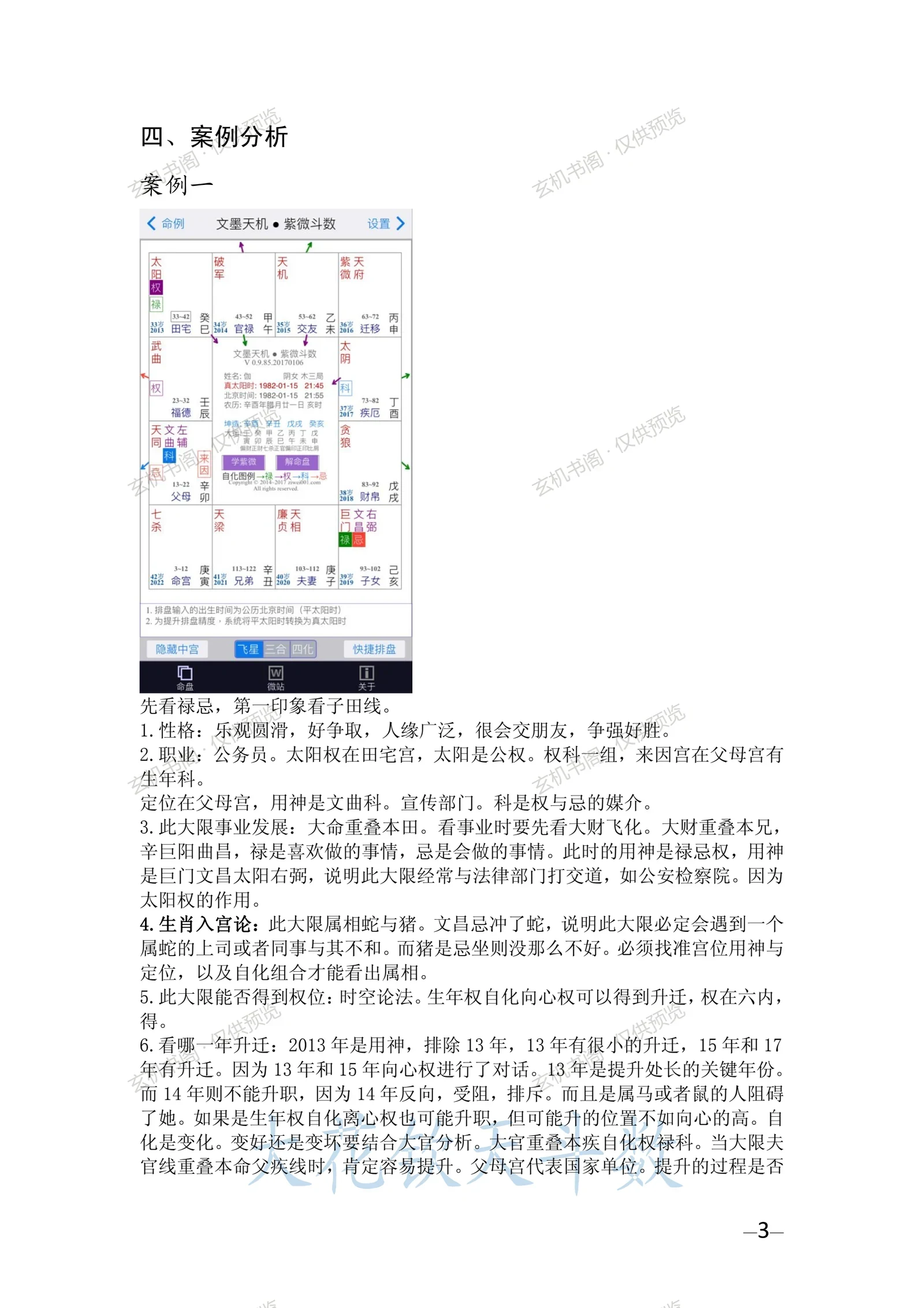
Case 1: first impressions, career, promotion years
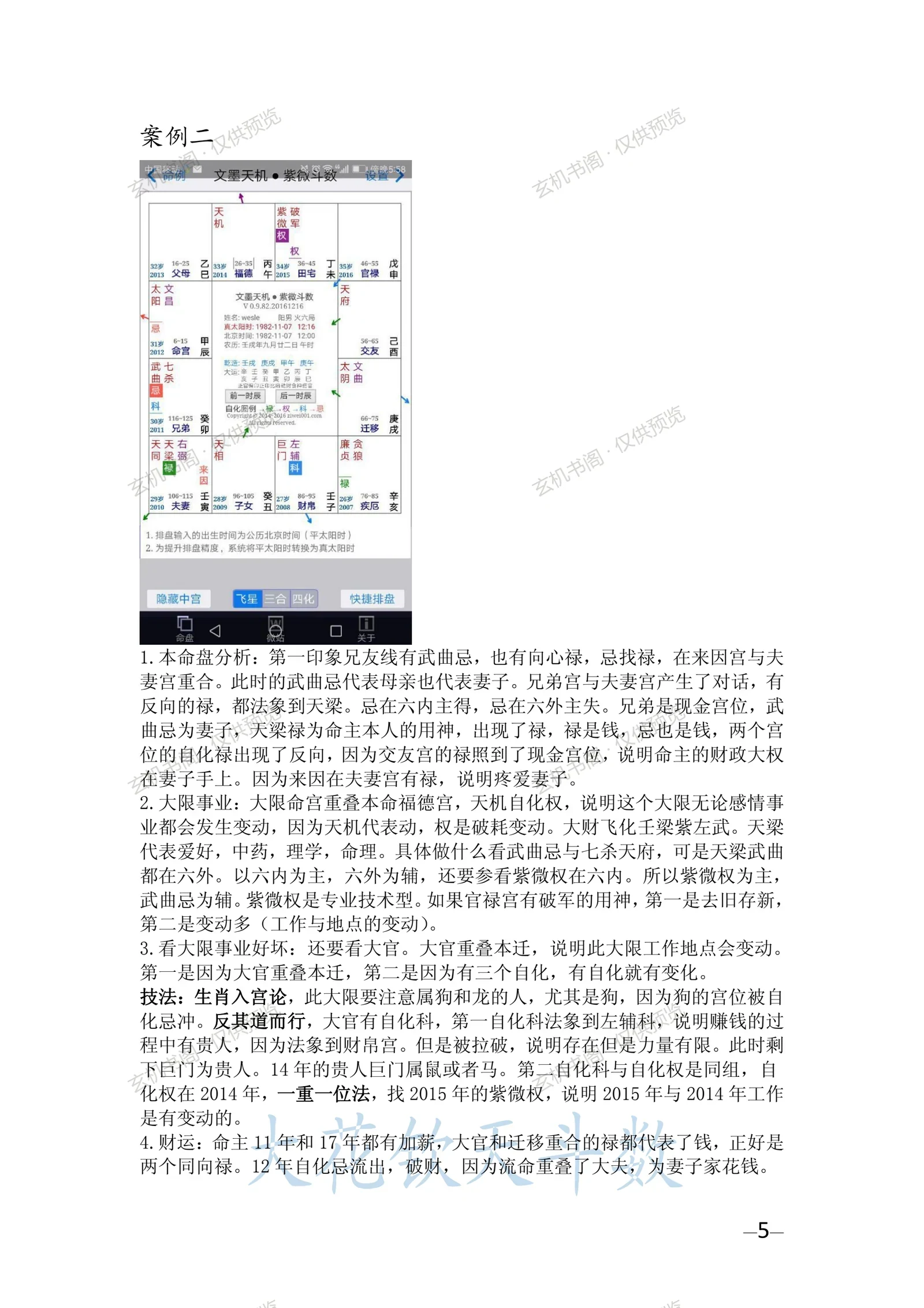
Case 2: sibling-spouse line, decade career and wealth
Key Points
Self-transformation is qualitative change, a temporal and spatial phenomenon.
The four transformations directly indicate behavioral tendencies by predominance.
Home and opposite palaces form one body; transformations split into yin and yang pairs.
One body, two sides: reading lines and overlaying birth-year with self-transformations.
Cases show how to use decade, year, and zodiac positions to time events.