Reading guide
Content guideOverview
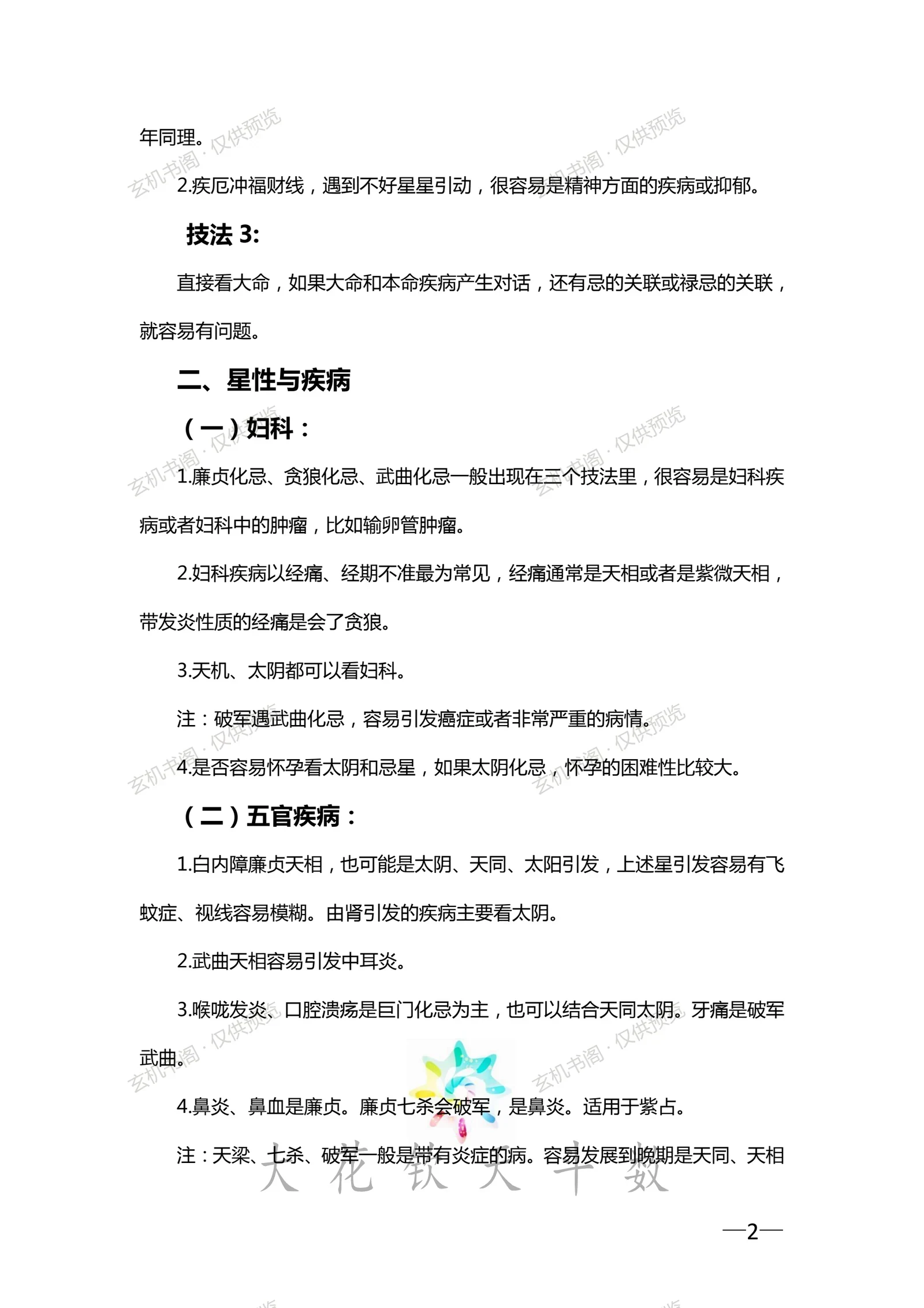
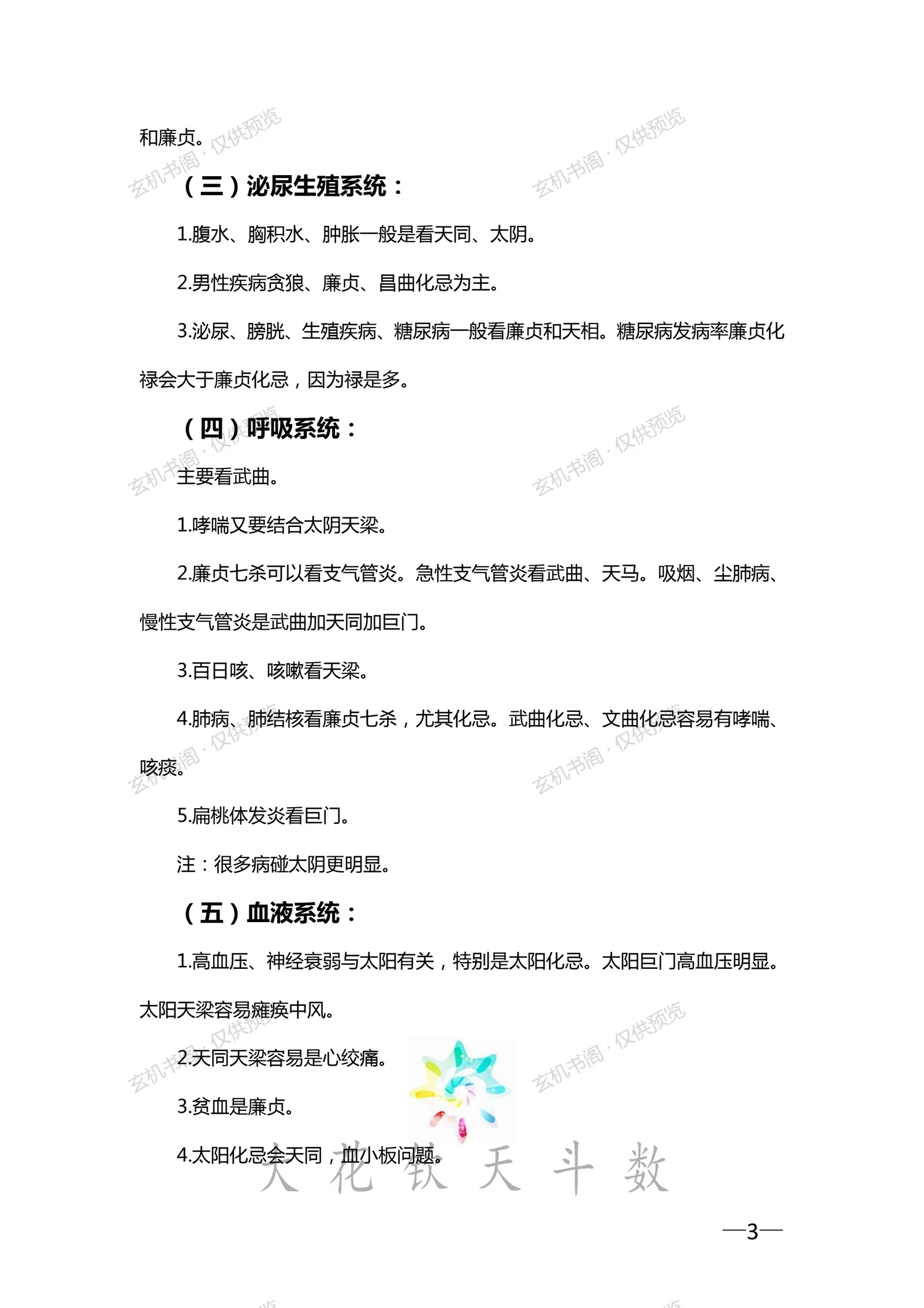
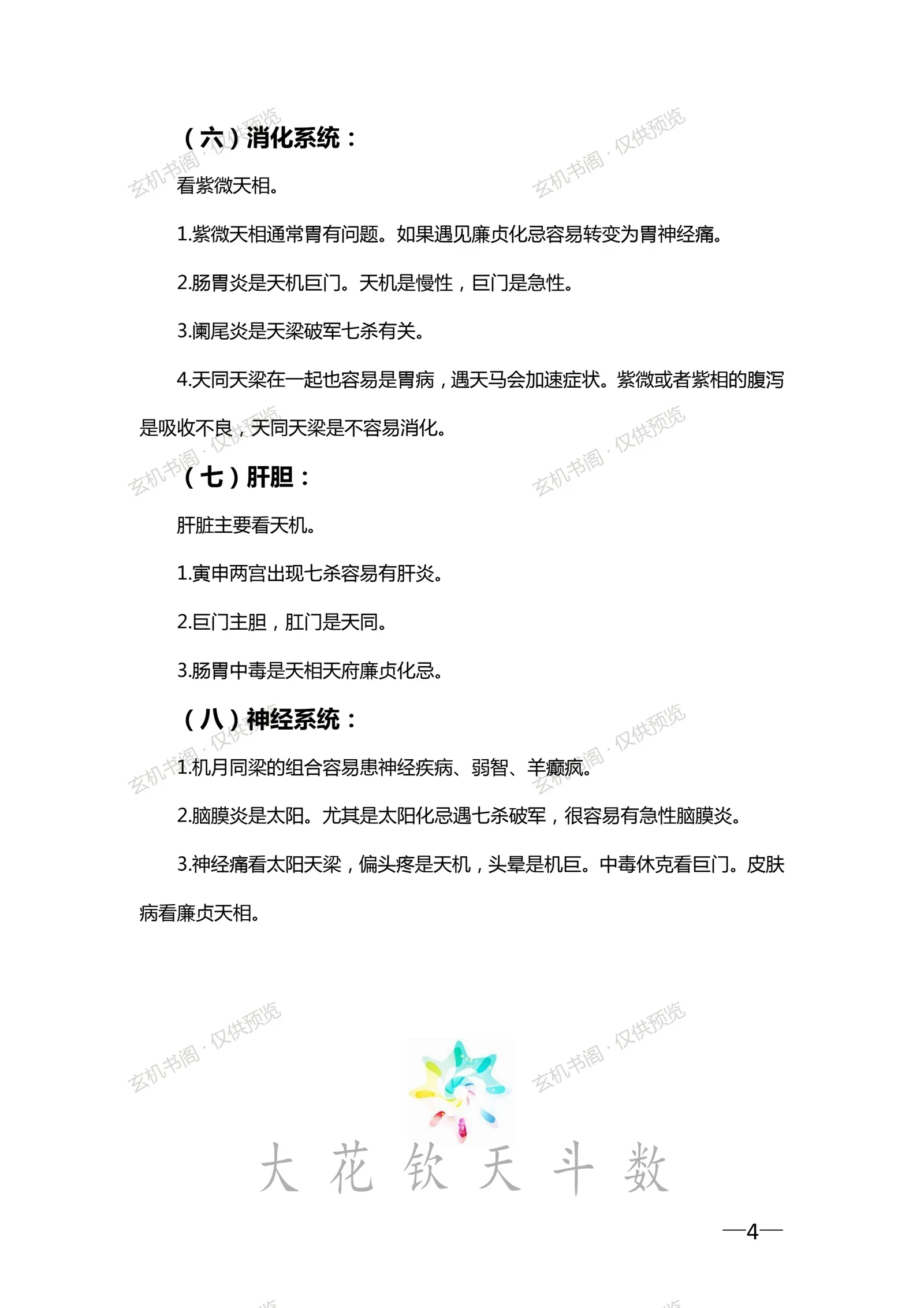
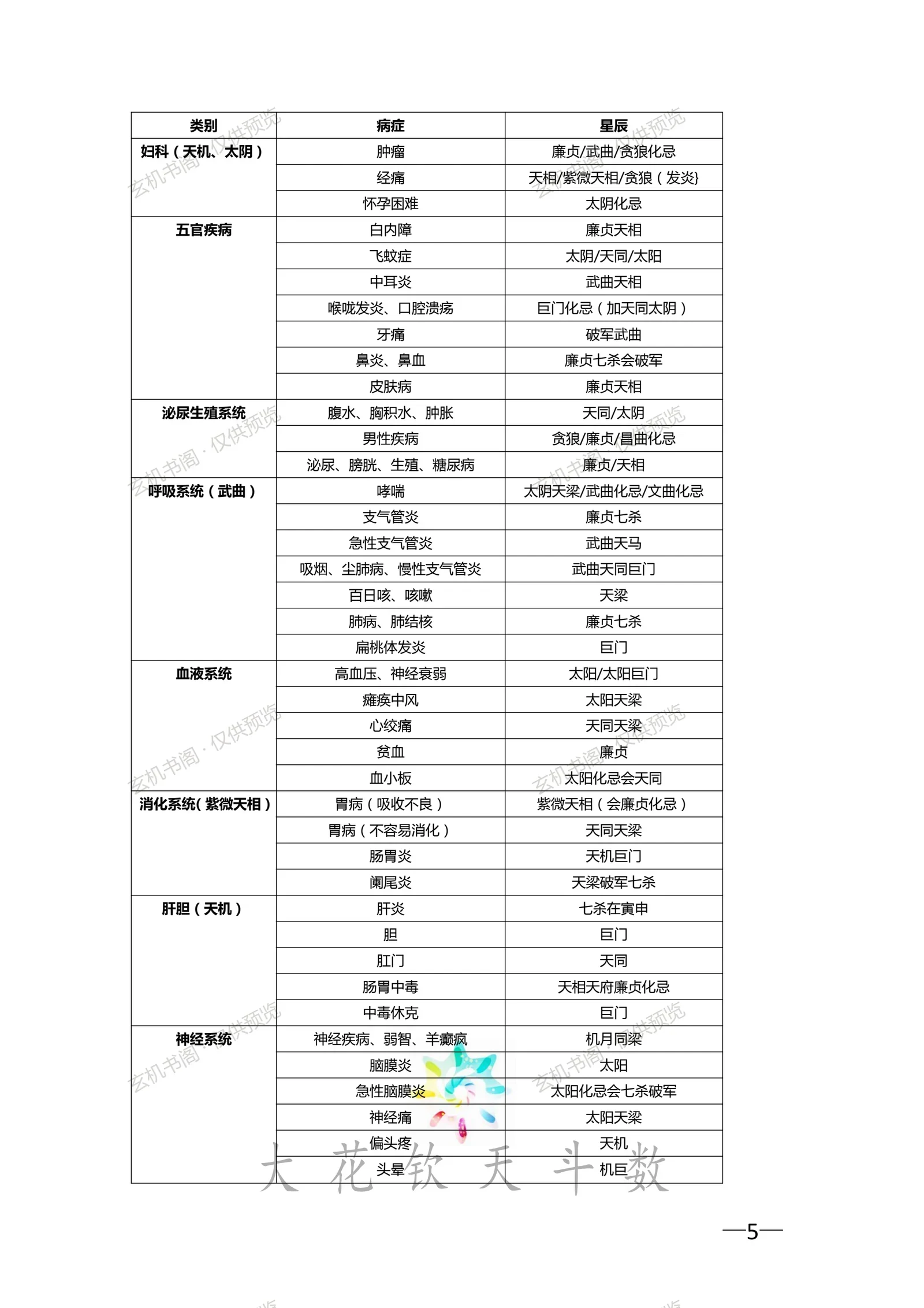
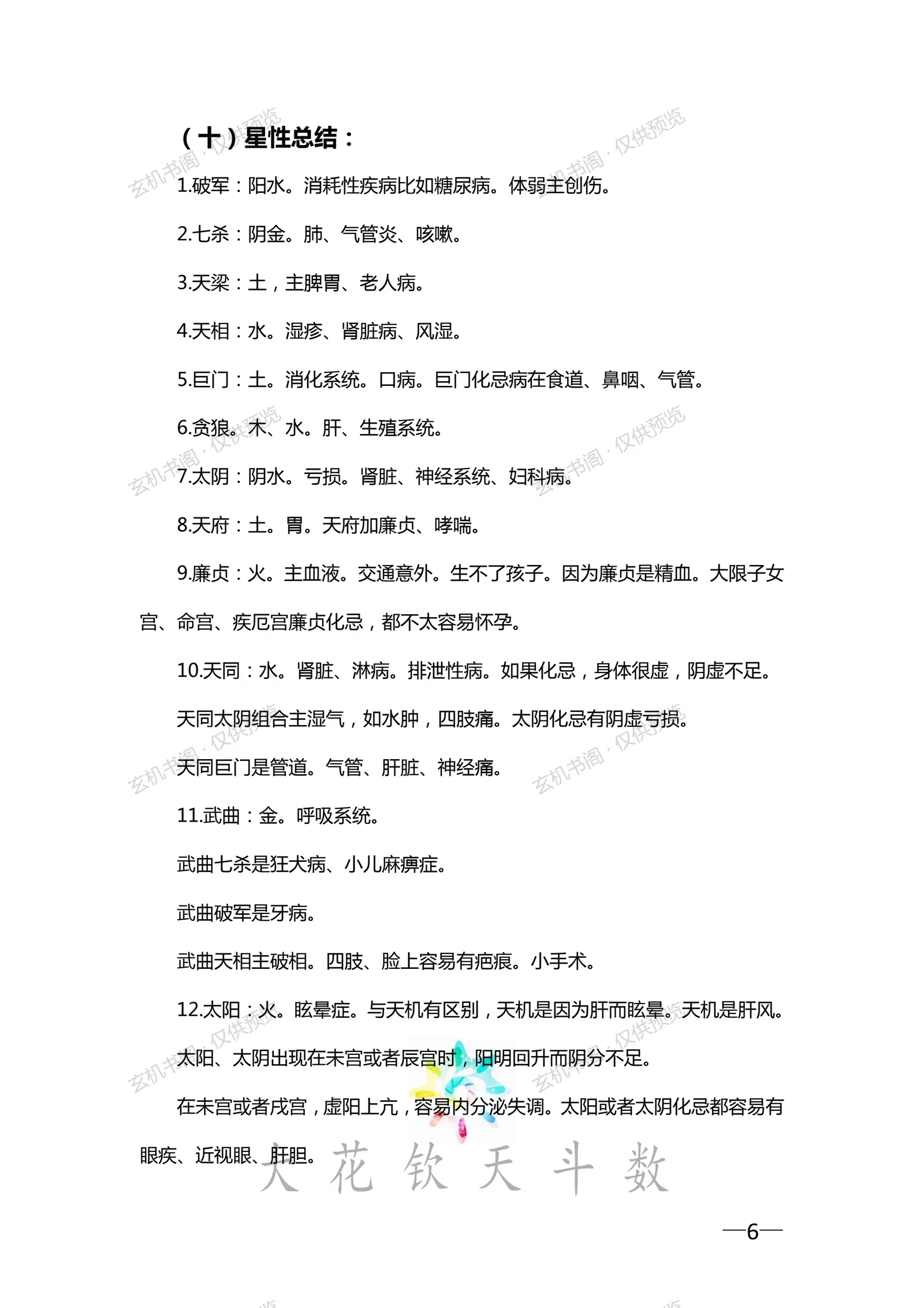
This handout is Lesson 19 of the Dahua Qintian advanced Zi Wei Dou Shu course, devoted to diagnosing illness. It first presents three techniques: the 'single qi life-and-death诀' method, which treats the siblings palace as the body's qi number and the friends palace as prenatal qi, watching for transformations that clash with the birth-year lu or ji star; a palace-dialogue method using transformations from the life, illness, and fortune palaces into the parent-illness and children-property lines, and the six disaster palaces (parents, illness, career, spouse, children, property); and a direct comparison of the decade life palace with the natal illness palace. It then discusses diseases by star and palace across gynecology, the five sense organs, urogenital, respiratory, blood, digestive, liver-gallbladder, and nervous systems, followed by a summary table mapping symptoms to stars and a closing summary of the twelve major stars' qualities and associated ailments. The material is practical and mnemonic, suited to readers with a foundation in four transformations.
Contents
Techniques for judging illness: qi life-and-death, palace dialogue, decade life vs natal illness
Star qualities and illness: gynecology, five sense organs
Urogenital, respiratory, and blood systems
Digestive, liver-gallbladder, and nervous systems
Summary table of symptoms and stars
Star summary: the major stars and their ailments
Key Points
Siblings palace as body qi, friends palace as prenatal qi; clashes with birth-year lu/ji signal disaster
Parents, illness, career, spouse, children, property are the six disaster palaces
Lian Zhen, Wu Qu, Tan Lang with ji often indicate gynecological tumors
Tai Yang with ji points to hypertension and meningitis; Tian Tong Tian Liang to angina and stomach illness
Closing summary assigns the major stars' five phases and organs to disease imagery