Reading guide
Content guideOverview
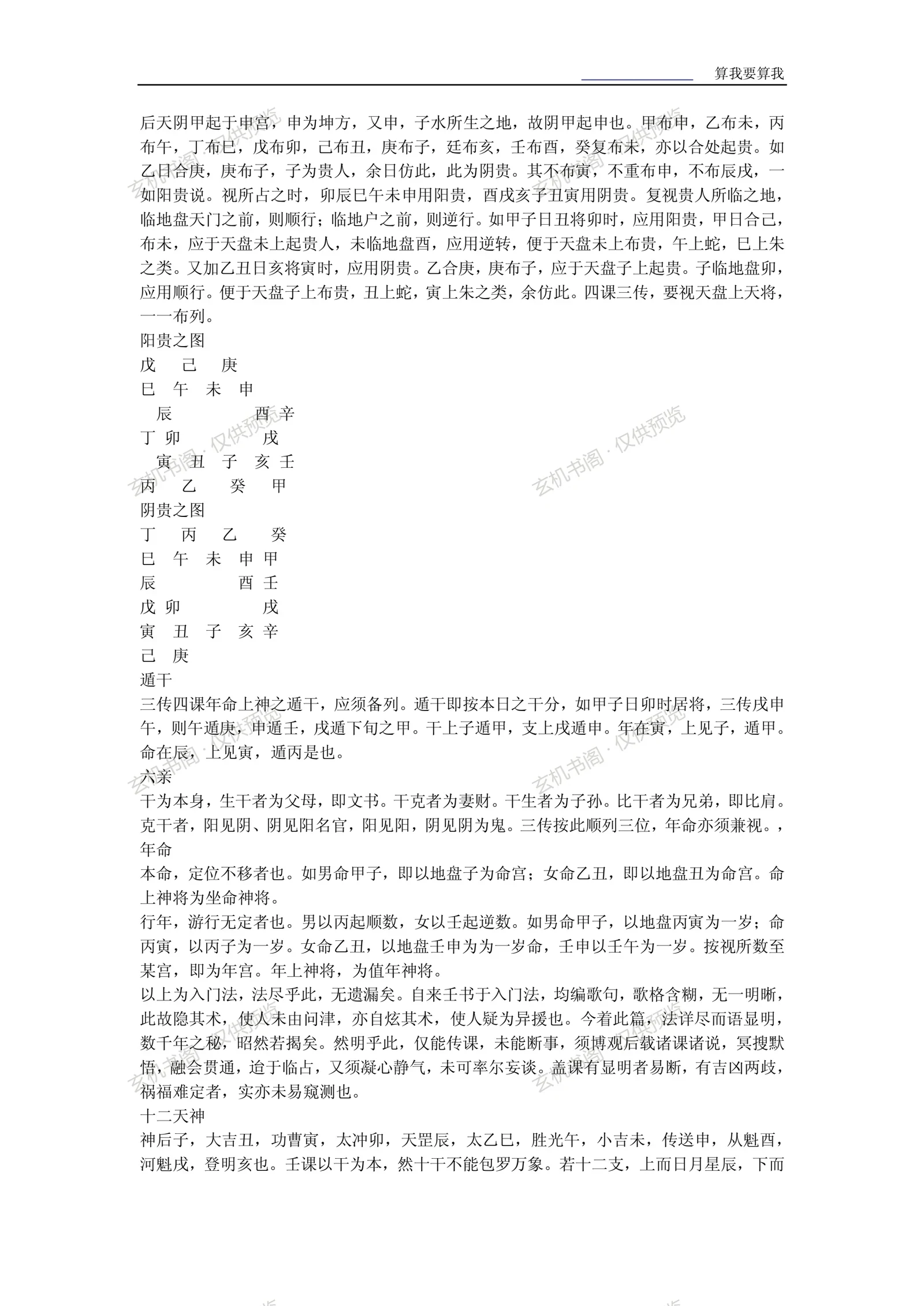
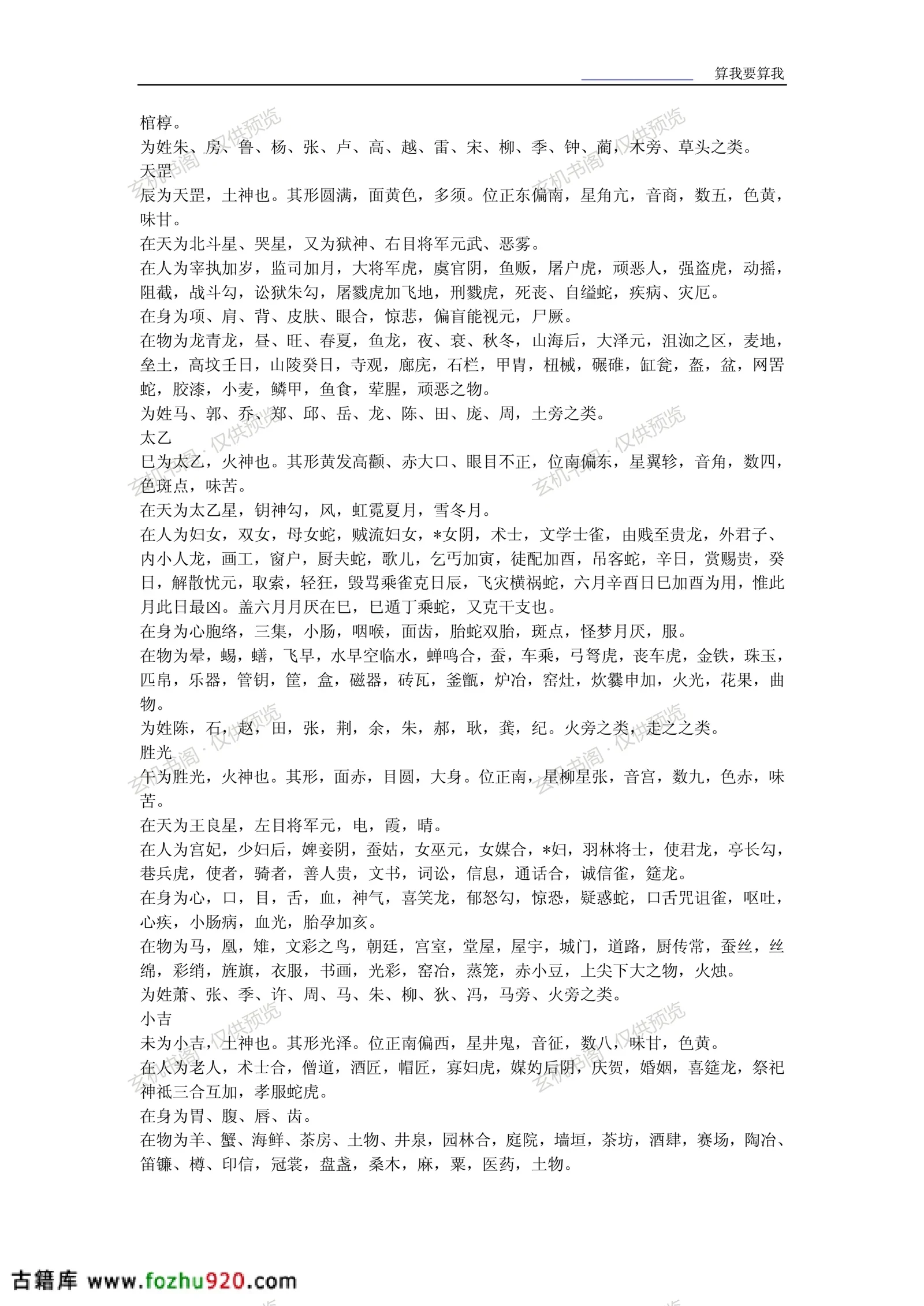
This is the opening 'Introduction' section of the Da Liuren Shuoyue, a foundational text for beginners of the Liuren divination method. It begins with the basics of heavenly stems and earthly branches—yin-yang, five phases, directions, lodgement, combinations, clashes, punishments, and harms—then explains how to set the heaven plate by adding the lunar general to the hour, and how to derive the four lessons. The core of the text covers the eleven methods for selecting the useful spirit and forming the three transmissions, including Yuan Shou, Shi Ru, Chong Shen, Bi Yong, She Hai, Yao Ke, Mao Xing, Bie Ze, Ba Zhuan, Fu Yin, and Fan Yin, with worked examples for specific days and hours. It then discusses the twelve celestial generals, their day/night placement, the forward or reverse movement of the Noble One, and the multiple imagery categories—form, role, body, and object—for each of the twelve celestial spirits. The text stresses that some lessons are easy to judge while others are genuinely ambiguous, making it a useful reference for learning Liuren terminology and casting procedures.
Contents
Yin-yang, five phases, directions of stems and branches
Combinations, clashes, punishments, harms
Lunar general and arrangement of the heaven and earth plates
Deriving the four lessons
Choosing the three transmissions: Yuan Shou, Chong Shen, She Hai, etc.
Sample lessons: Yao Ke, Mao Xing, Bie Ze, Ba Zhuan, Fu Yin, Fan Yin
Placement and direction of the twelve celestial generals
Imagery categories of the twelve celestial spirits
Key Points
First clarify yin-yang, five phases, directions, and lodgement of stems and branches
Adding the lunar general to the hour fixes the plates and is key to casting
Eleven methods guide the selection of the useful spirit
The twelve generals require attention to day/night and forward/reverse nobles
The twelve spirits are interpreted through form, person, body, and objects