Reading guide
Content guideOverview
This lecture handout by Yi Ting, used in a Wenmo Tianji online course, focuses on judging major periods and annual fortunes in Zi Wei Dou Shu. It opens with analogies of twelve clocks and a Monopoly-style board: palace positions shift like time units, and the three directions and four positions are likened to clock hands. After learning how the palace clock turns, the reader distinguishes the Thunder Palace (gelei gong) from the Opportunity Palace (jihui gong). The more harmful elements such as Hua Ji and malefic stars gather in the three directions and four positions, the worse the outcome, and landing on the Thunder Palace signals misfortune; the more auspicious stars gather, the stronger prosperity, and landing on the Opportunity Palace signals a good encounter. The lecture then explains the three overlaying charts: the natal chart as the basic image (pre-heaven chart), the major-period chart reflecting environmental changes, and the annual chart as the post-heaven chart responding to external shifts, with an emphasis on temporal unfolding. The visual analogies make the framework of dynamic fate analysis easier for beginners with basic chart-reading ability.
Contents
Cover: lecturer Yi Ting, online classroom
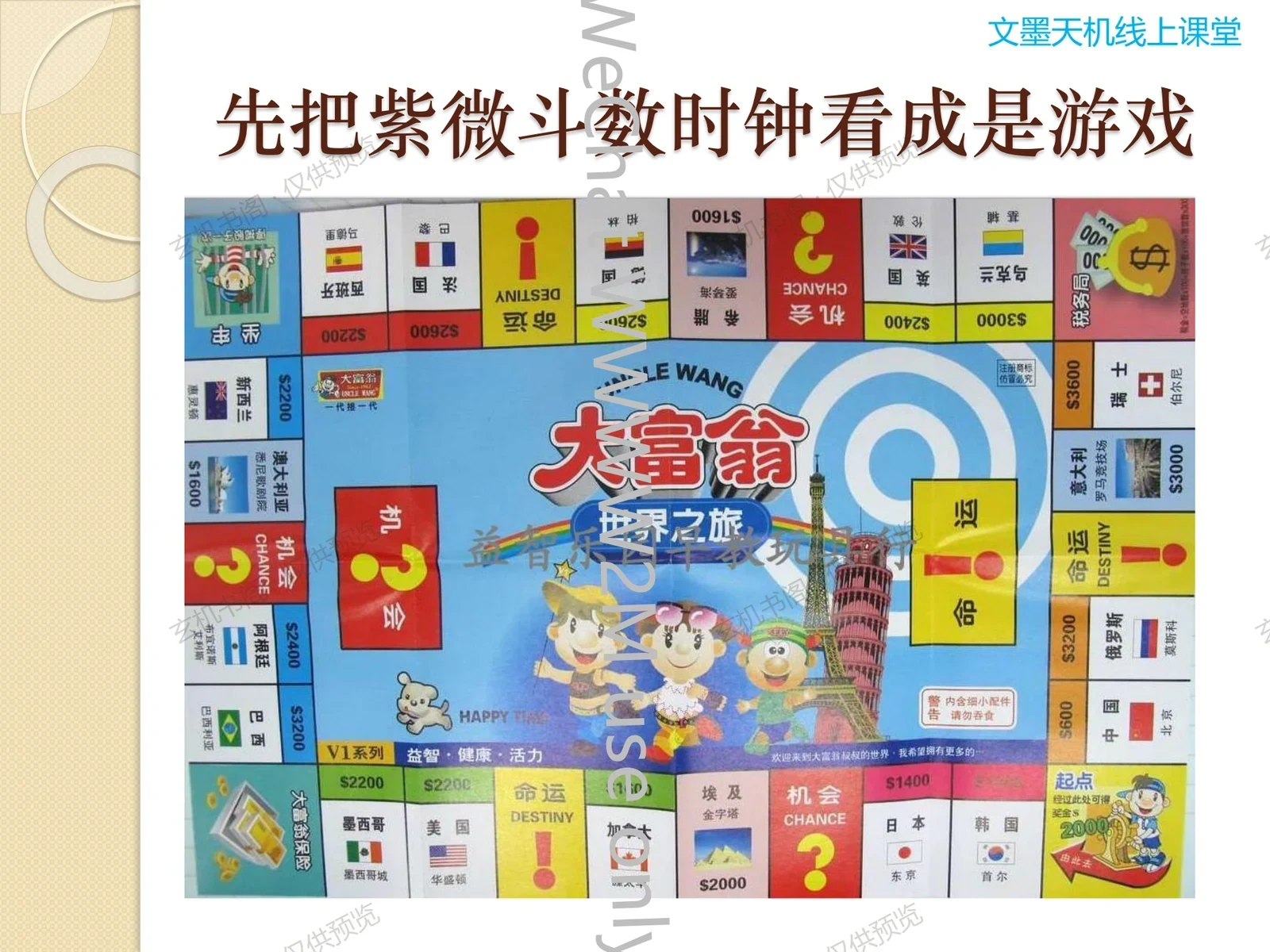
Clock and board analogies for chart reading
Simple board concepts and the three/four positions
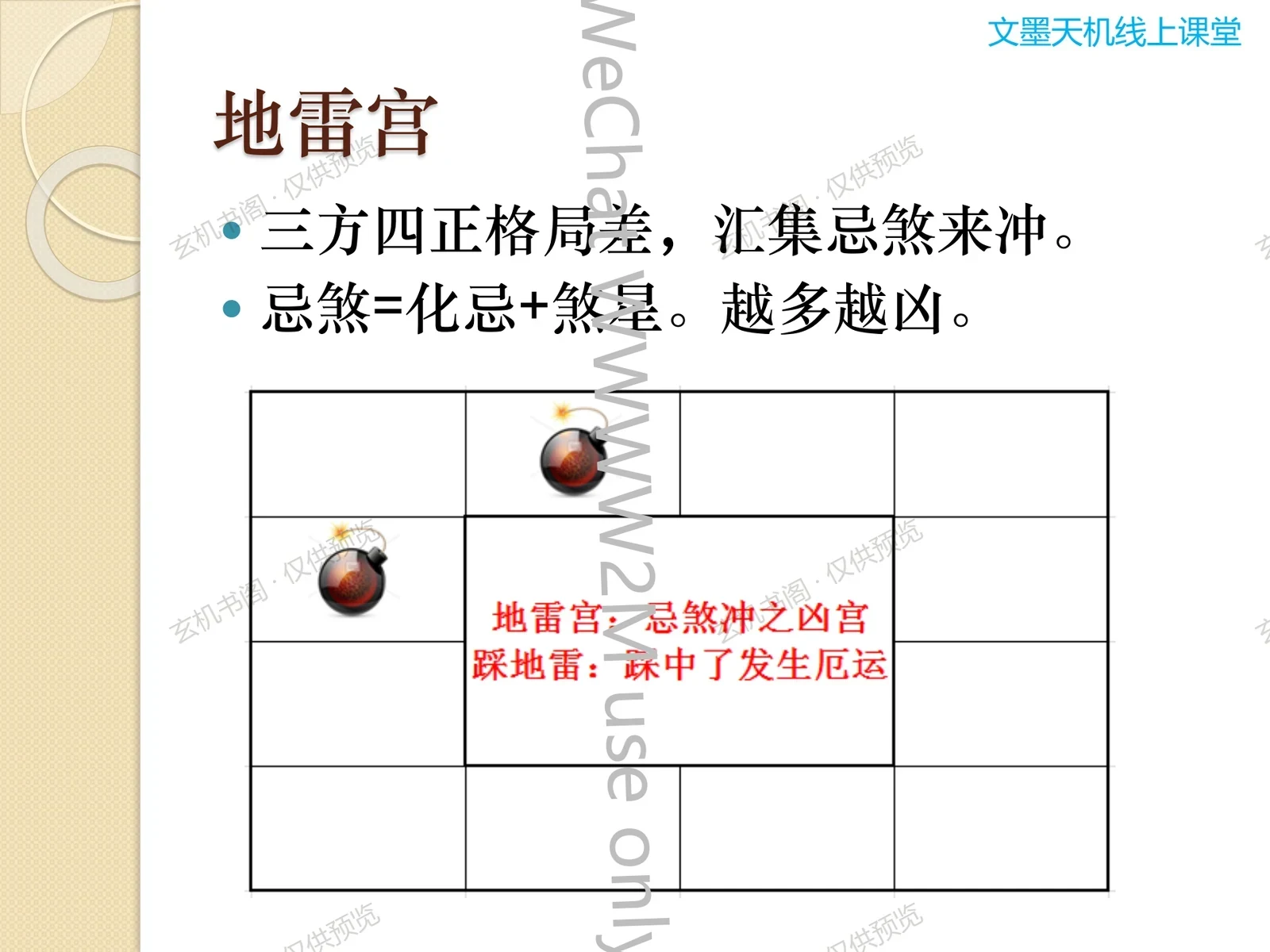
Thunder Palace: a harmful palace with Hua Ji and malefics
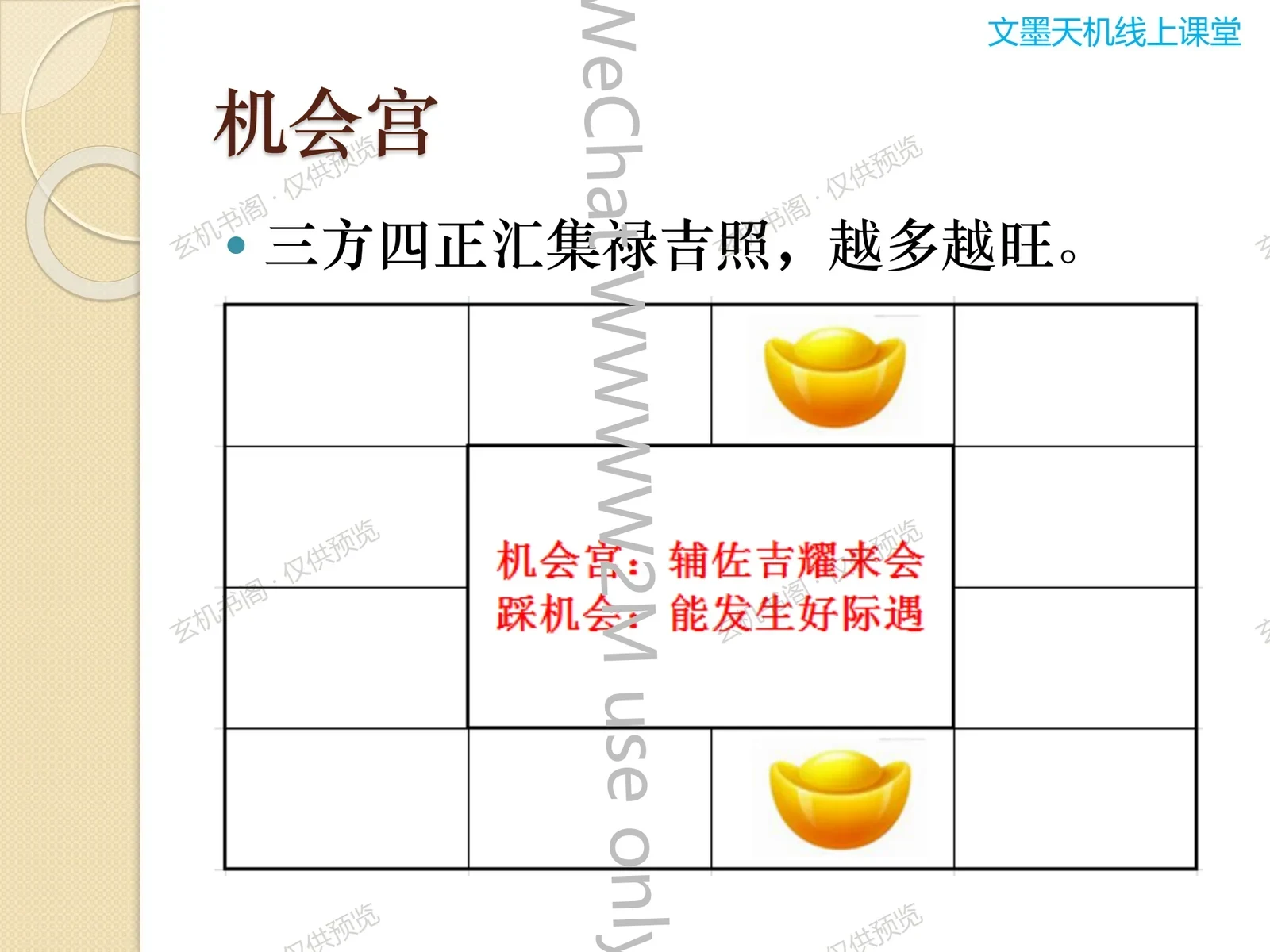
Opportunity Palace: an auspicious palace with favorable stars
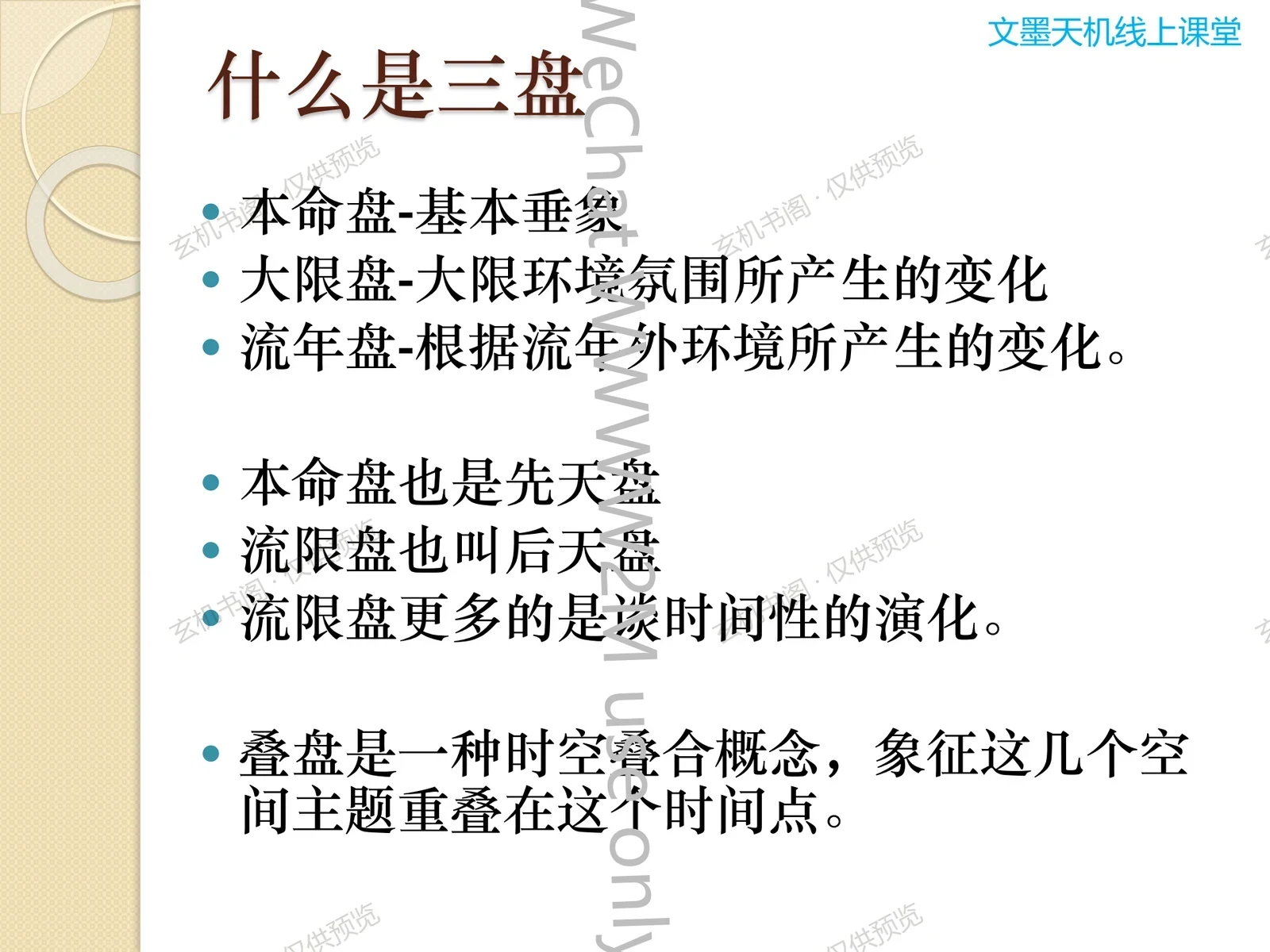
Overlaying three charts and temporal change
Key Points
Palaces move as time units; the three/four positions act like clock hands
Distinguishing Thunder Palace and Opportunity Palace is the entry point
More Hua Ji and malefics mean worse luck, landing on the Thunder Palace brings misfortune
More auspicious stars mean more prosperity, landing on the Opportunity Palace brings good encounters
The three charts overlay, focusing on the temporal evolution of natal, major-period, and annual charts