Reading guide
Content guideOverview
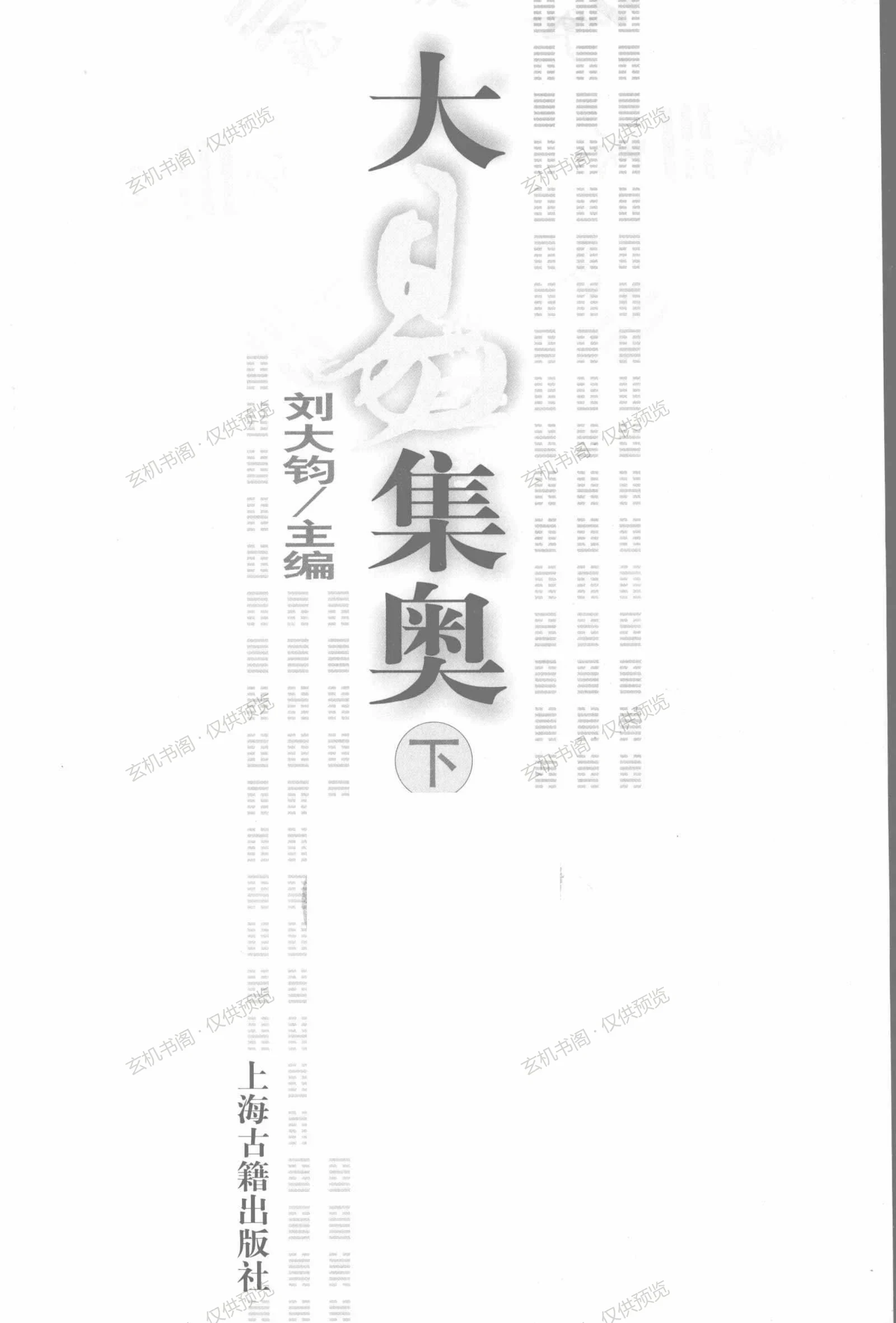
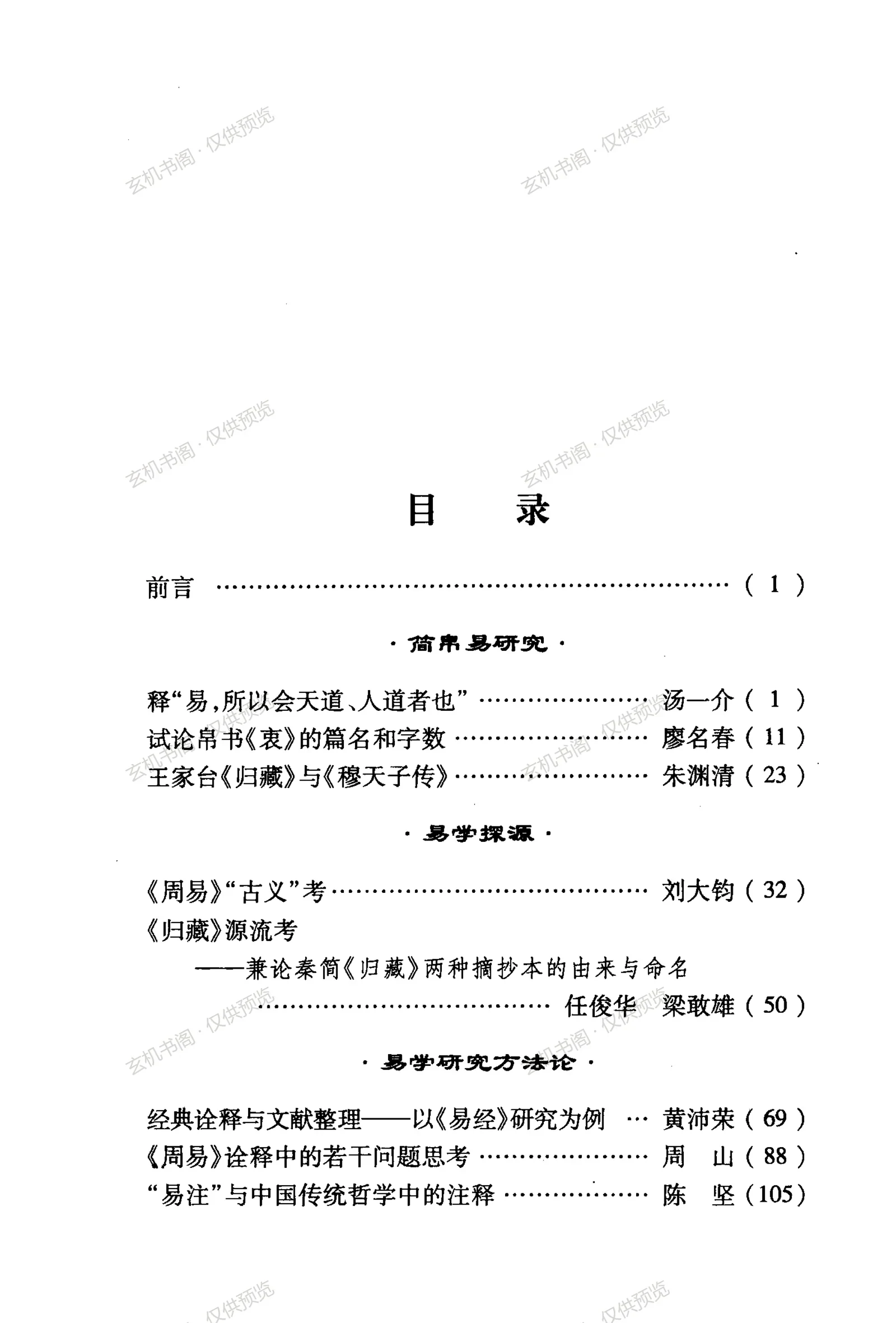
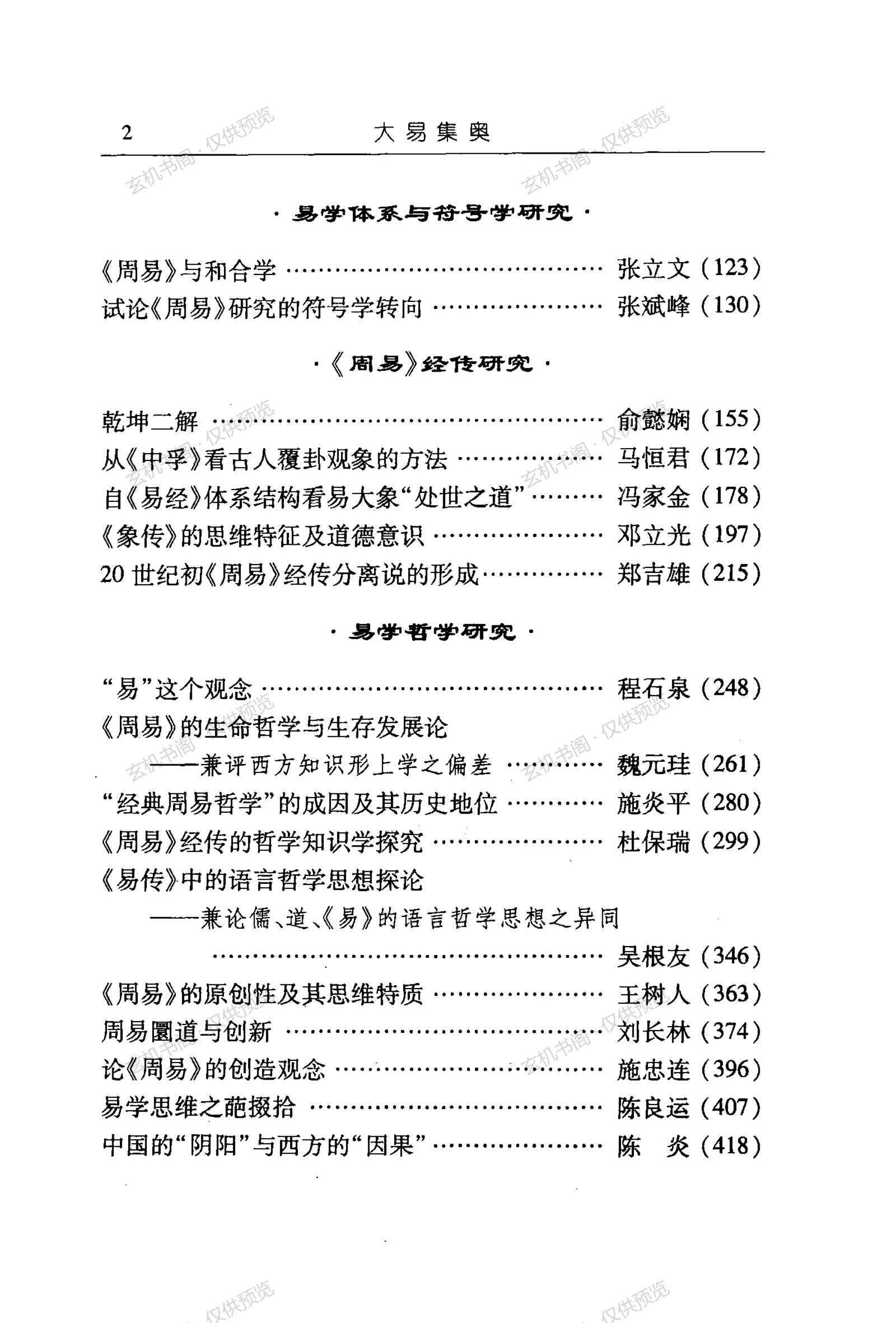
Collected Profundities of the Great Yi (Volume Two), edited by Liu Dajun and published by Shanghai Classics Publishing House, is the second volume of a scholarly anthology on Yijing studies. Its table of contents groups essays under headings such as bamboo-and-silk manuscript studies, origins of Yi learning, research methodology, semiotic and systematic studies, studies of the Zhouyi canon and commentaries, and Yi philosophy. Contributors include Tang Yijie, Liao Mingchun, Zhu Yuanqing, Liu Dajun, Ren Junhua, Liang Ganxiong, Huang Peirong, Zhou Shan, Chen Jian, Zhang Liwen, Zhang Binfeng, Yu Yixian, Ma Hengjun, Feng Jiajin, Deng Liguang, Zheng Jixiong, Cheng Shiquan, Wei Yuangui, Shi Yanping, Du Baorui, Wu Genyou, Wang Shuren, Liu Changlin, Shi Zhonglian, Chen Liangyun, and Chen Yan. Topics range from the title and character count of the silk manuscript Zhong and the relationship between the Wangjiatai Guicang and Mu Tianzi Zhuan, to the ancient meaning of the Zhouyi, the formation of the separation of canon and commentary, the thought characteristics of the Xiangzhuan, life philosophy in the Zhouyi, and comparisons between Chinese yin-yang and Western causality. It is a research-oriented collection rather than an introductory handbook.
Contents
Preface
Bamboo-and-silk Yi studies: silk Zhong and Wangjiatai Guicang
Origins of Yi learning: ancient meaning and Guicang
Methodology: interpretation and textual organization
Yi system and semiotic studies
Zhouyi canon and commentary studies
Yi philosophy: life philosophy, yin-yang and causality
Key Points
Opens with manuscript and excavated-text studies on the silk Zhong and Wangjiatai Guicang
Includes essays on the ancient meaning of the Zhouyi and the origins of the Guicang
A methodology section discusses classical interpretation and the commentary tradition
Canonical studies focus on Qian and Kun, the Zhongfu hexagram, and the Xiangzhuan
Philosophical essays address Yi life philosophy, original thinking, and yin-yang versus causality