Reading guide
Content guideOverview
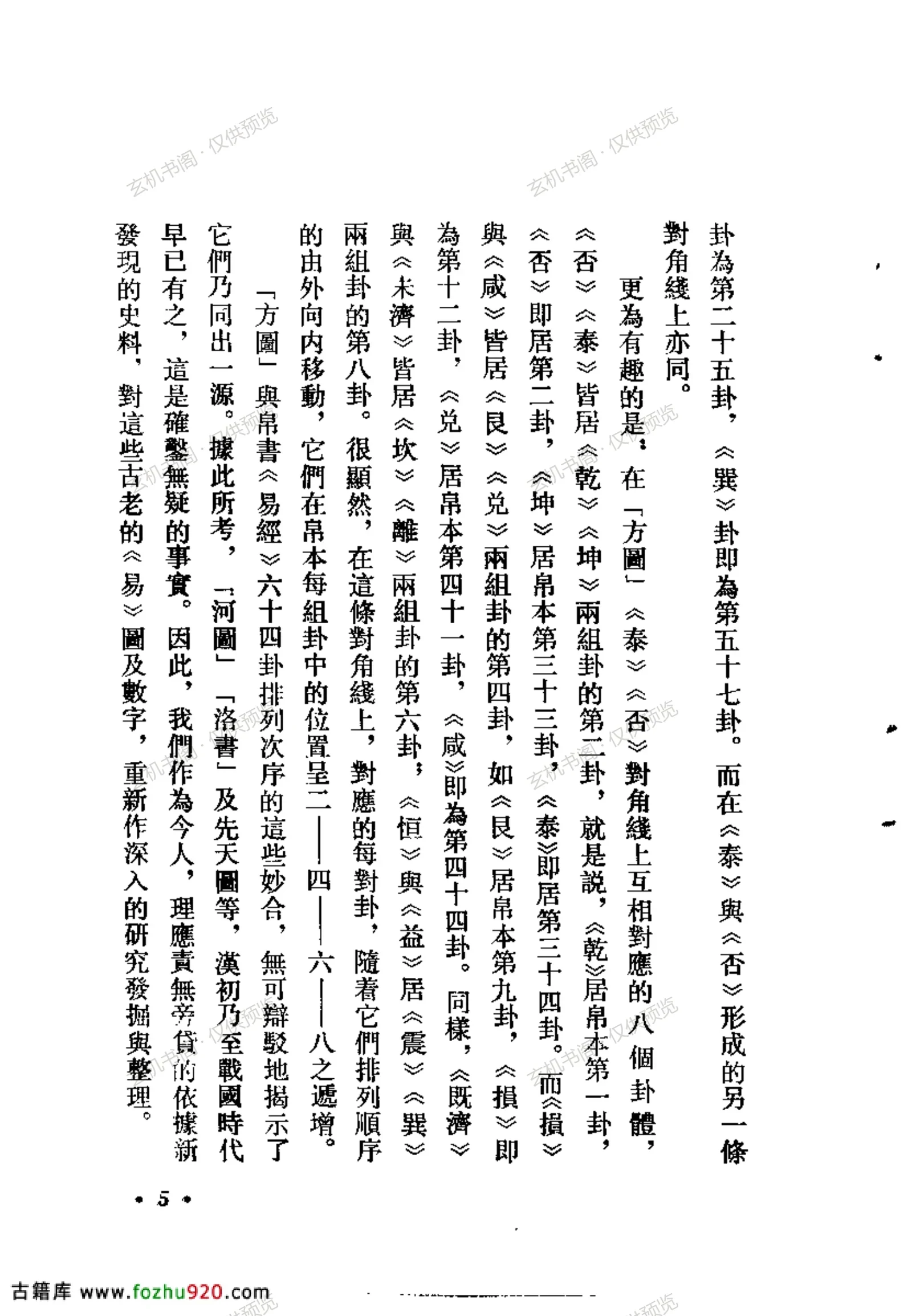
A Detailed Study of the Great Changes examines the transmission and authenticity of Yijing diagrams and numbers. The preface traces the Song-Yuan reception of the Hetu and Luoshu, noting that Zhu Xi's nine diagrams drew on Daoist sources and reviewing Qing scholars' critiques. The main text then turns to archaeological evidence: the Western Han Taiyi Nine Palace divination board from Fuyang, which matches the Luoshu pattern, and the Mawangdui silk manuscript of the Yijing, whose hexagram order differs from the received text. By comparing the silk manuscript sequence with the Xiantian square diagram, the author reconsiders old diagrams and numbers. The book is suited to readers with a foundation in Yijing studies who are interested in the authenticity of the Hetu-Luoshu tradition and hexagram-order problems.
Contents
Preface: transmission and Qing critique of Hetu-Luoshu
Taiyi Nine Palace board and the Luoshu pattern
Silk manuscript Yijing sequence versus received text
Correspondence between silk sequence and Xiantian diagram
Key Points
Traces the Song-Yuan transmission and disputes over Hetu and Luoshu
Cites Qing scholars such as Huang Zongxi and Hu Wei on diagram authenticity
Uses the Fuyang Han divination board to corroborate the Luoshu pattern
Compares Mawangdui silk Yijing hexagram order with the received text
Discusses correspondences between silk sequence and Xiantian square diagram