Reading guide
Content guideOverview
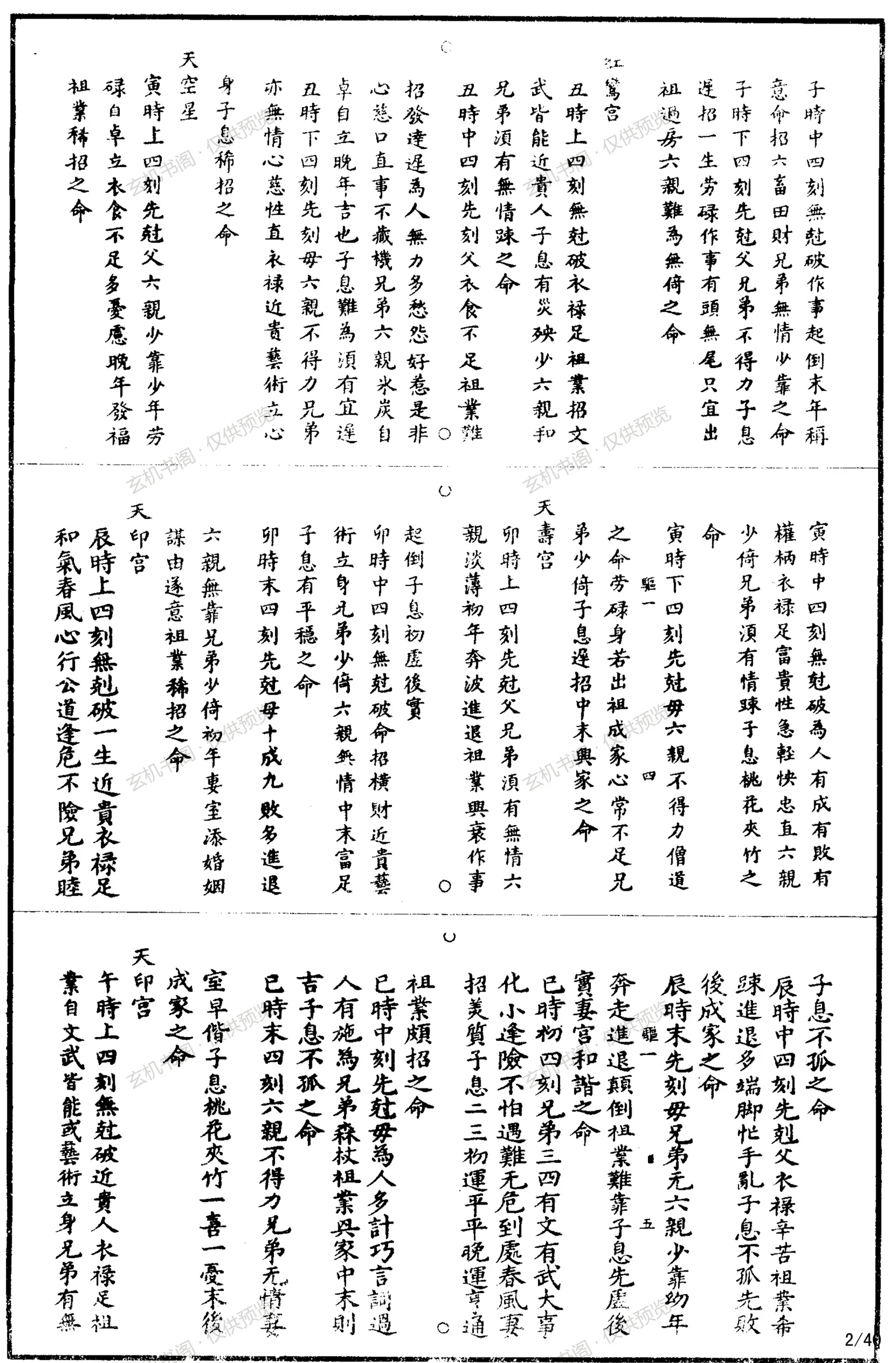
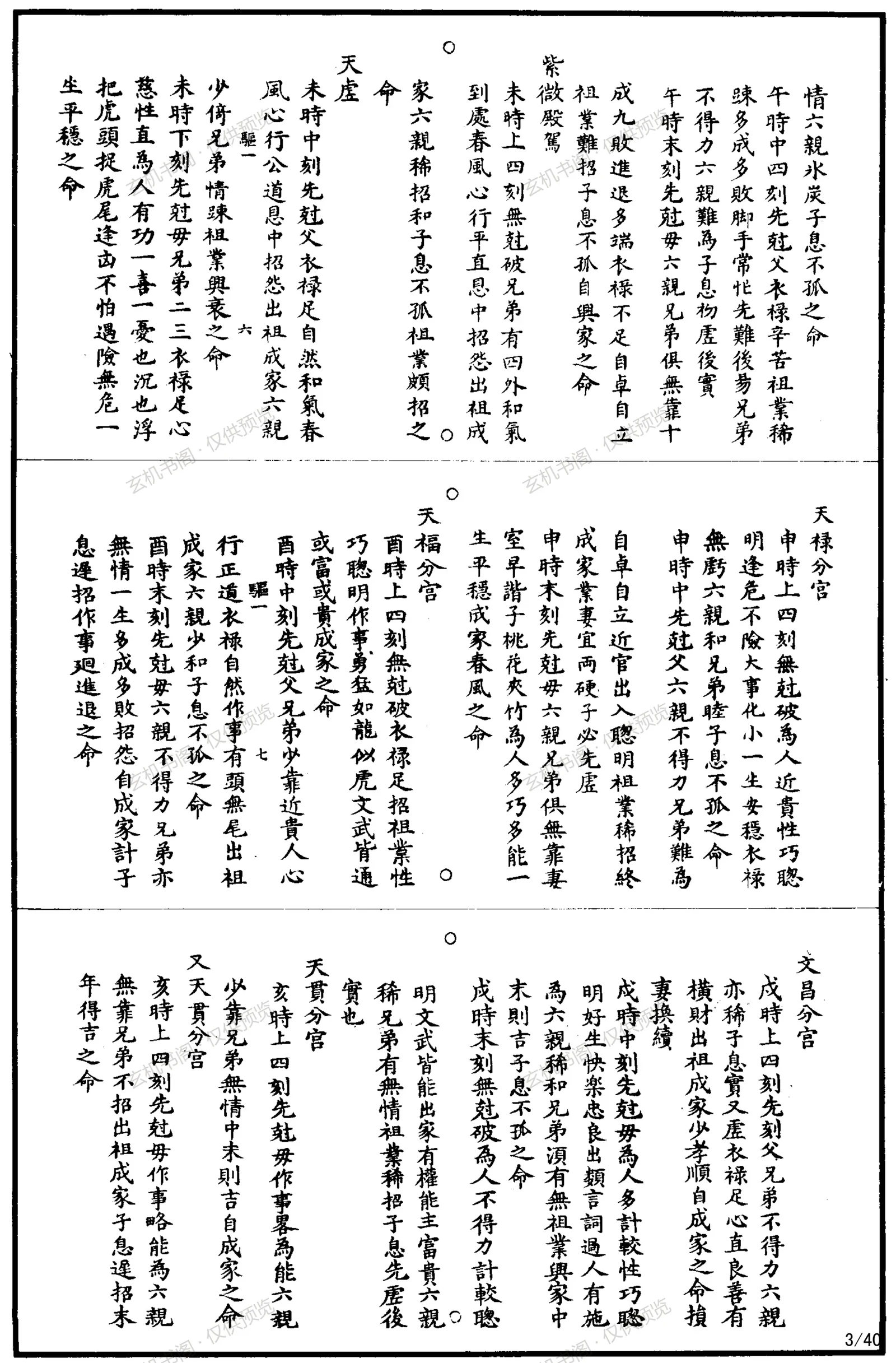
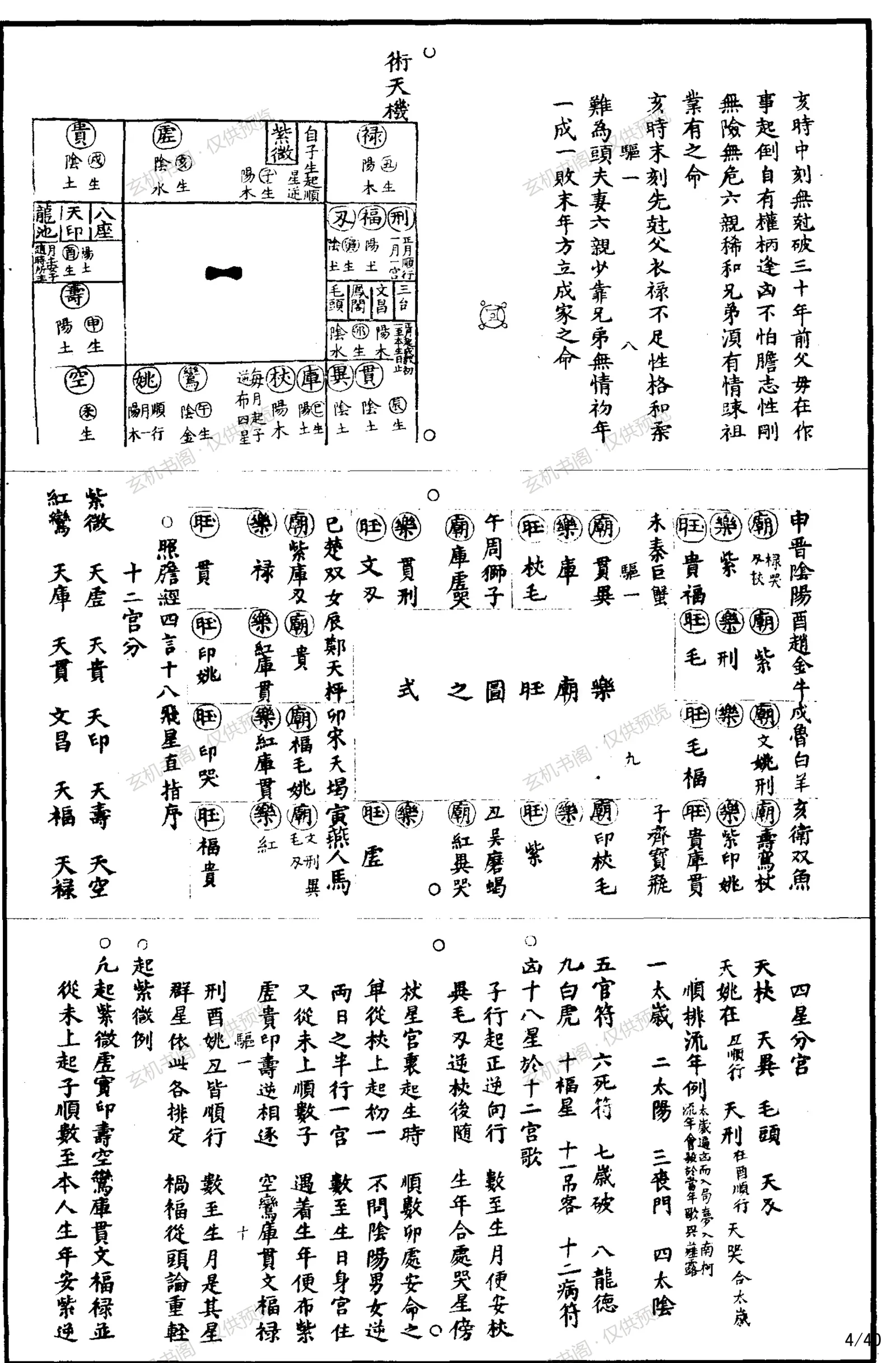
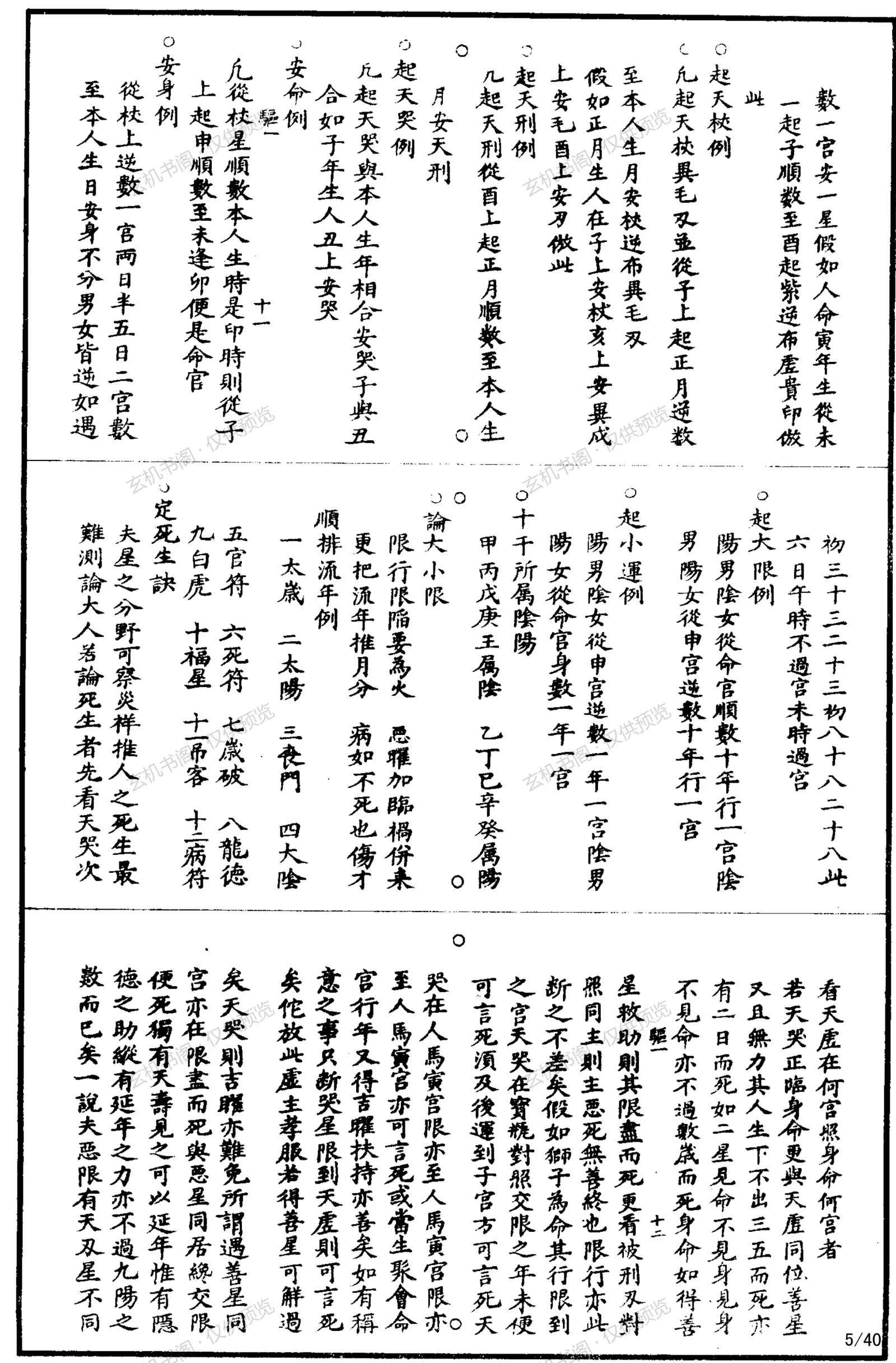
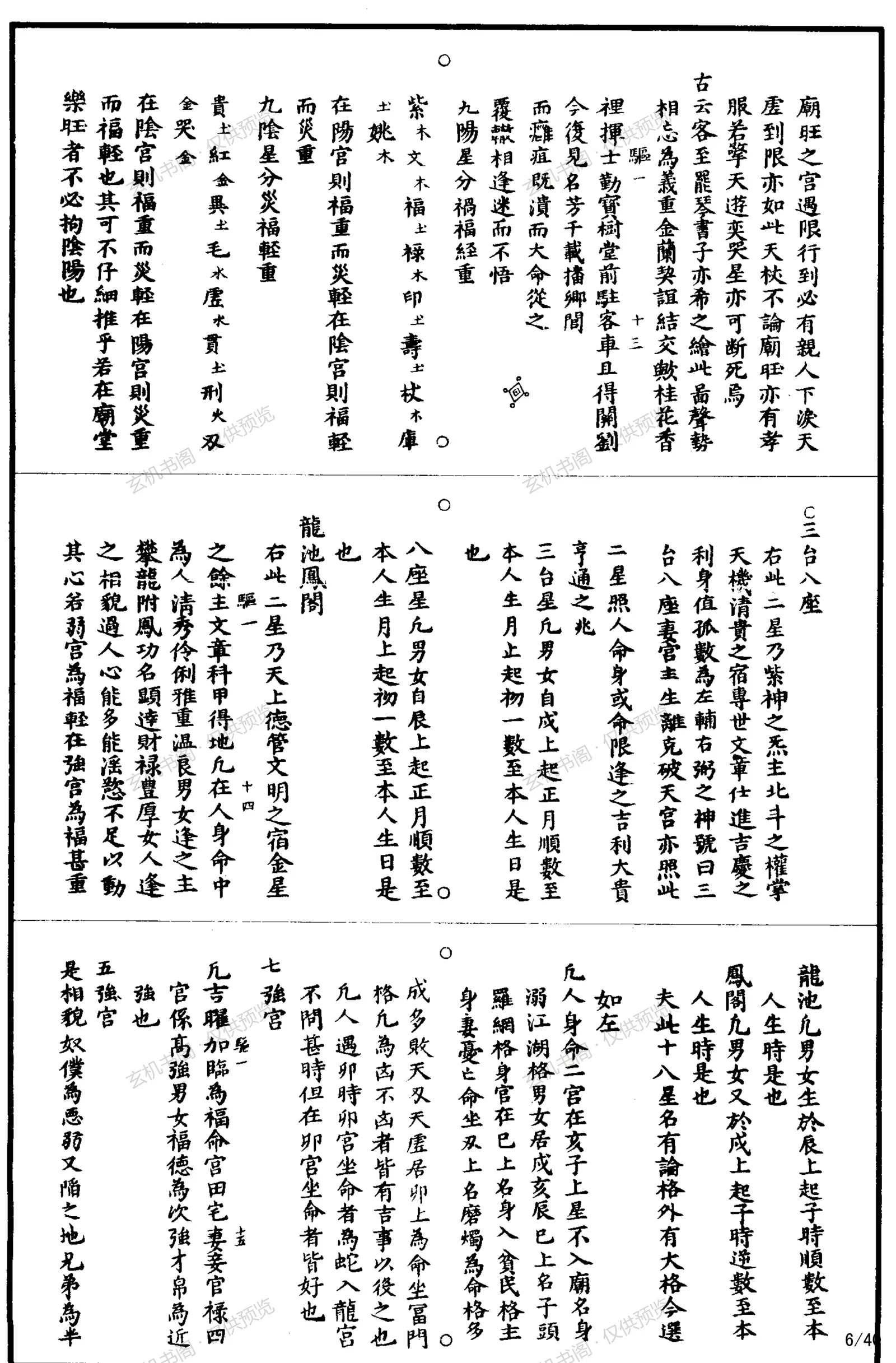
This is the Ziwei Doushu text preserved in the Daozang, and its system differs noticeably from the later standard Ziwei Doushu quan shu. It opens with a ten-step procedure: fixing the time, casting the eight characters, establishing the pattern, arranging stars, setting the life palace, starting major cycles and limits, writing transformations, noting likes and dislikes, and ranking auspicious and inauspicious signs. The main body explains the twelve palaces one by one, judging relatives, ancestral property, income, and children according to the birth hour and the palace where the life star falls. The latter part turns to star placement, listing Ziwei, Tianxu, Tiangui, Tianyin, Tianshou, Tiankong, Wenchang, Tianfu, Tianlu, Hongluan and others, with rules for raising Ziwei, Tianzhang, Tianxing, small limits and great limits, plus a chart of prosperous, strong and temple positions. The book preserves an early form of Doushu that combines eighteen flying stars with the twelve palaces, making it useful for studying the origins of Ziwei Doushu and Daoist astrological literature.
Contents
Ten-step procedure for reading a chart
Twelve palaces for relatives and ancestral property
Rules for raising Ziwei, Tianzhang and Tianxing
Chart of prosperous and temple star positions
Small and great limits with annual tai sui
Temple, prosperous and fallen positions
Key Points
Reading order: fix time, cast bazi, set pattern, arrange stars, set life palace, start cycles, note transformations, rank omens.
The twelve palaces judge relatives, property, children and income by birth hour and life palace.
Star placement centers on eighteen flying stars such as Ziwei, Tianxu, Tiangui and Hongluan.
A chart of prosperous and temple positions evaluates stars by element and palace.
Limit cycles differ from modern Ziwei Doushu and retain an ancient flavor.