Reading guide
Content guideOverview
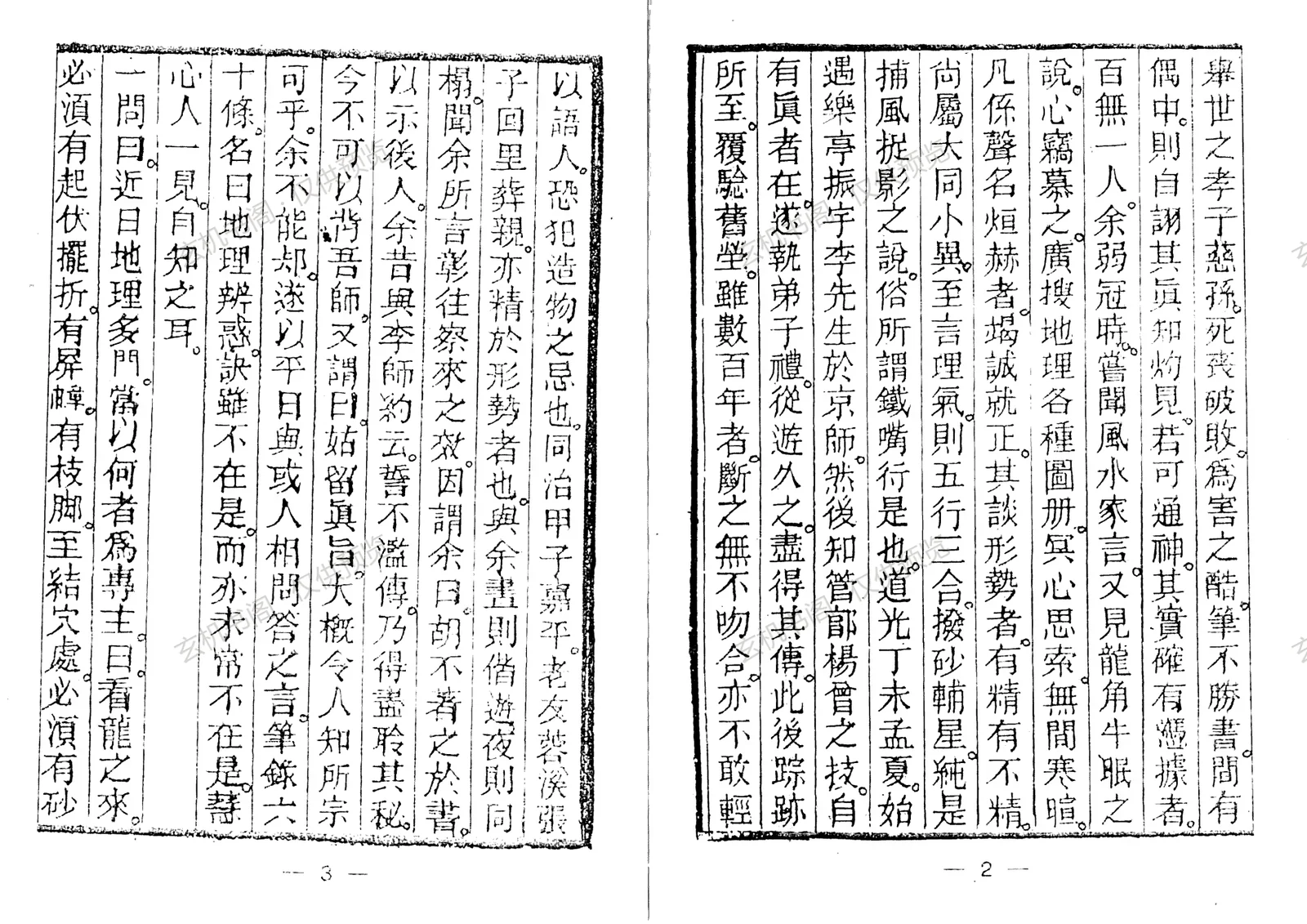
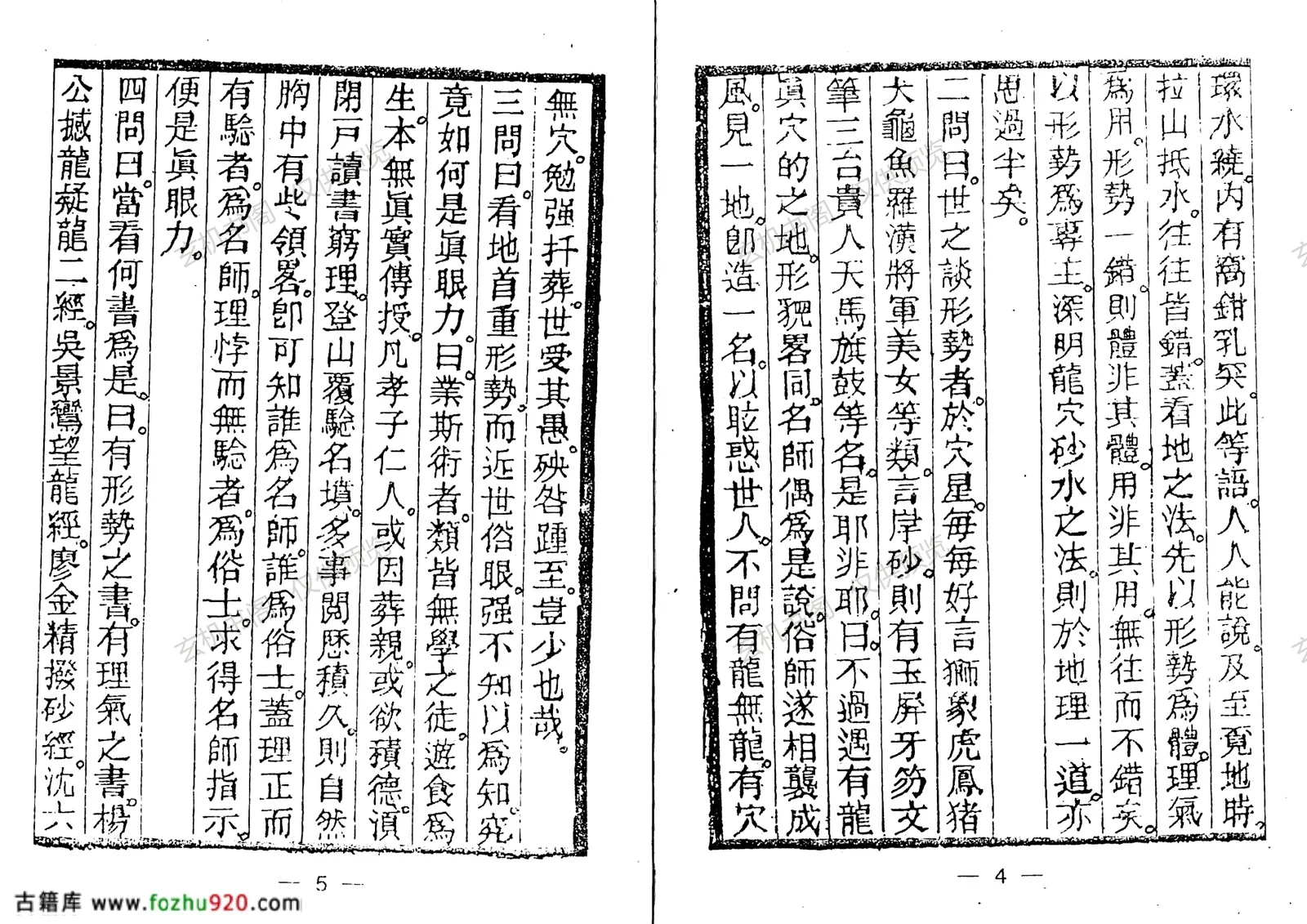
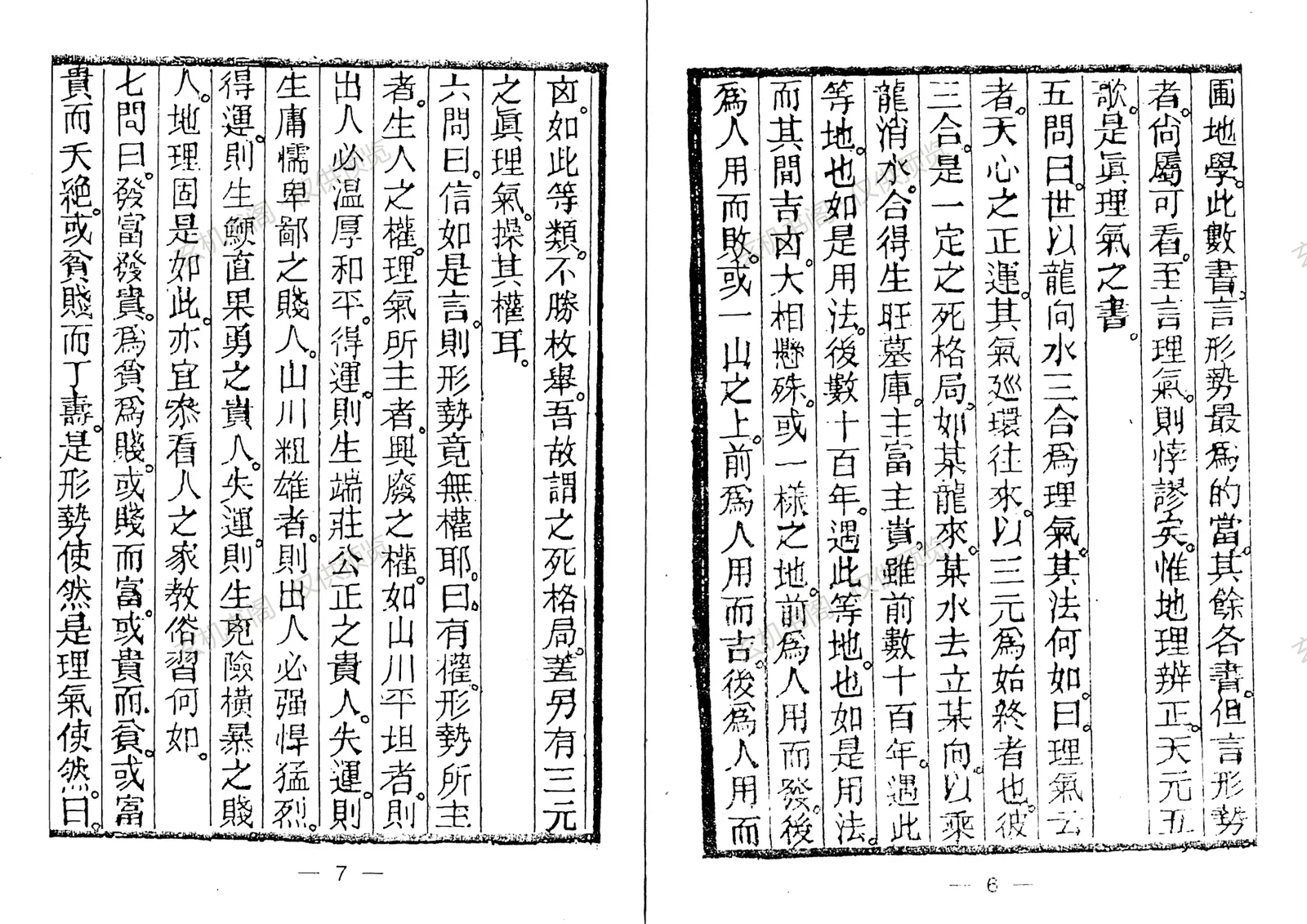
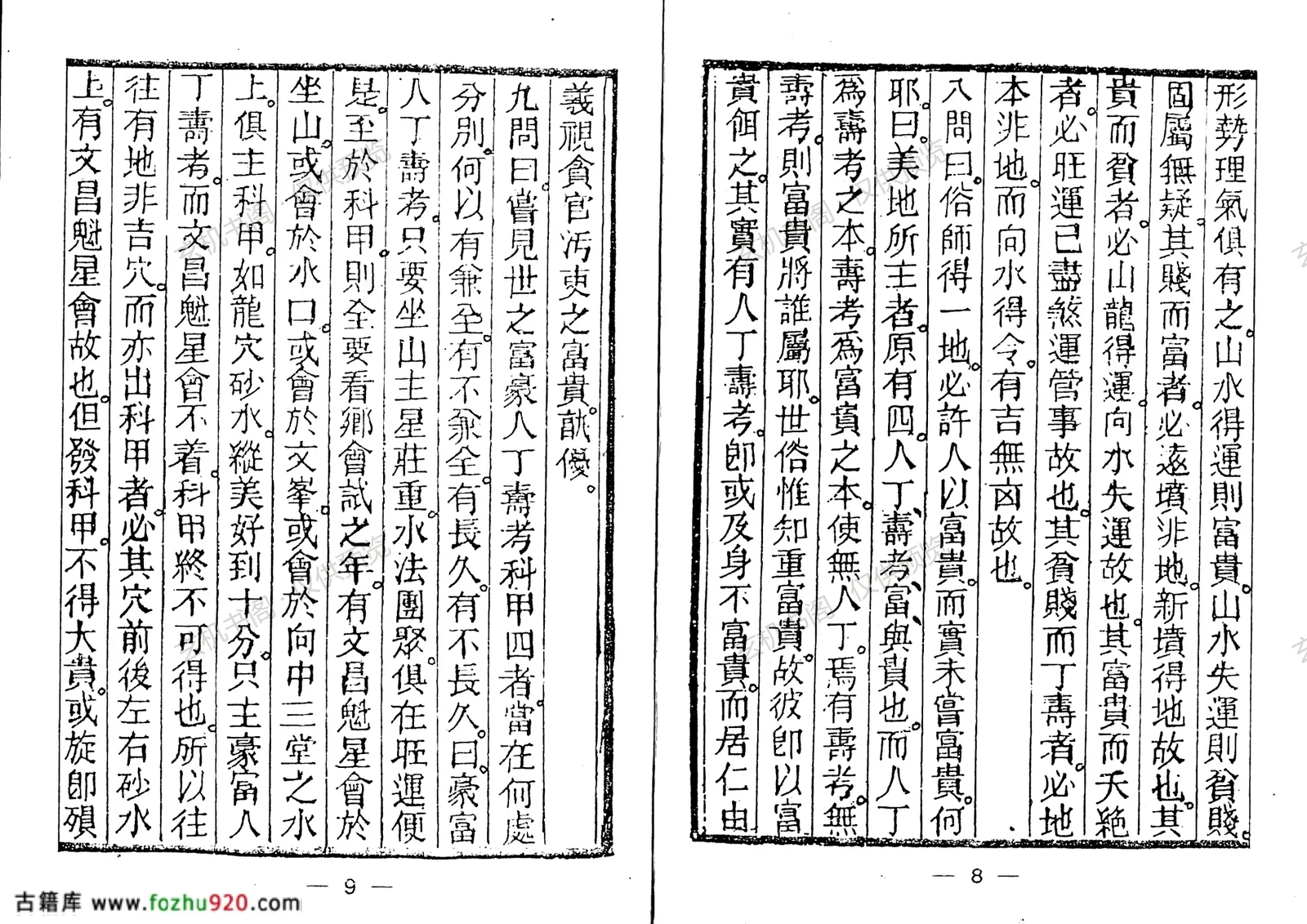
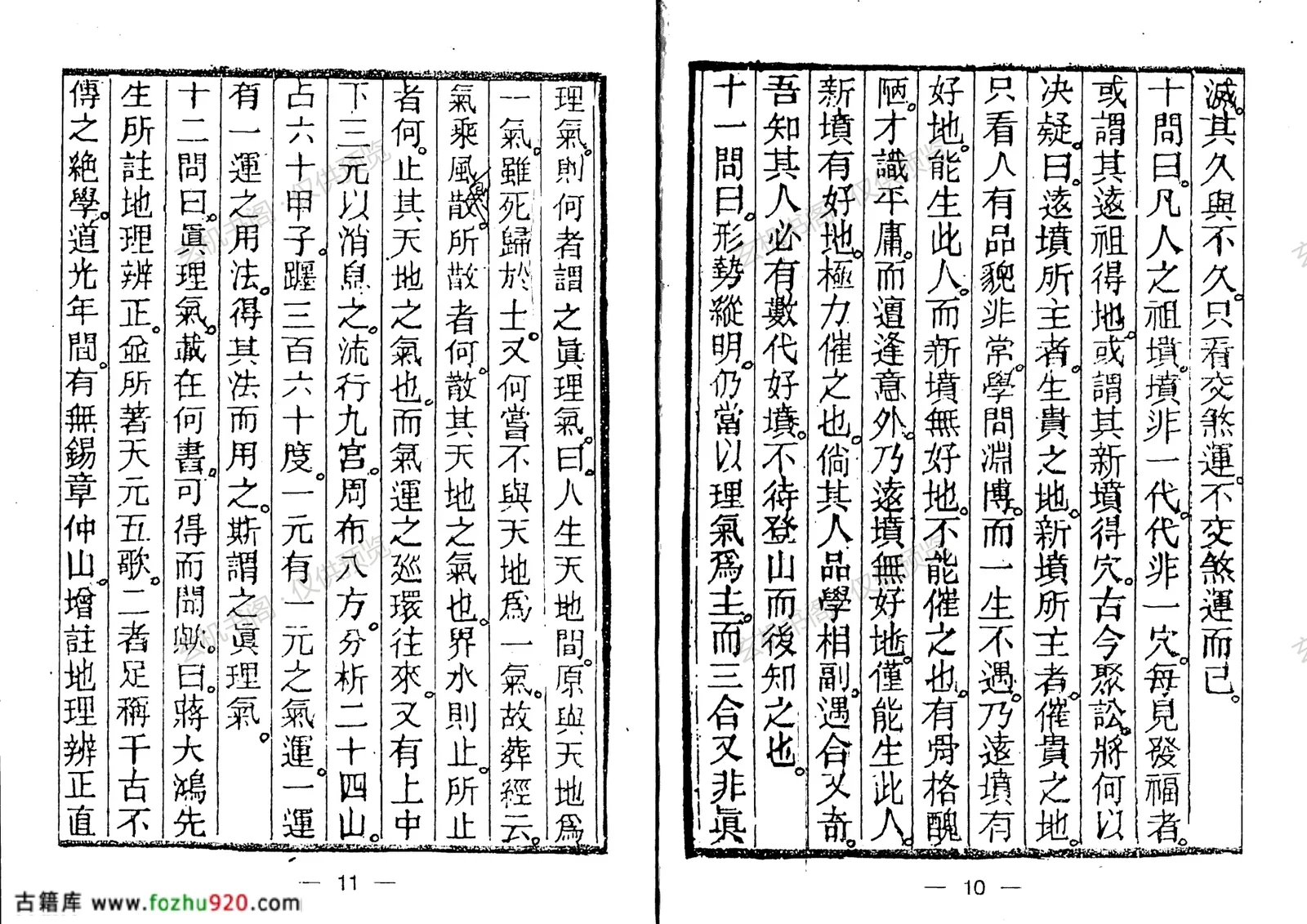
Resolving Doubts in Geography (Dili Bianhuo) is a Qing-era fengshui treatise attributed on its opening page to Ma Qing'e. The preface laments that true masters are rare and that fraudulent practitioners mislead the public, prompting the author to record conversations with friends and clients. The main text proceeds through numbered questions and answers, first clarifying the relationship between landscape forms (xingshi) and directional principles (liqi): forms provide the body, liqi the function, and dragons, lairs, sand, and water must correspond. It criticizes popular teachers who invent symbolic “animal” readings and peddle secret formulas. Later questions address Sanhe and Sanyuan methods, dragon-direction-water combinations, sand and water regulation, the nine palaces, twenty-four mountains, the sexagenary cycle, and cyclical calculations, with remarks on offspring, longevity, wealth, examination success, and Wenchang. The book insists on genuine dragon lairs and real expertise over rigid formulaic grids. This scanned old edition is useful for studying Qing fengshui debates over form and liqi, Sanhe-Sanyuan interaction, and burial practice.
Contents
Preface: rare true masters and prevalent false arts
Questions 1–3: body and function of forms and liqi
Questions 4–6: symbolic readings, Sanyuan, true expertise
Questions 7–9: offspring, wealth, examination success
Questions 10–11: ancestral and new graves, true liqi
Question 12: cyclical liqi and the nine palaces
Key Points
Uses Q&A to clarify the primacy of forms over liqi
Stresses matching dragon, lair, sand, and water over symbolic naming
Discusses Sanhe, Sanyuan, twenty-four mountains, and sexagenary cycles
Includes judgments on offspring, wealth, and examination success