Reading guide
Content guideOverview
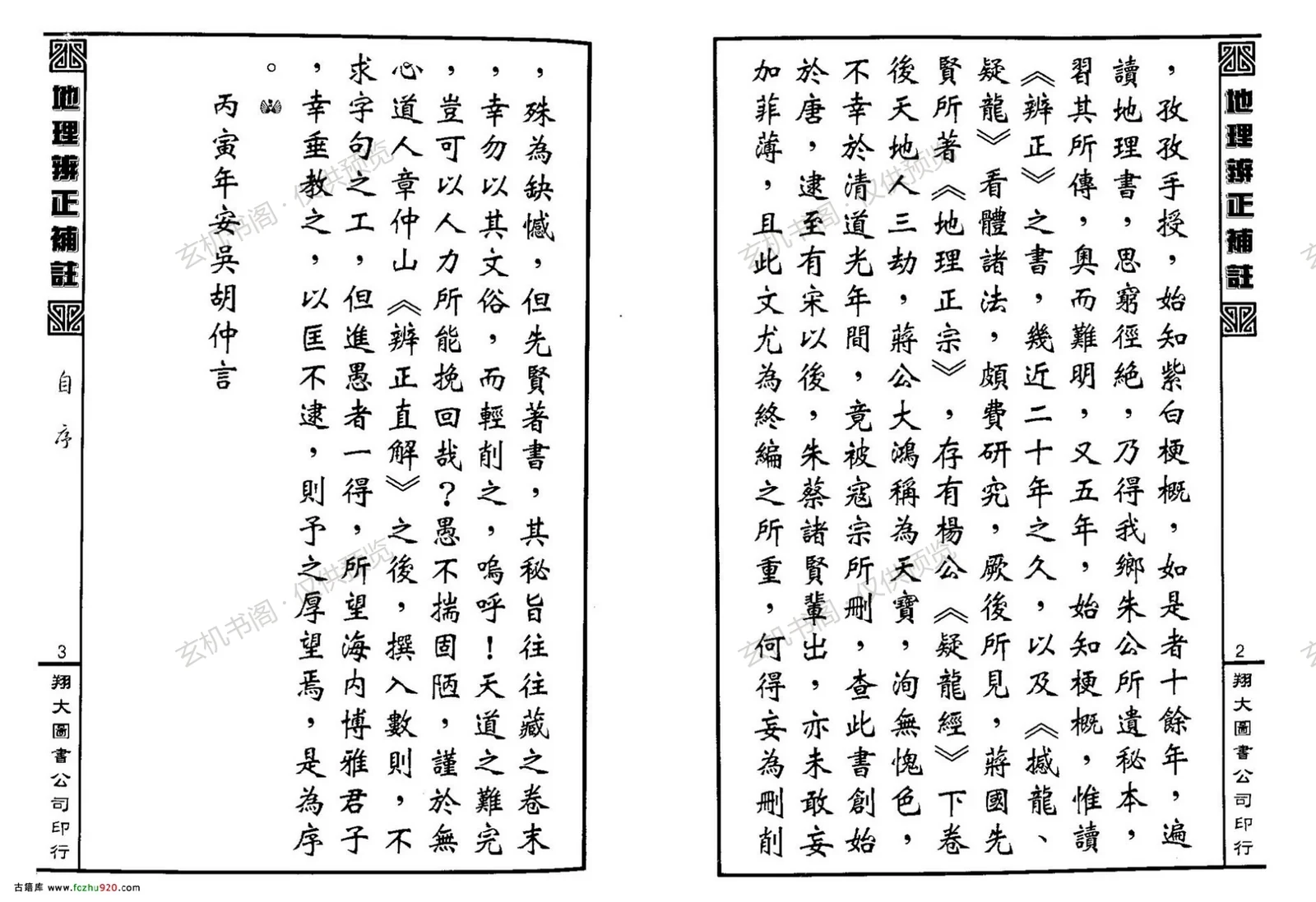
This is a classical Chinese feng shui text, volume 17 of the Xingming Jingdian Daxi series. The cover credits Jiang Dahong as author, Hu Zhongyan as annotator, and Li Zongyang as compiler. Three prefaces explain Jiang's Dili Bianzheng, which seeks to distinguish true from false in geomantic practice and to reveal the secrets of the Yang Gong classics such as the Qingnang Xu, Qingnang Aoyu, Tianyu Jing, and Dutian Baozhao Jing. The annotations proceed word by word and phrase by phrase, drawing on earlier commentaries and correcting popular errors and forged hexagram methods. The content concerns Xuan Kong principle-qi theory, Hetu-Luoshu hexagram patterns, and dragon-den-sand-water topics, making it a useful source for students of Jiang Dahong's Xuan Kong system and Qing dynasty geomantic scholarship.
Contents
Cover credits: Jiang Dahong author, Hu Zhongyan annotator, Li Zongyang compiler
Preface 1: on geomancy and the purpose of Dili Bianzheng
Preface 2: on the Yang Gong classics and the transmission of Qingnang secrets
Preface 3: on the reasons and method of supplementing and recension
Main text: supplementary annotations to Dili Bianzheng (not shown in preview)
Key Points
Based on Jiang Dahong's Dili Bianzheng with supplements and recension
Cross-references Yang Gong classics such as Qingnang Xu and Tianyu Jing
Distinguishes authentic geomancy from popular errors and forgeries
Belongs to the Xuan Kong principle-qi tradition, stressing hexagram patterns
Prefaces reveal the scholarly context of Qing dynasty geomantic commentary