Reading guide
Content guideOverview
This is a commentary edition of Geoli Bianzheng (Evidential Commentary on Geographical Principles) attributed to the late-Ming/early-Qing feng shui master Jiang Pingjie (Jiang Dahong). The cover shows a Daoguang jichou printing with the Peixing Shuwu woodblock label, and the prefatory pages discuss the transmission of geographical learning from Yang Yunsong and other classical masters. The book uses the framework of bianzheng, or critical correction, to evaluate popular geographical texts and oral formulas, arguing for a purer interpretation that integrates Xuan Kong directional theory with form-based observation of dragons, cavities, sand, and water. It touches on the Yijing, the twenty-four mountains, sixty-four hexagrams, and the practical work of assessing terrain. Because it is a woodblock reprint with archaic wording and esoteric terminology, readers need some grounding in compass-based feng shui and classical geographical terms to follow the arguments.
Contents
Cover: Geoli Bianzheng Shu, Daoguang jichou printing, Peixing Shuwu woodblocks
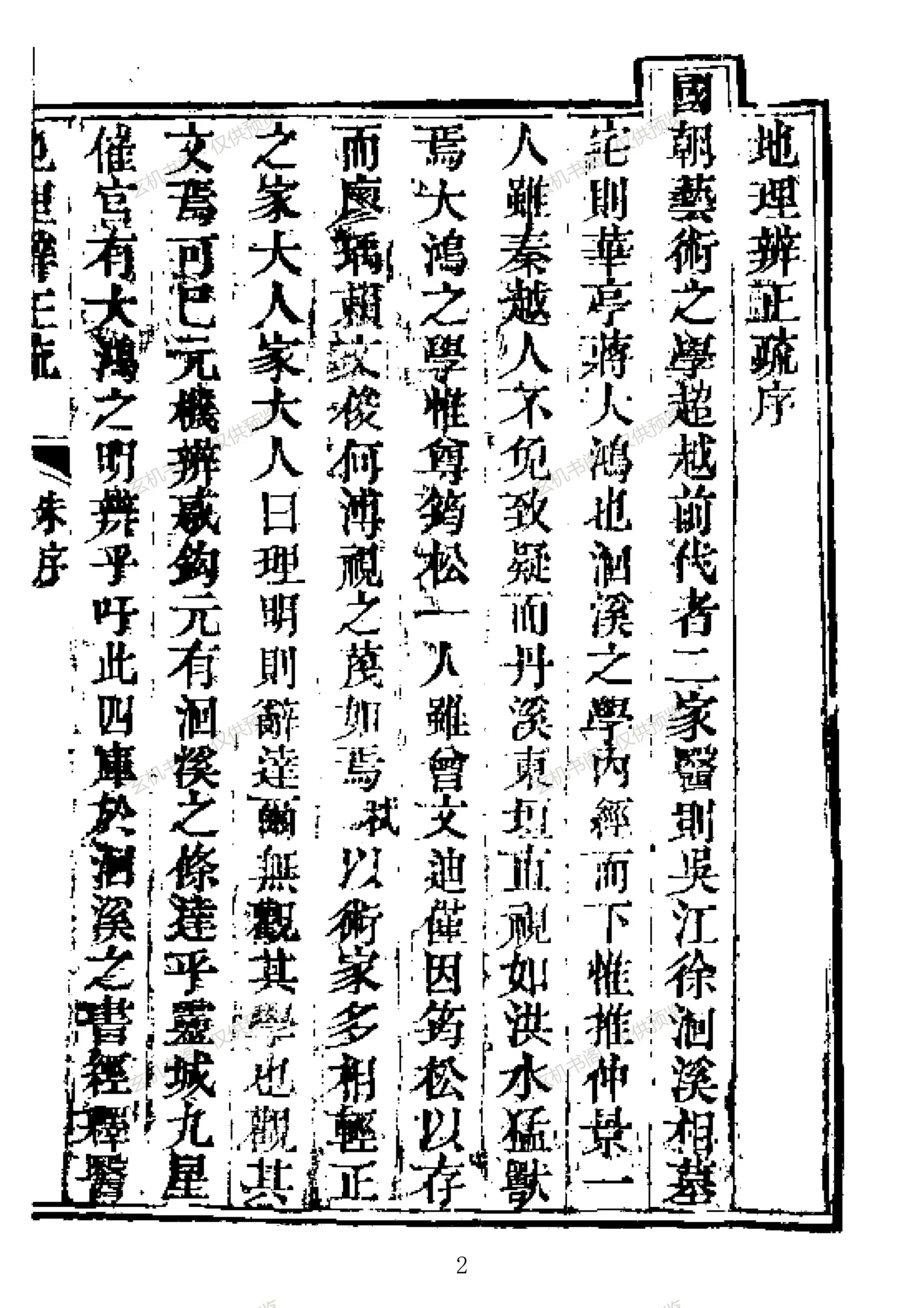
Preface on Jiang Dahong's geographical learning and the book's purpose
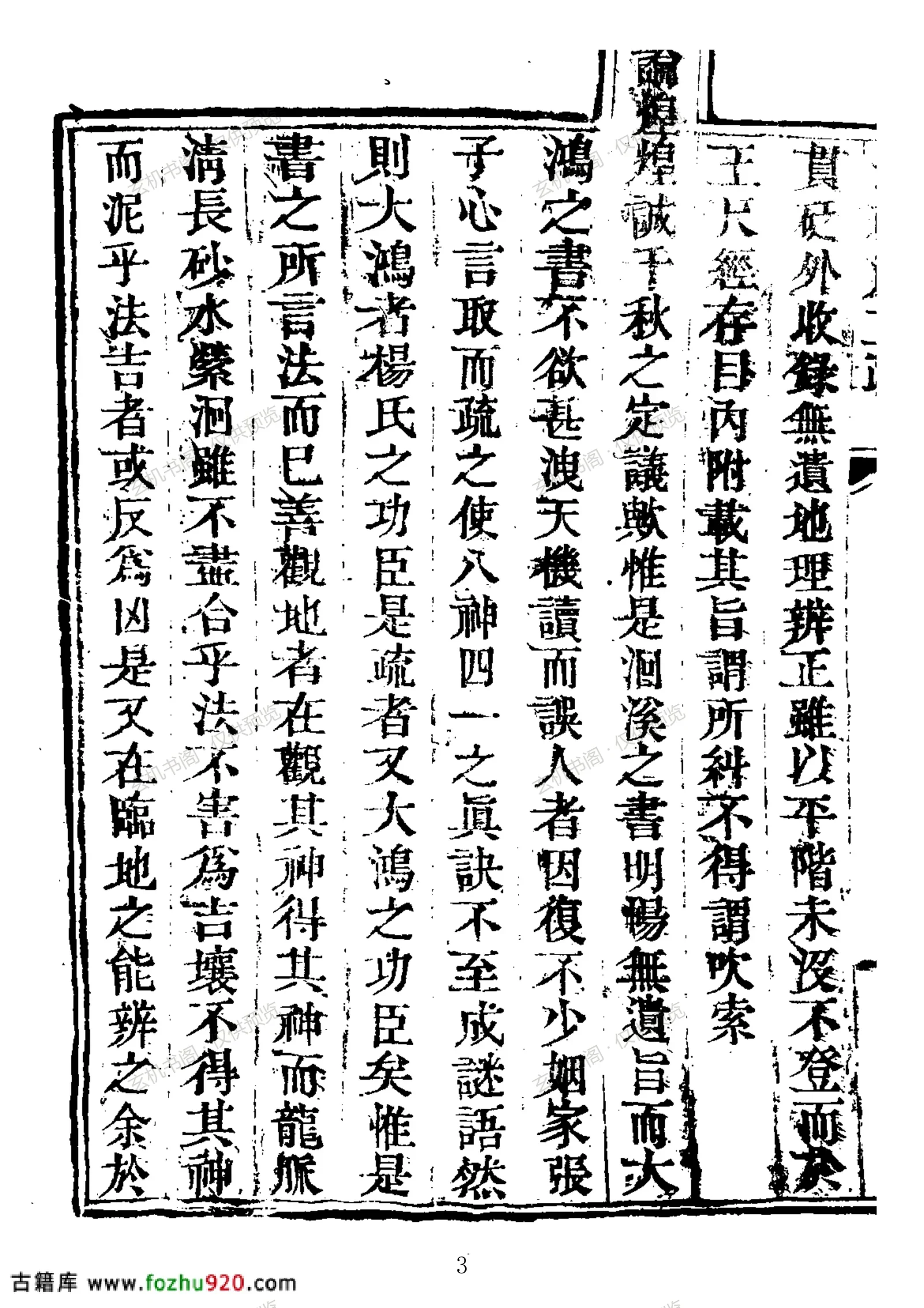
Critique of Yang Yunsong, Zeng Wenchuan, and Liao Yu traditions
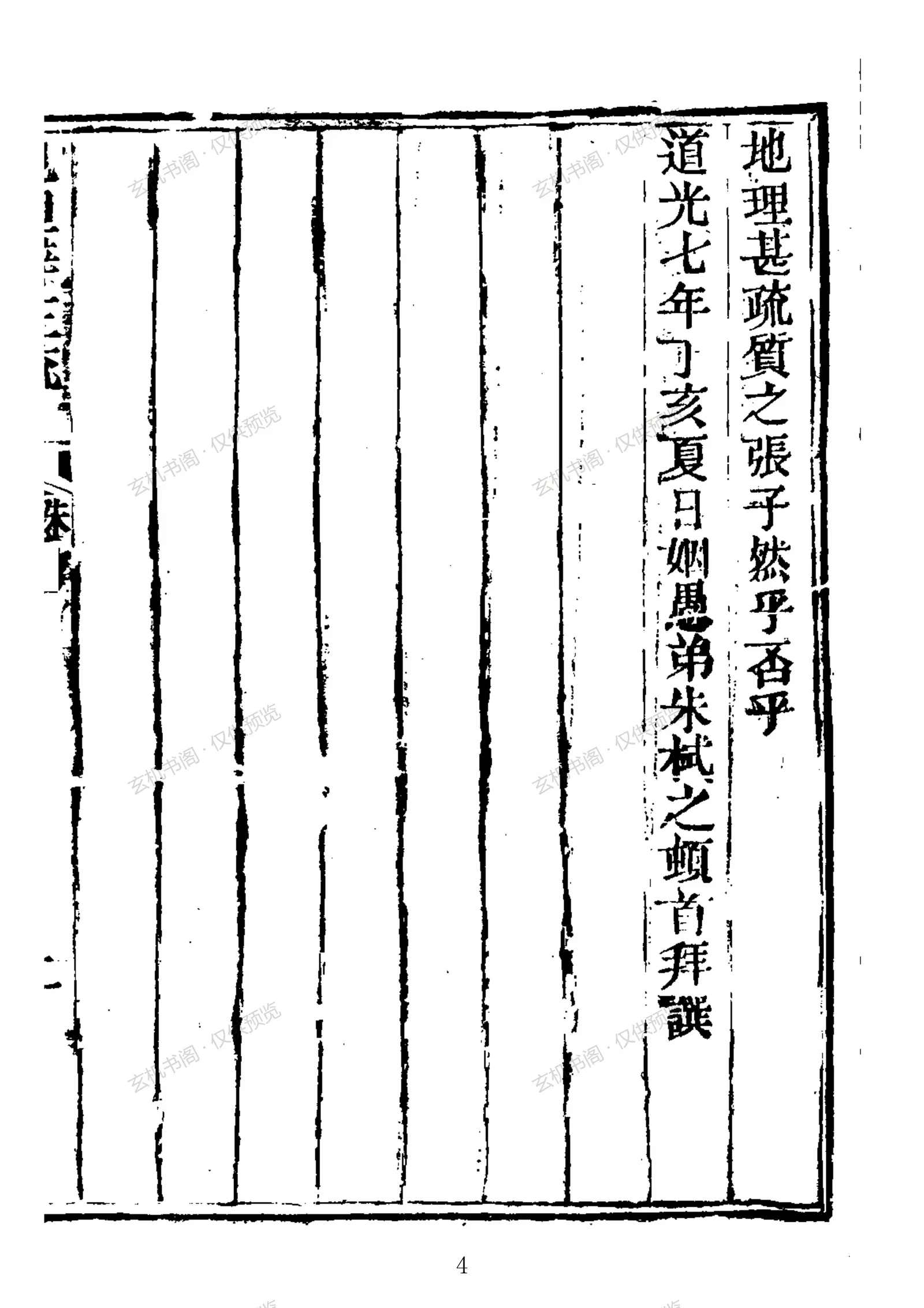
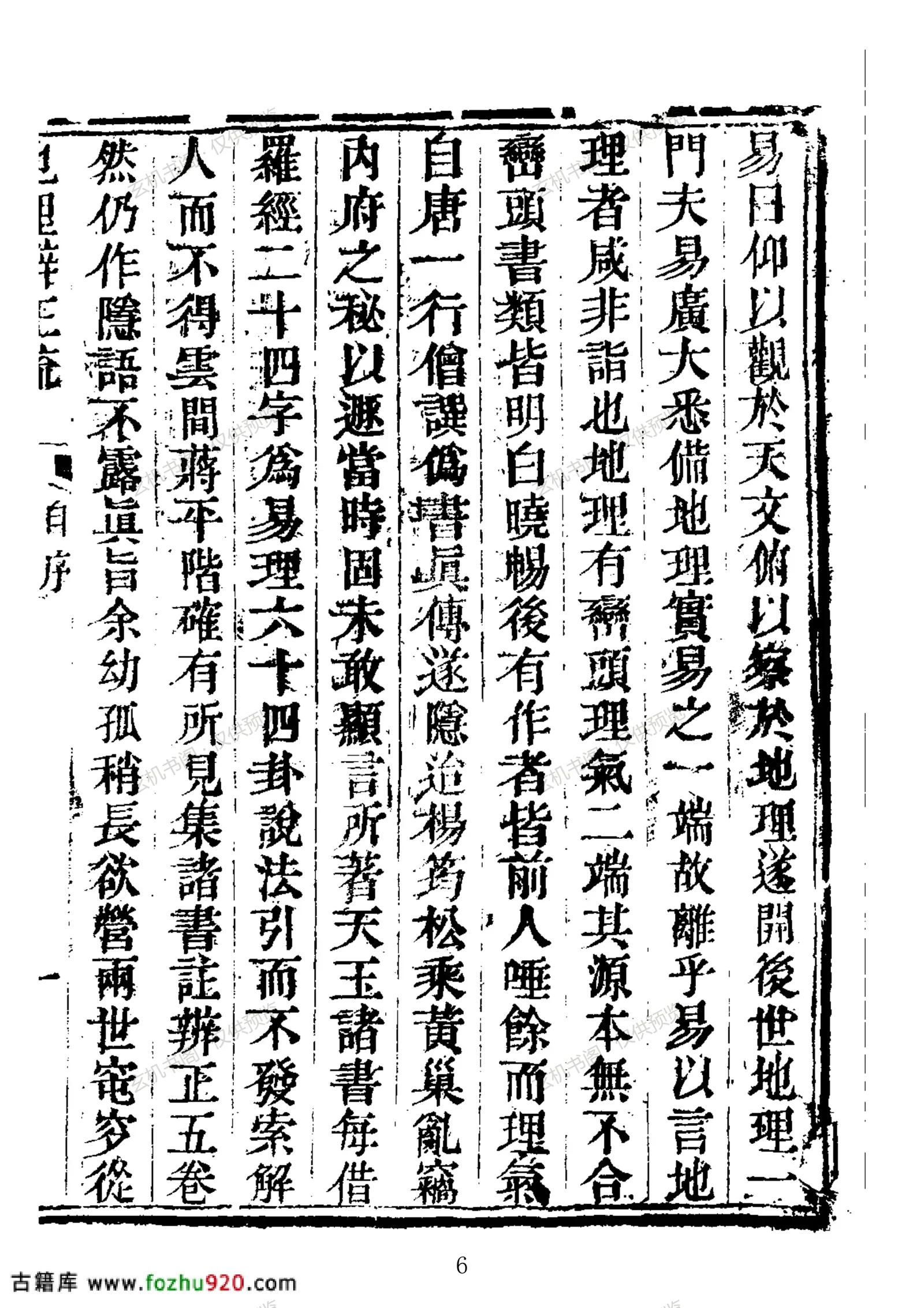
Author's preface on the five-juan structure and hidden-language problems
Main text on Yijing numerology, twenty-four characters, and sixty-four hexagrams
Discussion of form methods and on-site cavity identification
Key Points
A commentary on Jiang Dahong's Geoli Bianzheng within the Xuan Kong tradition.
The cover identifies a Daoguang-era printing by Peixing Shuwu.
Prefaces debate the authenticity of Yang Yunsong and other old teachings.
Combines directional theory with form-based landscape assessment.
Requires familiarity with the twenty-four mountains and hexagram systems.