Reading guide
Content guideOverview
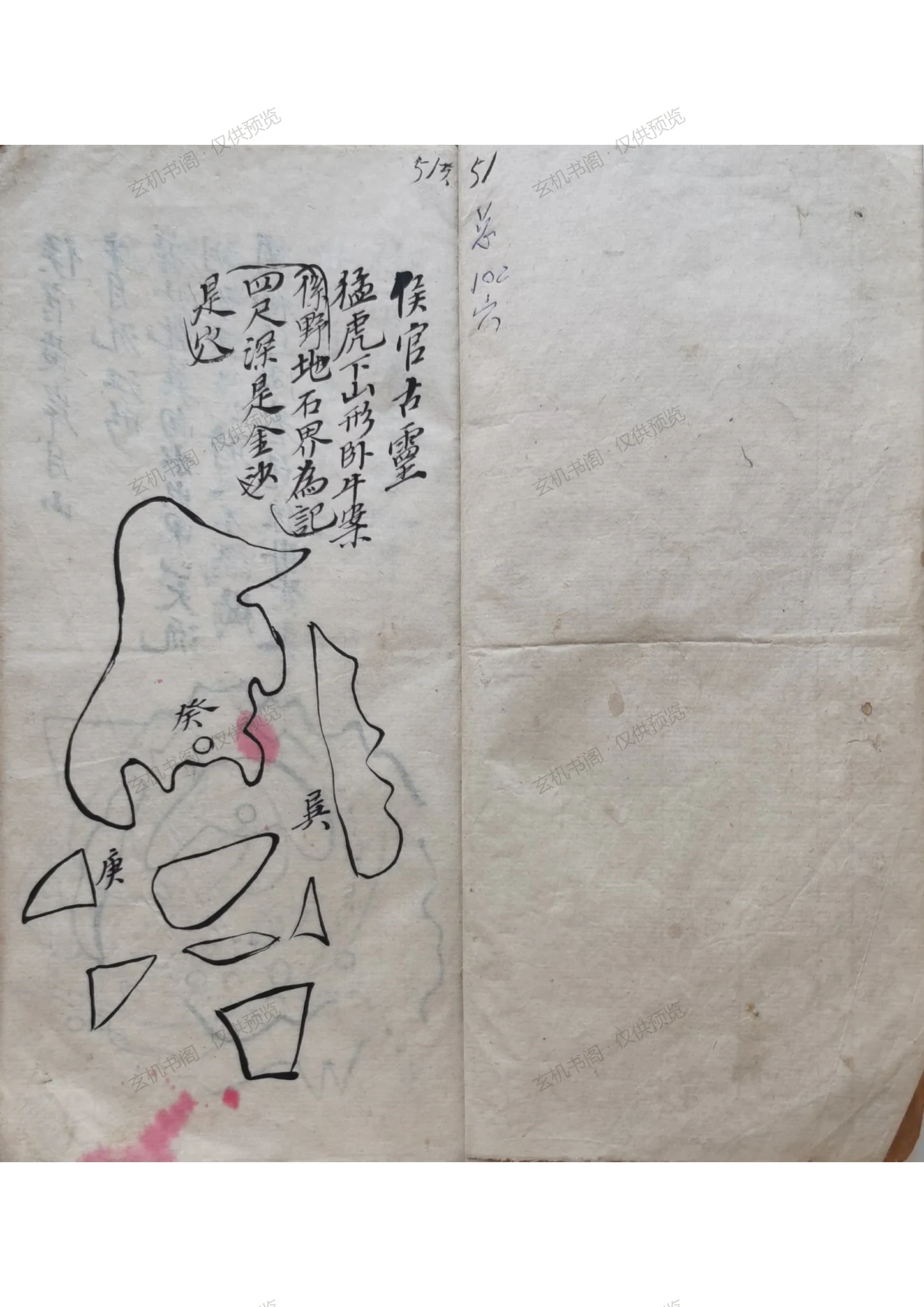
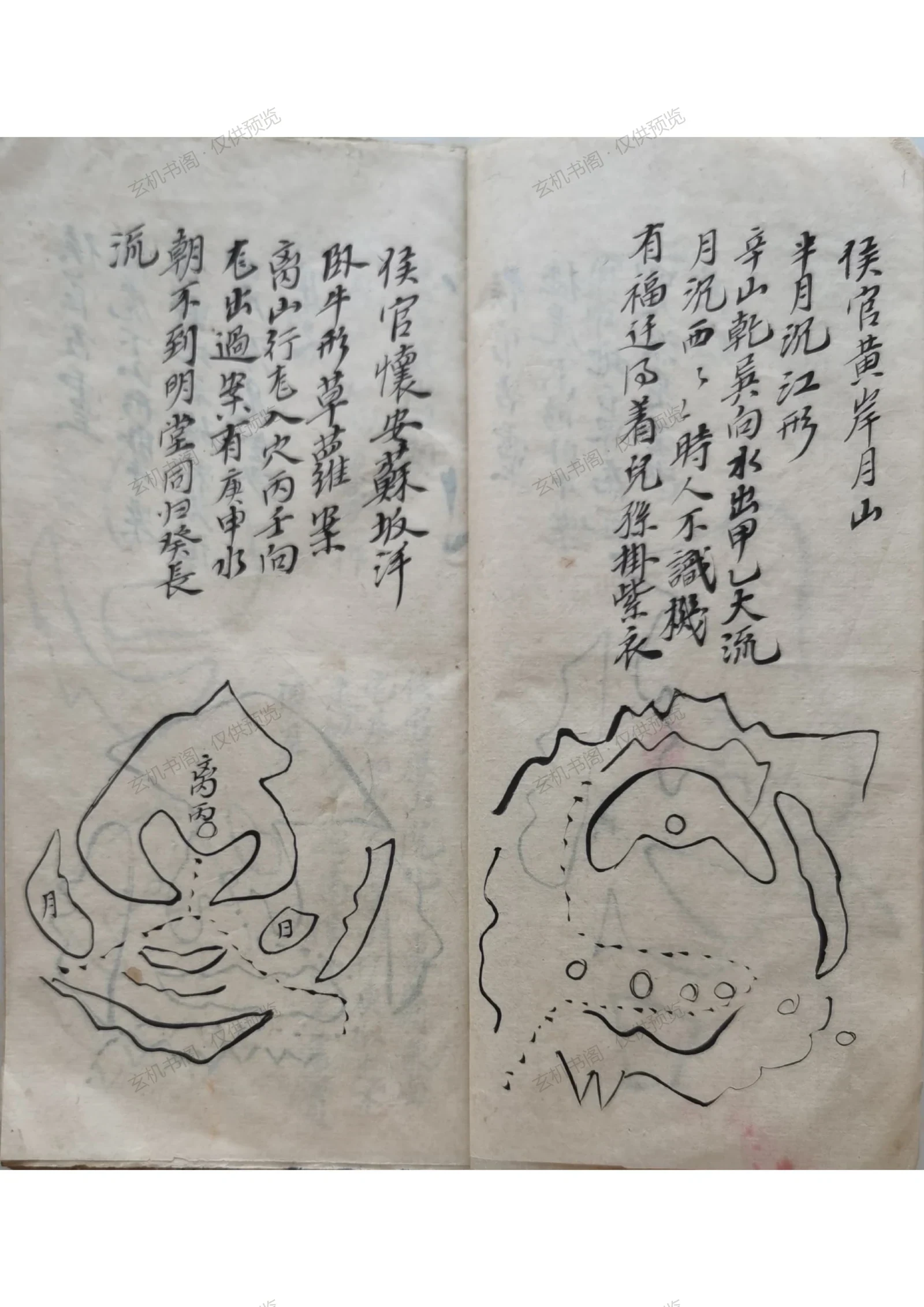
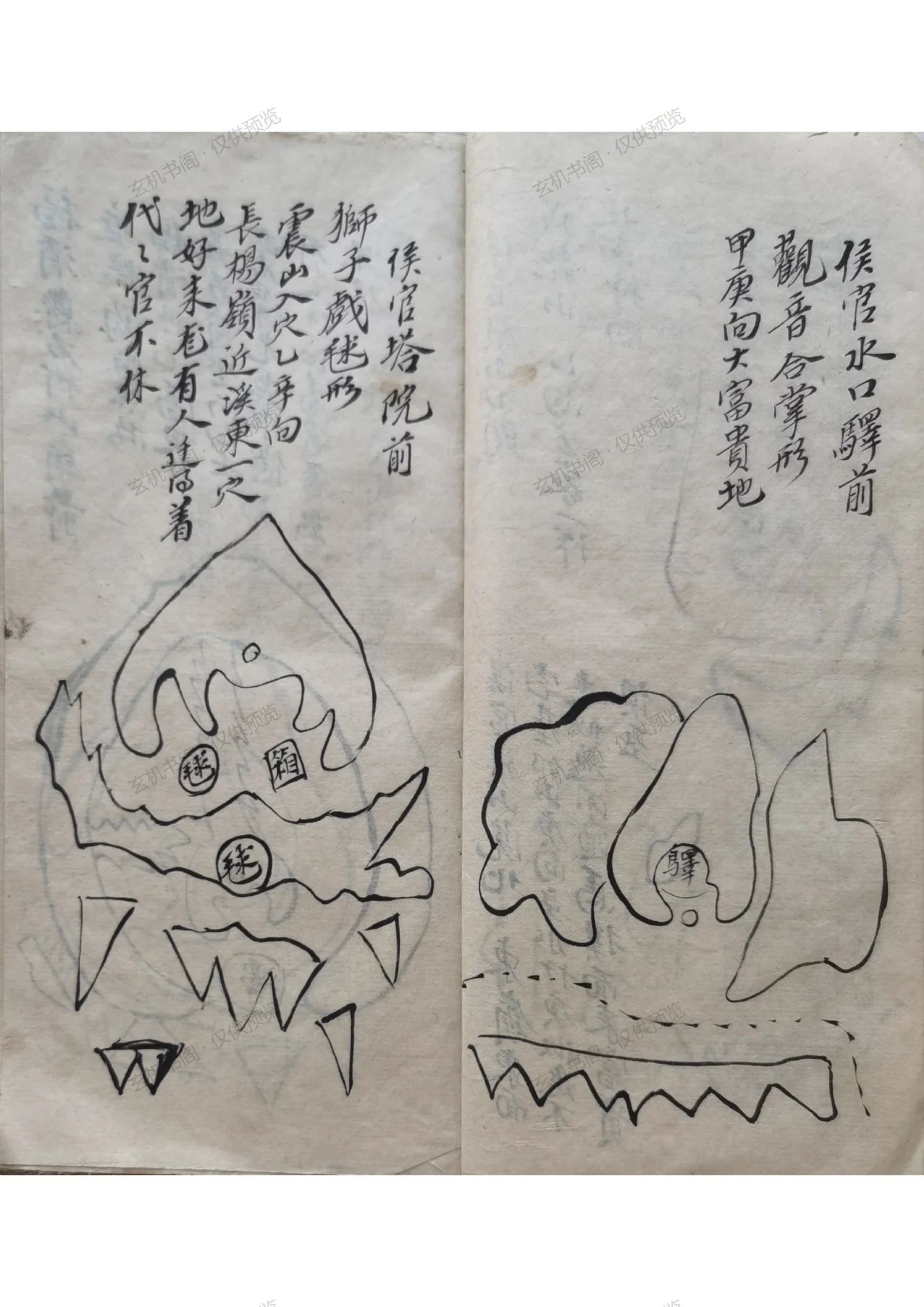
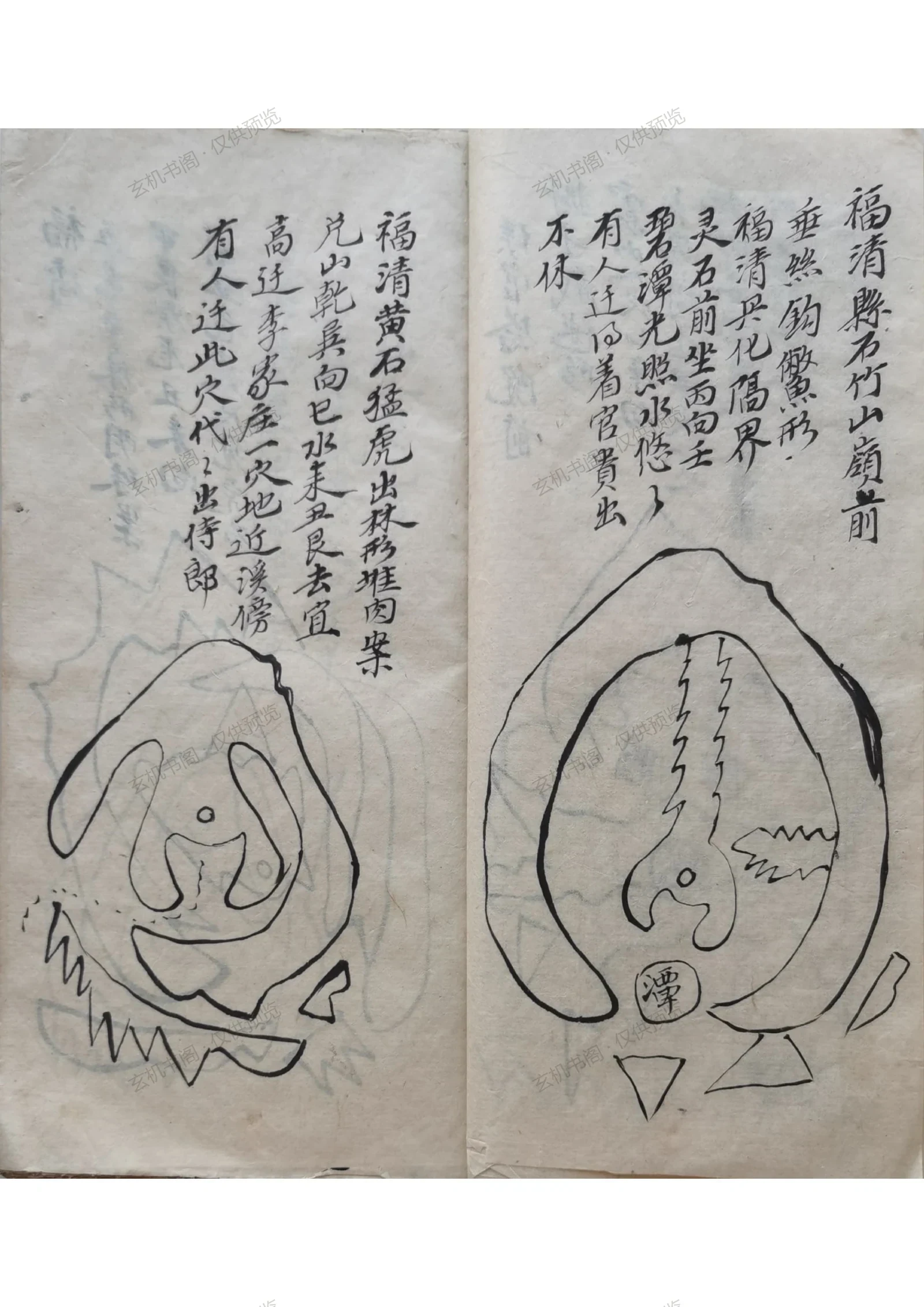
The Dili Jiu is a handwritten geomantic manuscript compiled in an illustrated chart format, documenting several specific feng shui cases. Each case presents a rough sketch of local topography, accompanied by a descriptive nickname such as “Tiger Descending the Mountain,” “Half Moon Sinking in the River,” “Lion Playing with a Ball,” or “Guanyin with Palms Together.” Handwritten cursive annotations beside the diagrams explain the dragon vein, water mouth, surrounding peaks, and the rationale for locating the burial spot. The notes also include specific orientations, depth for digging the grave, and pronouncements on the fortunes of descendants, such as “those who move here will have descendants wearing purple robes.” The book lacks a title page, author, and date; the paper, ink, and layout suggest it is a working manual copied by a folk feng shui master for on-site survey. Its value lies in preserving a set of first-hand records of practical geomantic form-school practices and the tradition of naming landforms by analogy.
Contents
Houguan Gulin: Tiger descending mountain and well depth
Houguan Huang'an: Half-moon river and water flow orientation
Houguan Huai'an: Recumbent ox form and straw-sandal nest
Houguan Qishan: Mountain head with Xun orientation and wealth
Houguan Tayuan: Lion playing ball and a single spot at Changyang Ridge
Fuqing Shizhu Mountain: Yellow stone tiger emerging from forest
Key Points
Uses hand-drawn diagrams to record specific mountain and water configurations
Each diagram is paired with an analogical name, such as tiger descending or half moon sinking
Notes orientations, water mouths, and grave depth as practical data
Includes pronouncements on descendants' fortunes, such as high officialdom