Reading guide
Content guideOverview
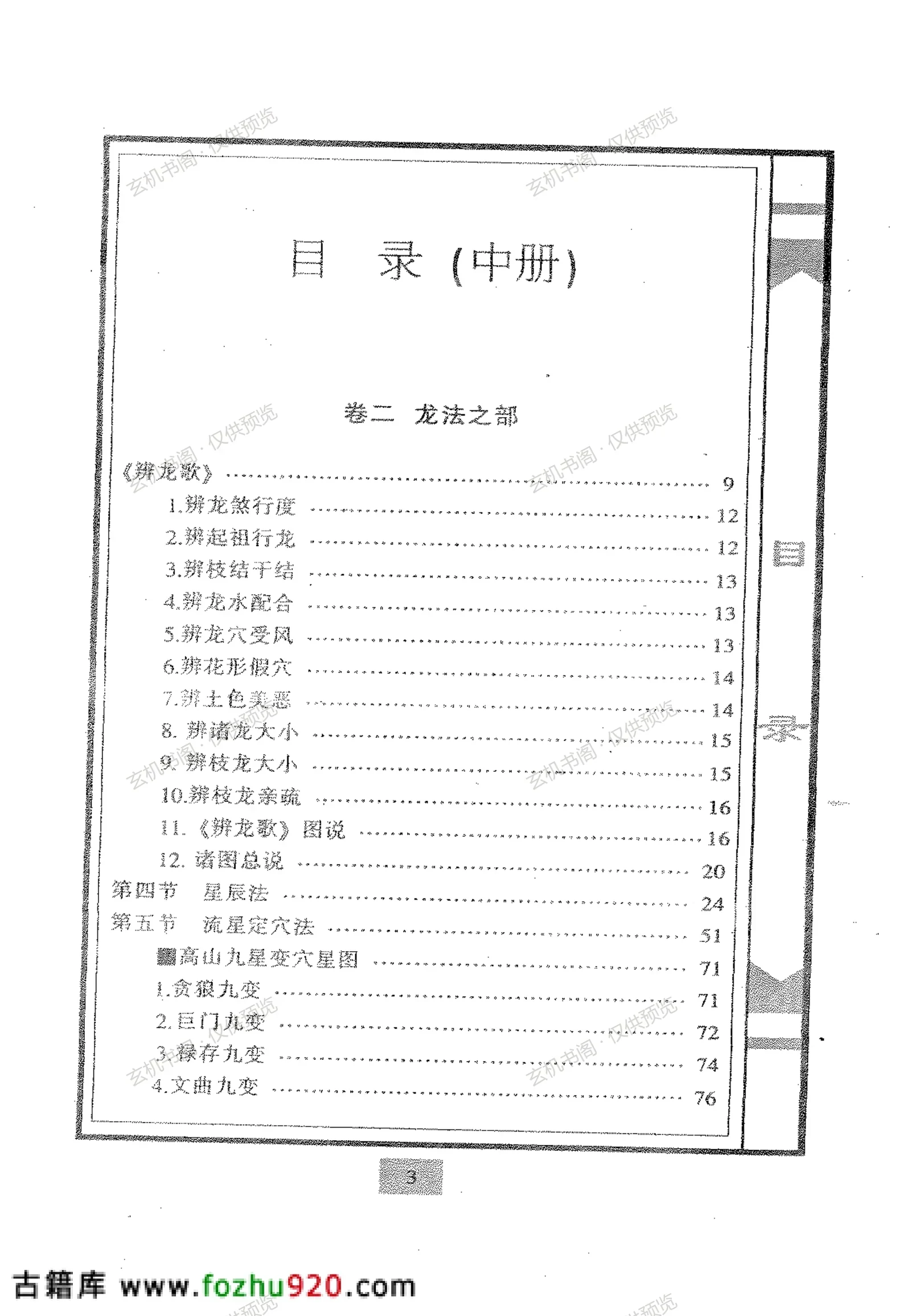
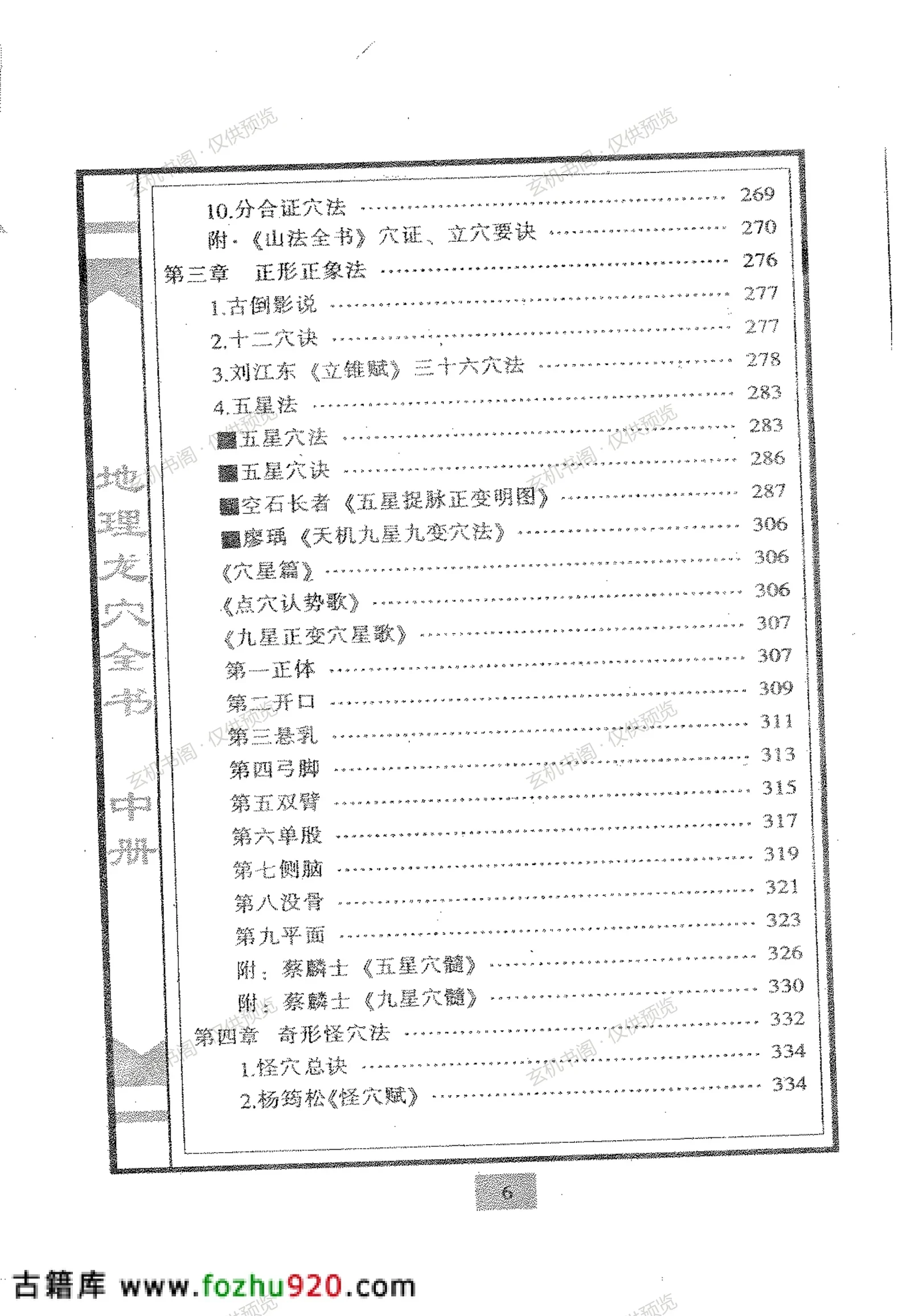
This is the middle volume of the Complete Book of Geographical Dragon Lairs, a form-school (luantou) feng shui work attributed on the cover to Budaowu. Volume Two, on dragon methods, builds around the Dragon-Discriminating Song, examining dragon energy, ancestral and branch dragons, dragon-water pairing, wind exposure, false lairs, soil colour, and the relative size and closeness of dragon branches, followed by diagram explanations. It then presents star methods and moving-star site fixing, pairing each of the nine stars (Tanlang through Zuofu) with nine transformations and mountain acupoint-star diagrams, and includes the Wanglong Jing with its several commentaries on yin-yang transformation, plus dragon-pattern illustrations from the Zhenlong Mingsui, Zhang Ziwei's Yusui Zhenjing and Li Chunfeng. Volume Three, on acupoint methods, opens with a general survey and gathers methods by Sima Toutuo, Ye Jiusheng, the Daofa Shuangtan, Cai Mutang's Acupoint Emotion Rhapsody, the four great acupoint emotions, and Liao Yu's Halo Method. Its core is the seventeen ways of fixing acupoints and ten ways of verifying them from the Renzi Xuzhi, with an appendix from the Shanfa Quanshu. Later chapters cover true-form imagery, five-element and five-star acupoint methods, Kongshi Changzhe's illustrated five-star pulse diagrams, Liao Yu's nine-star nine-transformation method, Cai Linshi's treatises, and finally strange acupoints with Yang Junsong's Rhapsody on Strange Acupoints. Organised as chants, rhapsodies and diagrams, it is a substantial compilation for studying dragon-and-lair theory.
Contents
Volume 2, dragon methods: the Dragon-Discriminating Song on energy, branches and water pairing
Star methods and moving-star site fixing: nine stars with nine transformations
Yin-yang transformation: the Wanglong Jing and its commentaries
Pattern methods: Zhenlong Mingsui and Yusui Zhenjing dragon diagrams
Volume 3, acupoint methods: Sima Toutuo, Ye Jiusheng, Cai Mutang and others
Seventeen ways of fixing and ten ways of verifying acupoints from Renzi Xuzhi
True-form imagery: five-element, five-star and nine-transformation methods
Strange acupoints: general principles and Yang Junsong's rhapsody
Key Points
Uses the Dragon-Discriminating Song to assess dragon authenticity, branches and water pairing
Nine-star nine-transformation diagrams are key form-school schematics
The seventeen fixing and ten verifying methods form the core framework
Collects chants and diagrams from Yang Junsong, Liao Yu, Cai Mutang and Ye Jiusheng