Reading guide
Content guideOverview
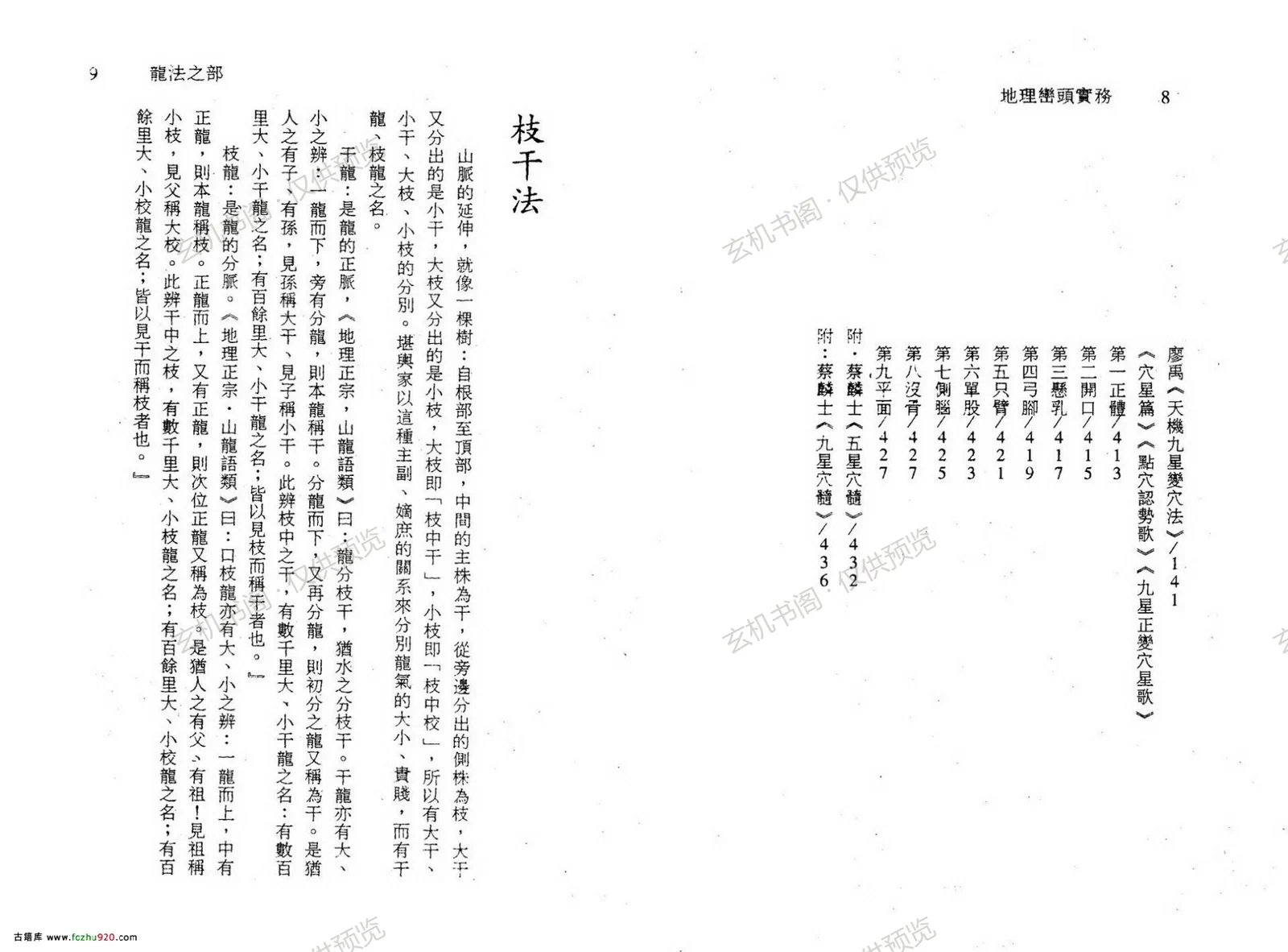
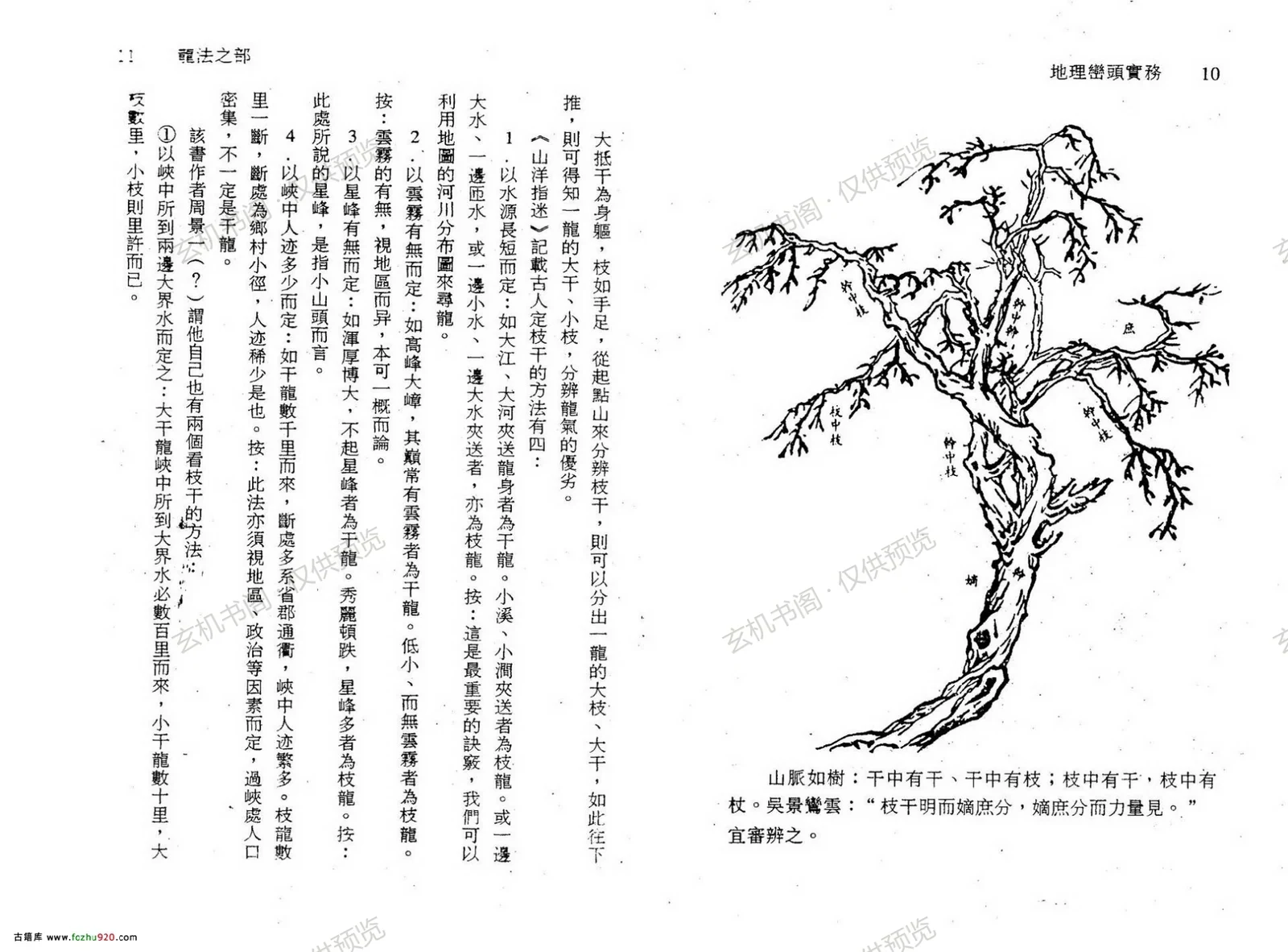
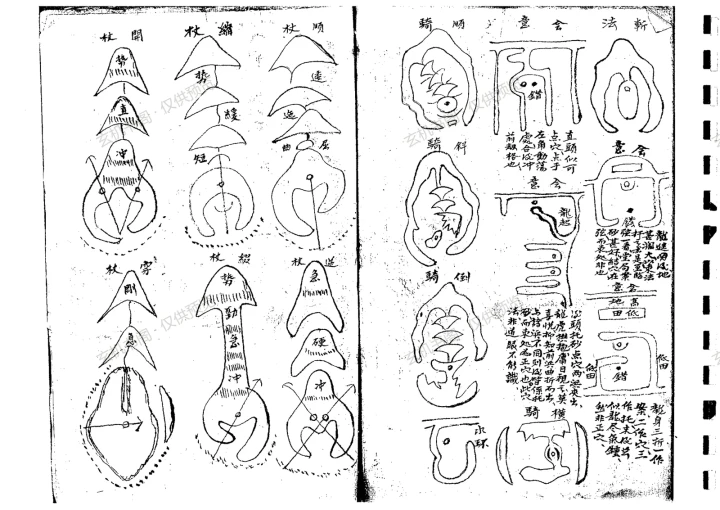
This is the middle volume of Zhong Yiming's Practical Studies in Terrain Feng Shui, a hands-on work in the form-luan-tou school. Organized around the four branches of dragon, acupoint, sand, and water, it concentrates on dragon and acupoint methods. The dragon section begins with the branch-and-trunk method, using a tree as a metaphor to distinguish main and secondary dragon veins, drawing on classical sources such as Dili Zhengzong and Shanyang Zhimi, and discussing water sources, cloud cover, and peak forms as field indicators, with a branching mountain diagram. The star section covers the nine mountain stars, their transformations into acupoints, and yin-yang qi transformation, quoting verses from Wanglong Jing and related commentaries. The acupoint section starts from the three major acupoint-star categories, describes how metal, wood, water, fire, and earth star forms produce acupoints, and collects specific placement methods from Renzi Xuzhi, including taiji, liangyi, sanshi, and santing methods, along with passages from Daofa Shuangtan and Liaoyu's measurement methods. The table of contents also lists twenty-four dragons and forty-eight configurations. Richly illustrated with verses and diagrams, it suits readers with some terrain foundation who want systematic practical training in dragon seeking and acupoint location.
Contents
Branch-and-trunk method: main and secondary dragons
Star method: nine mountain stars and transformations
Yin-yang qi transformation and Wanglong Jing
Acupoint section: three star categories and five-element forms
Renzi Xuzhi placement methods and three configurations
Classical passages on acupoint feeling and measurement
Key Points
Uses a tree metaphor to clarify main and secondary dragon relationships
Emphasizes water sources, clouds, and peaks as field indicators
Collects classical verses and diagrams from Wanglong Jing and Renzi Xuzhi
Details placement methods from taiji and liangyi to sanshi and santing