Reading guide
Content guideOverview
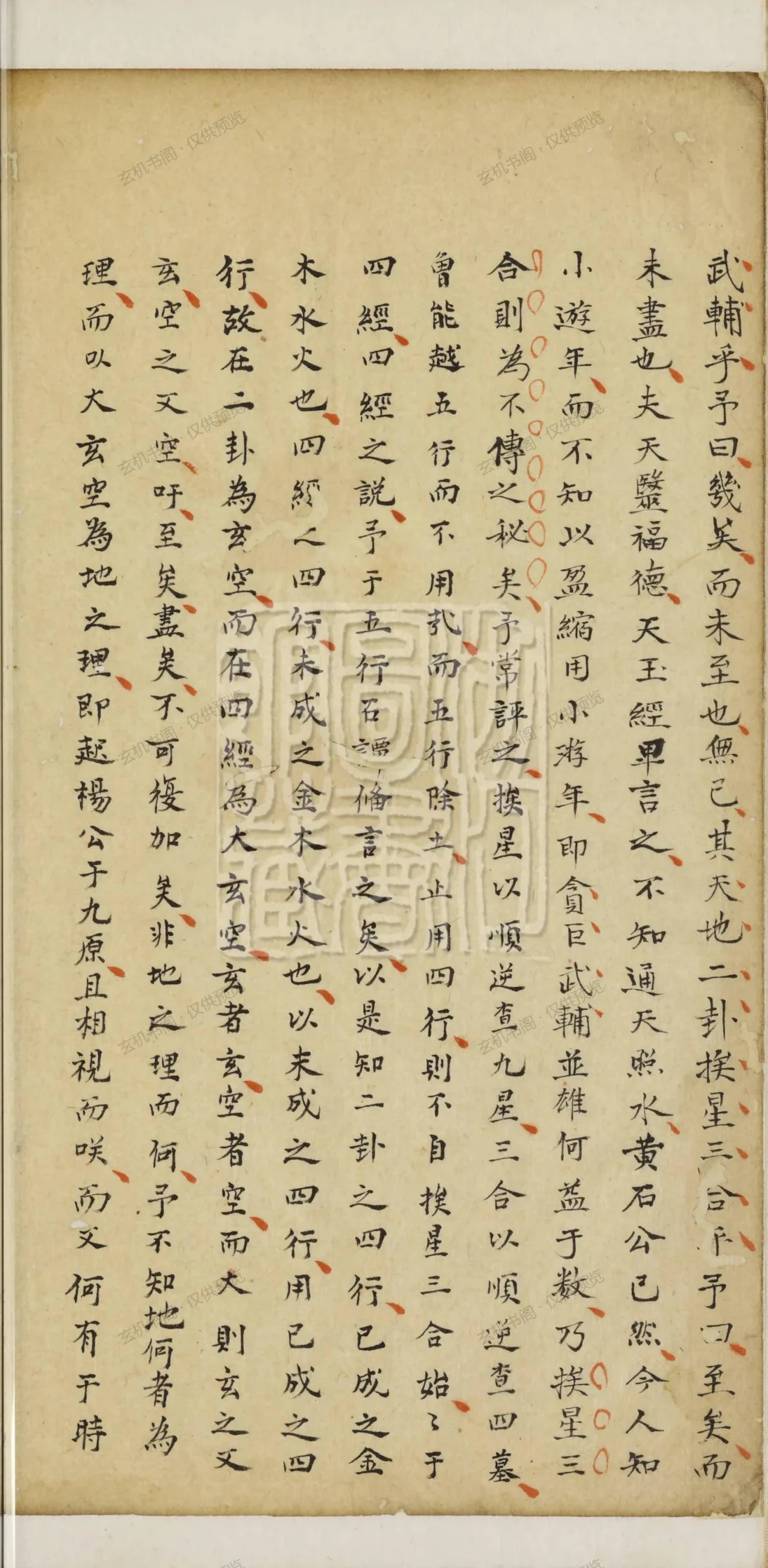
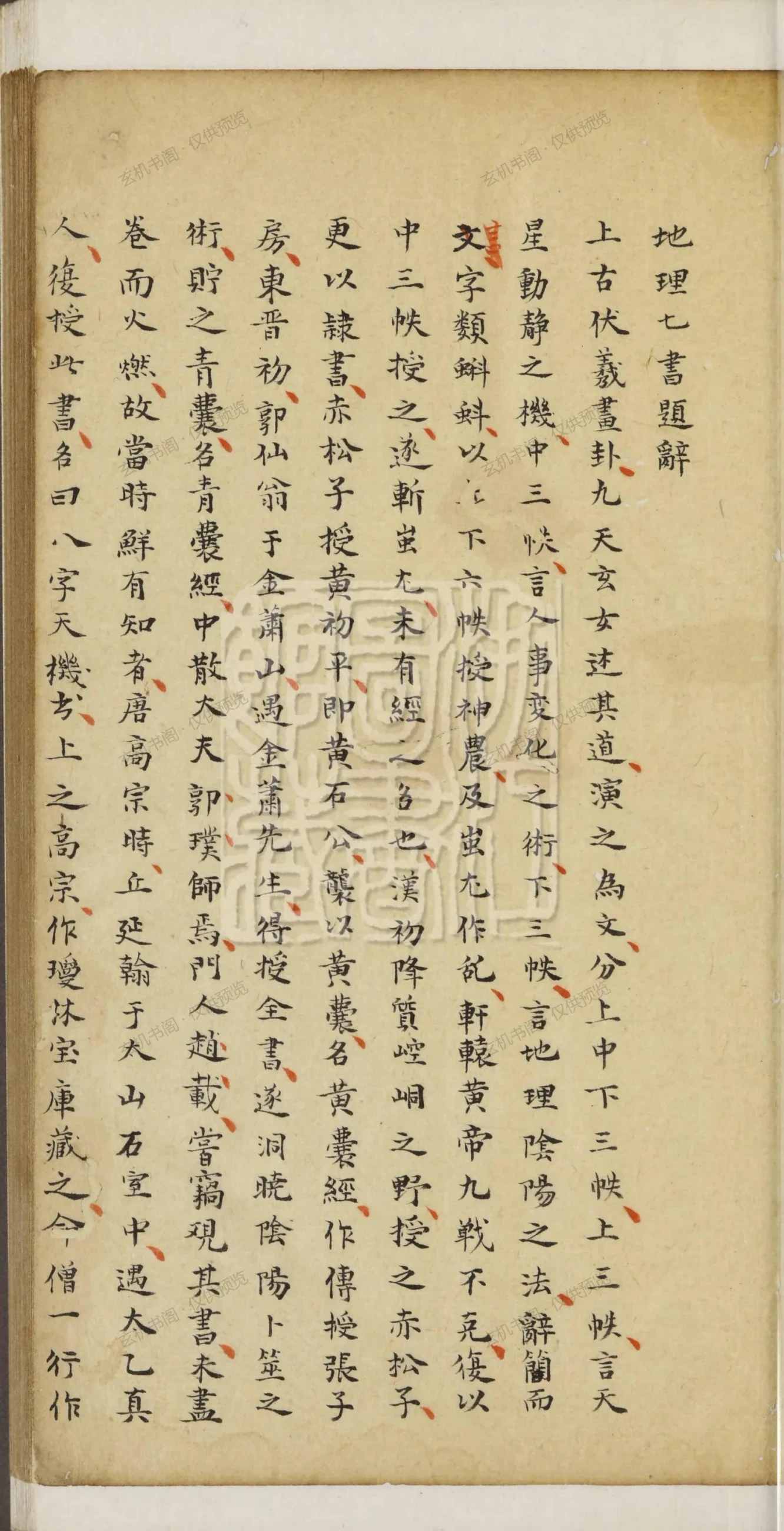
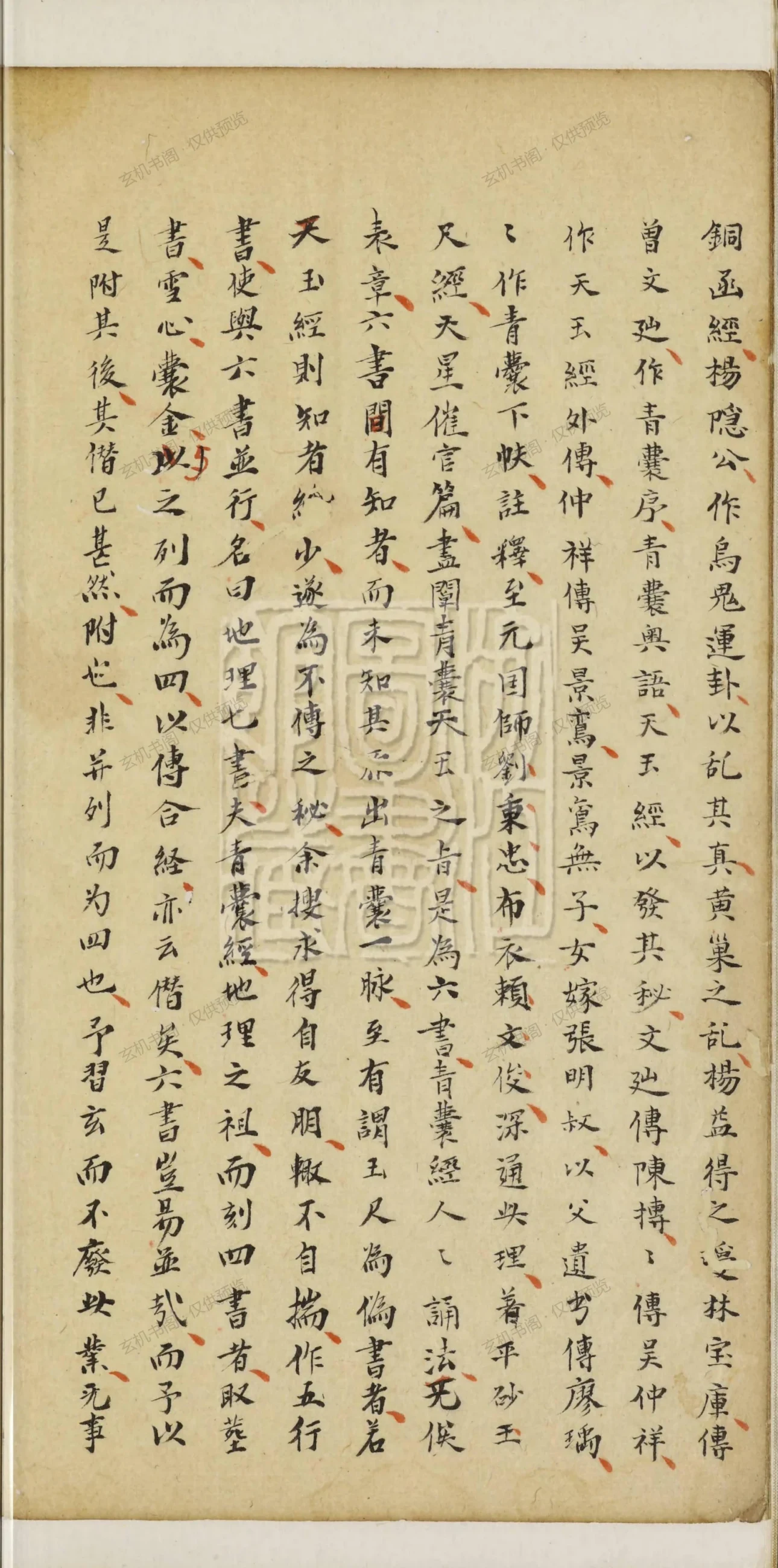
These pages preserve the preface and introductory remarks of the feng shui compilation Seven Books of Geography. The preface argues that form and principle must be considered together, criticising those who rely only on directional stars and hexagrams without understanding landforms, and roots the tradition in the Qingnang and Tianyu classics. The introduction recounts a legendary transmission from Fuxi and the Yellow Emperor through Chisongzi and Huang Shigong to Zhang Liang, then follows Guo Pu's full Qingnang text, Yang Junsong's outer transmission of the Tianyu Scripture, Zeng Wenchuan's Qingnang preface, and later figures such as Wu Jingluan and Liu Bingzhong. It also explains how six books were expanded into seven. A preface dated the winter of 1617 by Peng Haogu shows the Ming printing context. The material is useful for tracing the origins of the Jiangxi Sanhe school.
Contents
Preface: form and principle must not be separated
Introduction: transmission from Fuxi to Huang Shigong
Guo Pu's Qingnang and Yang Junsong's Tianyu
Zeng Wenchuan's preface and later lineage
How six books became seven
Peng Haogu's 1617 colophon
Key Points
Insists on balancing form and principle over star-hexagram speculation
Traces the Qingnang–Tianyu master-disciple lineage
Explains that seven books result from expanding six
Peng Haogu's preface records the printing background