Reading guide
Content guideOverview
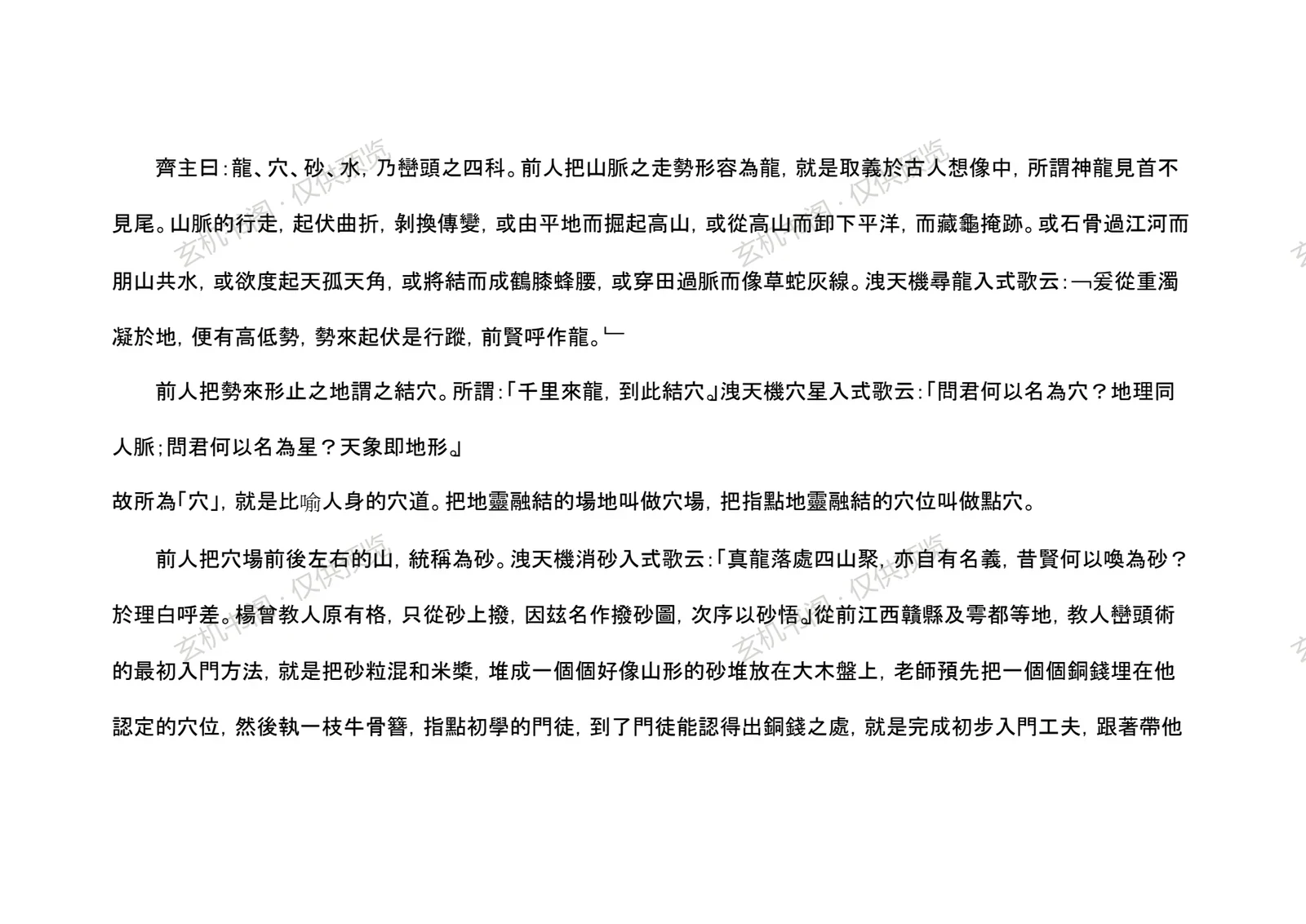
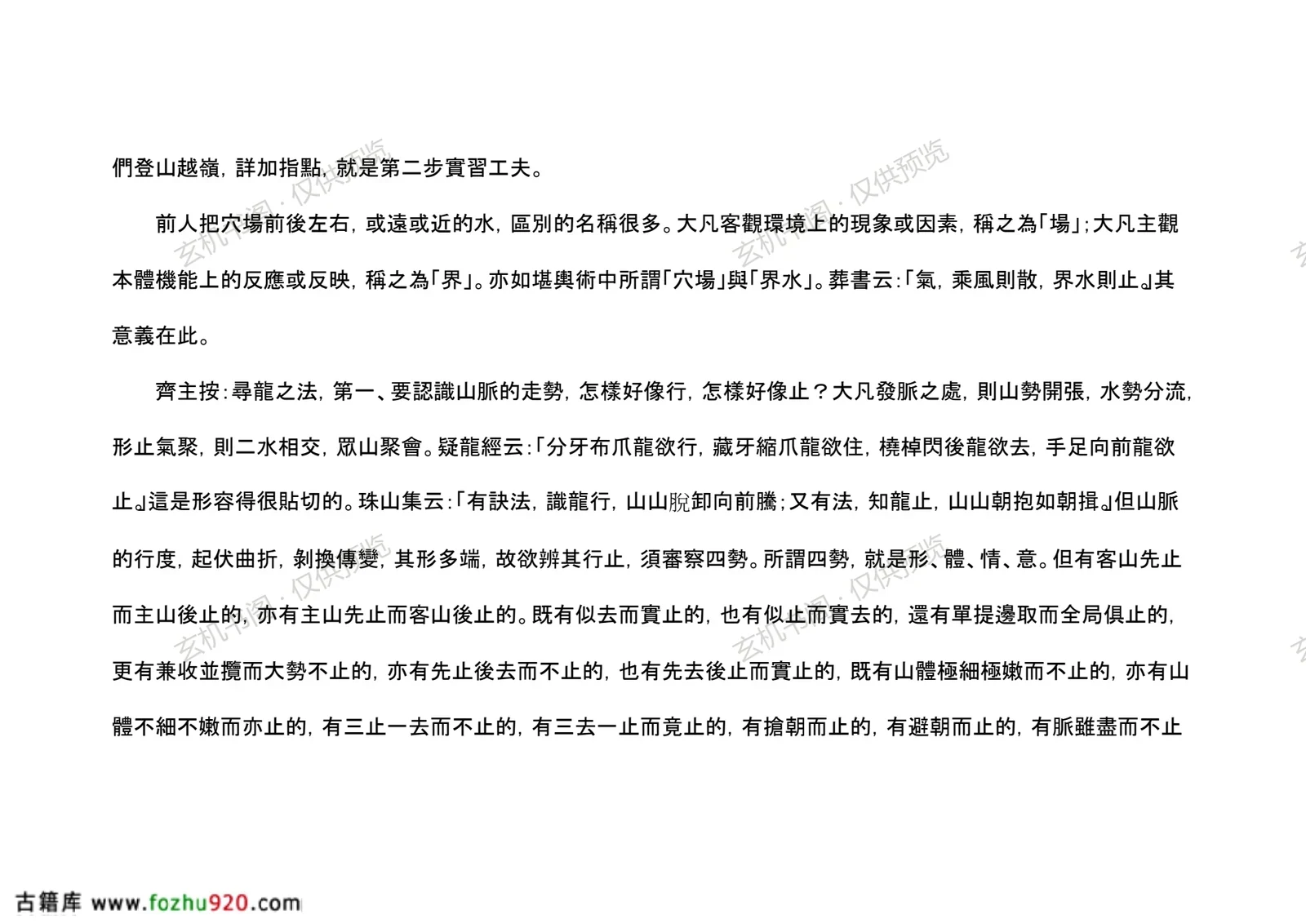
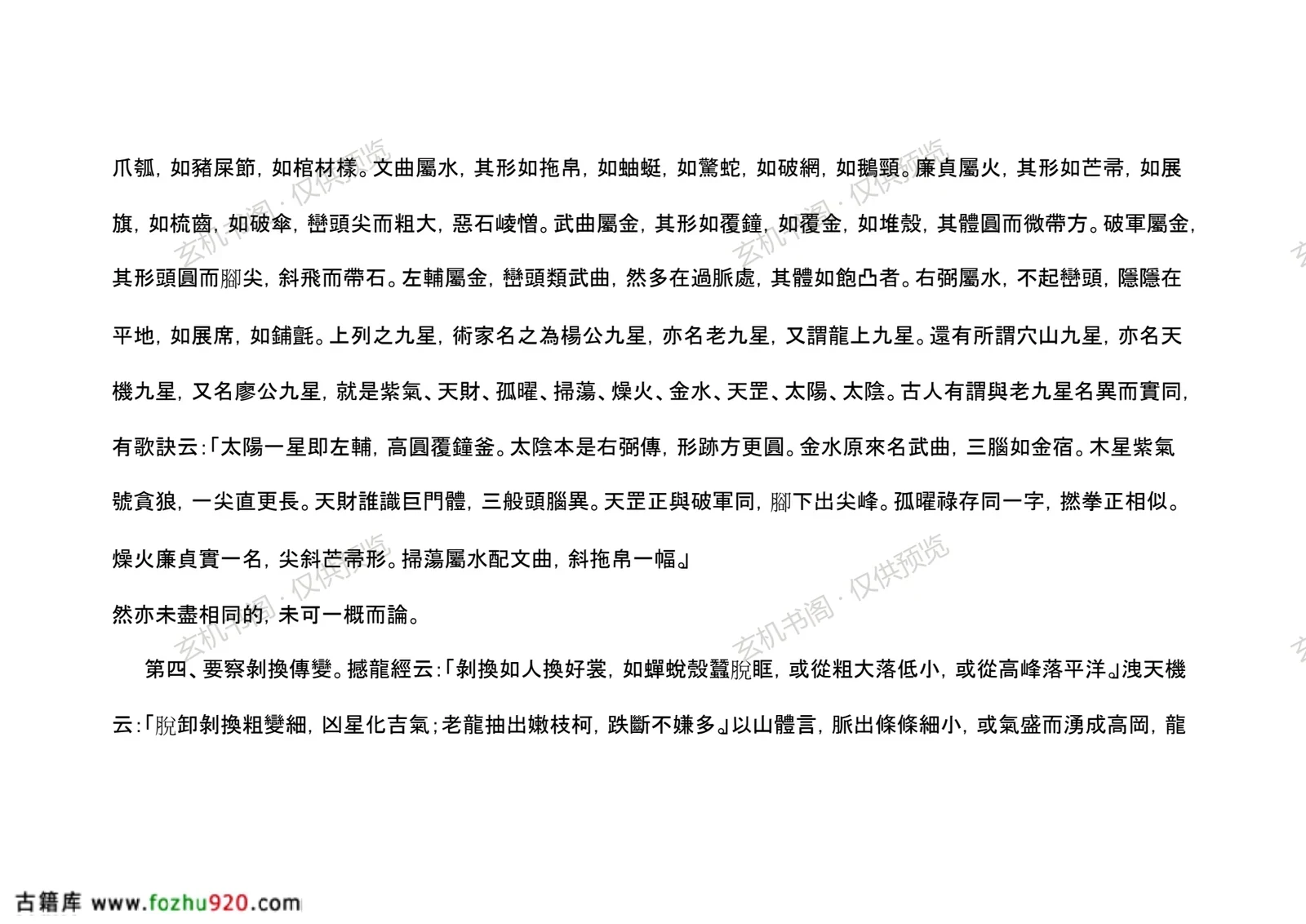
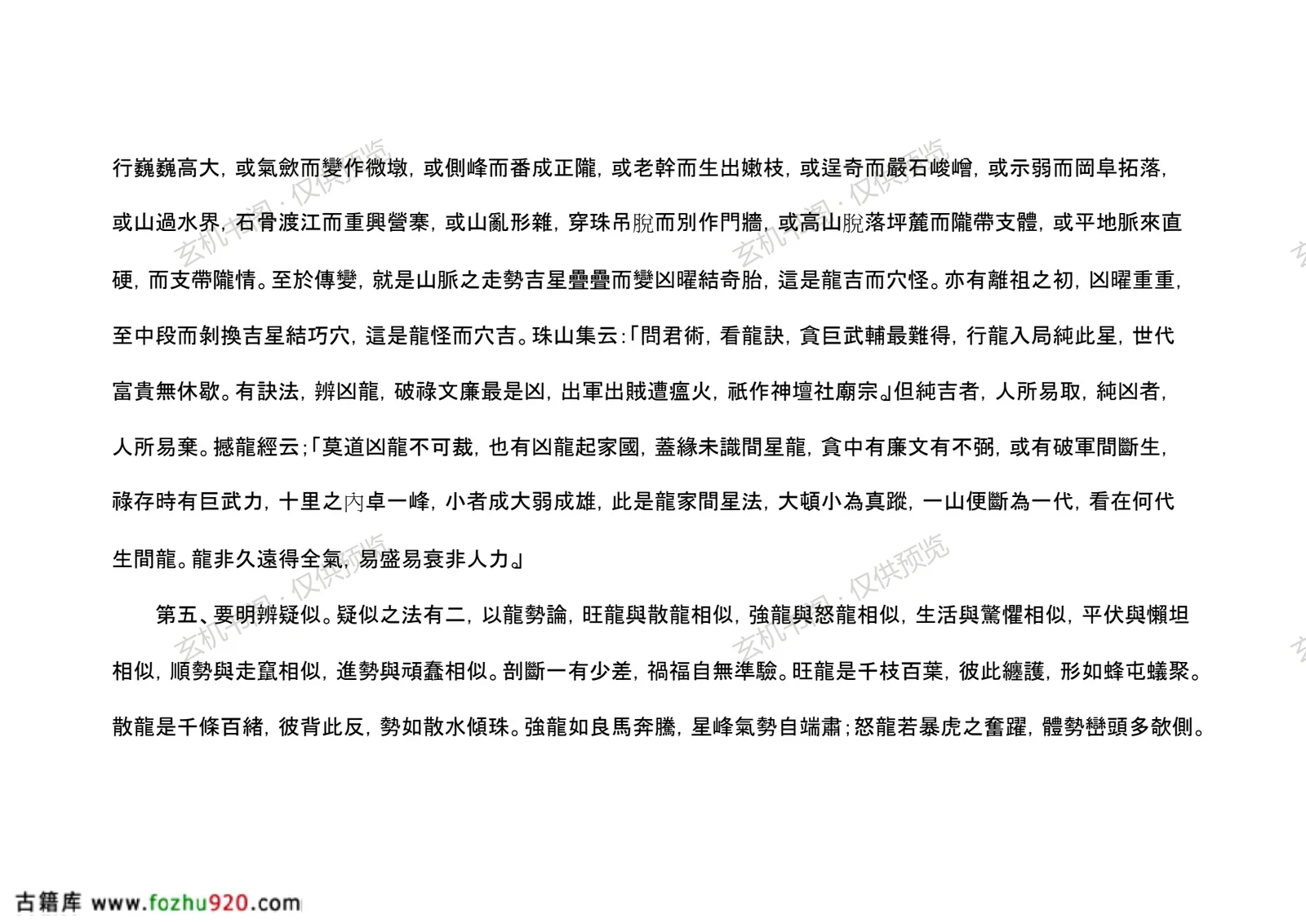
This is an annotated edition of the Dili Qianjin Fu (Thousand Pieces of Gold on Geography). The text first notes that the fu is traditionally attributed to Liu Ruogu of Jiangxi and is written in parallel prose that is easy to recite, its content centring on luantou (landform) learning, which the annotator regards as the foundation of kanyu—without it, liqi reasoning cannot be properly combined. The original verses are quoted paragraph by paragraph with explanation, beginning with the opening on geography as a teaching of filial piety, auspicious sites being reserved for the virtuous, and ancient masters refusing to transmit their art carelessly. The commentary then proceeds through dragon-seeking, formation, siting and sand-and-water, defining the dragon as the winding, transforming mountain vein, the xue as the place where the force comes to rest, the sha as the surrounding hills and the water as the boundary water, citing the Yilong Jing, Zhushan Ji and Xietian Ji in support. Five key methods of dragon-seeking are set out: recognising where the vein moves and stops, distinguishing trunk from branch, identifying star bodies (the five planets and the nine stars of Yang Gong and Tianji), observing transformation and change, and discerning look-alike dragons such as vigorous versus scattered, strong versus angry. The book belongs to the xingshi (form) school of sanhe landscape study and suits readers who already know basic dragon-site-sand-water terms and wish to grasp the original fu through an old commentary.
Contents
Opening commentary: the way of geography and virtuous sites
Overview of dragon, site, sand and water
Dragon-seeking 1: reading where the vein moves and stops
Dragon-seeking 2: telling trunk from branch
Dragon-seeking 3: the five planets and nine star bodies
Dragon-seeking 4: transformation and change
Dragon-seeking 5: distinguishing look-alike dragons
Key Points
The fu is parallel prose, easy to recite, and treats landform study as the root of kanyu
Dragon is the mountain vein; xue is where the force rests; sha is the surrounding hills; water is the boundary
Dragon-seeking begins with reading movement and rest, and the four aspects of form, body, feeling and intent
Trunk dragons are escorted by great rivers, branch dragons by small streams
Star bodies: the five planets give the norm, the nine stars give the variations
Look-alike dragons (vigorous vs scattered, strong vs angry) must be carefully distinguished