Reading guide
Content guideOverview
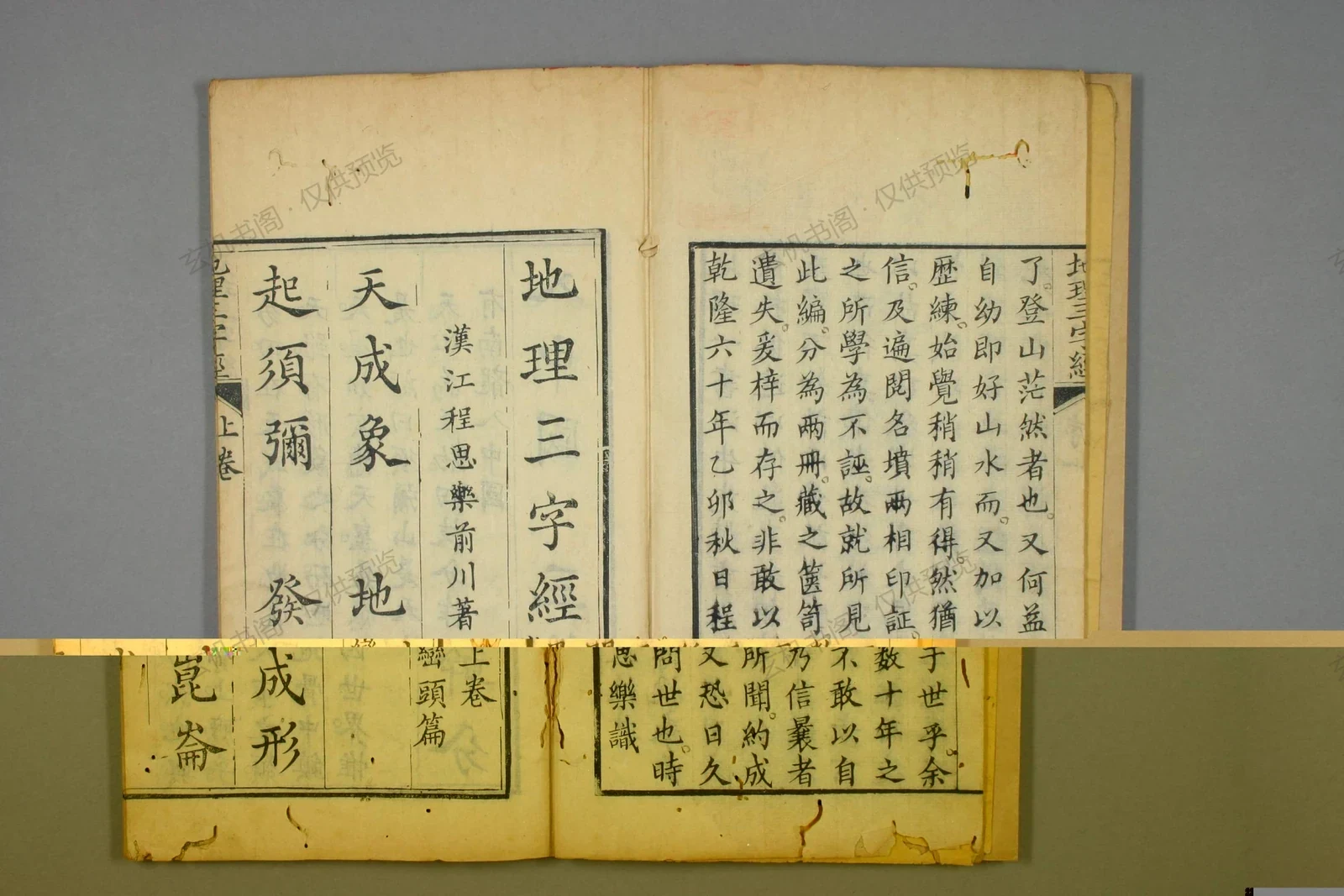
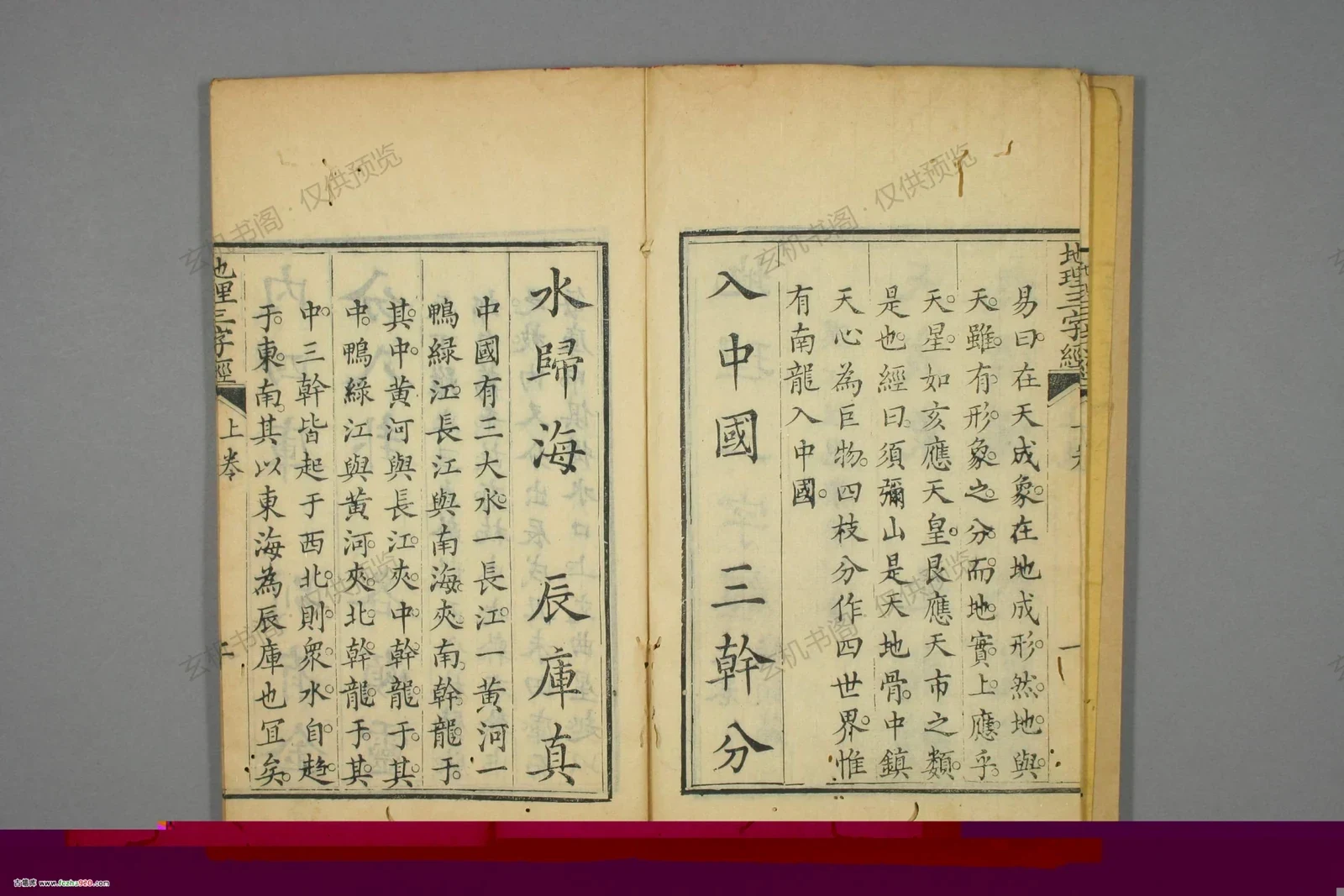
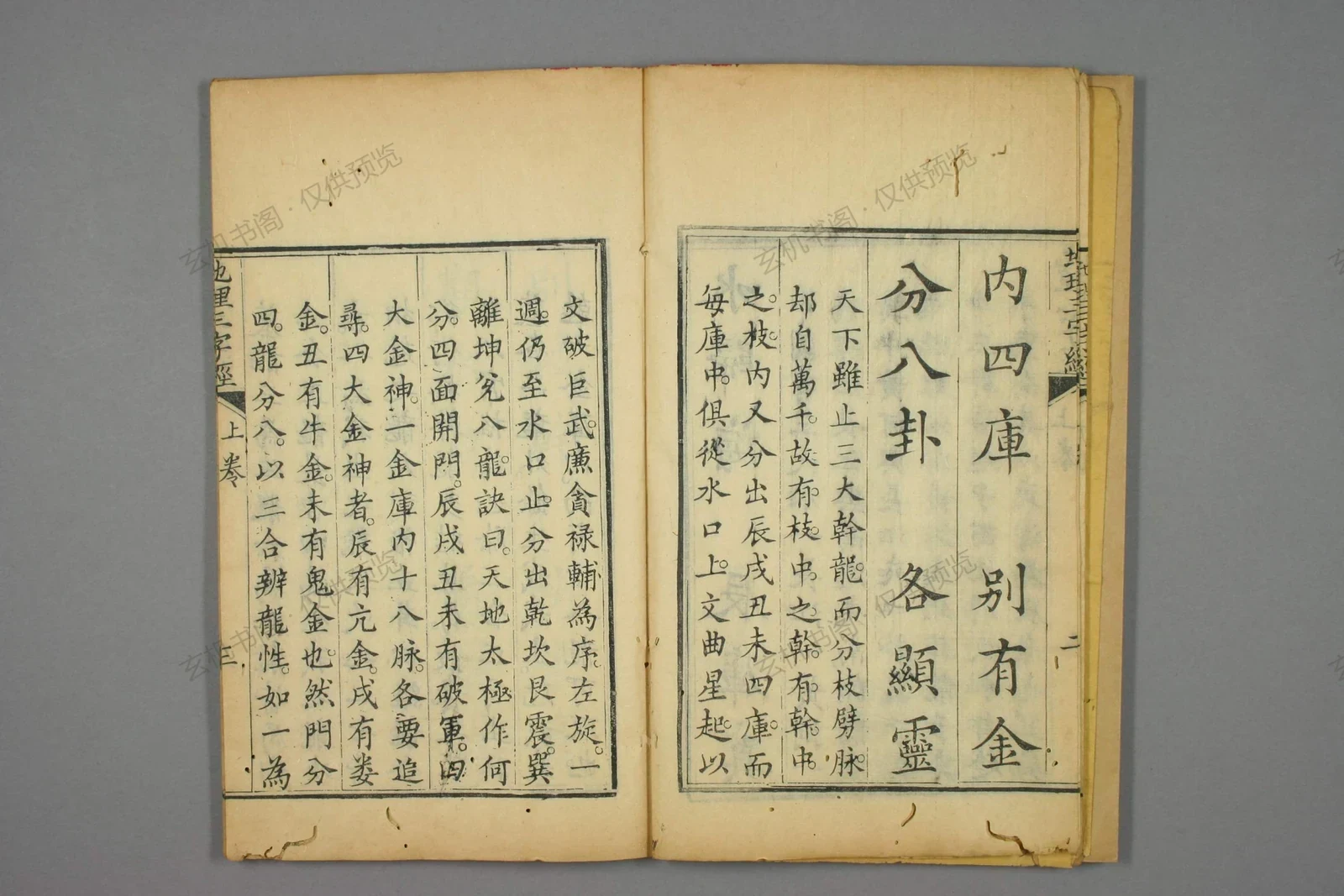
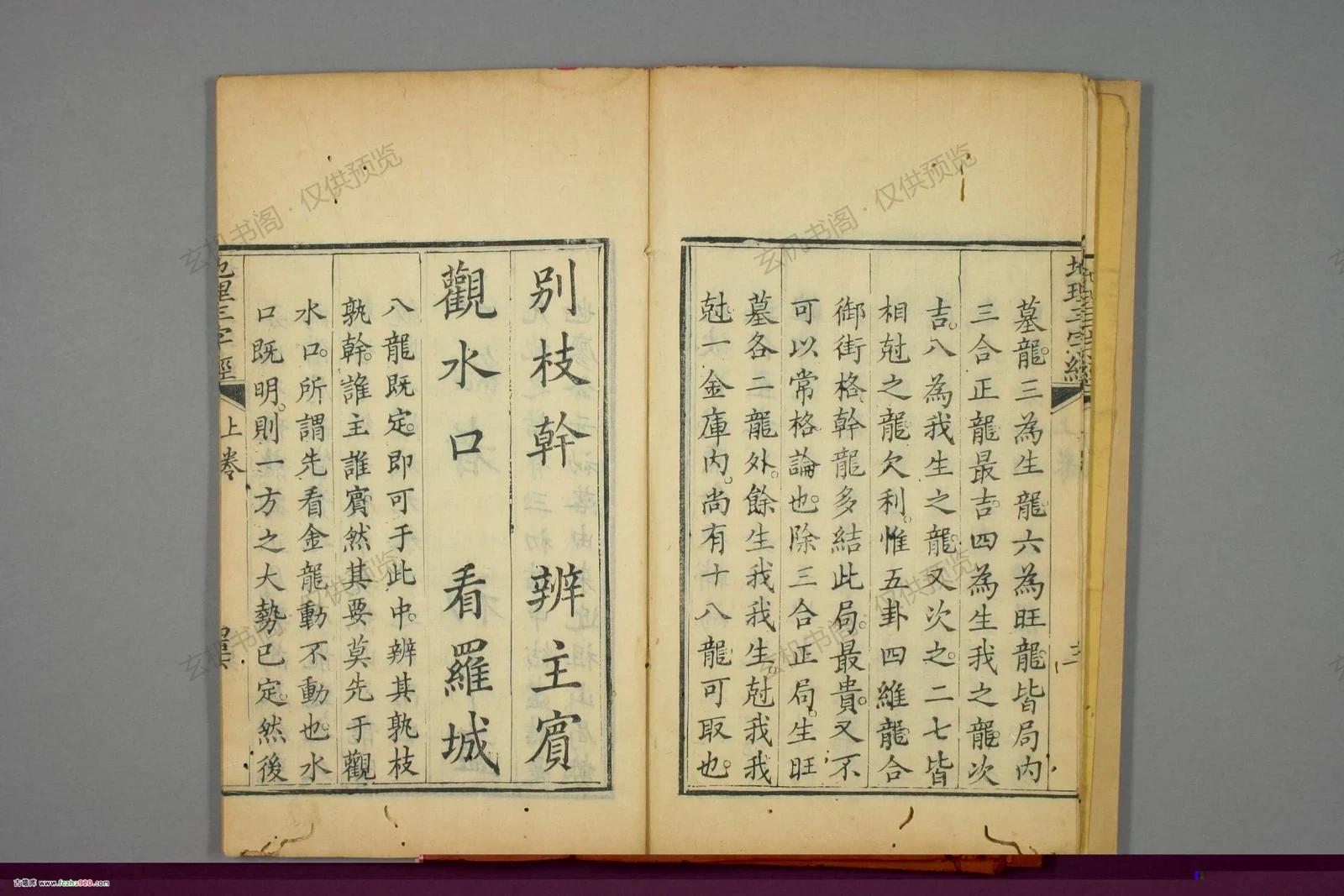
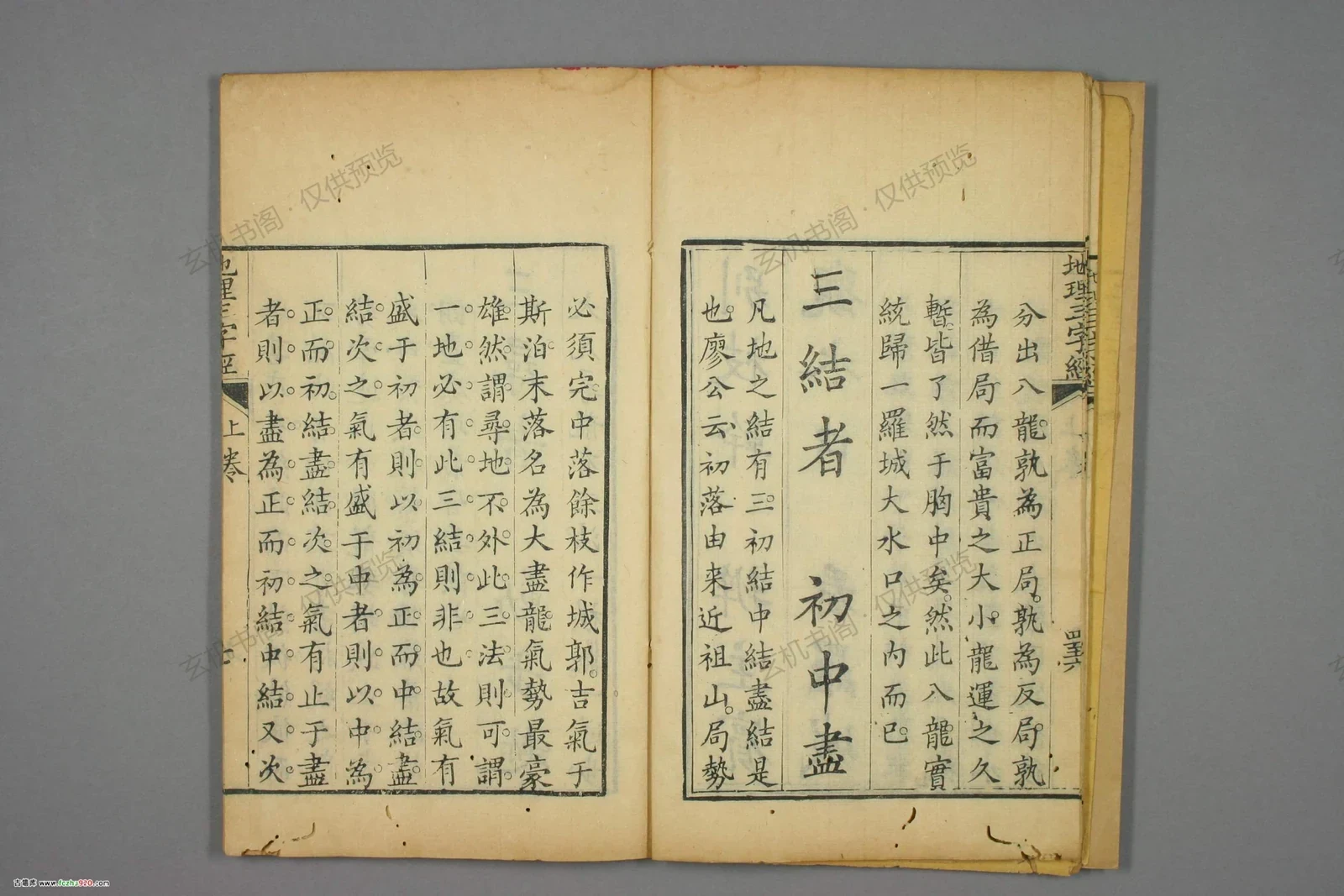
This is the upper volume of Cheng Qianchuan's Qing-dynasty *Dili Sanzijing*, a mnemonic primer on landform (luantou) fengshui written in three-character lines. The cover names Cheng Qianchuan of Hanjiang and the Siyatang imprint, while the text is signed Cheng Sile, courtesy name Qianchuan, whose preface recounts years of fieldwork at famous graves. Beginning with the formation of heaven and earth, the book surveys China's mountains and rivers and the three main dragon ranges, then explains the division of the four repositories into the eight trigrams and the classification of the four elemental dragons into eight groups. It closes with methods for distinguishing trunk from branch dragons, host from guest, reading water mouths and surrounding ranges, and judging sites by the three conclusions—initial, middle and final. As a compact Sanhe-school manual, it serves as an accessible entry point to traditional form-school fengshui.
Contents
Preface: the author's fieldwork and reasons for writing
Heaven forms, earth takes shape: cosmology and terrain
Waters return to the sea: three great waters and three dragon ranges
Four repositories and eight trigrams: classifying the four dragons
Trunk and branch, host and guest: water mouths and enclosing ranges
The three conclusions: initial, middle and final
Key Points
Written in three-character verse for easy memorization and transmission.
Takes a Sanhe-school stance, stressing birth-prosperity-tomb cycles and the four repositories.
Focuses on landform: trunk and branch dragons, host and guest, water mouths and enclosing hills.
Proposes the 'three conclusions' to judge where qi gathers and how strong a site is.
The preface shows the work grew from field verification at famous graves, not armchair theory.