Reading guide
Content guideOverview
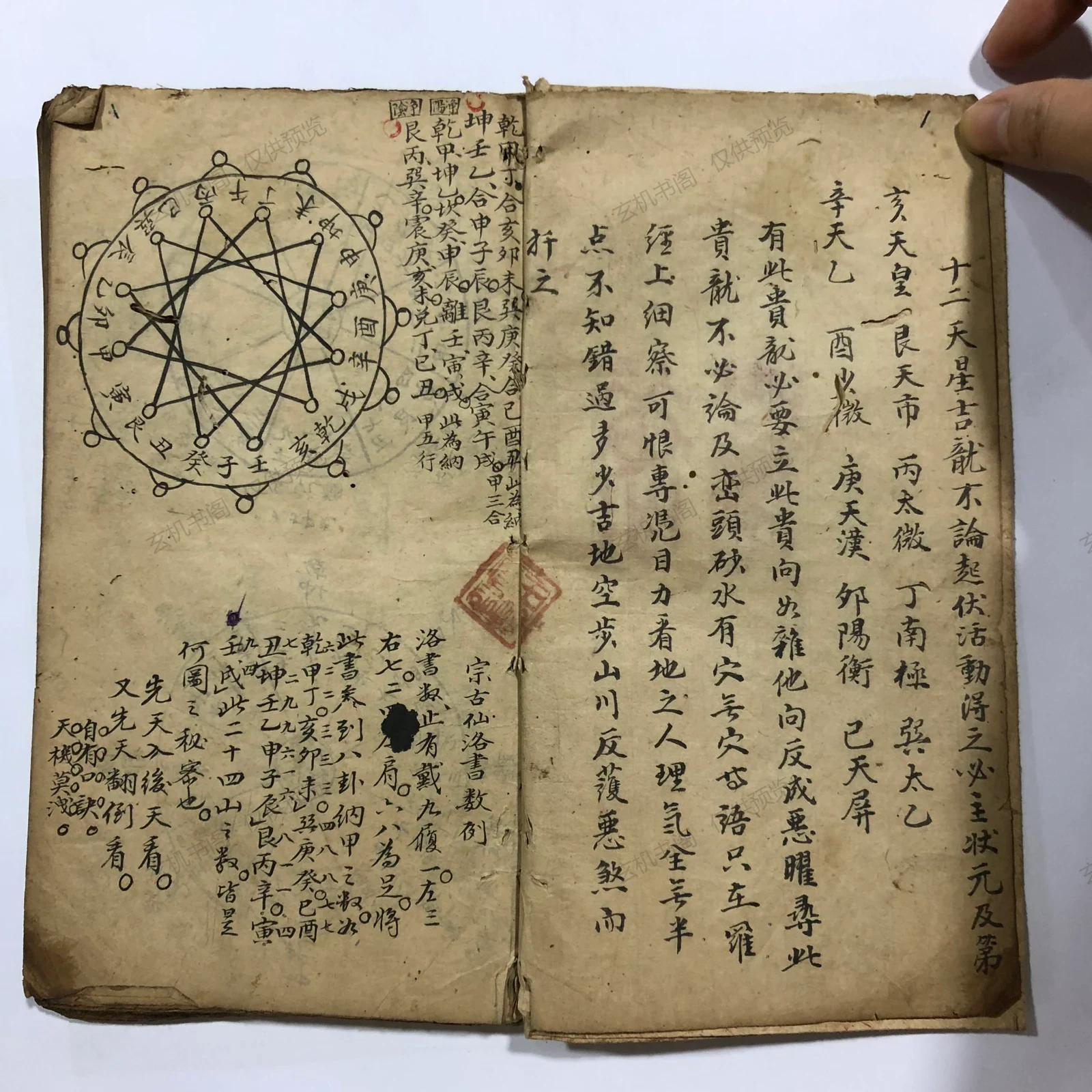
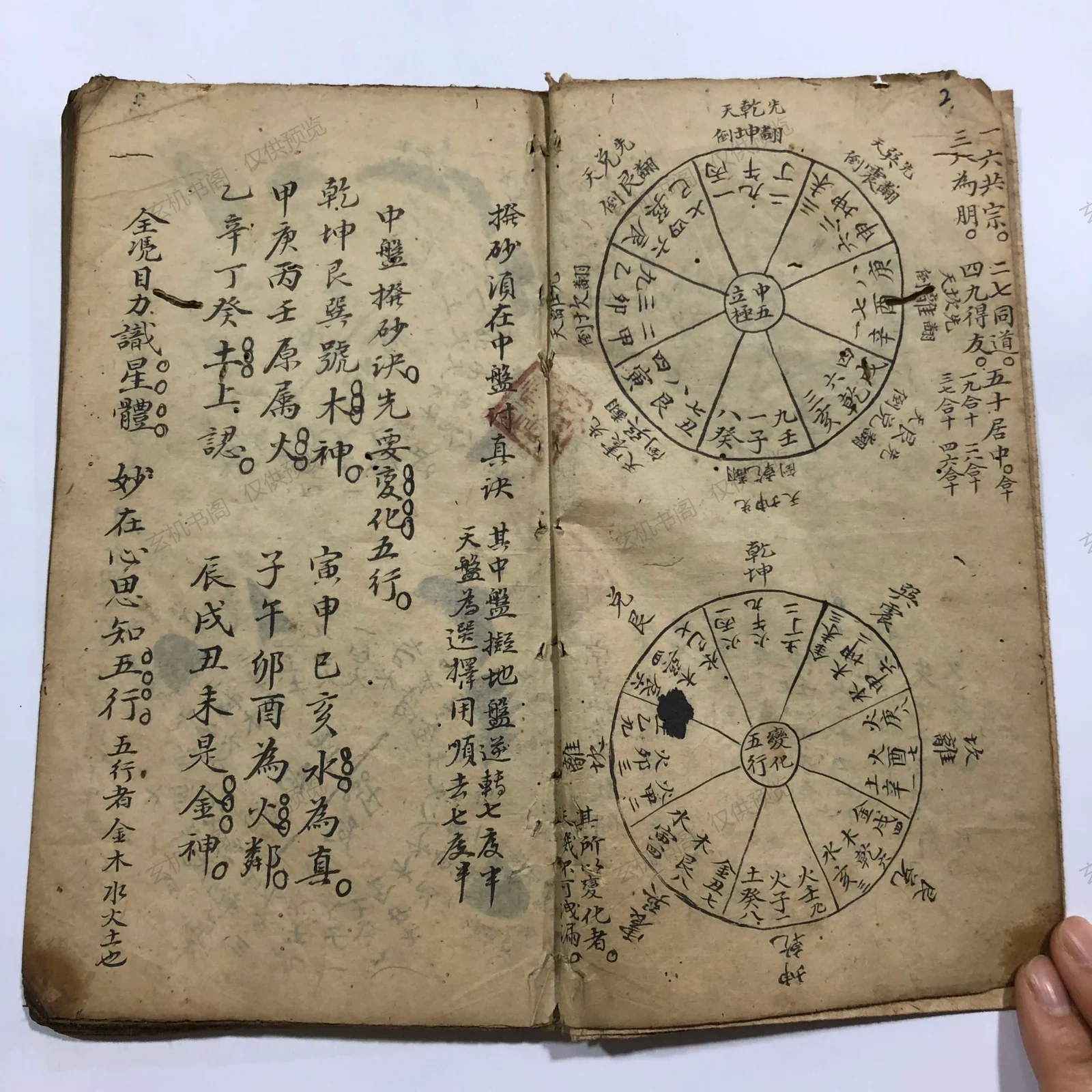
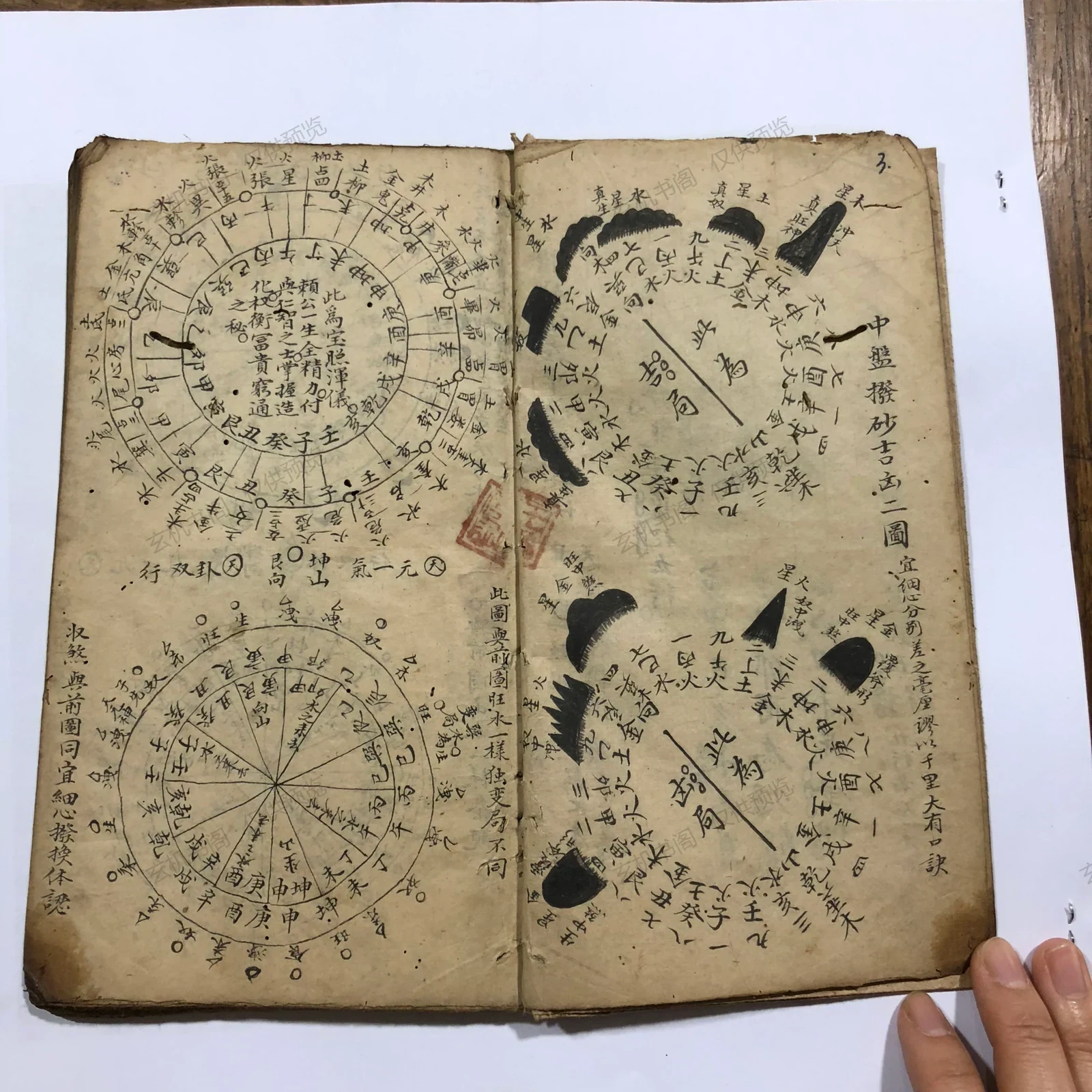
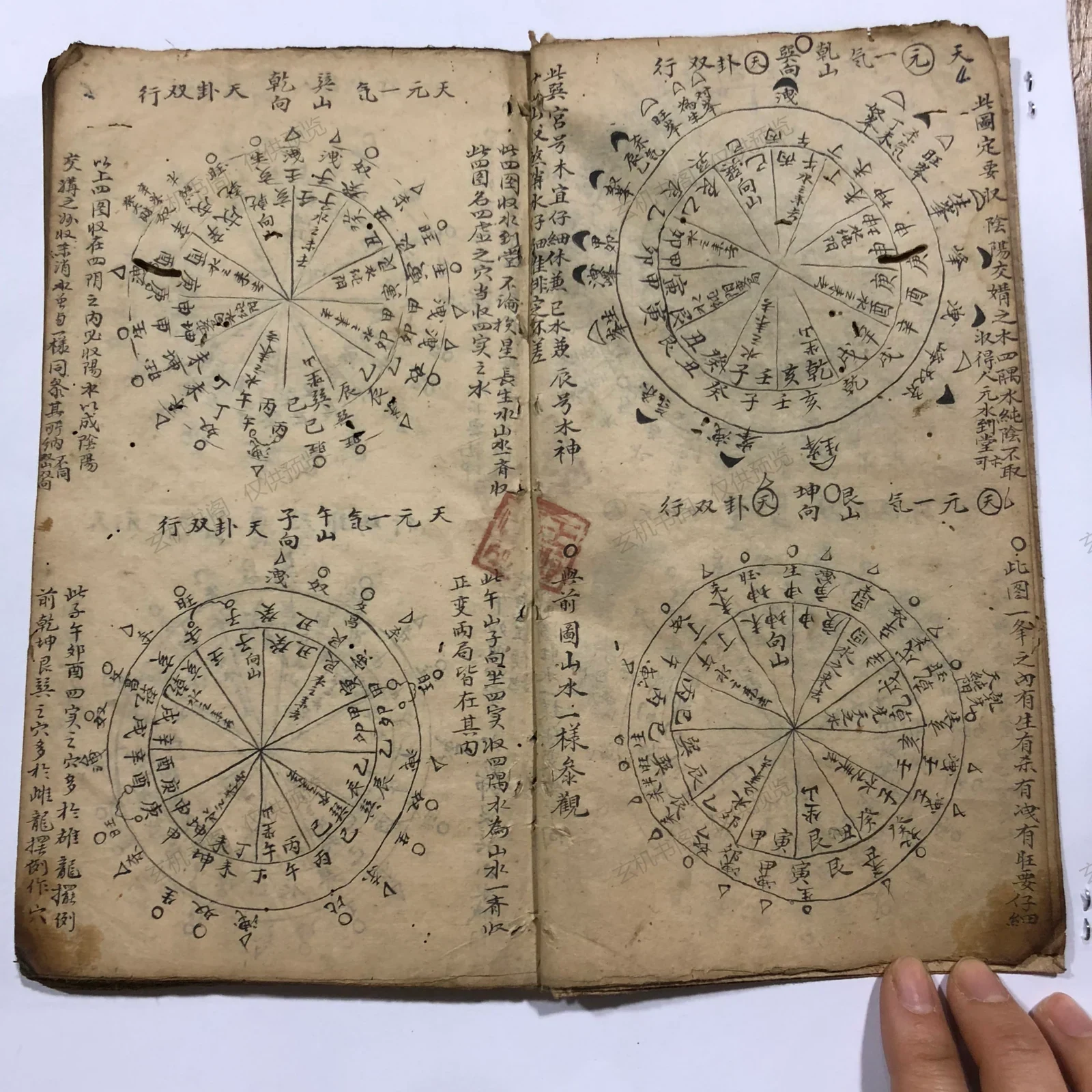
This is a handwritten feng shui text centered on the 'twelve celestial stars' (shier tianxing), integrated with the twenty-four mountains, Hetu-Luoshu numerology, and the najia system to assess the fortune of dragon veins, cave sites, sand formations, and water. The visible pages first list the twelve stars and their corresponding stems and branches, then present circular diagrams linking the twenty-eight lunar mansions and twenty-four mountains to the five phases. A section titled 'Two Diagrams of Sand Assessment in the Central Plate' explains how to use the central plate of the compass to evaluate sand formations and assign fortunes to different houses. The text also includes oral-formula verses on 'double-mountain five phases,' 'receiving water,' and 'setting orientations,' reflecting a practical blend of the Tianxing and Sanhe schools. The manuscript is heavily diagrammatic and practical, but the handwriting is rough, with corrections and ink blots, requiring a physical compass and oral transmission to interpret accurately.
Contents
Names of the twelve celestial stars and their correspondence to the twenty-four mountains
Circular diagrams of Hetu-Luoshu numerology and najia hexagram assignments
Two diagrams for sand assessment in the central plate and house allocation
Verses on the central plate, sand assessment, and the three plates
Diagrams of double-mountain five phases and water reception
Illustrated formulas for setting orientations and managing mountain-water relationships
Key Points
Uses the twelve celestial stars to organize the twenty-four mountains into a coherent positional system
Stresses that sand assessment must rely on the central plate of the compass, cross-referenced with the heaven and earth plates
Judges sand and water fortune through Hetu-Luoshu najia and double-mountain five phases
Combines diagrams with oral verses, emphasizing practice over theoretical exposition