Reading guide
Content guideOverview
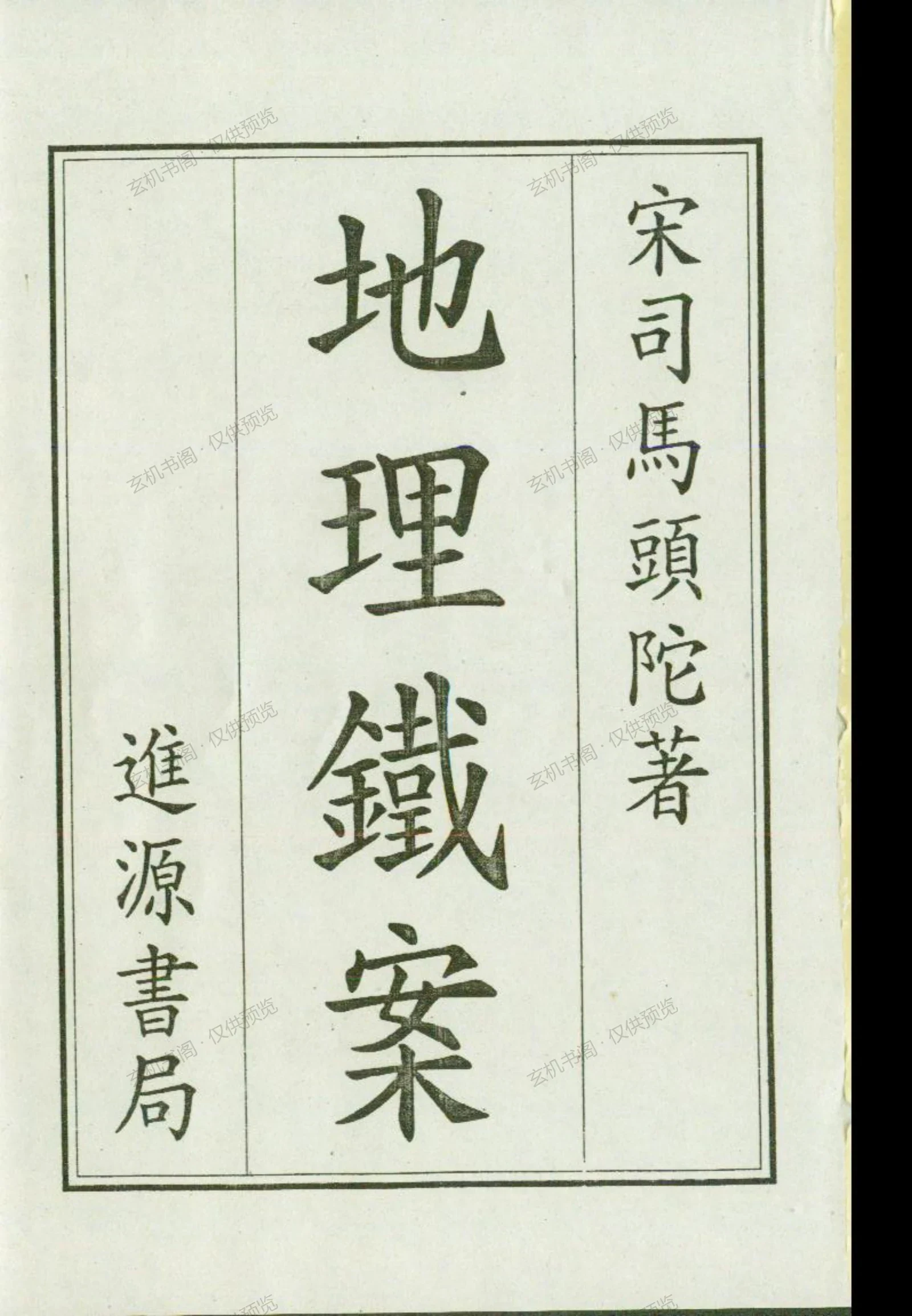
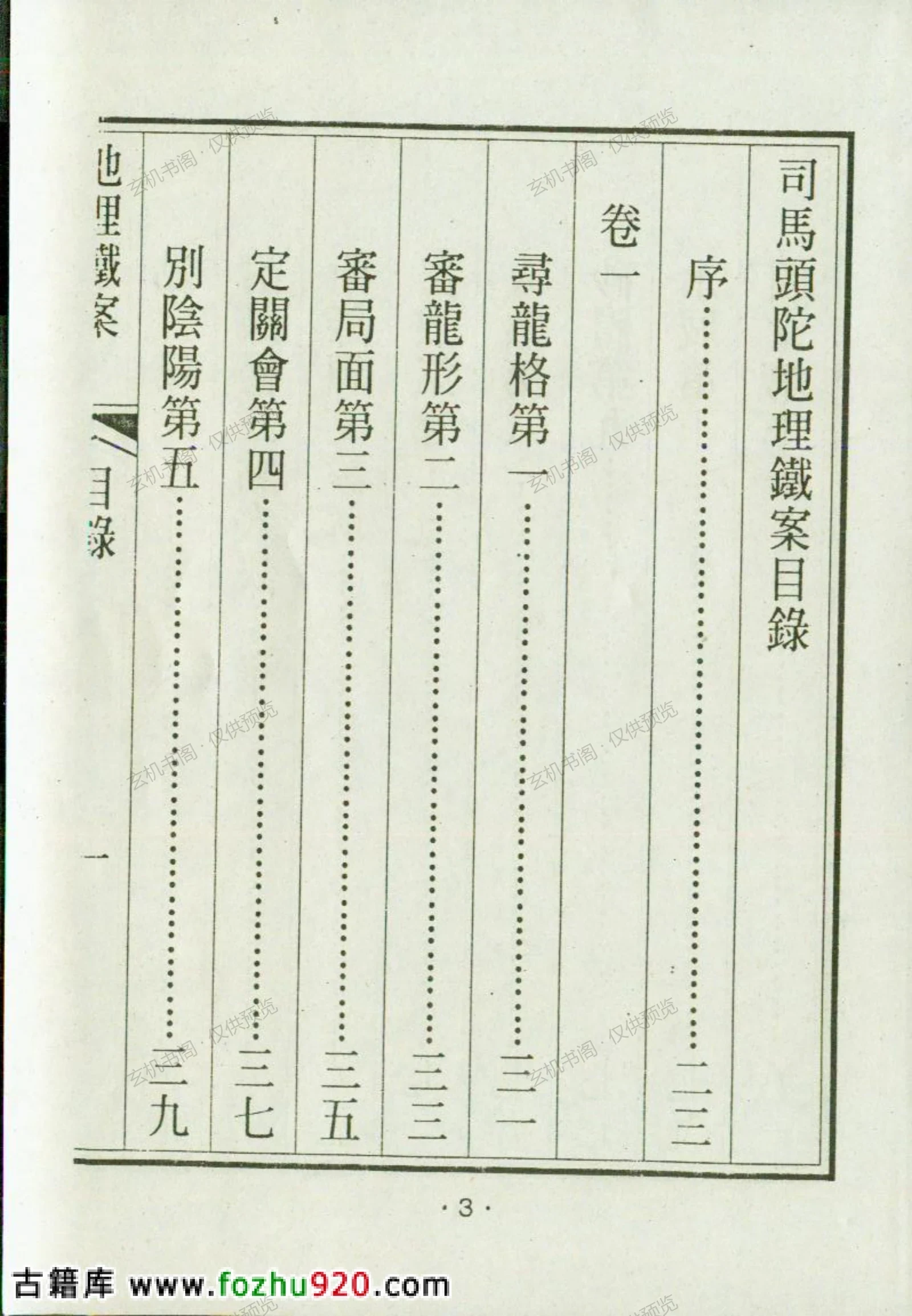
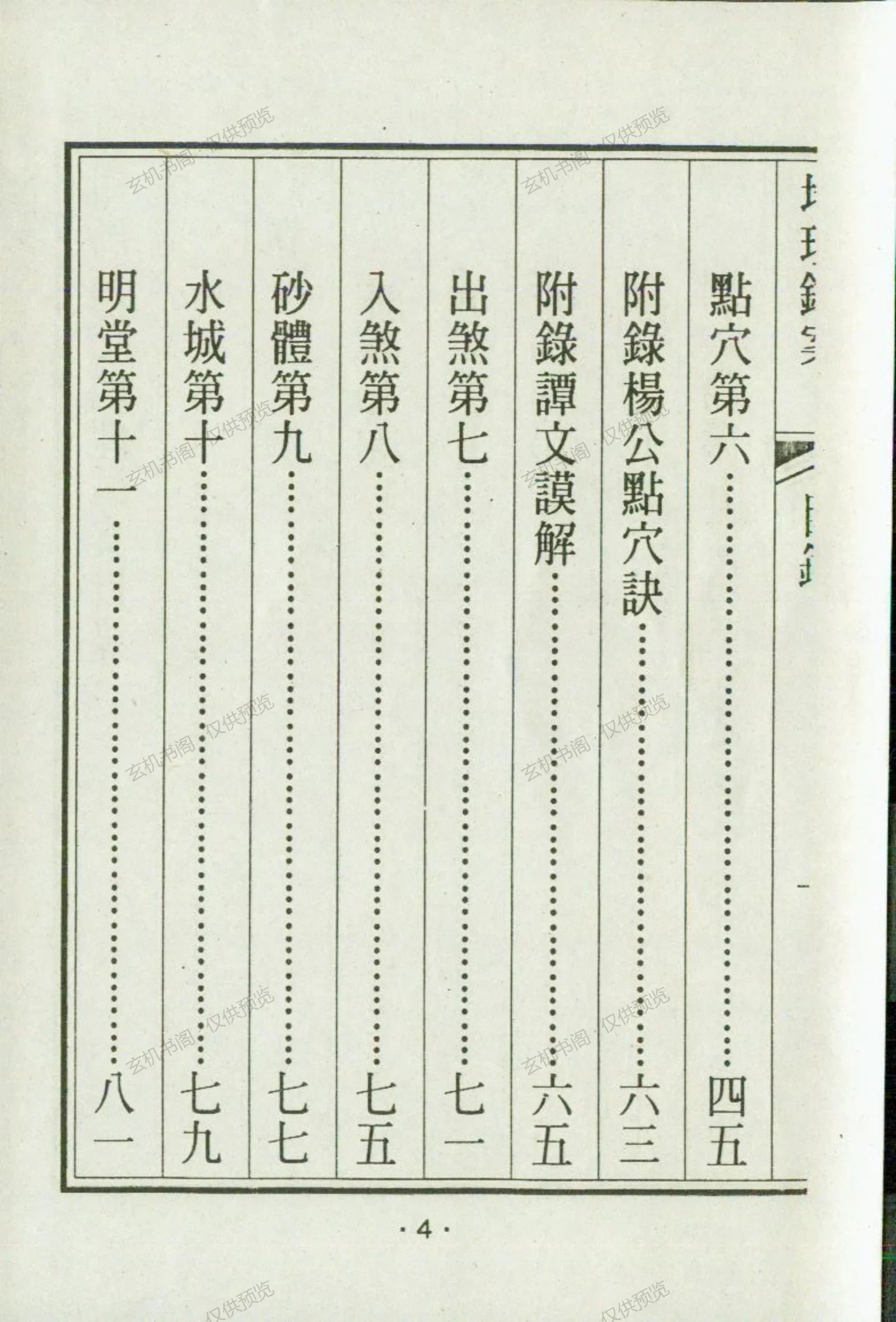
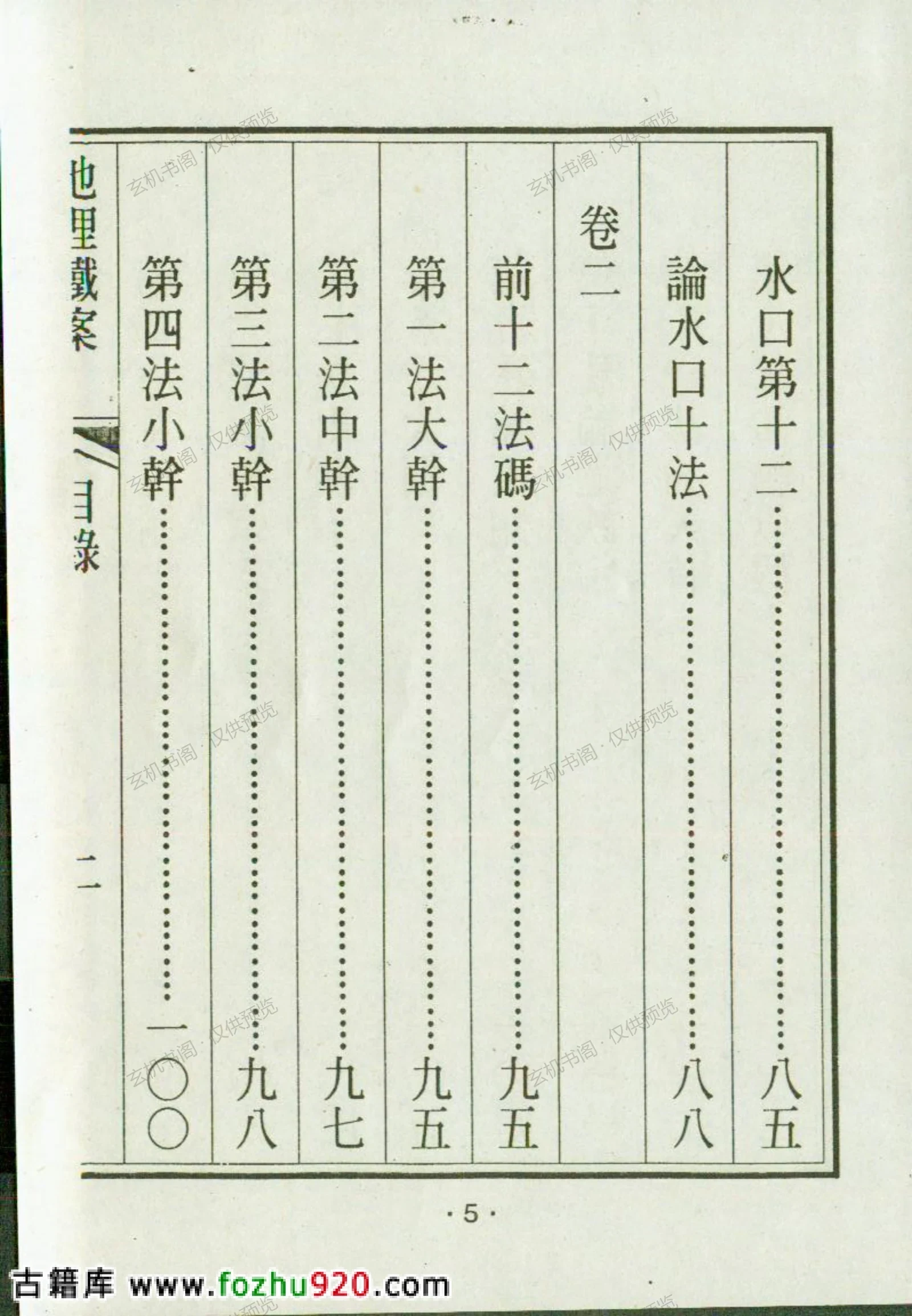
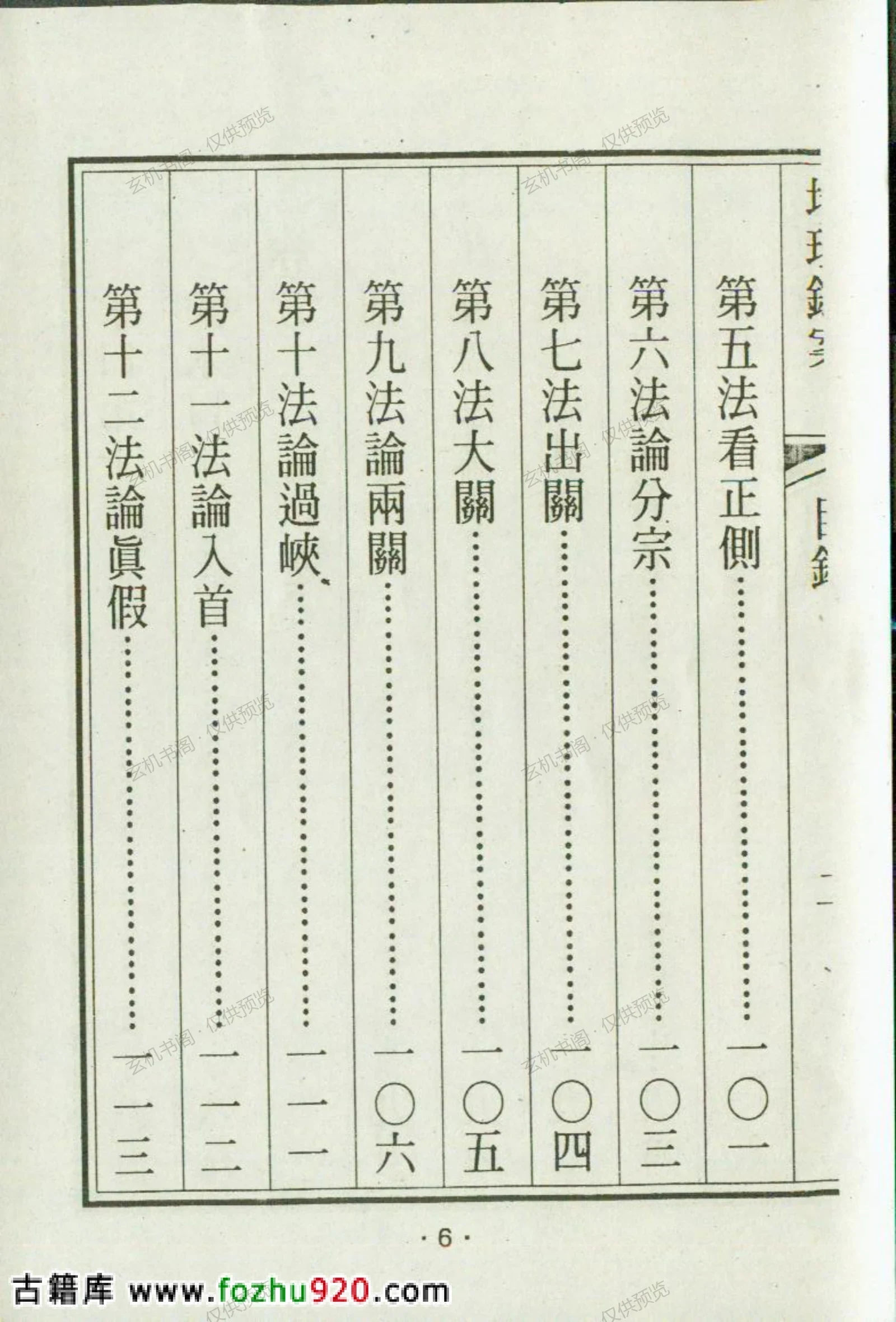
Geographical Iron Cases (Dili Tie'an) is attributed to Sima Toutuo of the Song dynasty and is presented here as a reprint of an old edition from Jinyuan Book Company. The table of contents shows a structured manual: Volume One begins with dragon-seeking patterns and proceeds through examining dragon forms, assessing configurations, determining junctions, distinguishing yin and yang, selecting the point, managing exits and entrances of qi, sand bodies, water cities, and the bright hall, with appendices on Yang Gong's point-selection formulas and Tan Wenmo's explanations. Volume Two turns to water methods, listing water mouths, ten methods for water mouths, and the first twelve method codes, then expands through the four methods of major, middle, and minor stems, followed by topics on viewing front and side, distinguishing lineages, exits, major and minor passes, gorge crossings, entrances, and true versus false. The work is a practical form-school fengshui handbook focused on field observation and judgment of dragons, points, sand, water, and orientation. Readers need familiarity with traditional fengshui terminology and landscape reading; the scanned text occasionally shows unclear characters.
Contents
Preface
Vol. 1: Dragon-seeking patterns, dragon forms, configurations
Vol. 1: Junctions, yin-yang, point selection
Vol. 1: Qi exits and entrances, sand bodies, water cities, bright hall
Vol. 1 appendix: Yang Gong's point formulas, Tan Wenmo's explanation
Vol. 2: Water mouths, ten methods, first twelve codes
Vol. 2: Four methods of major, middle, and minor stems
Vol. 2: Front and side, lineages, exits, passes, gorges, entrances, true and false
Key Points
Starts with dragon seeking, form analysis, and configuration assessment.
Discusses point selection together with qi exits and entrances.
Separate chapters on sand bodies, water cities, and the bright hall.
Volume Two focuses on water mouths and the division of stem dragons.
The appendix on Yang Gong's formulas shows the transmission of Yang Junsong school texts.