Reading guide
Content guideOverview
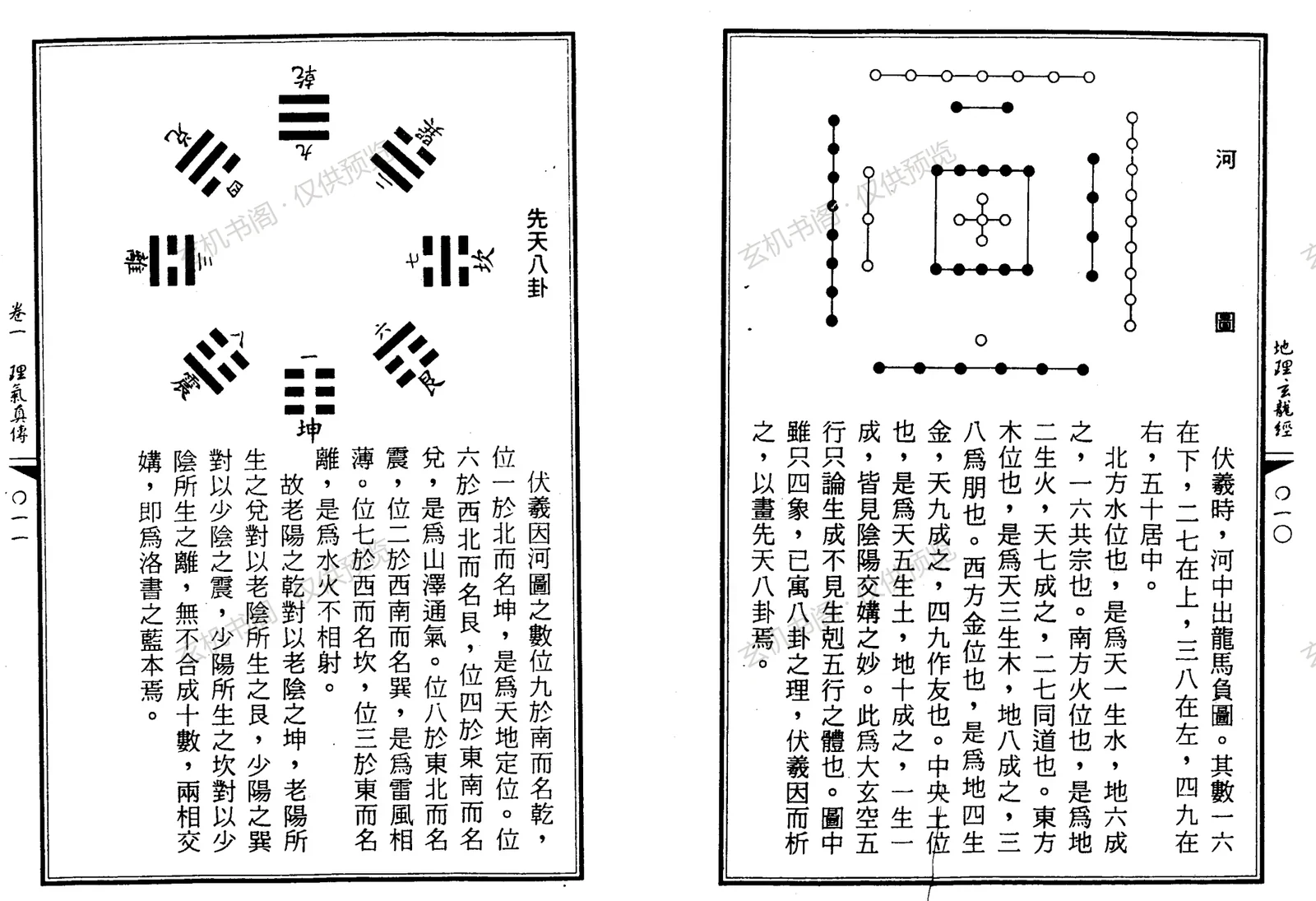
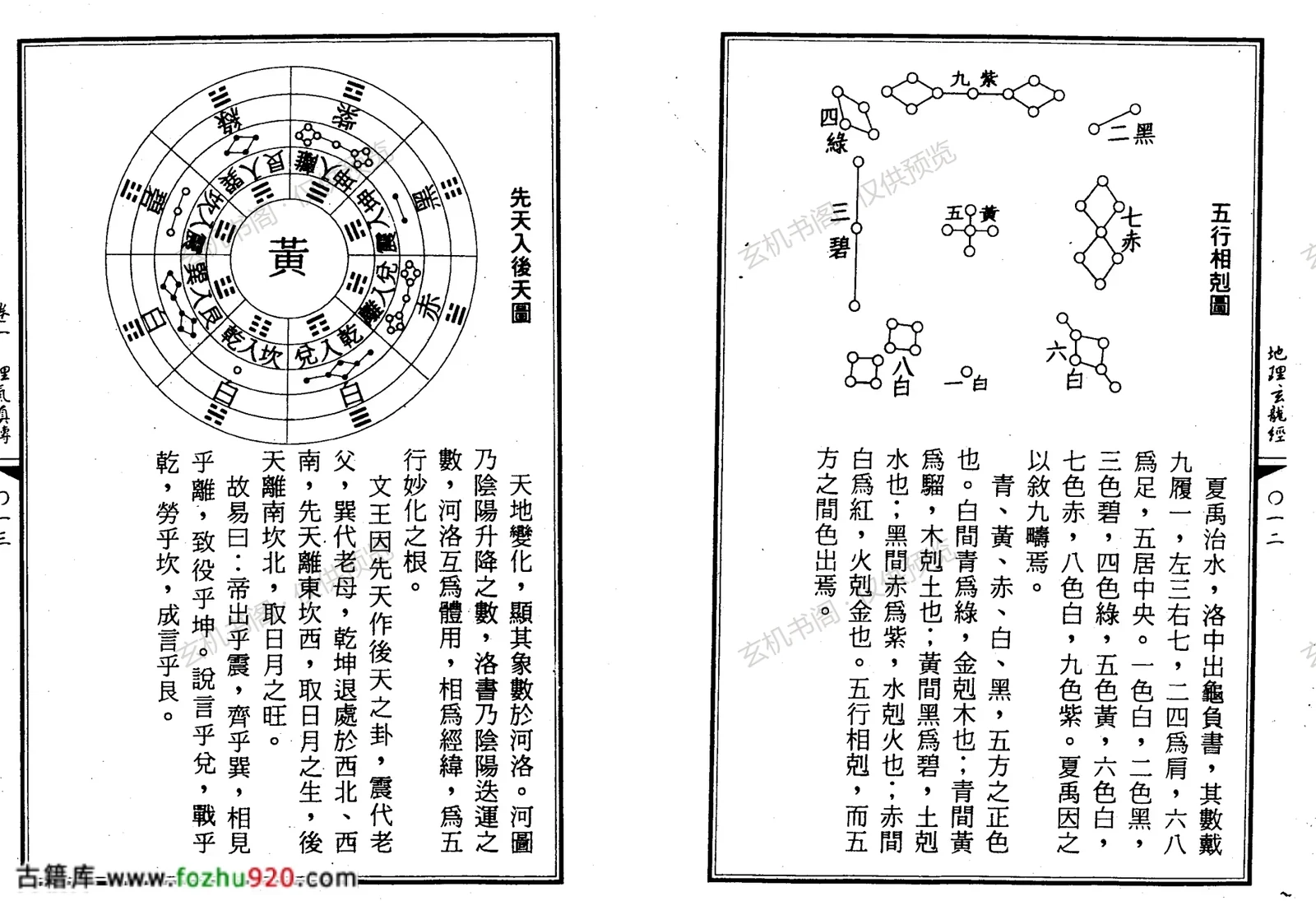
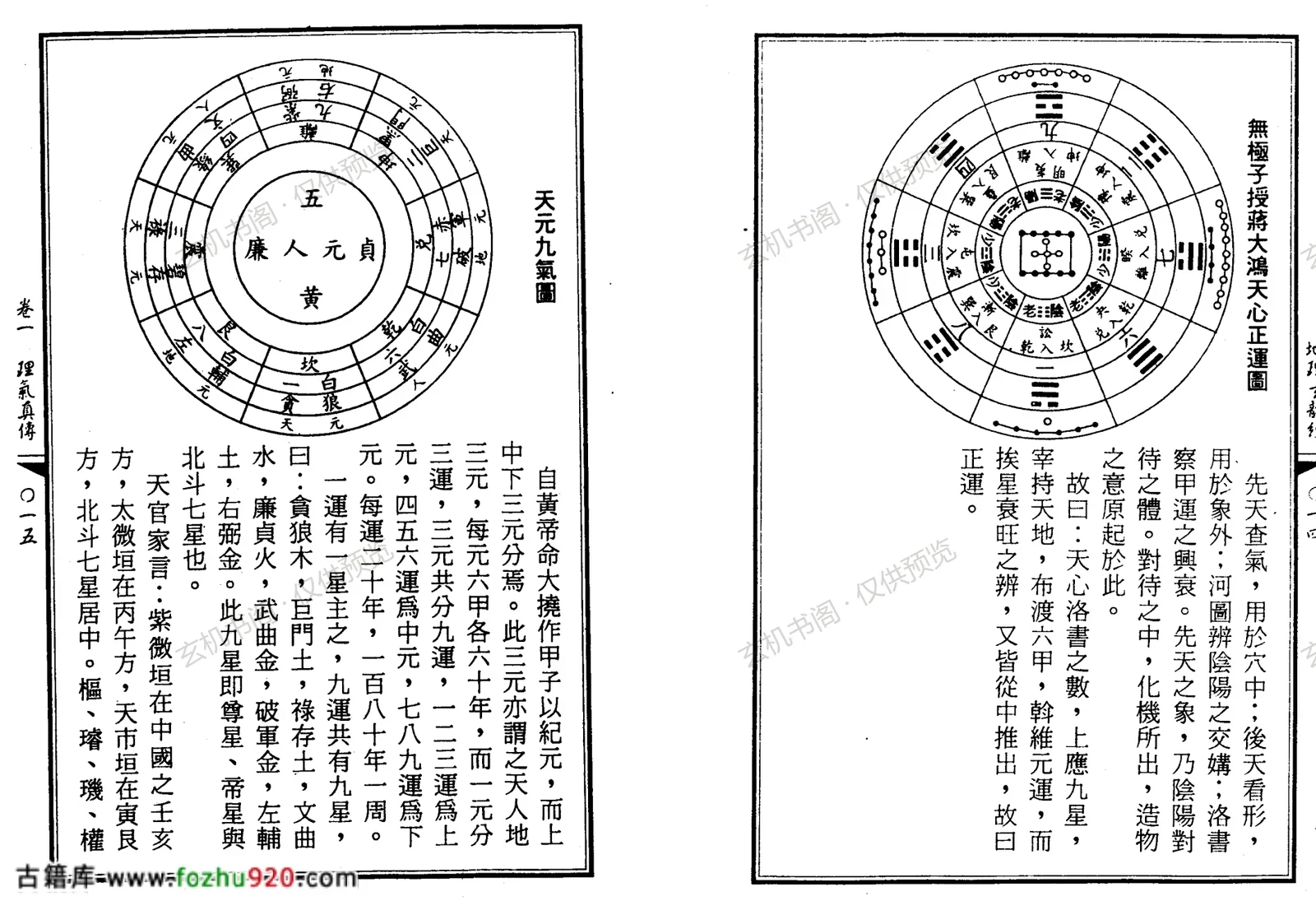
The Dili Xuanlong Jing is a feng shui liqi compendium prefaced in 1924 by Dungen Yesou. The preface frames geography as a Confucian pursuit rooted in the Hetu and Luoshu, while the first juan, titled 'True Transmission of Liqi,' collects essays on qi movement, the Sanyuan Jiuyun cycles, auspicious and inauspicious stars, parent and child trigrams, yin-yang discrepancies, void亡, fetal origin, zero-positive催照, water dragon star-raising, and the general theory of aixing. Several diagrams are included, among them the Hetu, the Former Heaven bagua, the Former-to-Later Heaven diagram, the Five Phases overcoming diagram, the Heavenly Origin Nine Qi diagram, and Wujizi's transmission to Jiang Dahong of the Tianxin Zhengyun diagram. Later juan extend to water dragons, mountain dragons, pingyang, cave methods, burial methods, and yang dwellings. The work is a primary source for studying Sanyuan xuankong liqi and early Republican feng shui literature.
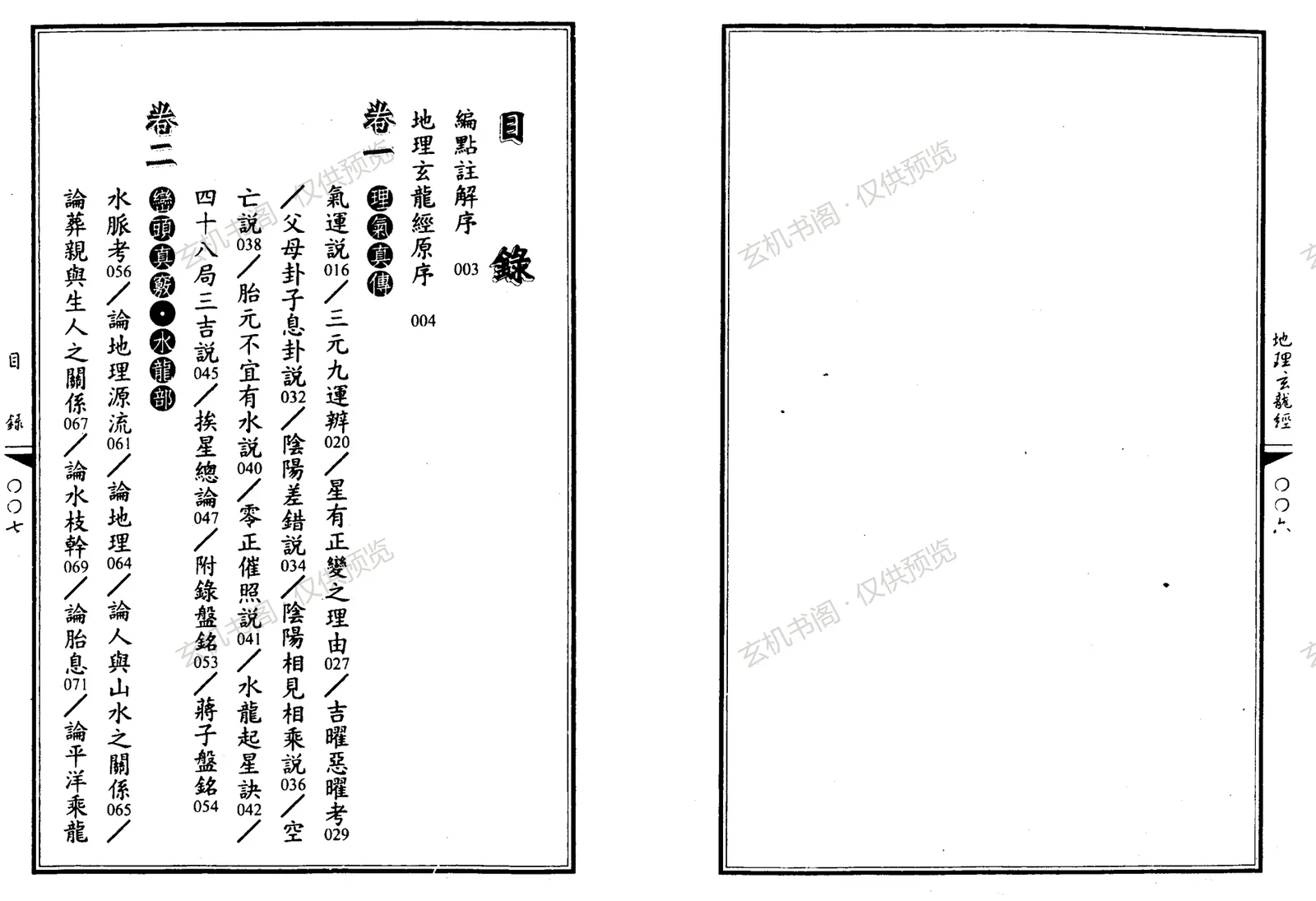
Contents
Prefaces: geography as a Confucian practice
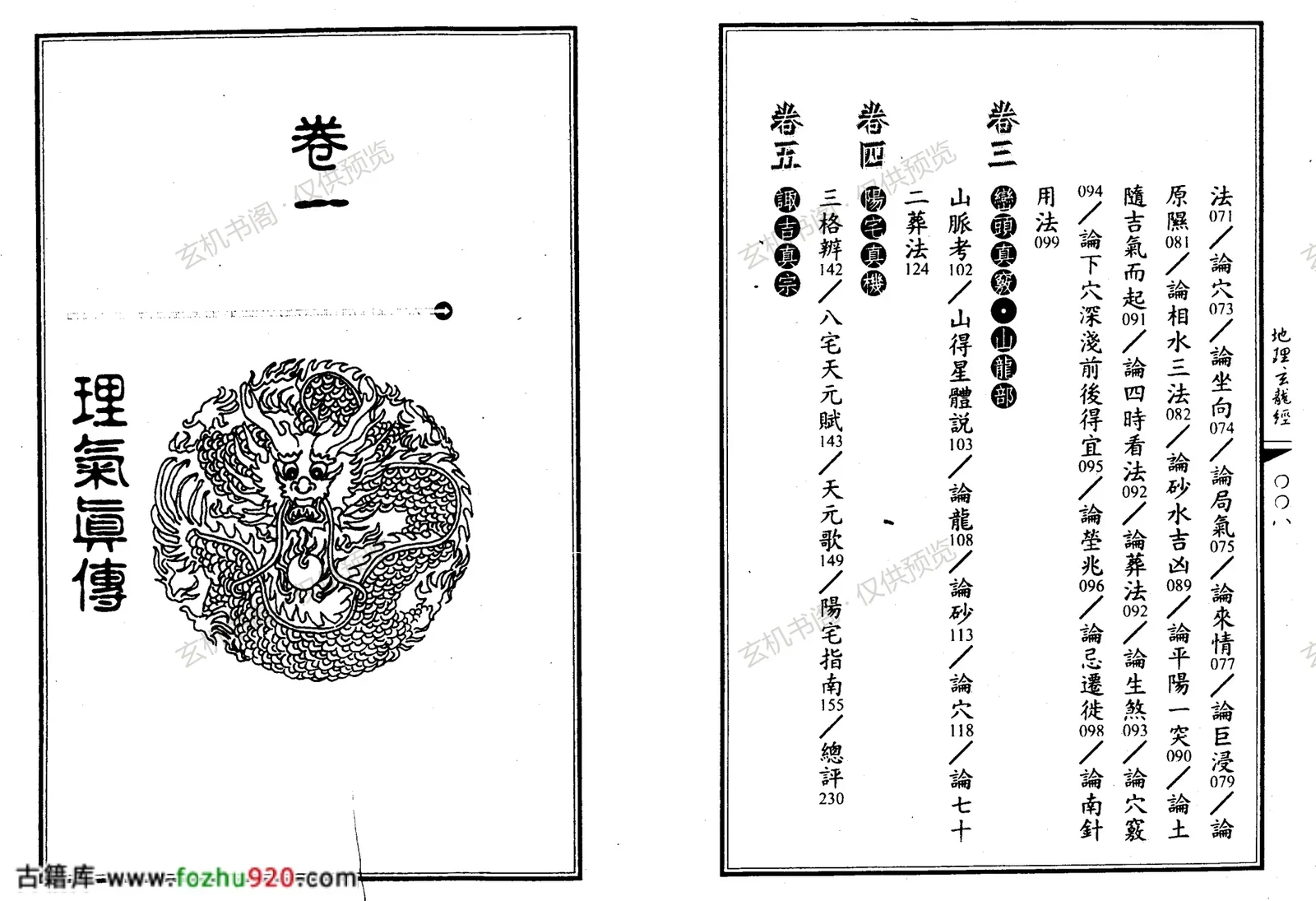
Juan 1 True Transmission of Liqi: qi cycles, Sanyuan Jiuyun, stars
Parent-child trigrams, yin-yang errors, void亡, fetal origin
Zero-positive催照, water dragon star-raising, aixing
Luopan inscriptions including Jiang's plate
Diagrams: Hetu, bagua, Former/Later Heaven, Nine Qi
Juan 2 onward: water and mountain dragons, caves, burials, dwellings
Key Points
Grounds liqi in Hetu-Luoshu and Former/Later Heaven bagua with Sanyuan Jiuyun
Includes Jiang Dahong's Tianxin Zhengyun diagram and plate inscriptions
Juan 1 offers a full set of diagrams, from Hetu to the Nine Qi chart
Explains zero-positive催照, aixing, and water dragon star-raising
Prefaces defend geography from a Confucian standpoint in 1924