Reading guide
Content guideOverview
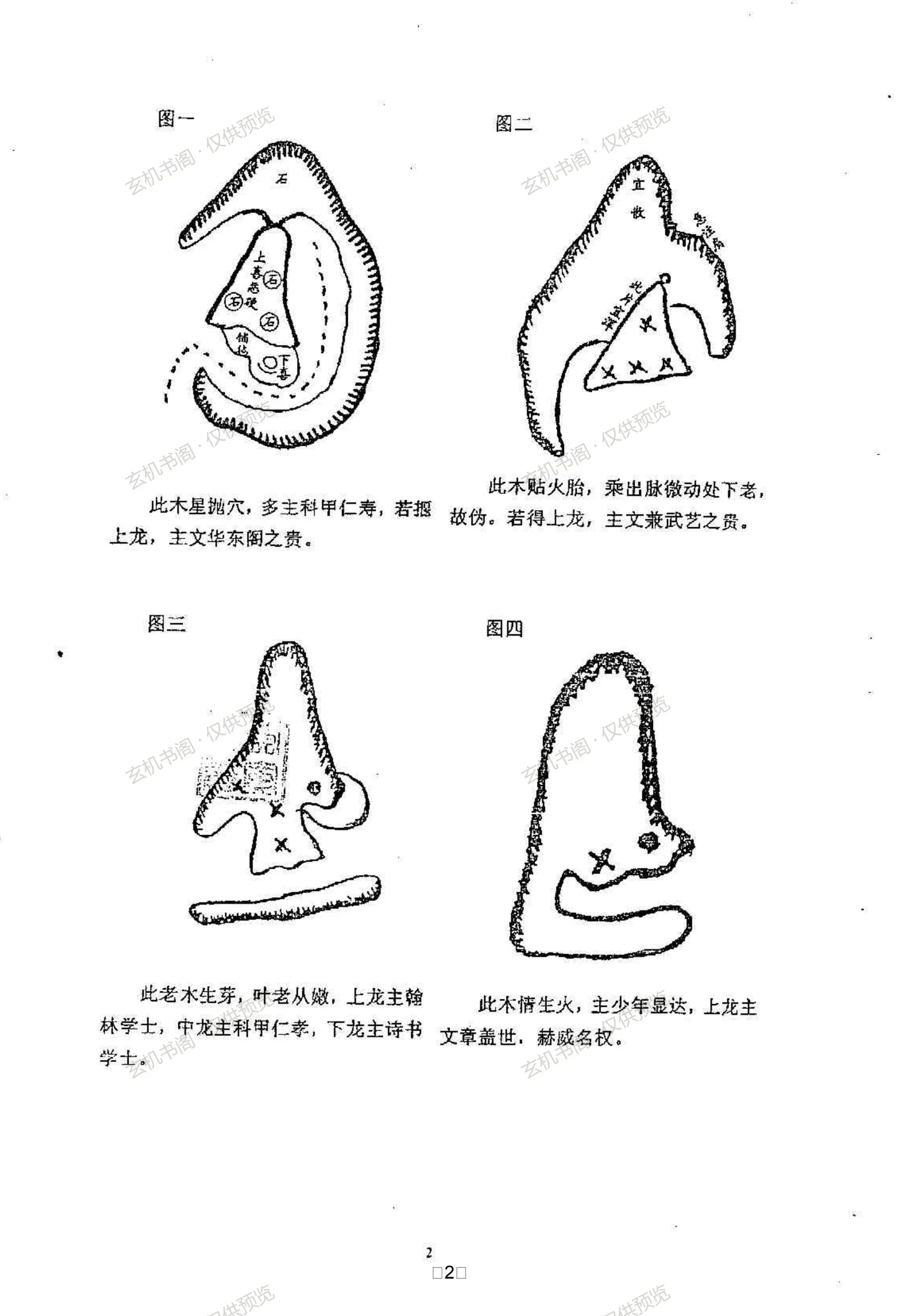
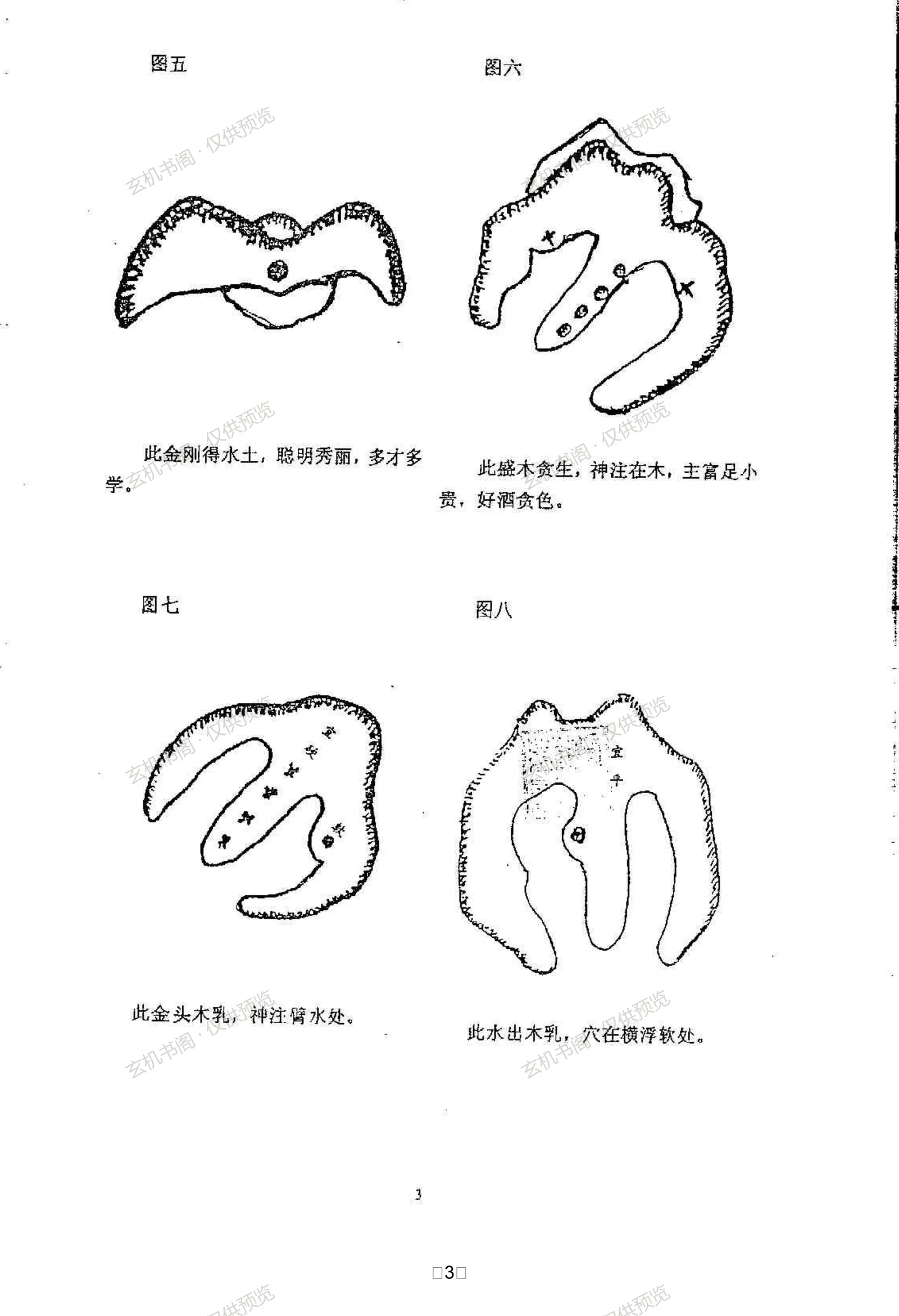
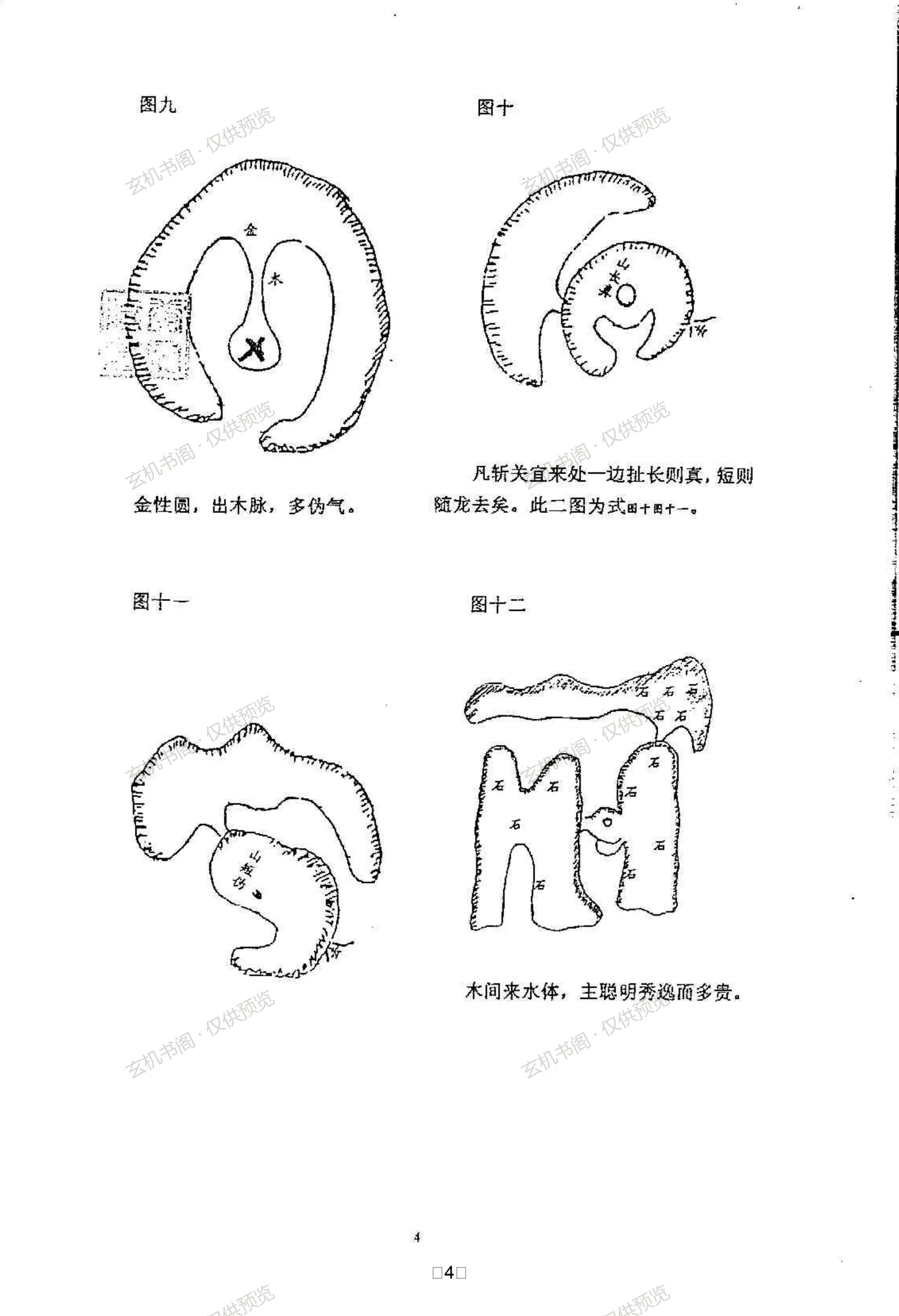
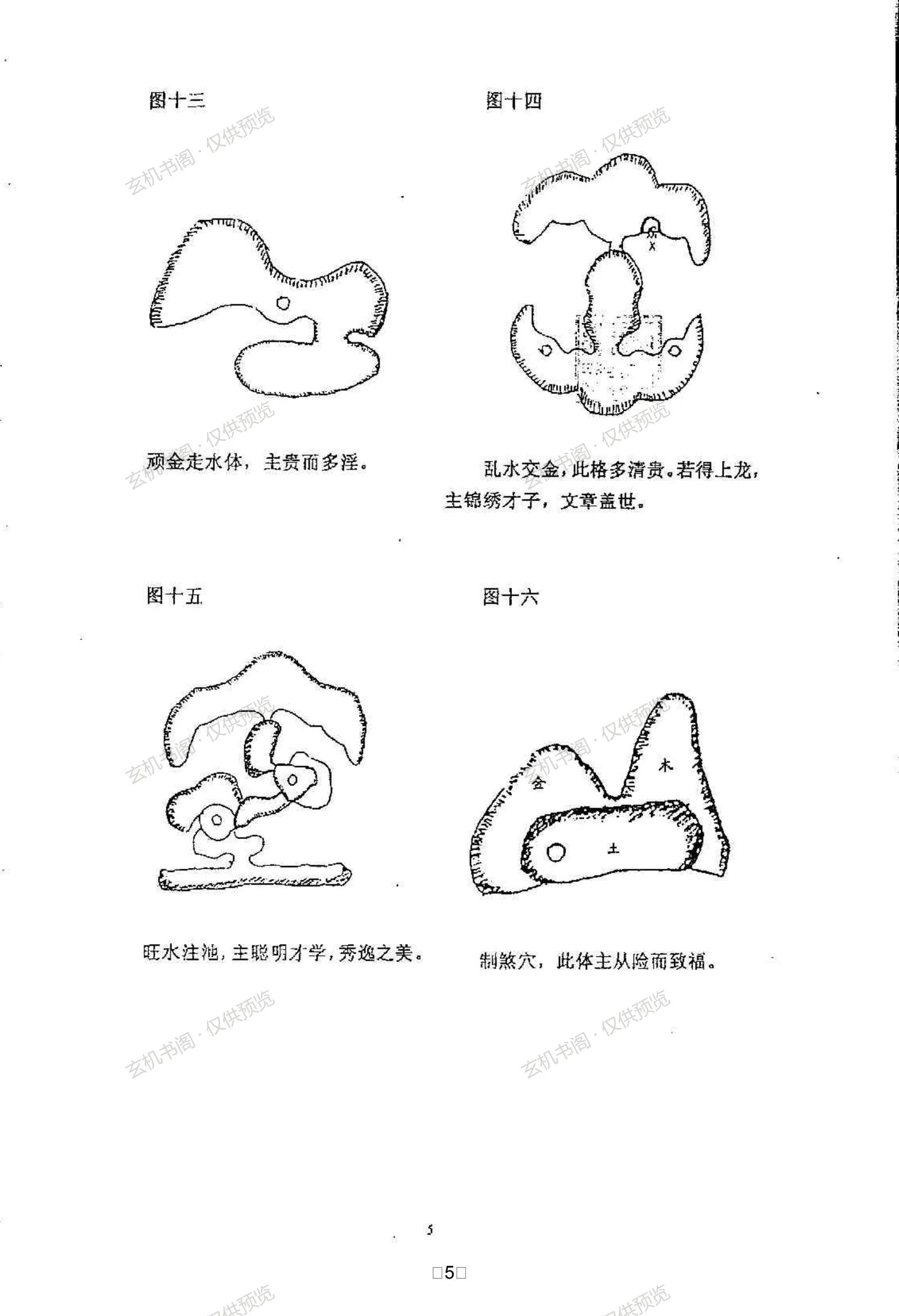
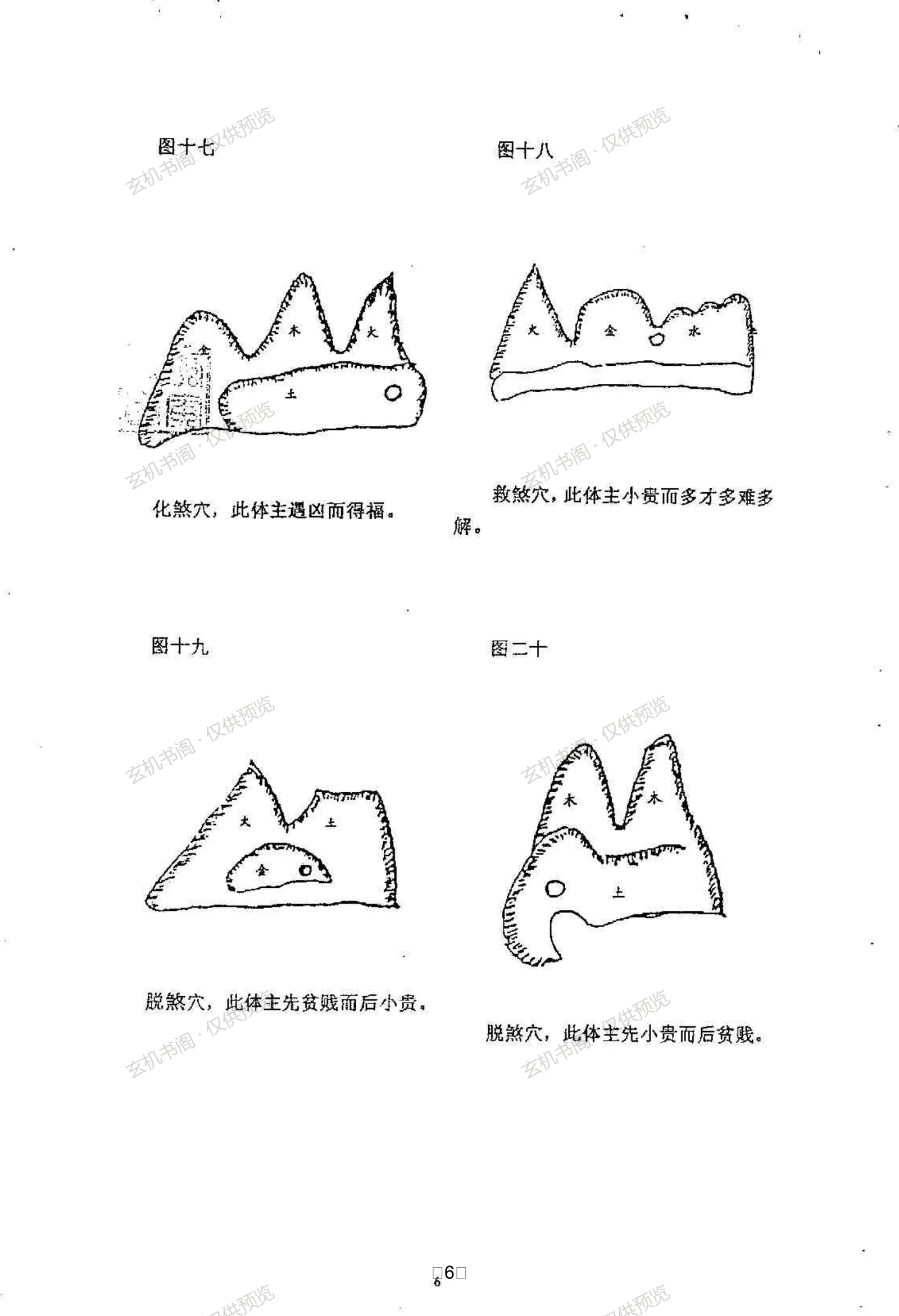
This is a diagram-centred manual of form-school feng shui (xingfa kanyu). The cover reads "Illustrated Compendium of Simplified Geography"; the body consists mainly of line drawings with short annotations. Each plate sketches a mountain form, marks the spot where the qi node (xue) falls, and adds a one-line verdict on the talents, rank, or misfortunes that the shape is said to produce. The twenty plates visible here fall into three groups: nodes formed by the Five Elements (wood, fire, earth, metal, water), combinations of metal and water forms, and a closing series on controlling, transforming, rescuing, and shedding baleful (sha) configurations, including cases of rising from poverty to modest wealth or the reverse. The annotations repeatedly distinguish upper, middle, and lower dragon positions to grade the level of fortune. The format is compact and easy to consult shape by shape, making it useful for studying form-based site reading, though readers need a basic grasp of dragon, node, sand, and water terminology to follow the verdicts.
Contents
Cover: Illustrated Compendium of Simplified Geography
Plates 1-4: wood-star and fire-embryo node forms
Plates 5-8: metal, wood, water, and earth combinations
Plates 9-12: metal-water generation and breach passes
Plates 13-16: stubborn metal, rushing water, and controlling sha
Plates 17-20: transforming, rescuing, and shedding sha
Key Points
Each plate pairs a sketch with a verdict on fortune and rank
Upper, middle, and lower dragon grades recur throughout
Five-Element form classification and node spotting are the core
Final plates cover four ways of turning baleful forms to good