Reading guide
Content guideOverview
This volume by Huang Dalu is a collection of fengshui essays written in dialogue form. The opening essays examine the site of Zhu Yuanzhang's ancestral tomb at Yangjiadun, comparing hill-dragon and plain-dragon configurations, tracking how flooding in the Kangxi era altered the landscape, and pairing textual sources with satellite and field photos. Later essays turn to Hu Village in Jixi, Anhui, assessing its so-called taiji water layout, the locking water-mouth, and the brush-peak facing mountains. Rather than a systematic treatment of luopan theory, the book stresses reading terrain from images and cross-checking classical texts, making it useful for readers with basic luan-tou knowledge who want to test form-and-principle reasoning against real cases.
Contents
Opening: is Zhu Yuanzhang's ancestral tomb underwater?
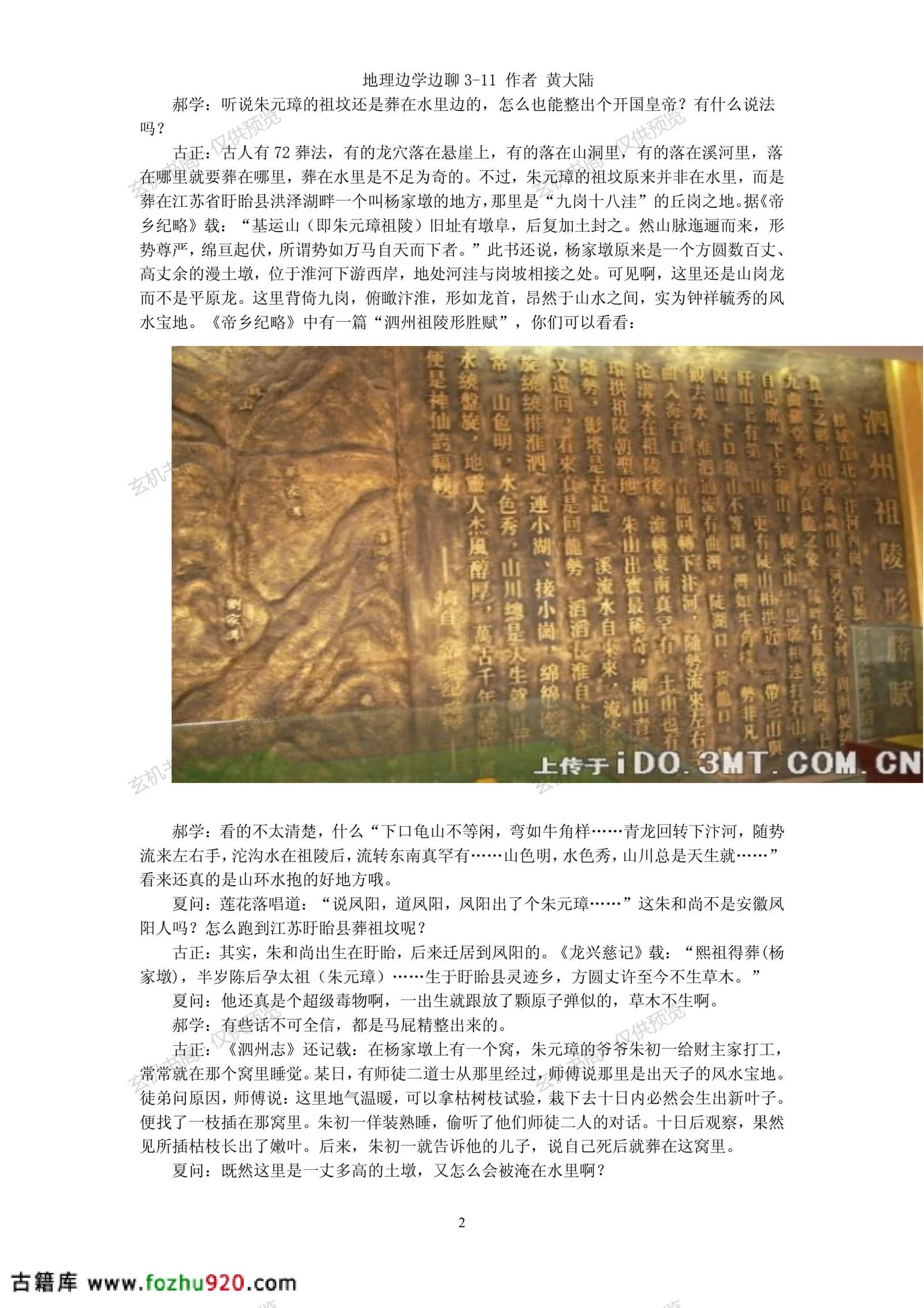
Yangjiadun hill-dragon terrain and the Dixiang Jilüe record
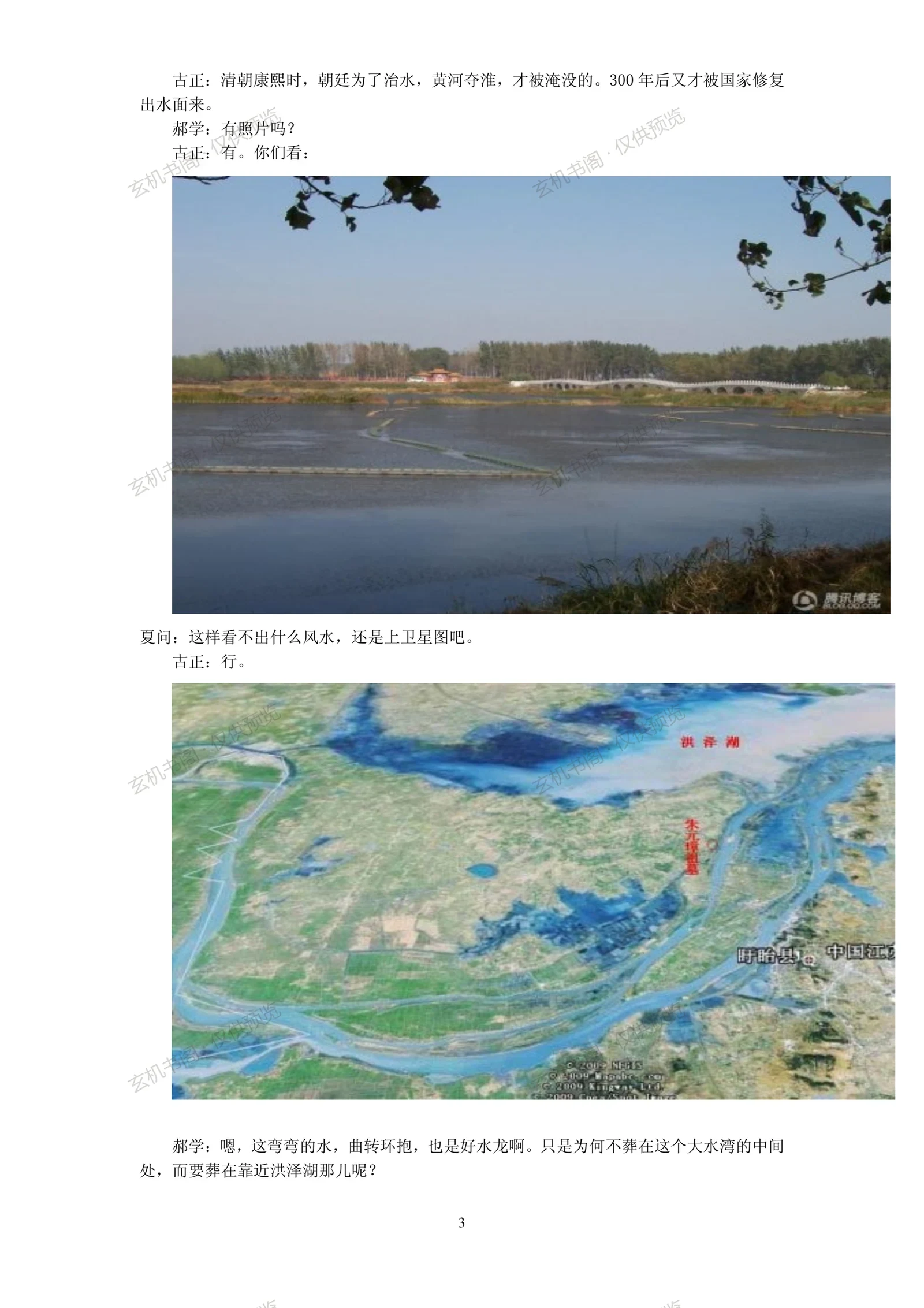
Kangxi flood control, submergence and later restoration
Reading the embracing water dragon from satellite imagery
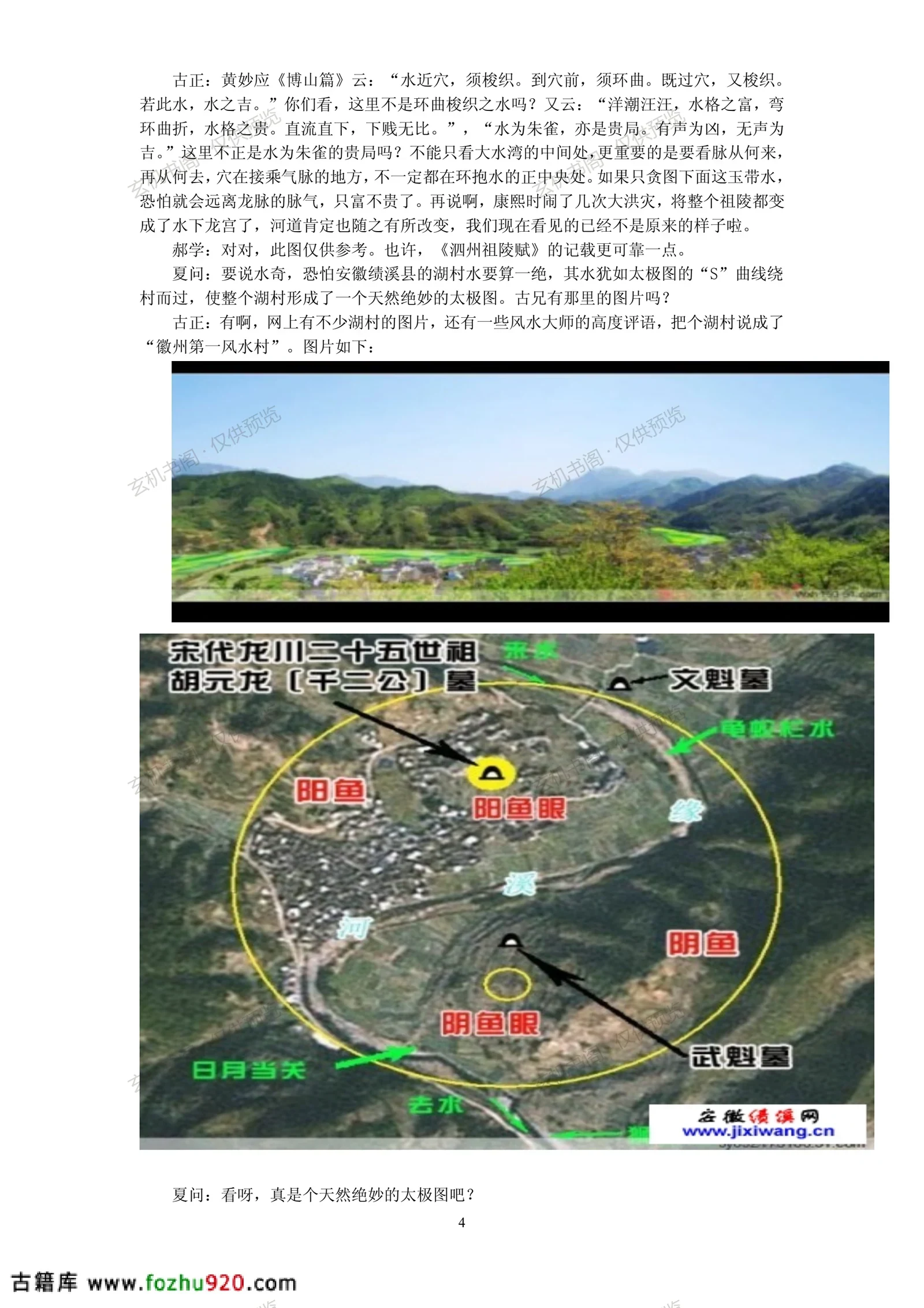
Hu Village taiji water layout: yang-fish and yin-fish eyes
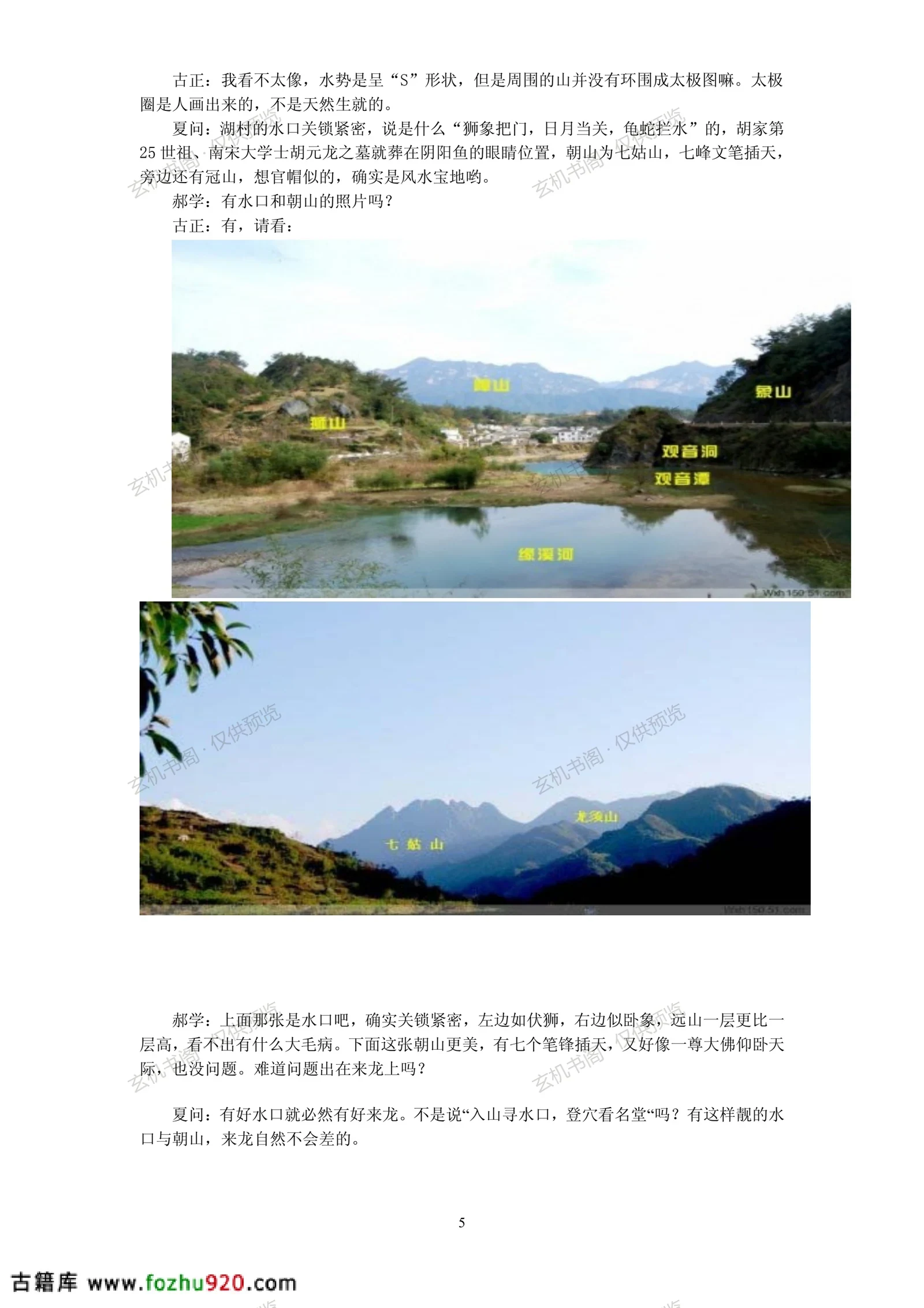
Lion-elephant water-mouth and Qigu Mountain brush peaks
Key Points
Uses Zhu Yuanzhang's ancestral tomb to distinguish hill dragons from plain dragons
Cites the Boshan Pian on valued water patterns: woven, winding, vermilion-bird water
Warns against judging only whether water embraces the exact center of a bend without tracing the vein
Notes that the taiji ring at Hu Village is largely drawn on, not a natural formation
Argues water-mouth and facing mountains must be read together with the bright hall