Reading guide
Content guideOverview
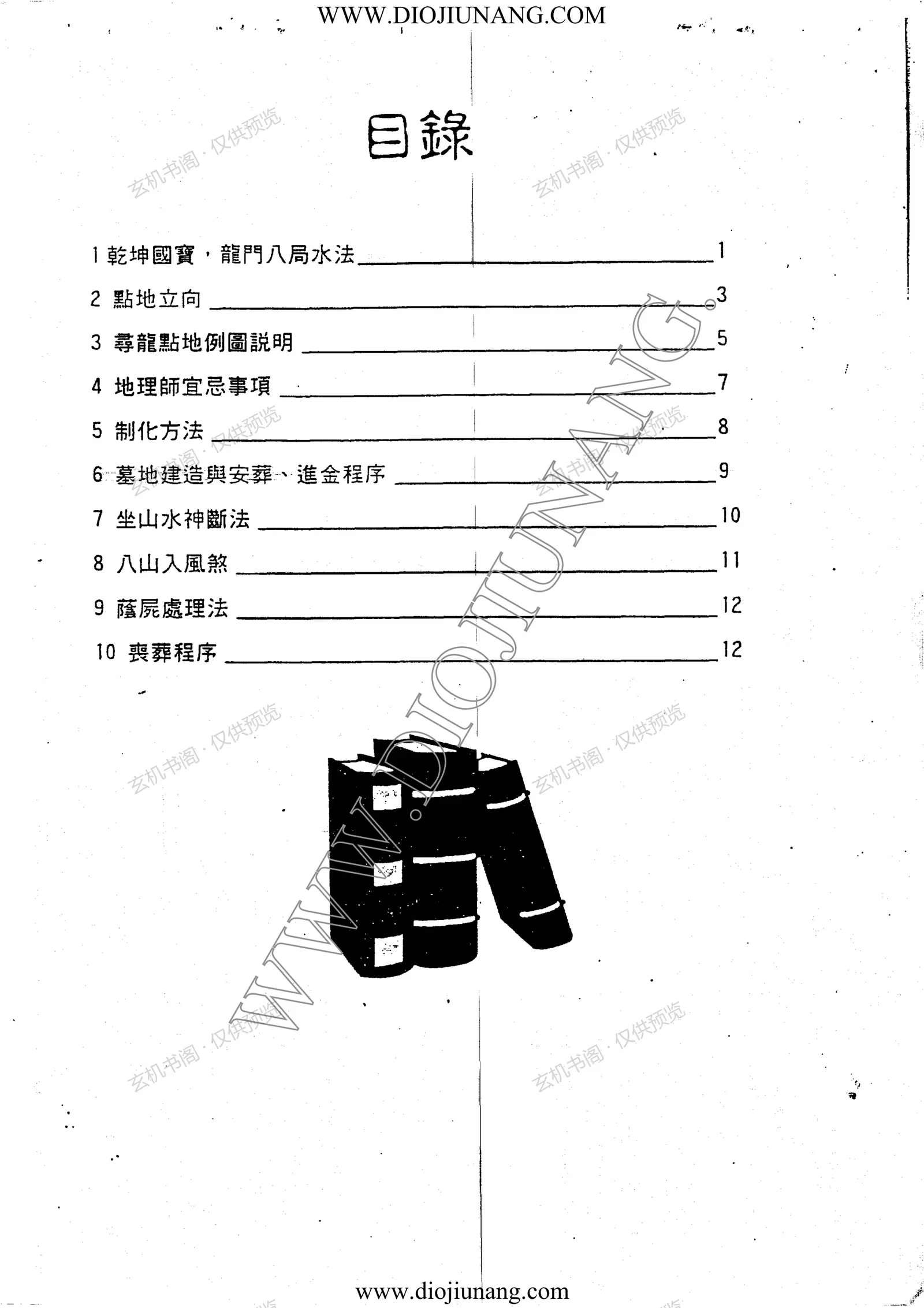
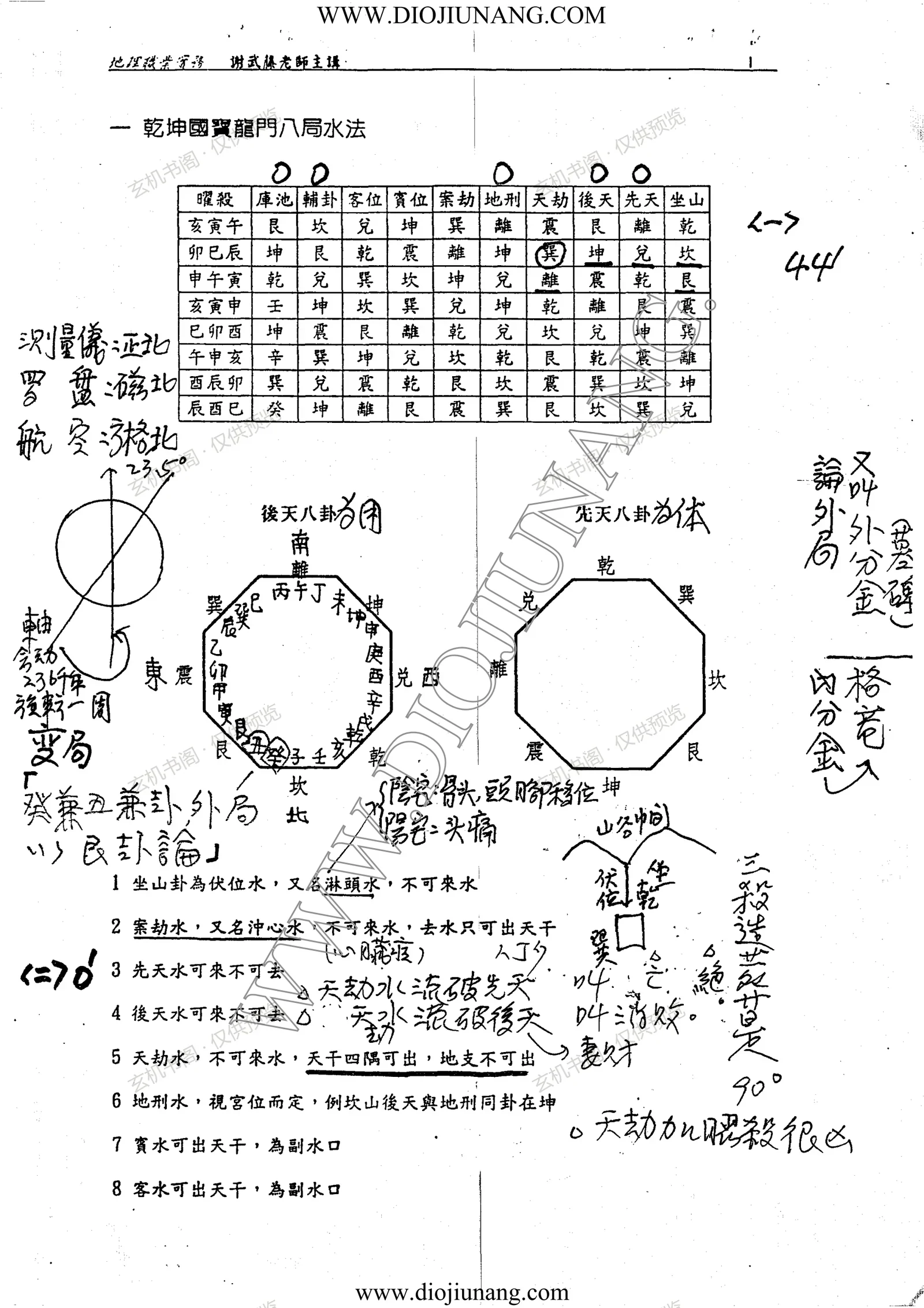
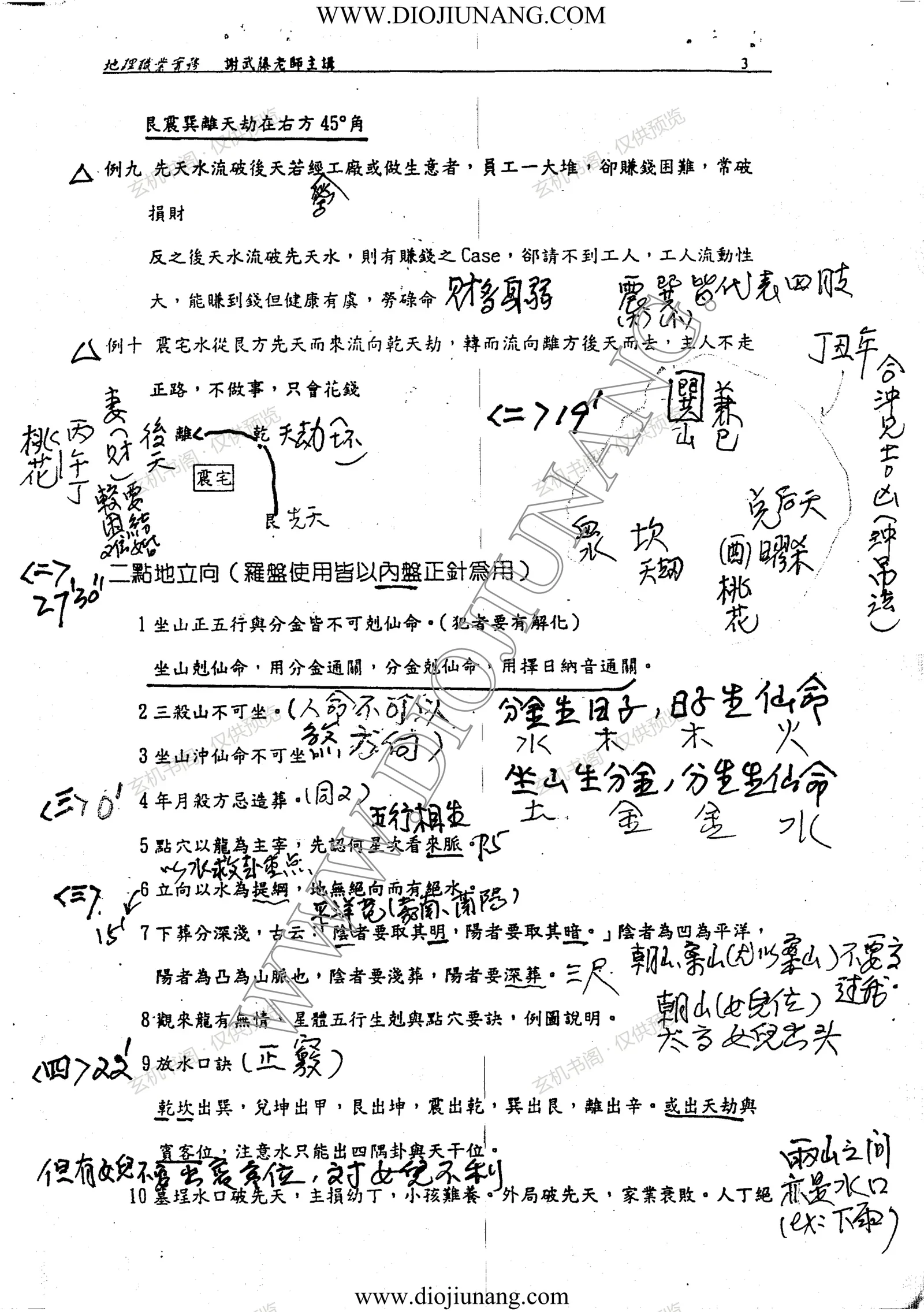
This is a practical feng shui lecture set by Xie Wuteng, centered on the Qiankun Guobao Longmen Eight-Palace water method and combining water-method theory, site selection and orientation, and burial procedures. The table of contents has ten sections: the Longmen Eight-Palace water method, site setting and orientation, illustrated dragon-spot examples, cautions for geomancers, remedy methods, grave construction and interment procedures, sitting-mountain water-deity judgments, eight-mountain wind-sha, corpse-preservation handling, and funeral procedures. The visible pages focus on the water method, tabulating earlier and later heaven trigram positions, guest and host positions, yaosha and jiesha, explaining how sitting mountains, incoming and outgoing water, and earlier/later heaven breakages relate, with case examples. The text also gives orientation rules: sitting-mountain elements and fenjin must not overcome the client's life stem, three-kill mountains must be avoided, and outlet rules are listed. Heavy handwritten notes and arrows make it a working manual suited to readers with basic feng shui knowledge.
Contents
Qiankun Guobao Longmen Eight-Palace water method
Site setting, orientation and sitting-mountain fenjin
Illustrated dragon-spot examples
Cautions for geomancers and remedy methods
Grave construction, interment and jinjin procedures
Sitting-mountain water-deity judgments and eight-mountain wind-sha
Corpse-preservation handling
Funeral procedures
Key Points
The Longmen Eight-Palace water method governs earlier/later heaven positions and water auspiciousness
Guest, host, yaosha and jiesha tables are core tools for diagnosing water breakages
Orientation must avoid sitting mountains overcoming life stems, three-kill mountains, and life-stem clashes
Outlet rules and peach-blossom water directly affect descendants, wealth and house branches
Burial procedures and corpse handling are the practical field-work layer