Reading guide
Content guideOverview
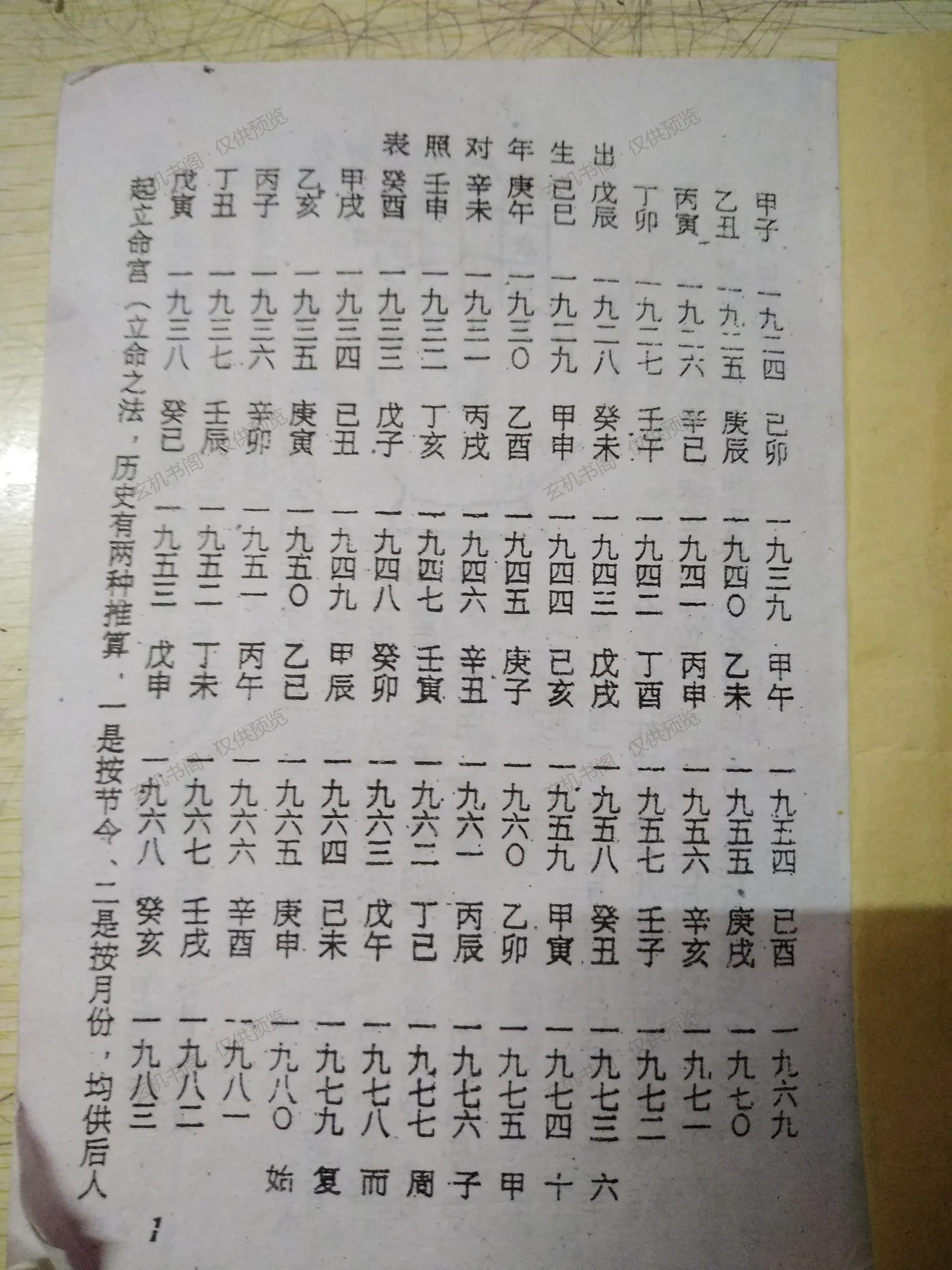
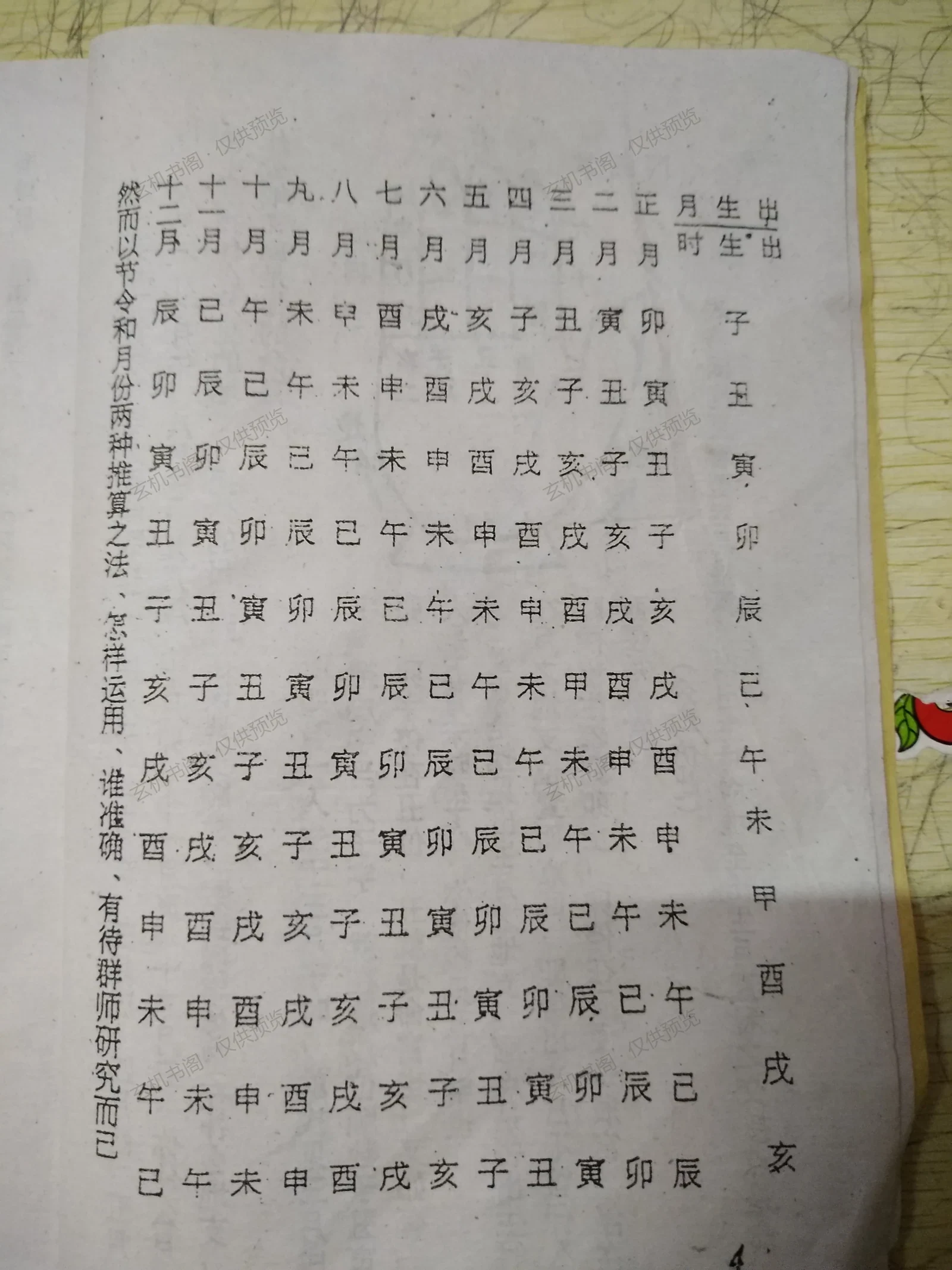
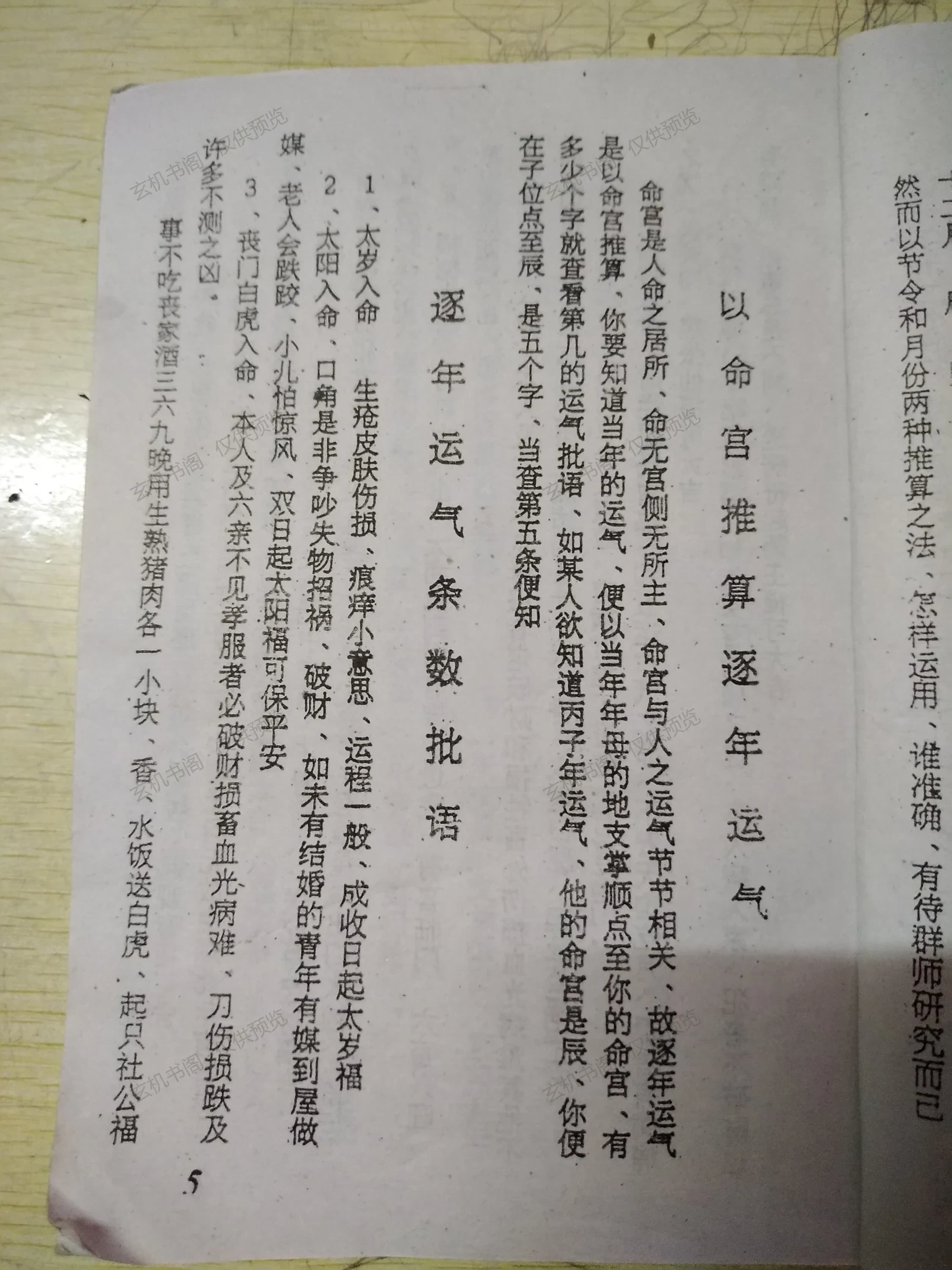
Ding Hua Gen is a hands-on manual for folk fortune-telling. Based on the visible pages, the book does not delve into the complex charts and interactions of the Ten Gods in Bazi. Instead, it focuses heavily on the core concept of the 'Ming Gong' (Life Palace). It details methods for calculating the Life Palace, including using palm diagrams (Zhang Jue) and employing both forward and reverse counting based on birth months and hours, while noting the differences between calculations based on solar terms versus calendar months. After determining the Life Palace, the book combines it with the year's earthly branch to predict 'yearly fortunes'. It includes specific oracle verses for these fortunes, such as 'Tai Sui entering the palace' indicating skin ailments, and 'Sang Men and Bai Hu entering the palace' suggesting financial loss or injury. This represents a typical folk fortune-telling method, using accessible language suitable for beginners curious about traditional Chinese metaphysics.
Contents
Basic preparation and the Heavenly Stems & Earthly Branches table
Step-by-step calculation of the Life Palace using palm diagrams
Comparison of the two calculation methods: solar terms vs. calendar months
Predicting yearly fortunes based on the Life Palace
Oracle verses and auspicious/inauspicious interpretations for yearly fortunes
Key Points
Teaches how to quickly locate the Life Palace using the 12 Earthly Branches palm diagram (Zhang Jue).
Emphasizes the Life Palace's role in yearly predictions, treating it as the baseline for annual fortune.
Provides specific oracle verses for yearly fortunes, such as events associated with offending Tai Sui or Sang Men/Bai Hu.
Contrasts the two calculation methods (solar terms vs. calendar months), leaving room for further study.