Reading guide
Content guideOverview
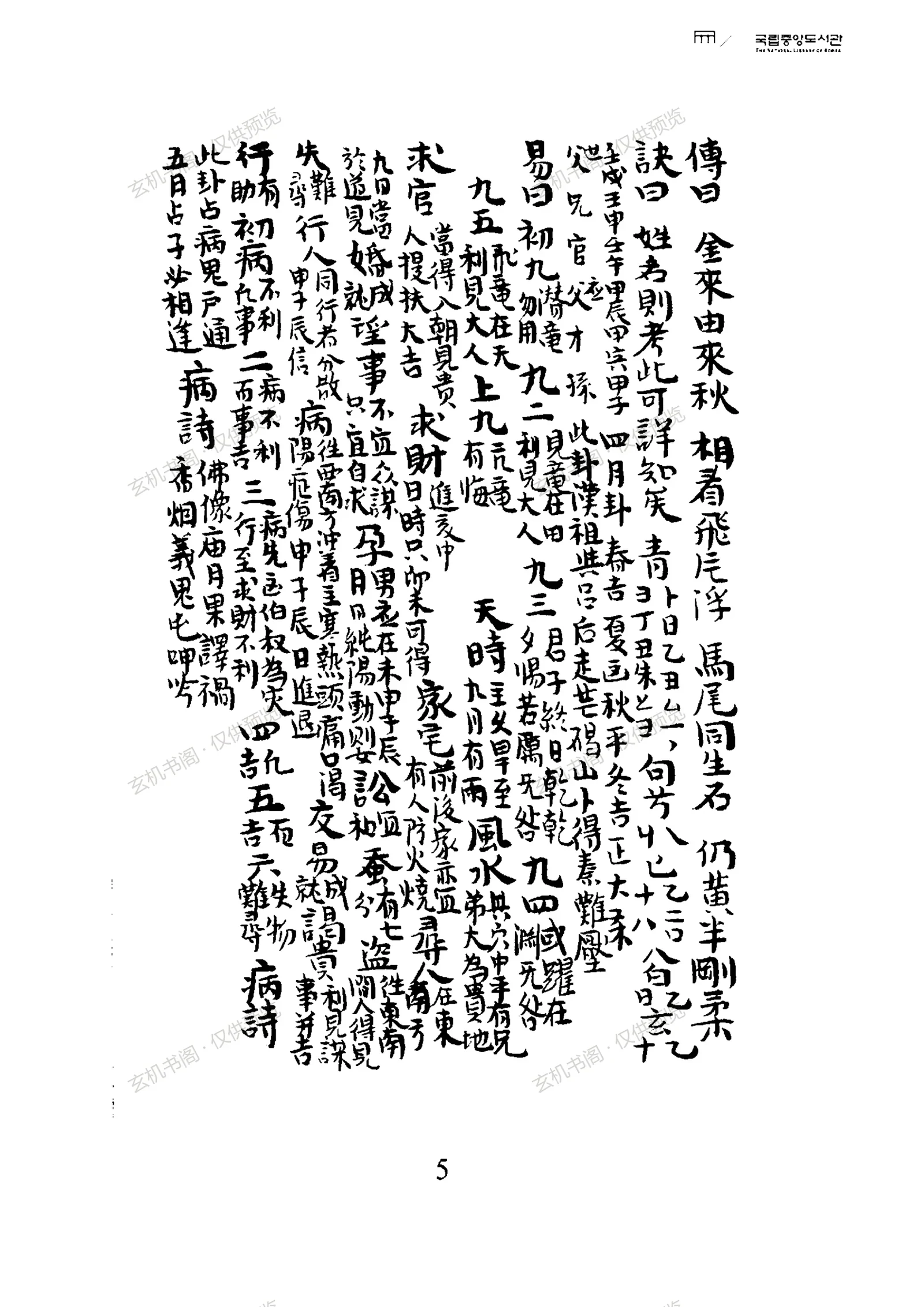
This Dunhuang manuscript, written in cursive script, presents divination methods centered on character analysis (cezi), the eight trigrams (bagua), and six-line divination (liuyao). The opening chapter introduces Master Donglin, a recluse who used divination to identify thieves and communicate with spirits, emphasizing that judgments should combine handwriting, character forms, directions, and hexagrams. The text includes examples on illness, lost objects, official advancement, marriage, and more, along with oral formulas for the Six Spirits and bagua characters. It offers insight into Dunhuang divination literature and folk divination practices.
Contents
Chapter on Master Donglin and the origins of divination
Character divination: judging fortune by form, handwriting, and direction
Bagua character formulas: trigrams and human affairs
Six Spirits character-breaking: combining spirits with characters
Case examples: illness, lost objects, office, marriage
Key Points
Character divination as the core method
Bagua and Six Spirits combined with character analysis
Numerous case examples reflecting folk practice
Cursive Dunhuang manuscript preserving original form