Reading guide
Content guideOverview
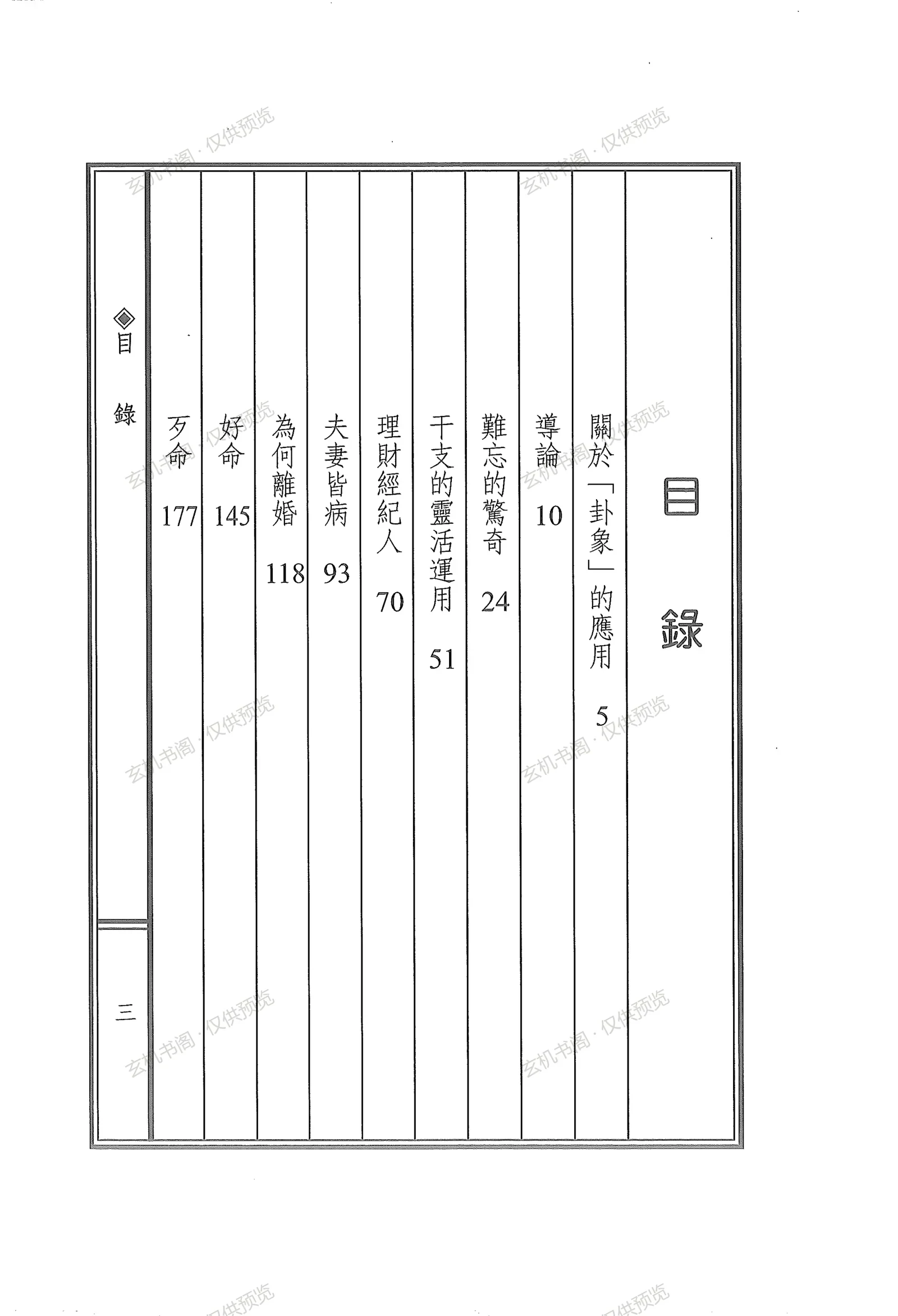
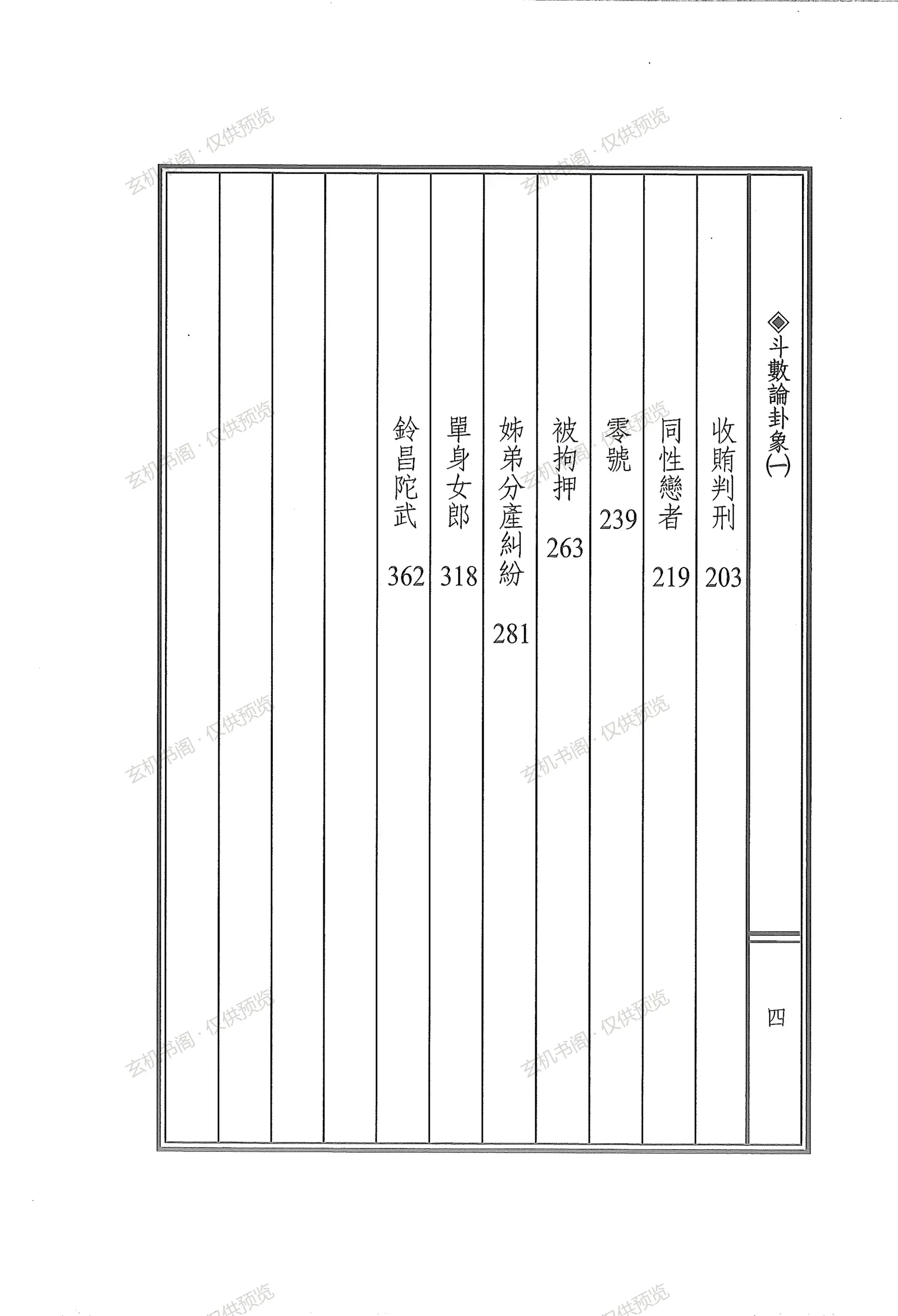
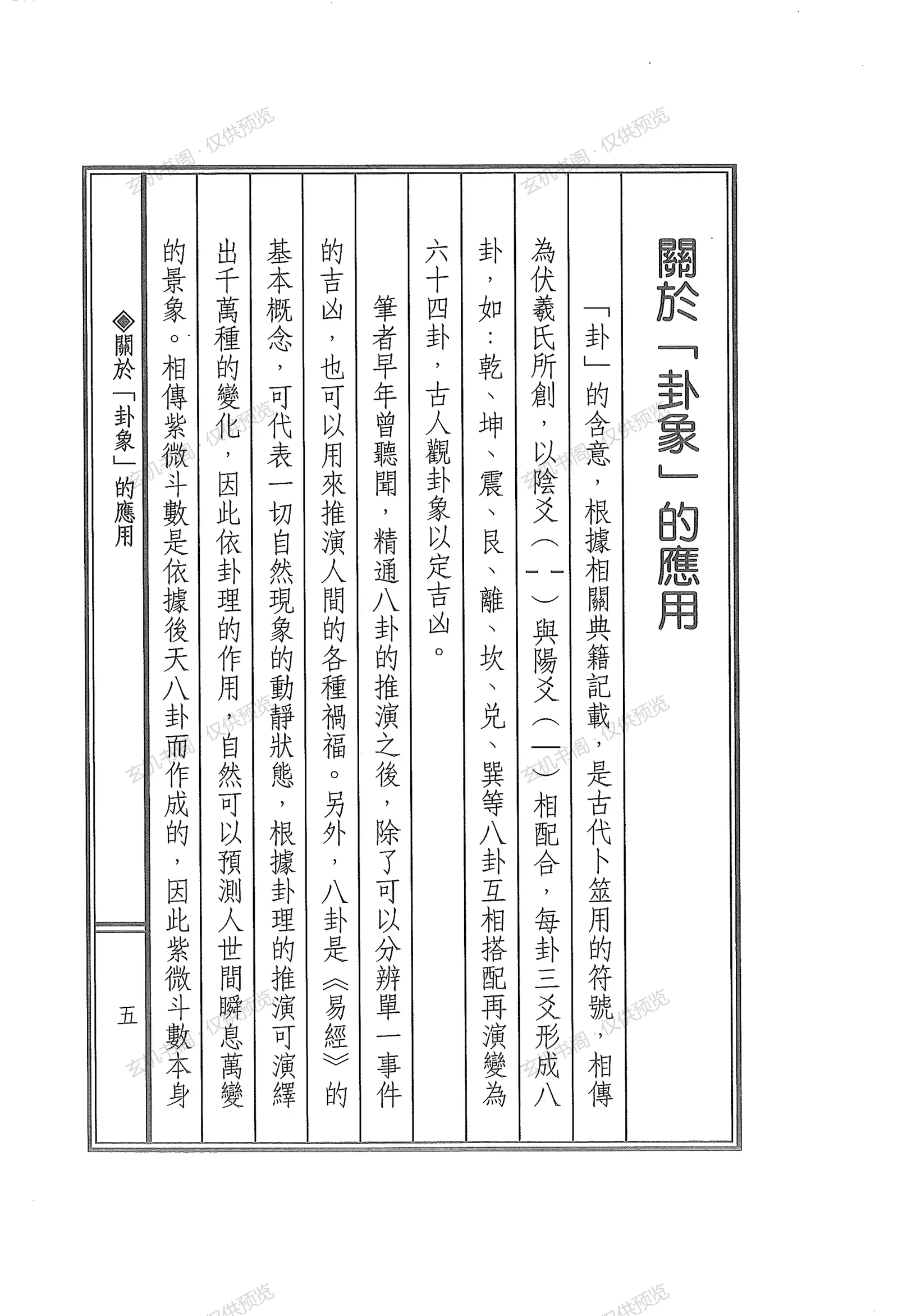
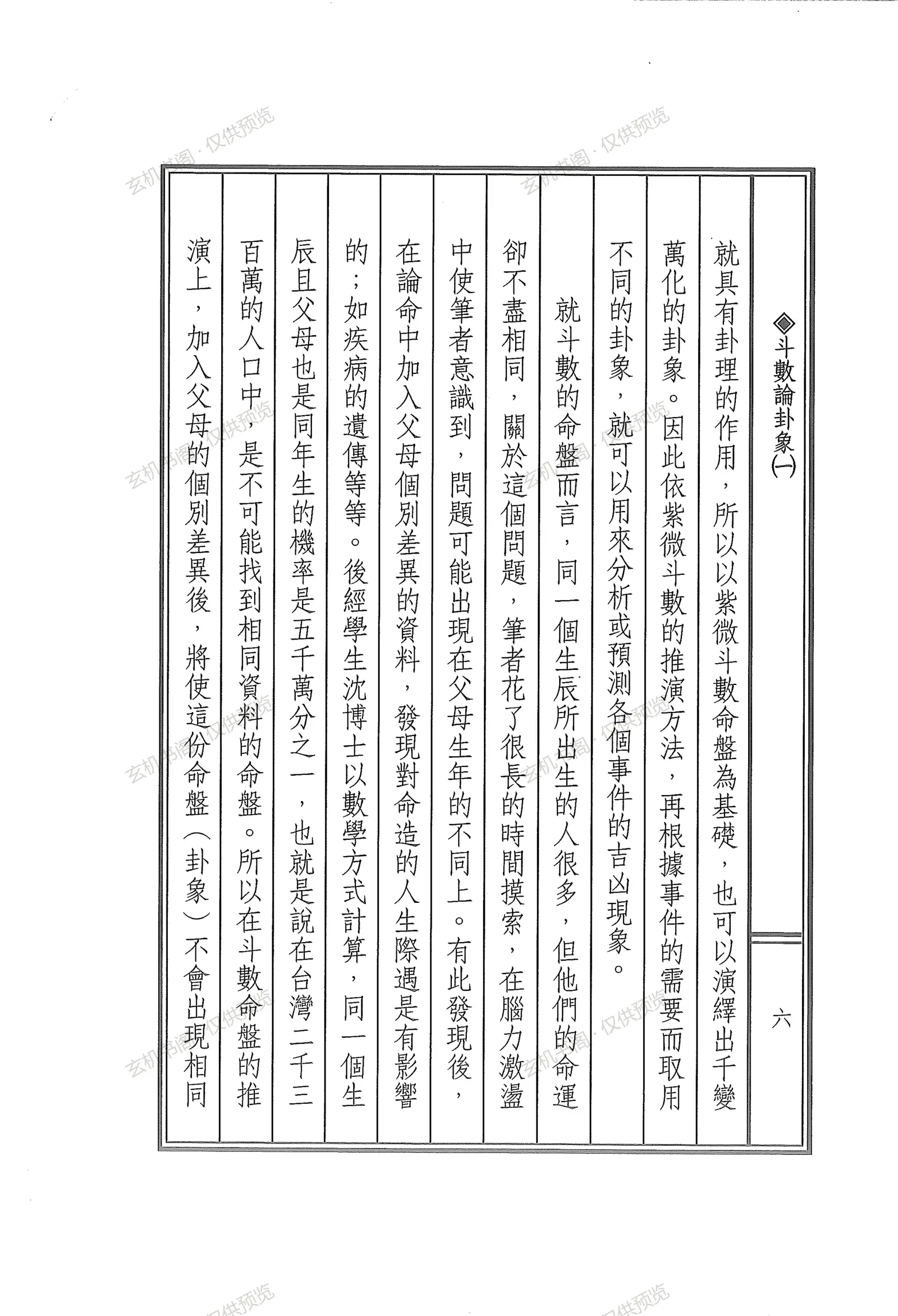
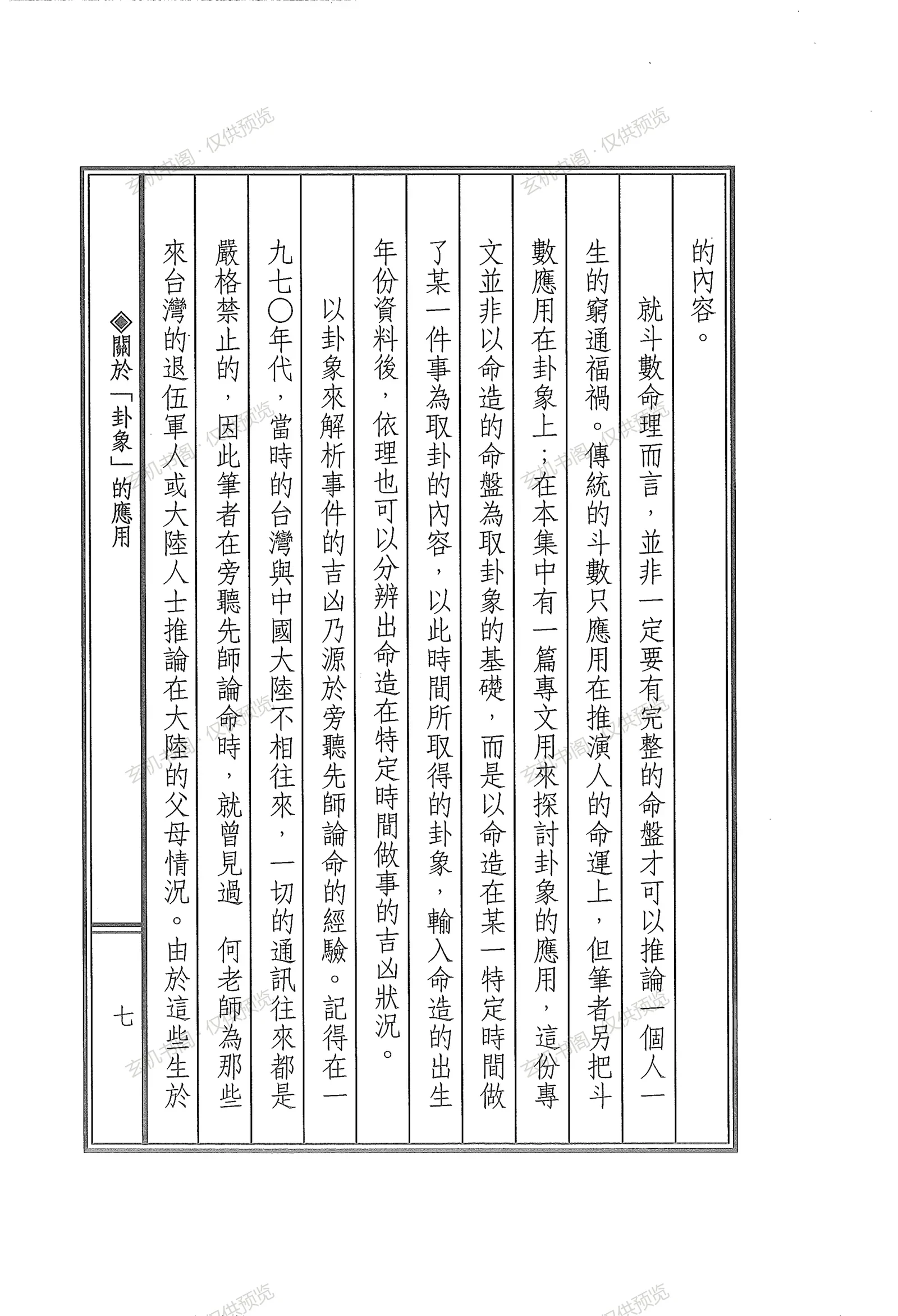
This volume, the sixteenth in the Zi Yun series, explores the intersection of Zi Wei Dou Shu and Yijing hexagram imagery. The table of contents lists chapters on the application of hexagrams, an introduction, notable cases, the flexible use of heavenly stems and earthly branches, financial agents, illness of spouses, divorce, good and bad fates, bribery sentencing, homosexuality, detention, sibling property disputes, single women, and the Ling Chang Tuo Wu configuration. The opening essay, 'On the Application of Hexagrams,' reviews the eight trigrams and sixty-four hexagrams formed from yin and yang lines, explains that the ancients observed hexagrams to determine fortune, and argues that Zi Wei Dou Shu charts, built on the later heaven arrangement, can serve as a basis for selecting and interpreting hexagrams according to the event at hand. It also addresses why people born at the same time may have different fates, proposing that parents' birth data be added to refine chart and hexagram interpretation. The book is practical and case-oriented, suited to readers who already know Dou Shu fundamentals.
Contents
On the application of hexagrams and Dou Shu
Introduction: principles of selecting hexagrams
Notable cases as casting demonstrations
Flexible use of stems and branches for timing
Topics on finance, marriage, divorce and fate
Cases on bribery, detention, inheritance and more
Key Points
Explains the yin-yang line structure of trigrams and hexagrams
Uses Zi Wei Dou Shu charts as a basis for hexagram interpretation
Selects different hexagrams according to the event being analyzed
Discusses individual differences and parents' birth data