Reading guide
Content guideOverview
This book presents Zi Wei Dou Shu teachings through the metaphor of a kitchen and a menu. The opening pages list the 'ingredients': the eighteen stars of the Zi Wei, Tian Fu, and month-hour systems, framed by the Qian and Kun counts of 216 and 144 totaling 360. It then maps year, month, day, and hour onto the Hetu, Luoshu, the eight trigrams, and the twelve sovereign hexagrams, linking Lianshan, Guicang, Zhouyi, and the Taixuan Jing. The main text begins with a welcoming banquet of twelve dishes; the first, a cold platter, uses the 'fifty for the Great Expansion, forty-nine in use' principle to explain why Zi Wei stays motionless at the center while the four transformations yield twelve kinds each, totaling forty-eight plus one. Later sections distinguish Zi Wei's Hua Quan and Hua Ke as destiny arts from Lian Zhen's Hua Lu and Hua Ji as geography, cite the Luoshu 'carry one, tread nine' to relate their palace positions, and conclude that Dou Shu originally unites destiny, geography, and medicine.
Contents
Ingredients: eighteen stars and Qian-Kun counts
Year, month, day, hour mapped to Hetu, Luoshu, trigrams
Welcoming guests: twelve dishes
First dish: fivefold platter and the Great Expansion
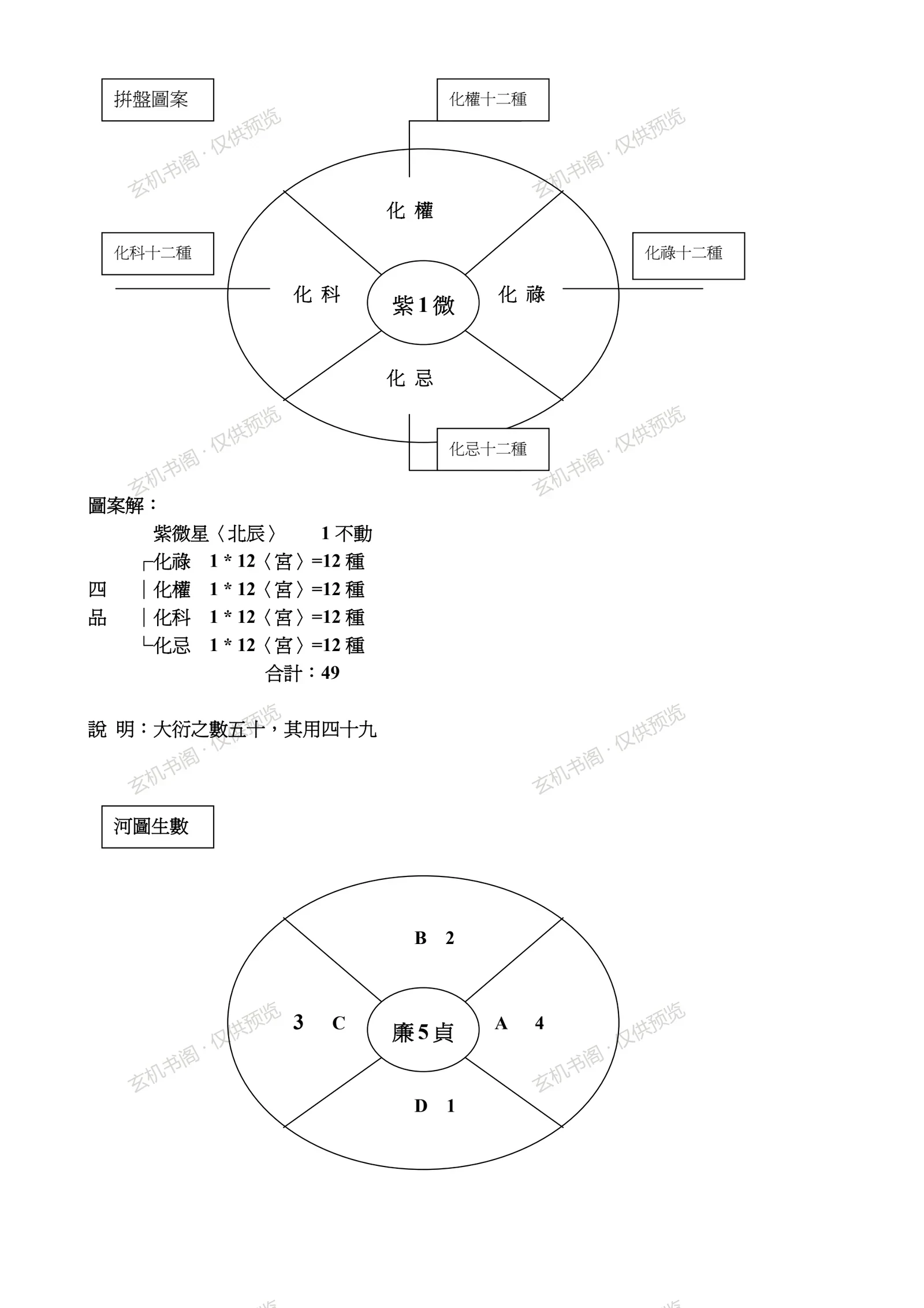
Twelve kinds of four transformations and Hetu numbers
Zi Wei's Quan/Ke versus Lian Zhen's Lu/Ji
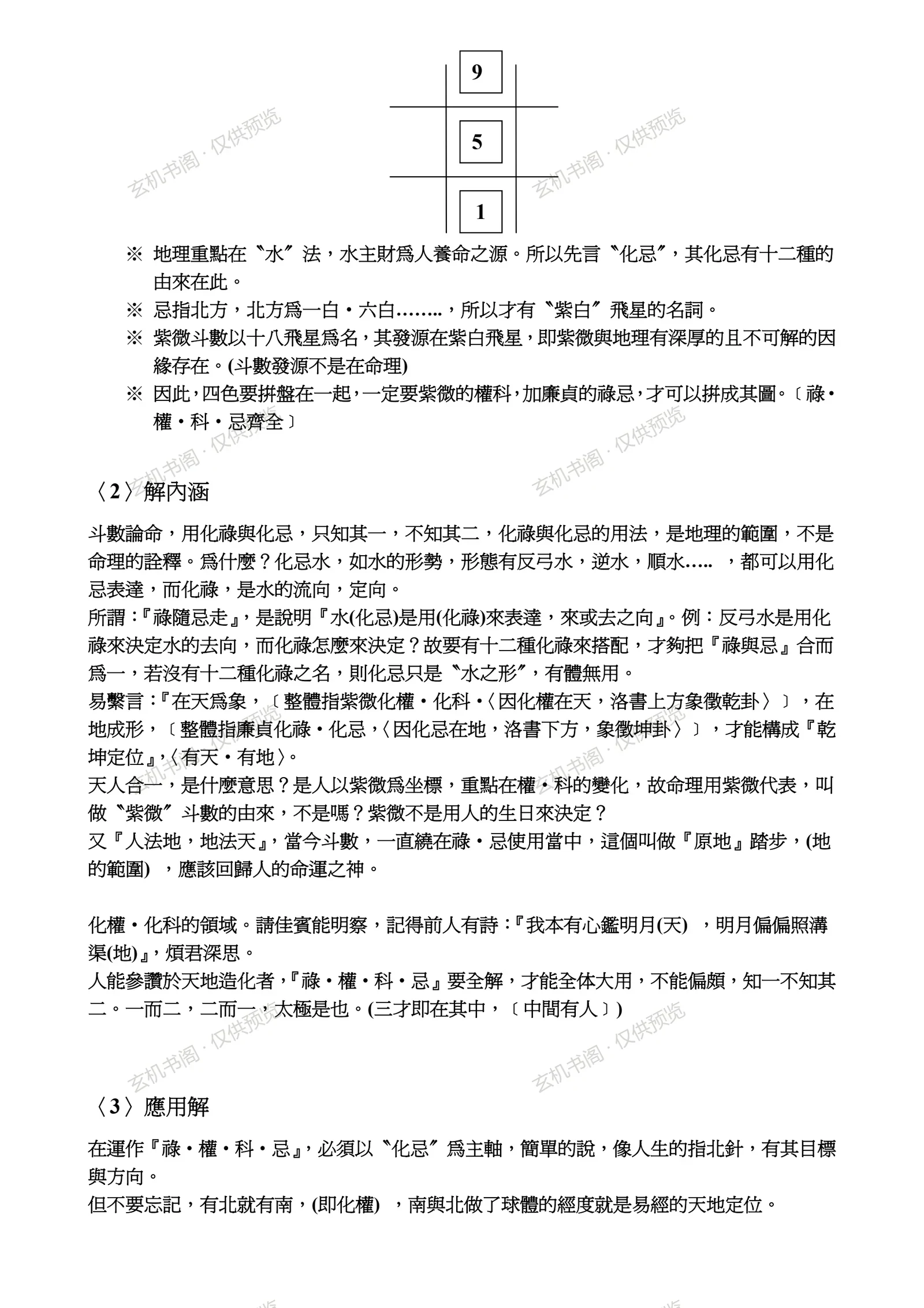
Luoshu carry-one-tread-nine and the threefold unity
Key Points
Organized as a menu, with the first dish explaining the Great Expansion's fifty and forty-nine
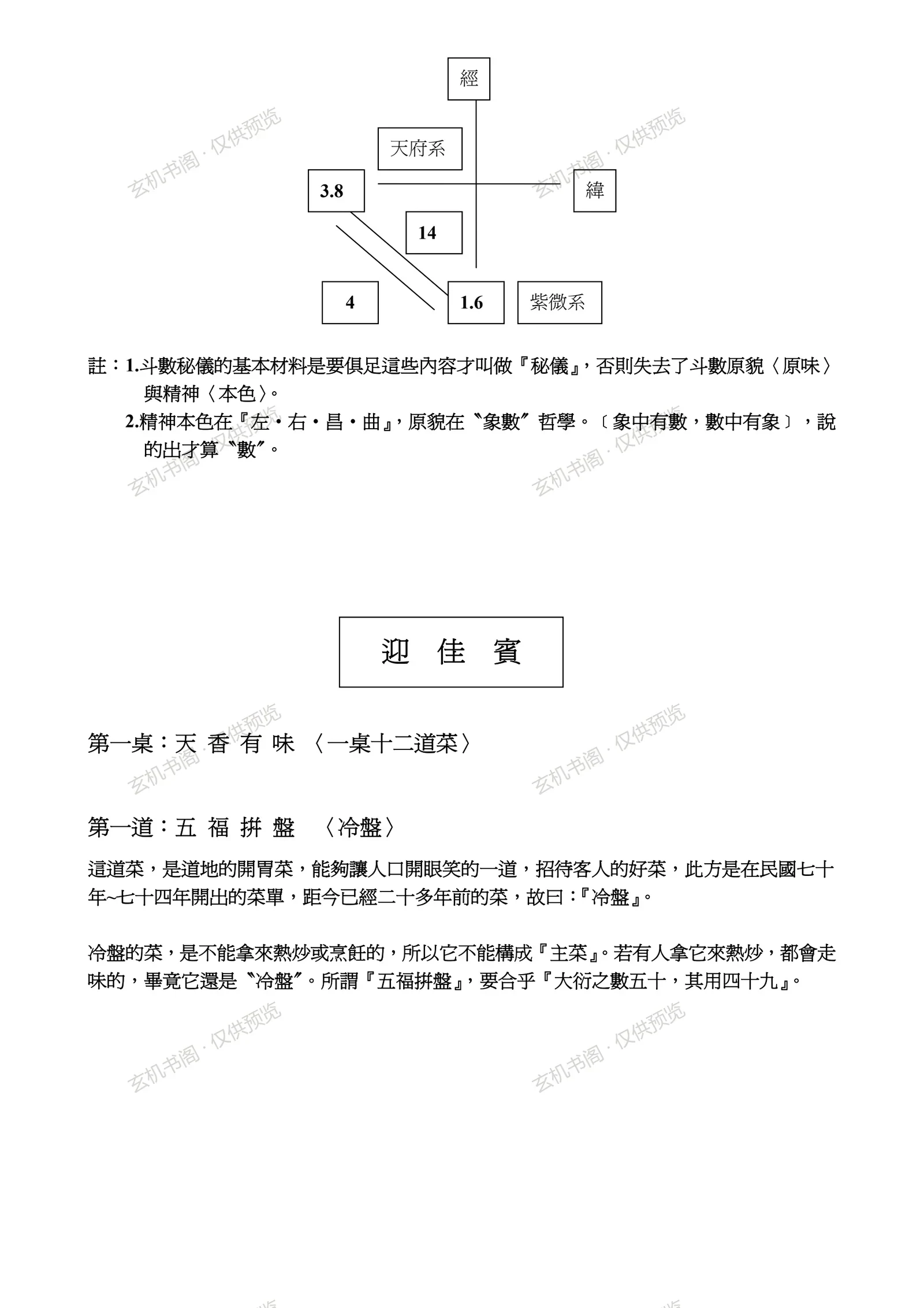
Basic materials are eighteen stars: six Zi Wei, eight Tian Fu, four month-hour
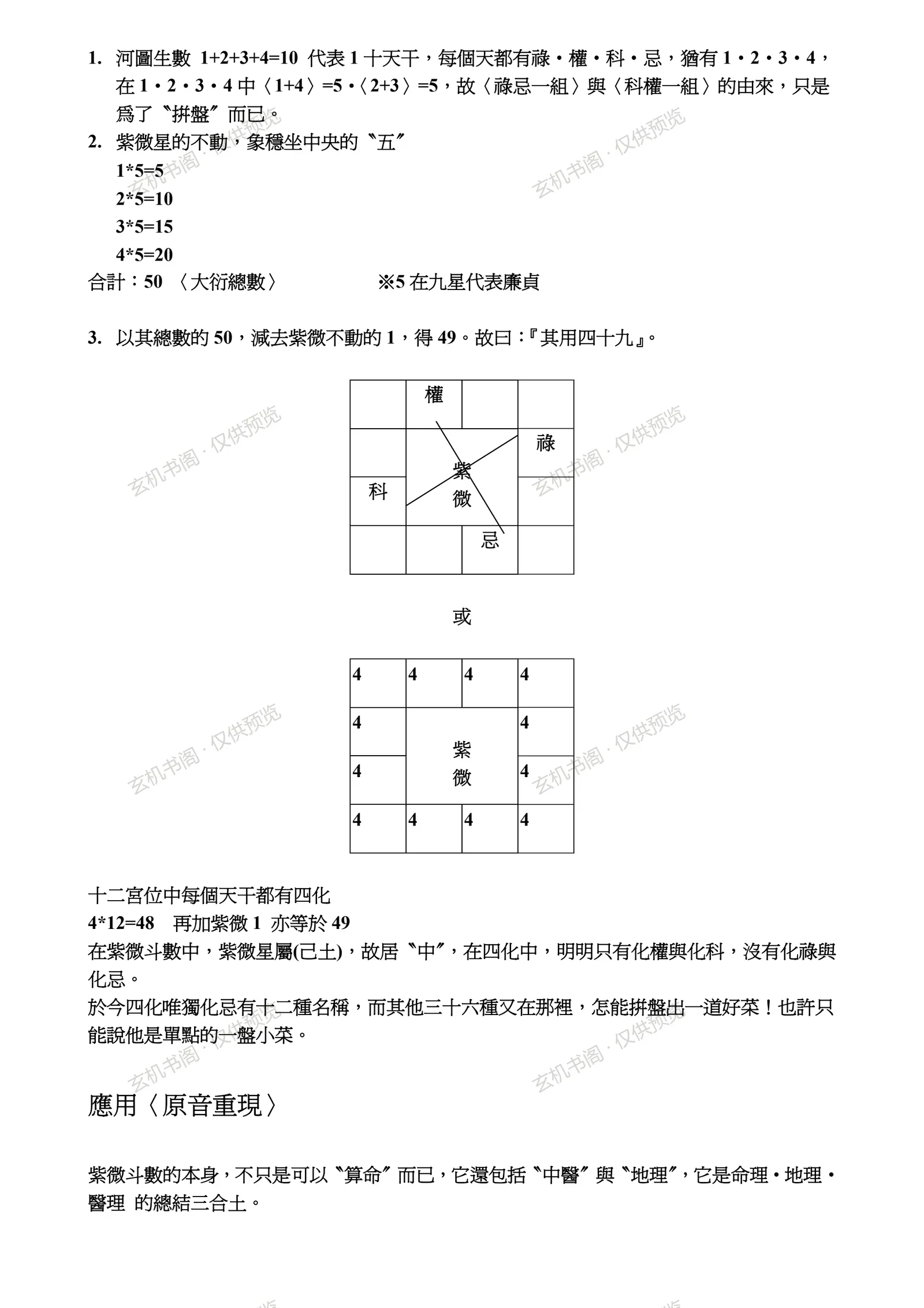
Four transformations yield twelve kinds each, forty-eight plus the motionless Zi Wei makes forty-nine
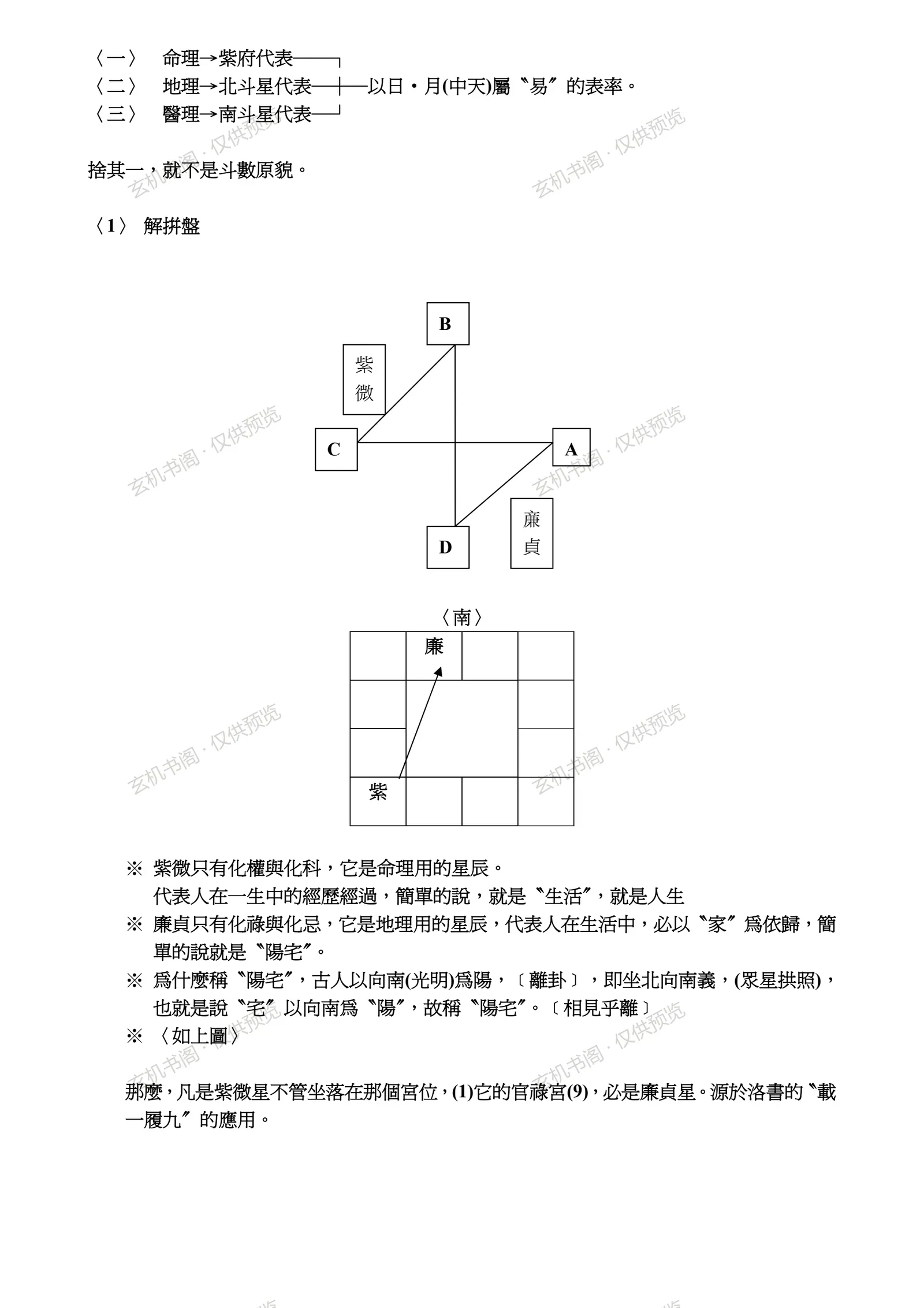
Zi Wei has only Hua Quan and Hua Ke for destiny; Lian Zhen only Hua Lu and Hua Ji for geography
Luoshu 'carry one, tread nine' explains the Zi Wei-Lian Zhen palace relation
Claims Dou Shu unites destiny, geography, and medicine