Reading guide
Content guideOverview
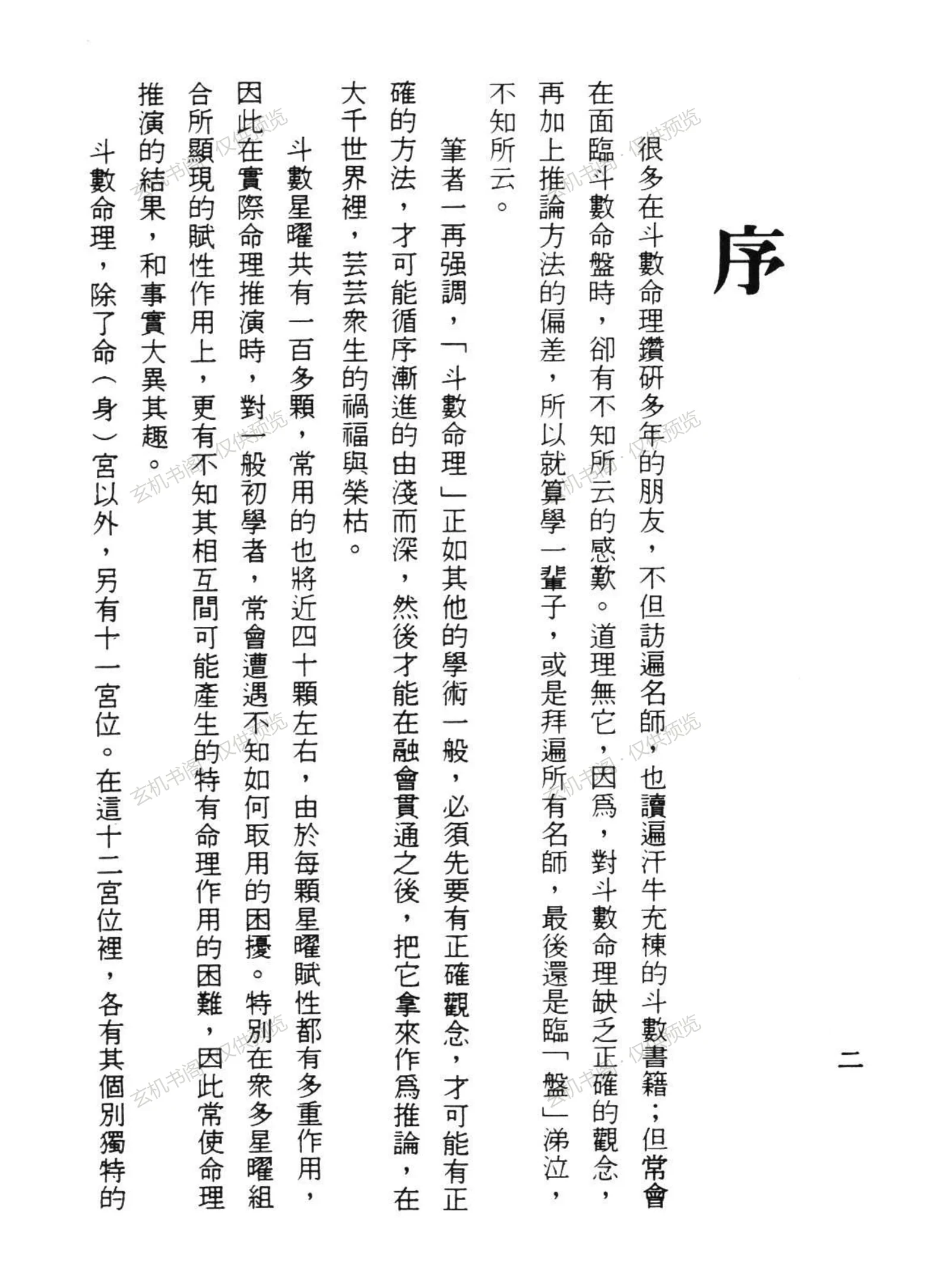
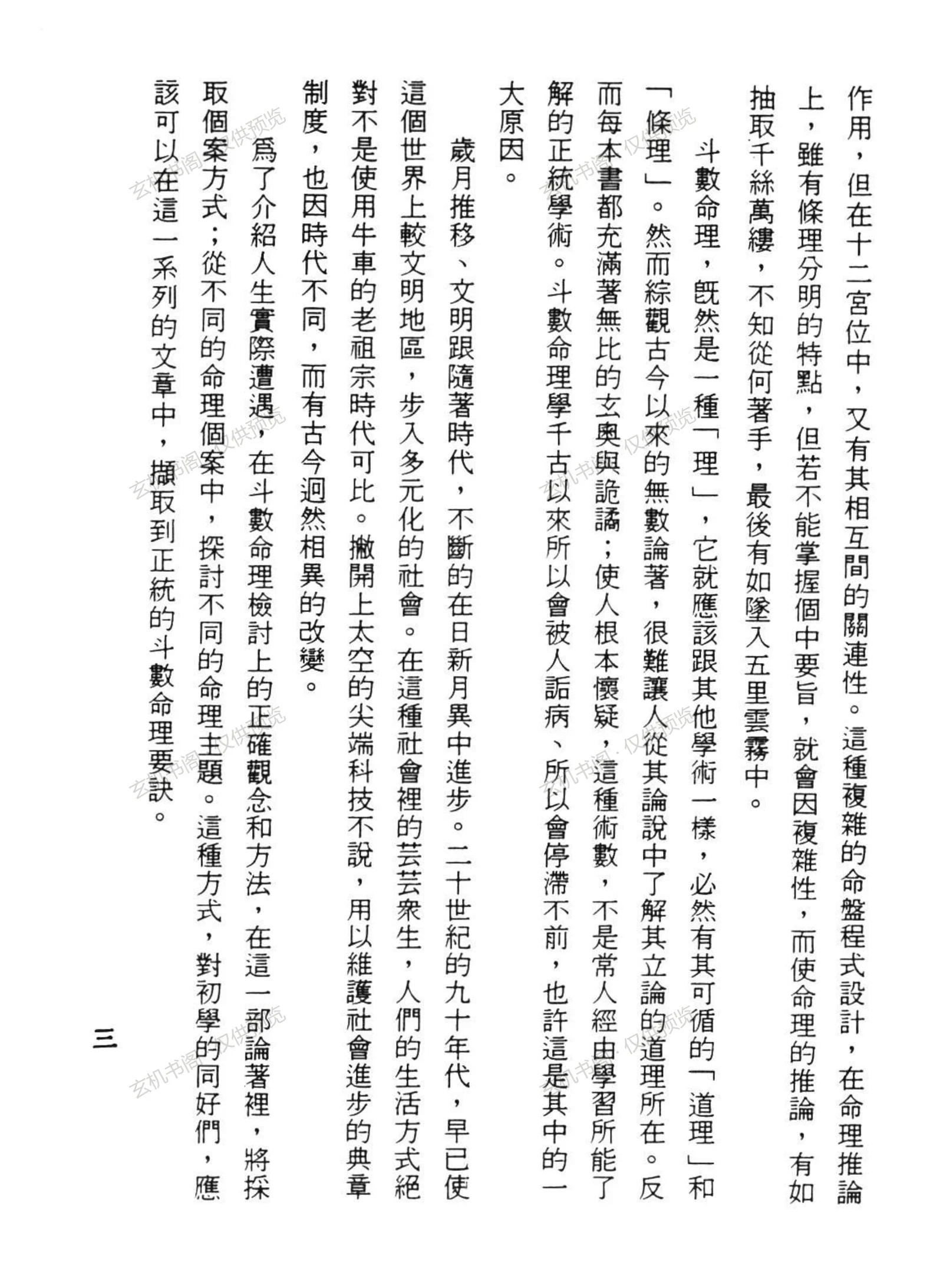
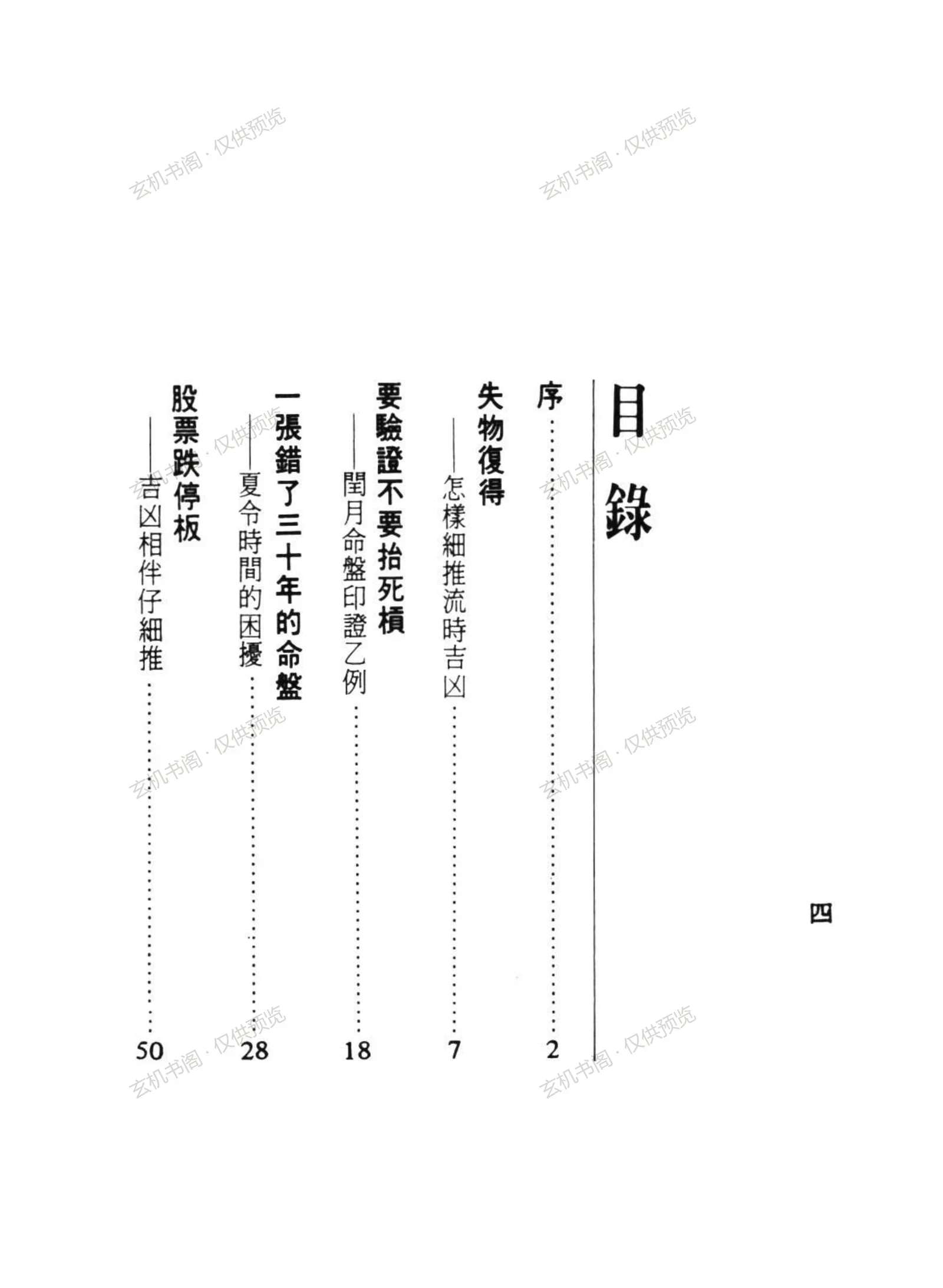
Compiled by Qing Yun, this book works through actual Zi Wei Dou Shu case studies to show how chart inference is done. The preface notes that there are over a hundred stars in the system, with about forty commonly used, and that each star has multiple layers of meaning; beginners often struggle with which significations to apply and how star combinations interact. The author argues for establishing correct principles first, then proceeding from simple to deep until the material can be integrated. The table of contents includes sections on inferring hourly fortune, recovering lost objects, verifying leap-month charts, problems caused by daylight saving time, and reading fortune and misfortune together in a stock-limit-down case. The book is suited to readers who already know the basics of Zi Wei Dou Shu and want to study case-based reasoning.
Contents
Preface: correct principles for chart inference
How to infer hourly fortune in detail
Recovering lost objects
Verifying a leap-month chart
Confusion caused by daylight saving time
Fortune and misfortune in a stock-limit-down case
Key Points
Star qualities have multiple layers and must be read with palace and combination context
Inference should proceed from simple to deep and be integrated
Actual cases demonstrate judgment of hourly fortune
Leap months and daylight saving time can affect chart accuracy
Verification should avoid preconceptions and rigid arguments