Reading guide
Content guideOverview
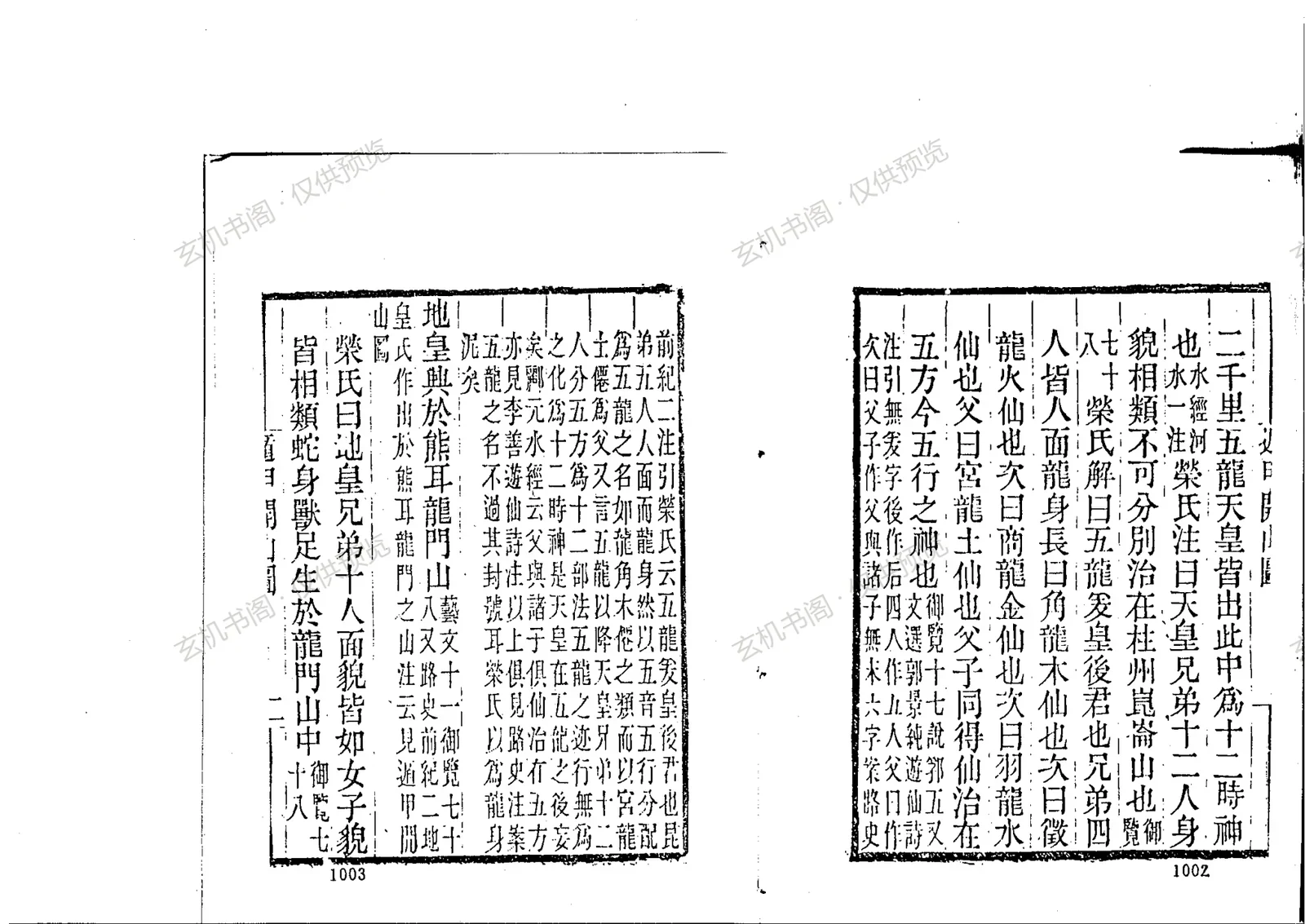
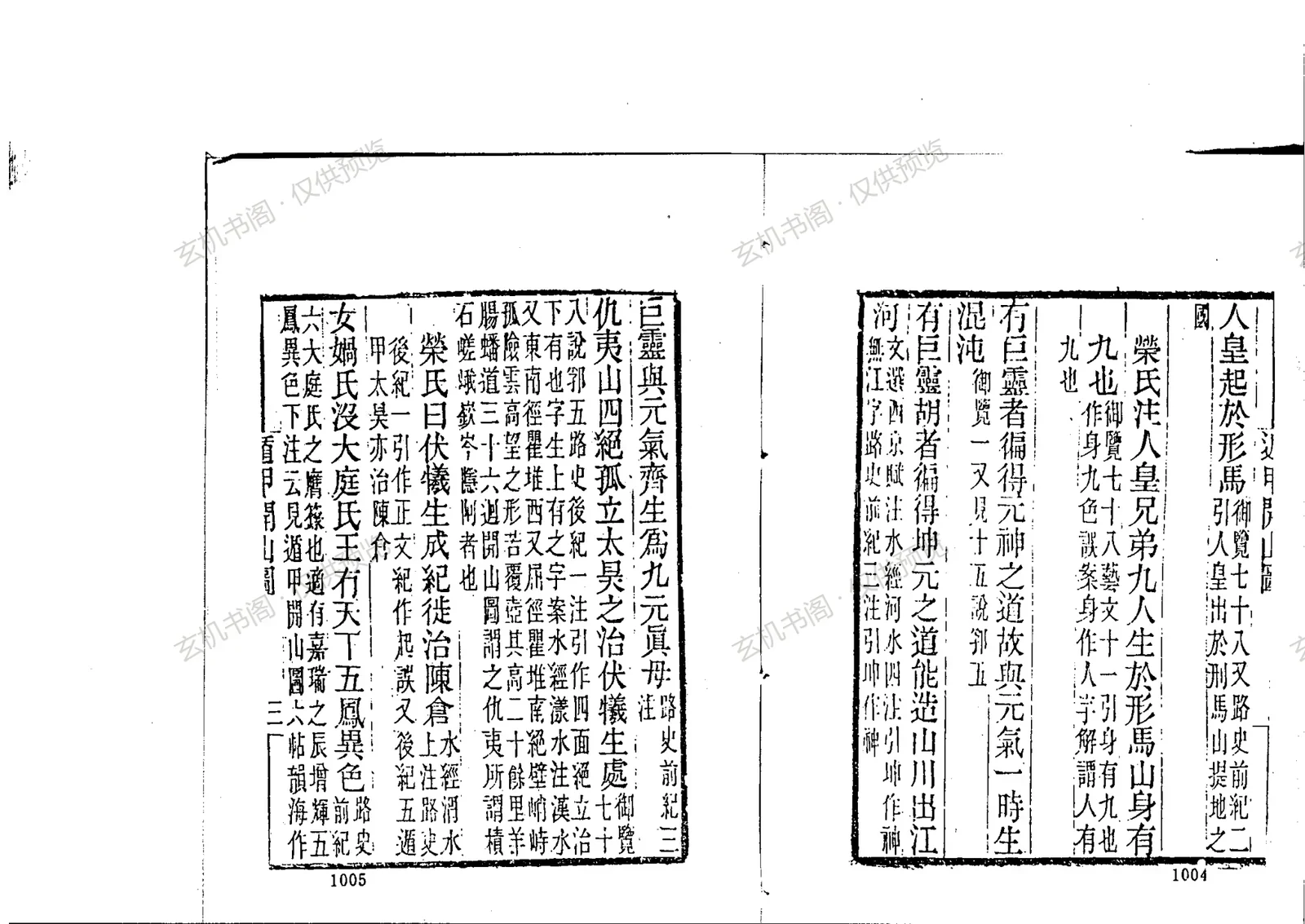
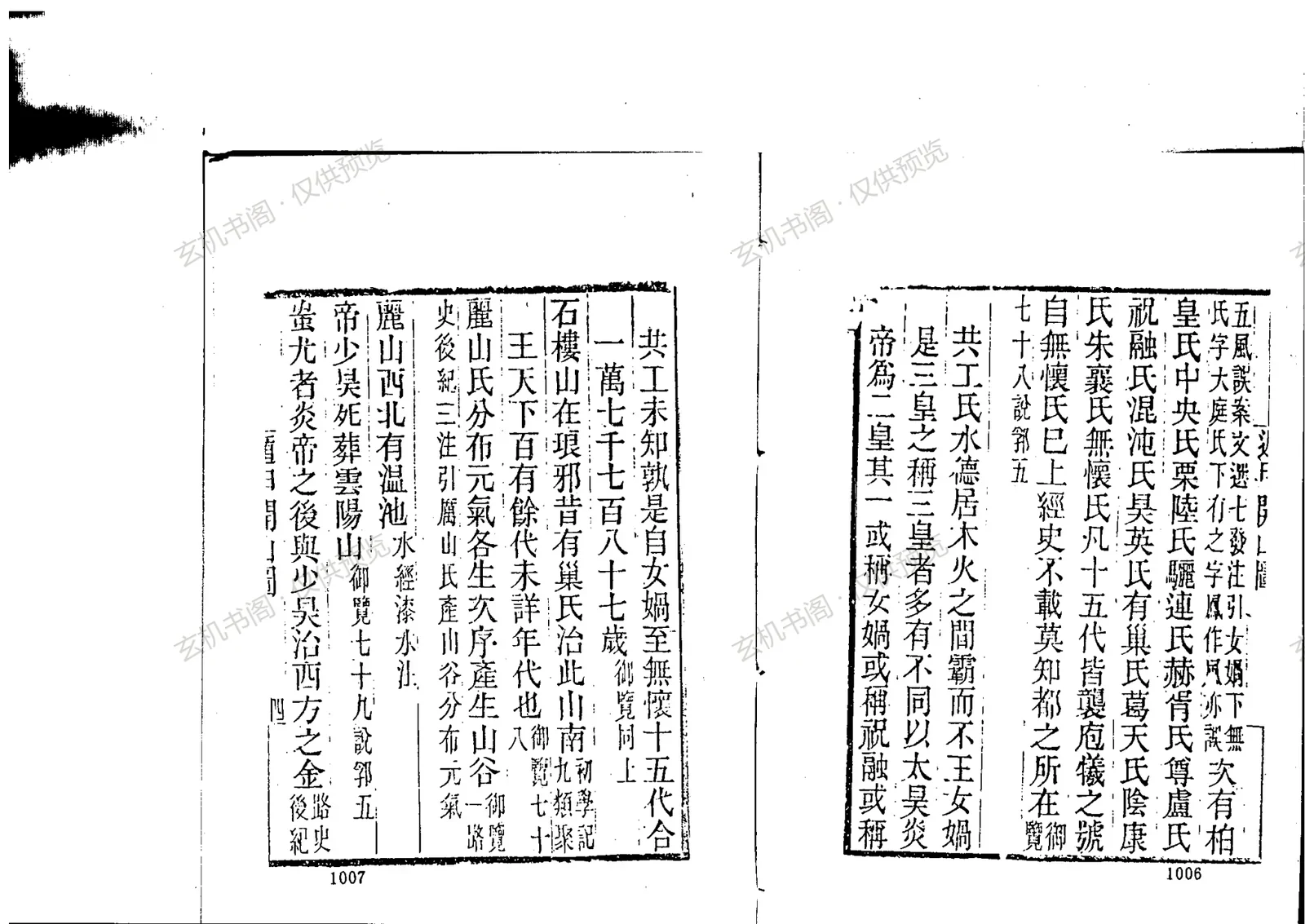
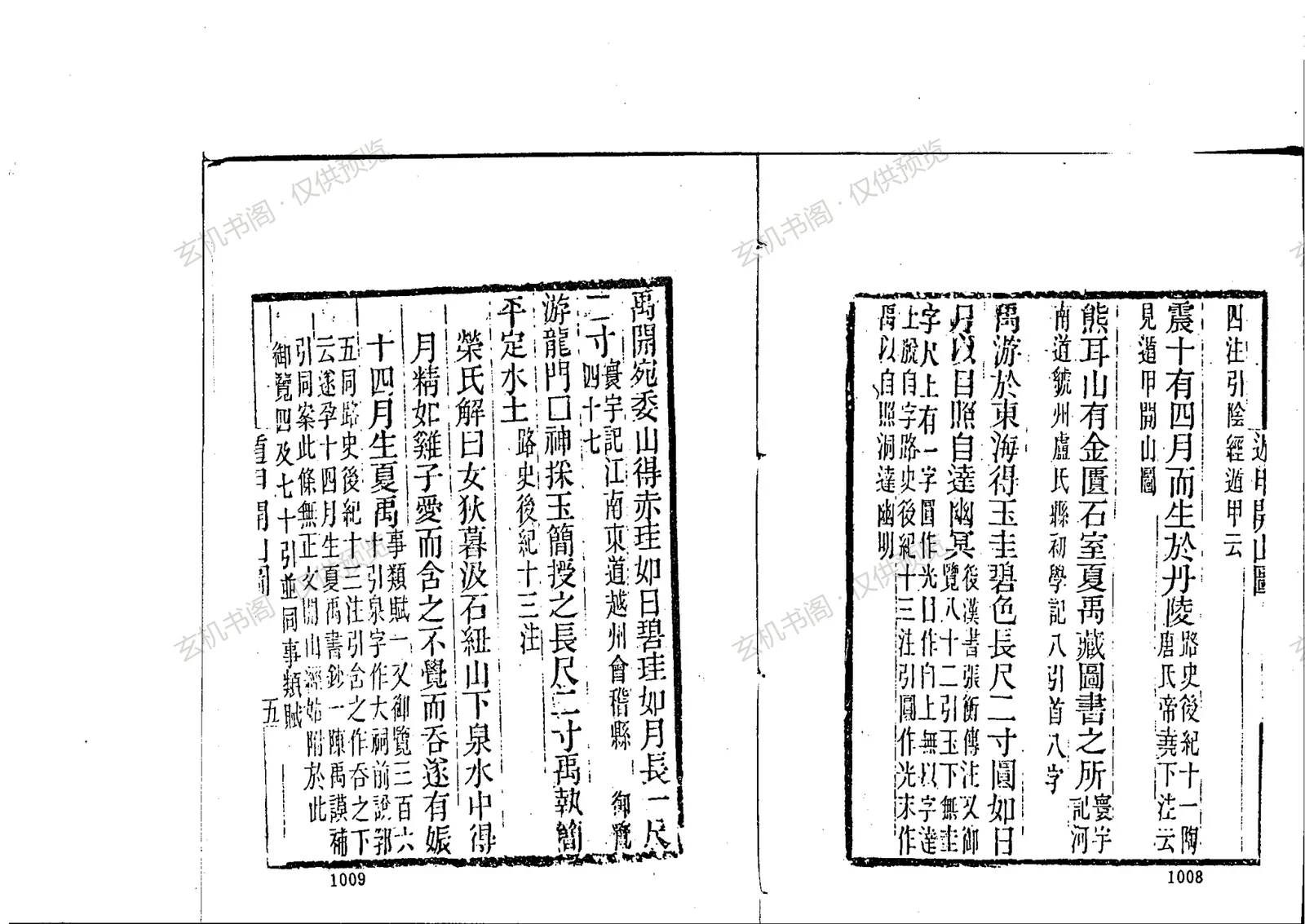
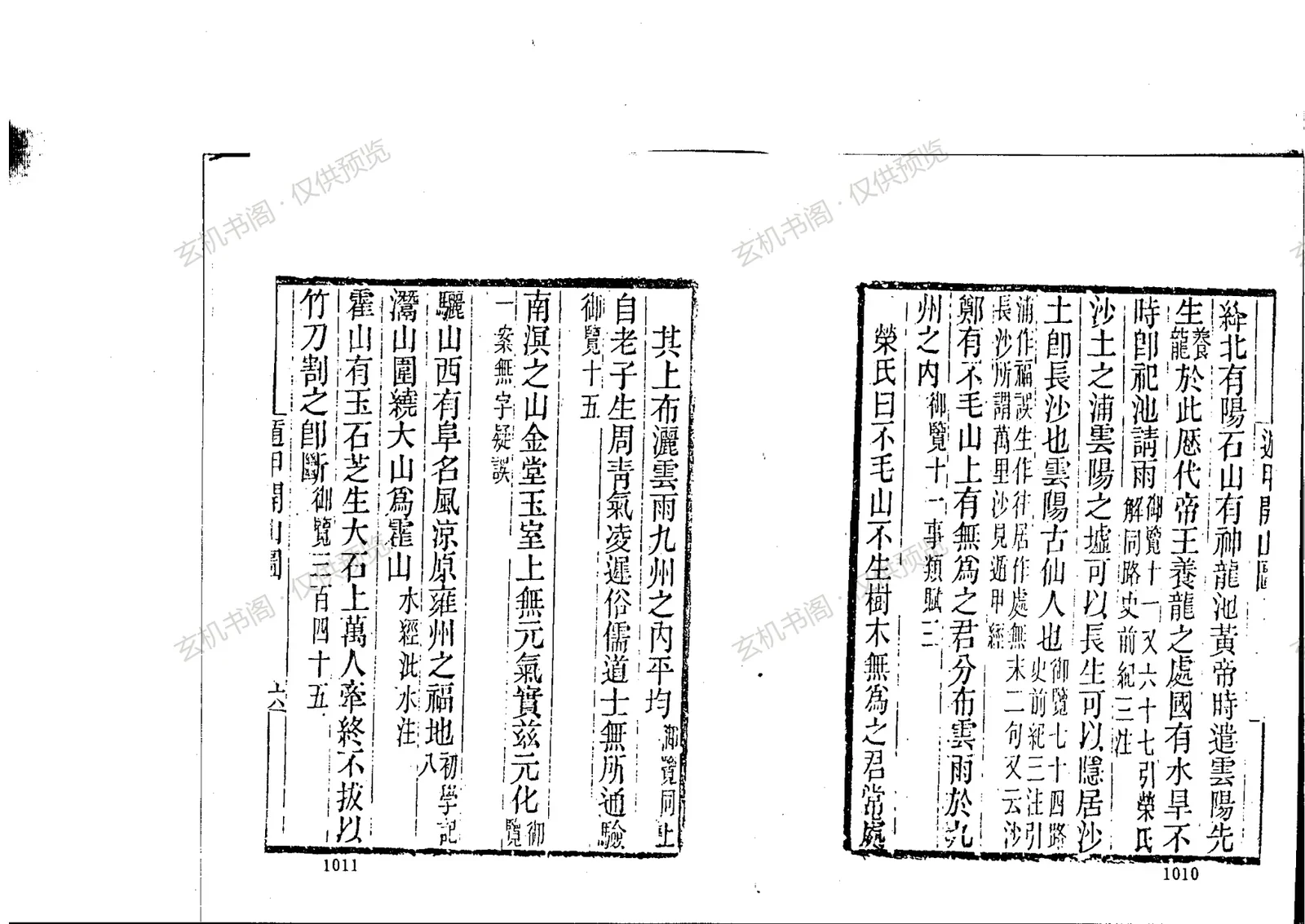
This book is a reconstructed edition of the lost Dunjia Kaishan Tu, with the title page reading 'Dunjia Kaishan Tu, Rong family, studied by Huang Shi of Ganquan,' and marked with 'Supplementary Notes' and 'Examining Lost Books.' The main text compiles surviving fragments of the original work, each followed by Rong's commentary and extensive citations from the Lushi, Chuxue Ji, Yiwen Leiju, Shuijing Zhu, and Imperial Readings, used for textual collation and explanation. The content centers on the forms, capitals, and administrative seats of ancient figures such as the Five Dragons, the Heavenly August One, the Earthly August One, the Human August One, Nüwa, Fuxi, Gonggong, the Yan Emperor, and the Yellow Emperor, along with related mountains and geography: the Five Dragons governing the five directions, the twelve brothers of the Heavenly August One dividing the five regions, the Human August One rising from Xingma Mountain, and Nüwa governing at Zhonghuang Mountain. The book also records the locations and myths of mountains such as Kunlun, Longmen, Xiong'er, Huo, and Li, and touches on the notion of grotto-heavens and blessed lands like the 'mountain beyond the beyond' and the 'golden hall and jade chamber.' Overall, it is a reconstructed text of a Qimen Dunjia classic that also holds documentary value for ancient geography and mythology, useful for those studying the origins of Qimen Dunjia, ancient geographical concepts, and ancient historical legends.
Contents
Title page, supplementary notes, and examination of lost books
Five Dragons governing the five directions and the Heavenly August One's brothers
The Human August One rising from Xingma Mountain with nine-colored appearance
Geographical accounts of Nüwa, Fuxi, and Gonggong
The Yan and Yellow Emperors and places like Yunyang and Pengcheng
Records of mountains such as Kunlun, Longmen, and Xiong'er
Key Points
Compiles fragments of the Dunjia Kaishan Tu with Rong's commentary and Huang Shi's collation
Centers on legends of the Five Dragons and the Three August Ones
Extensively cites the Lushi, Shuijing Zhu, and Imperial Readings
Combines mountain geography with grotto-heaven concepts
A reconstructed and examined edition of a Qimen Dunjia classic