Reading guide
Content guideOverview
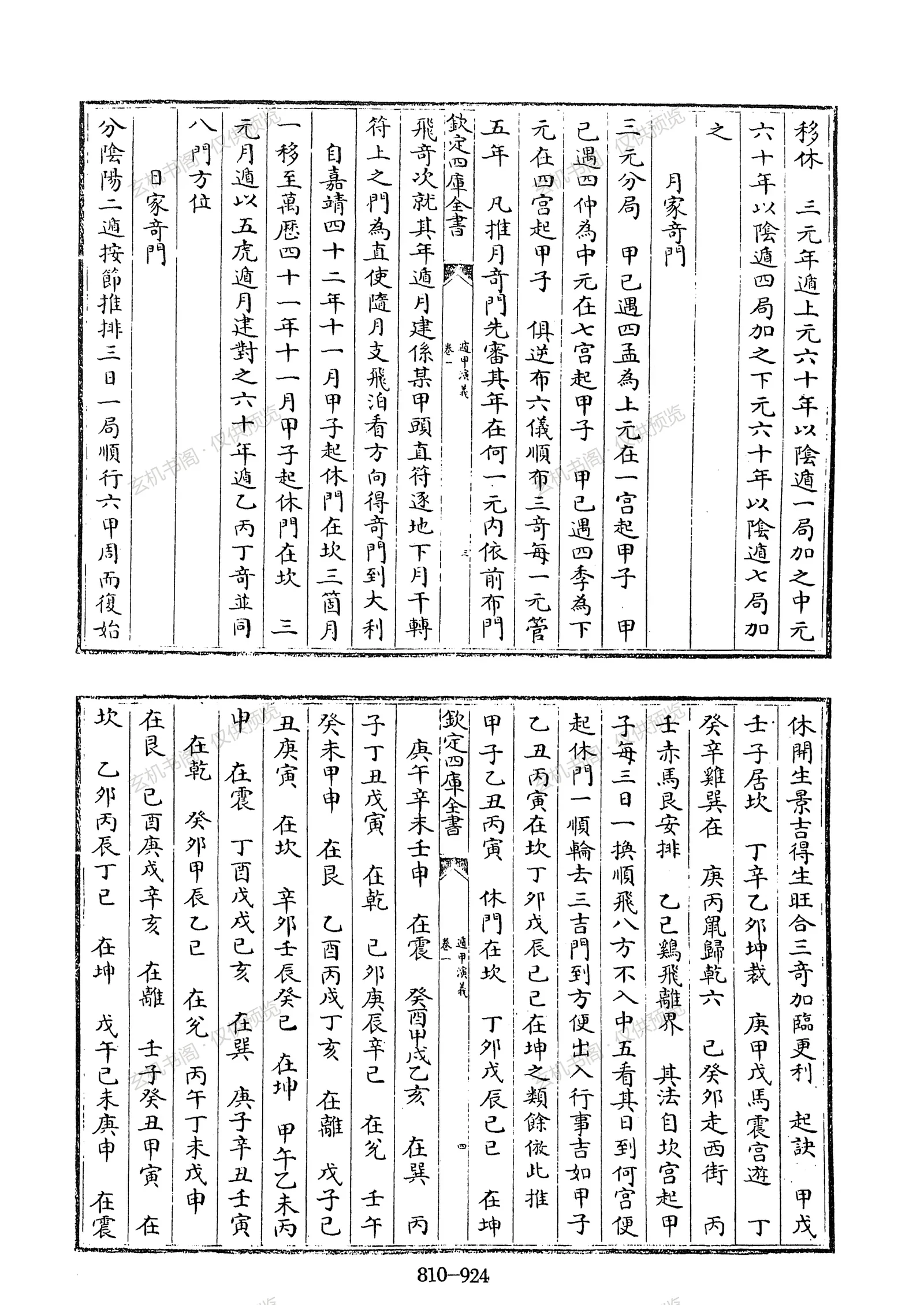
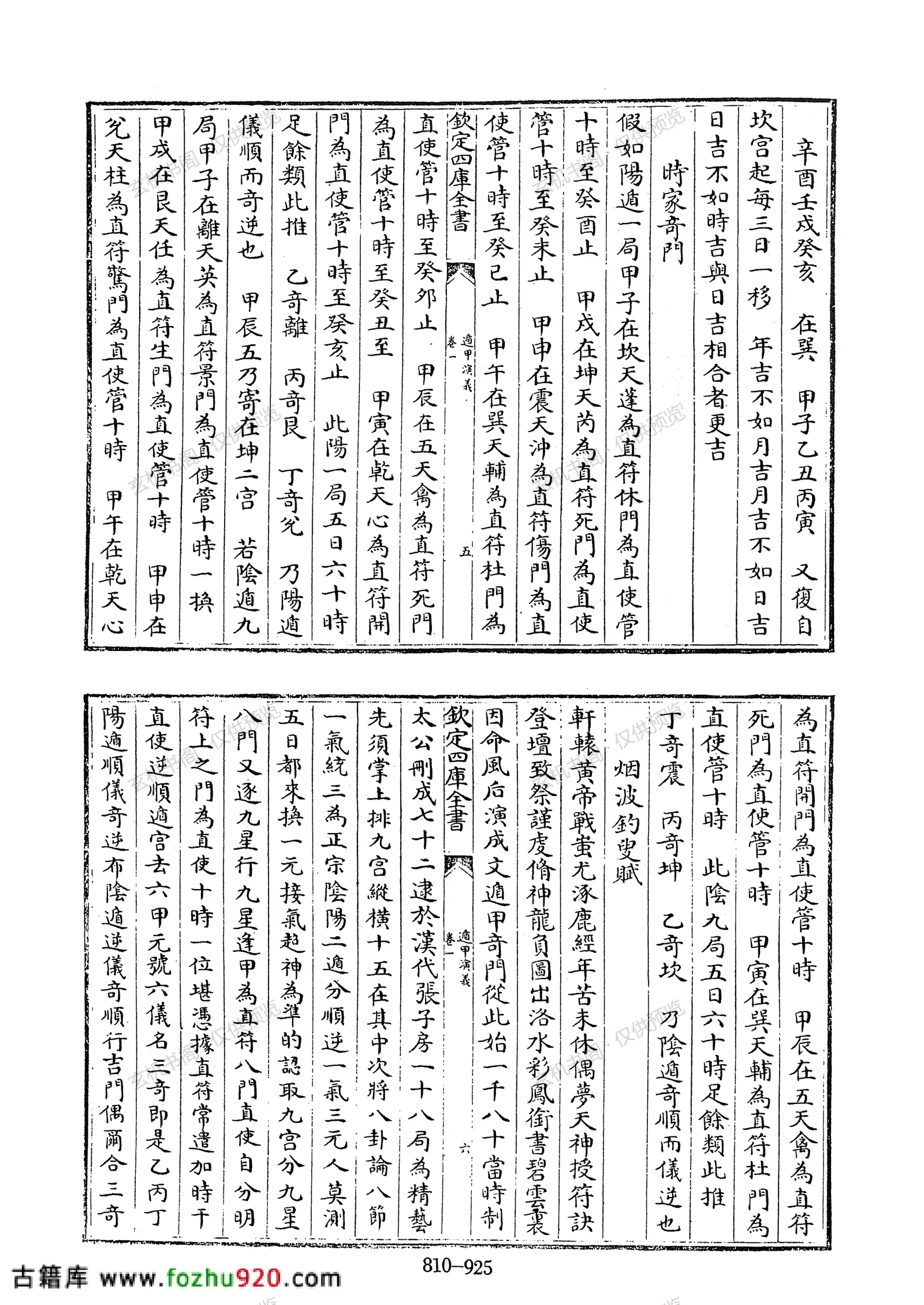
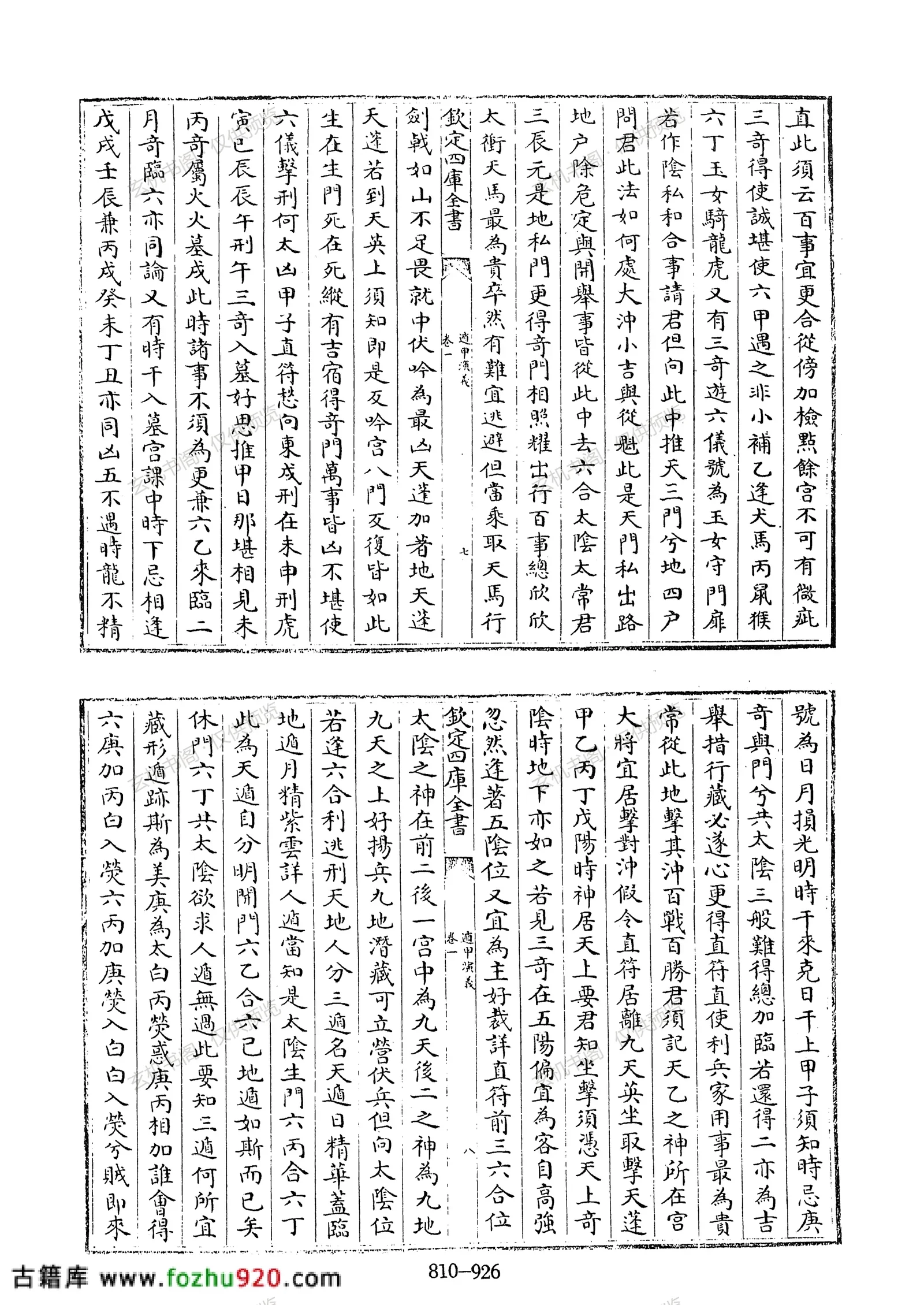
Dunjia Yanyi is a four-volume Ming-dynasty treatise on Qimen Dunjia by Cheng Daosheng, preserved in the Siku Quanshu under the divination section. This fascicle is Volume Two and opens with the Siku editors' abstract, which traces Qimen's lineage and reviews earlier records, attributing its origins to the Yellow Emperor and Feng Hou and grounding its method in the Luoshu and Hetu diagrams, the nine palaces, eight gates, three wonders, and six instruments. The main text first presents the 'Origins of Dunjia', explaining how the Yellow Emperor's 4,320 charts were reduced by Feng Hou to 1,080, and further edited by Jiang Taigong and Zhang Liang, with the eight trigrams dividing the eight seasons, each solar term covering three periods, and each period divided into three elements. It then sets out the year, month, day, and hour Qimen methods, detailing how the upper, middle, and lower elements are established, how the six instruments are arranged in forward or reverse order, and how the chief star and chief gate rotate with time, illustrated with sexagenary examples. The text also discusses special configurations such as the three wonders obtaining their envoys, the six instruments striking punishment, gate compulsion, and the heaven, earth, and human遁. This volume offers a systematic view of Ming-dynasty Qimen Dunjia and is valuable for studying the tradition and the Siku compilers' treatment of divination texts.
Contents
Siku abstract: origins of Qimen and compilation notes
Origins of Dunjia: from the Yellow Emperor to Feng Hou's 1,080 charts
Three-element method: eight trigrams, eight seasons, three periods each
Year Qimen: year elements and arrangement of the six instruments
Month Qimen: monthly qi and eight-gate directions
Day Qimen: day charts and yin-yang遁 progression
Hour Qimen: chief star, chief gate, and configurations
Key Points
Volume Two of Dunjia Yanyi, including the Siku abstract.
Traces Qimen to the Yellow Emperor and Feng Hou and later editors.
Derives yin and yang charts from eight seasons, three periods, and three elements.
Covers year, month, day, and hour Qimen chart methods.
Discusses configurations such as the three wonders, six instruments, and three遁.