Reading guide
Content guideOverview
This is a handwritten lecture or study notebook on Qimen Dunjia. The visible pages move through topic entries: debt collection, choosing a business location, bidding, negotiation, office siting and business profit, followed by chapters on marriage, lawsuits and lending. Each entry explains how to infer outcomes from heavenly stems, hour stems, Zhishi gate, Zhifu, Shengmen, Kaimen and Jingmen, often with a nine-palace sketch. The style is short, numbered and formula-like, focused on concrete cases rather than a complete theoretical system. It is most useful to readers with some Qimen background who want to compare practical examples.
Contents
Debt collection: Zhifu as creditor, Tianyi as debtor
Choosing a business location, bidding and negotiation signs
Office selection and judging business profit
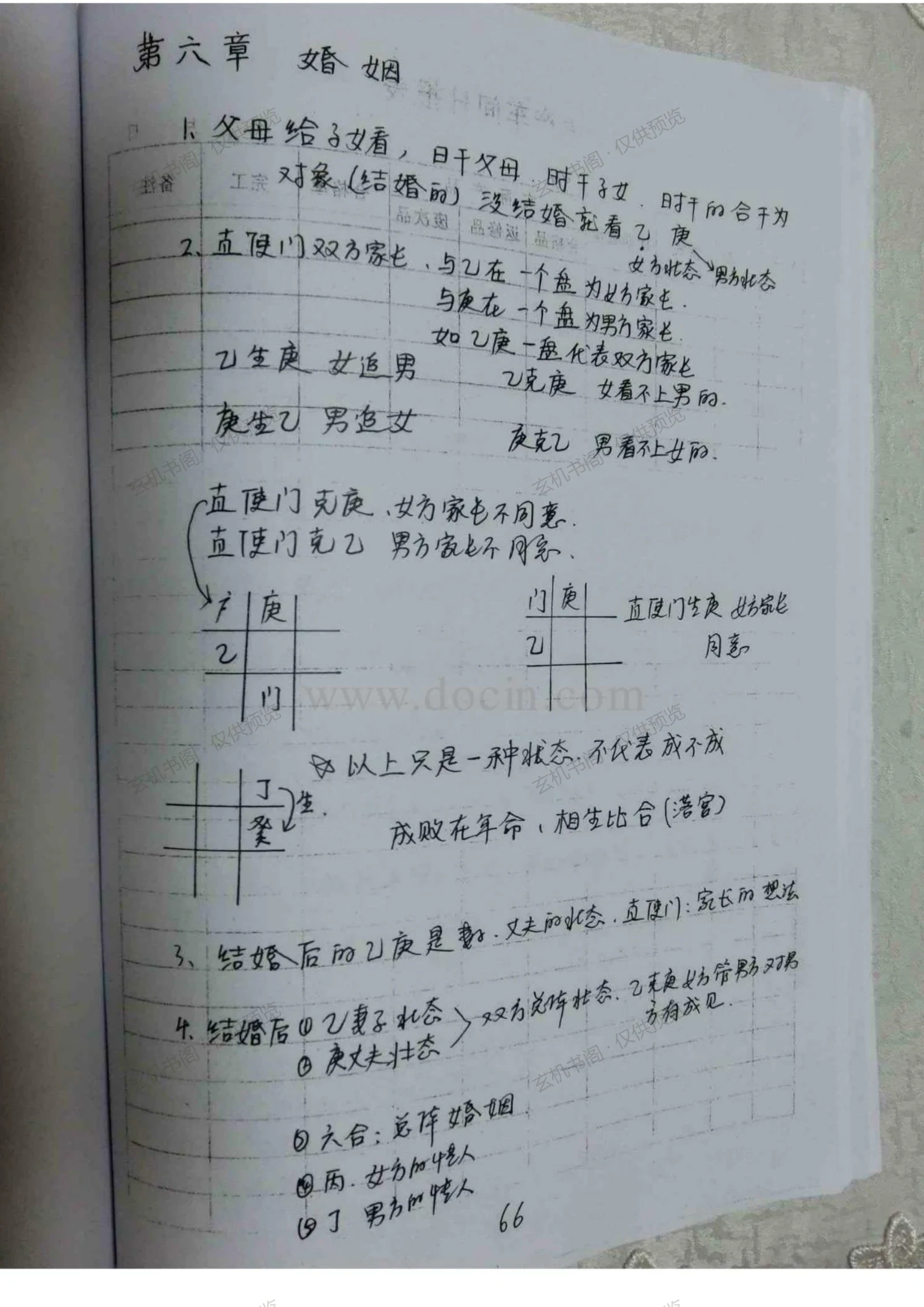
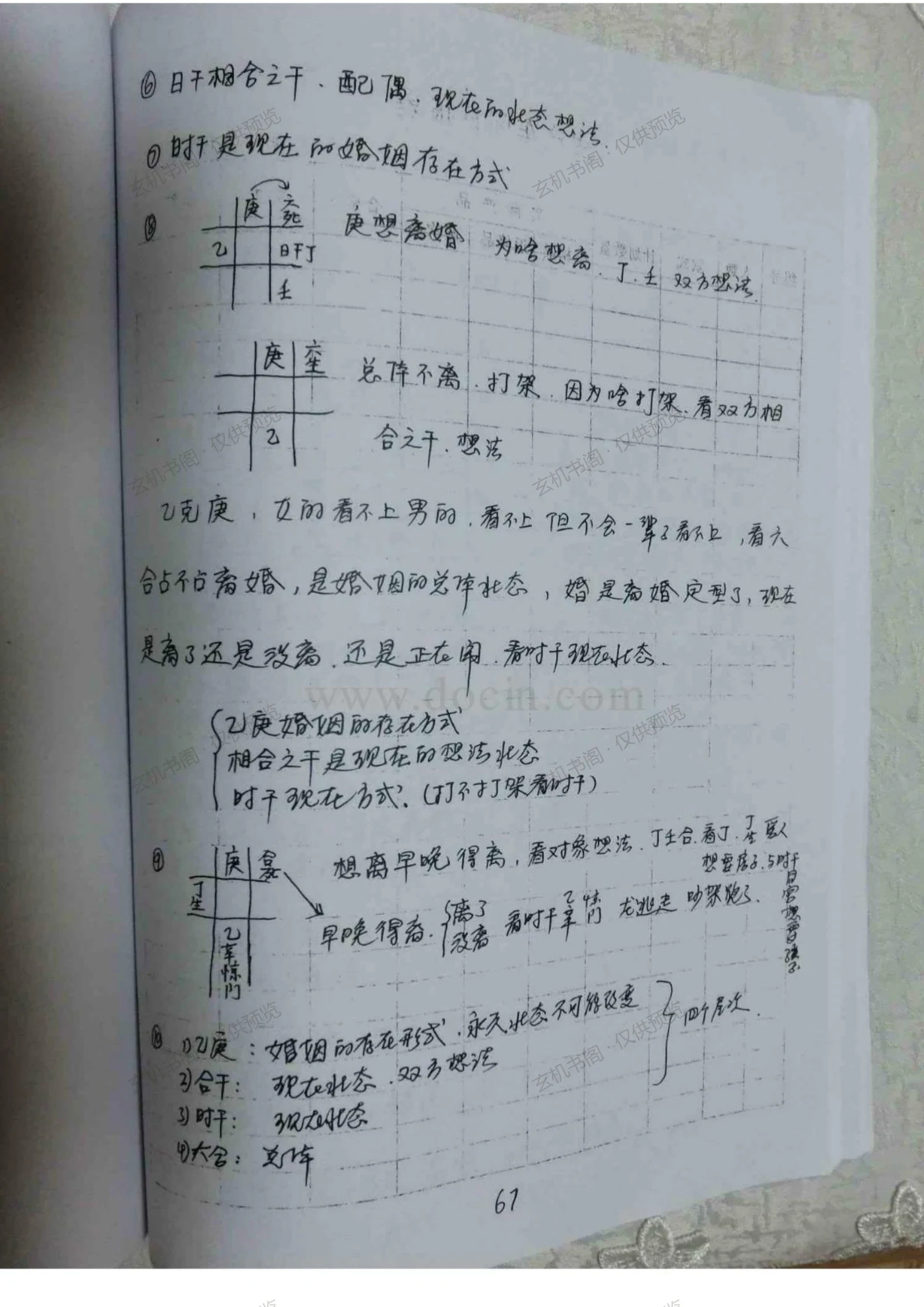
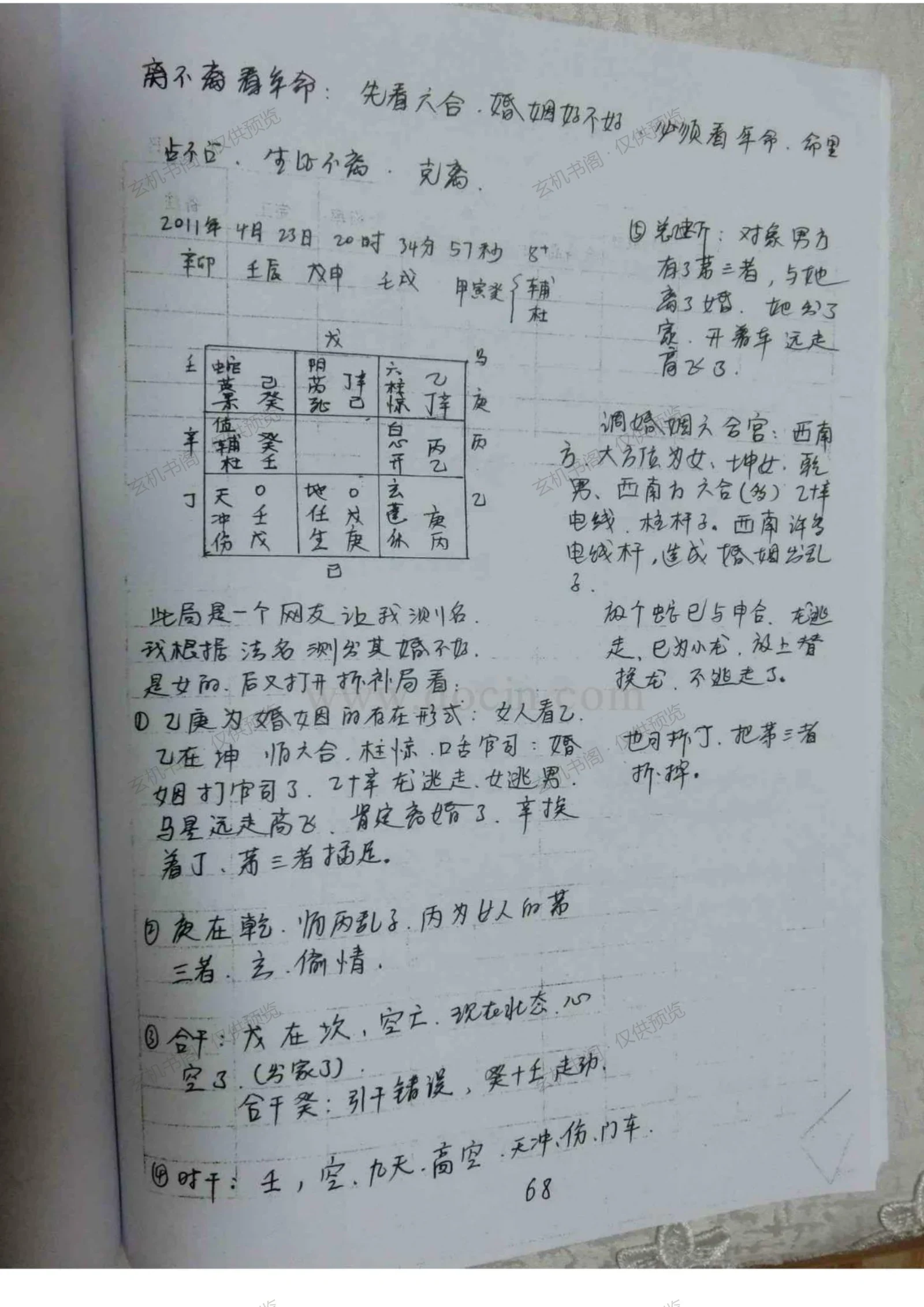
Chapter 6 Marriage: parents viewing children, couple's chart and separation
Chapter 7 Lawsuits: Zhifu plaintiff, Tianyi defendant, Kaimen judge
Chapter 8 Lending and detailed debt judgment
Key Points
Zhifu stands for creditor and Tianyi for debtor; mutual generation and restriction decide repayment
Marriage uses Yi and Geng for woman and man, combined stems for overall state, hour stem for current state
Lawsuits assign Zhifu to plaintiff, Tianyi to defendant, Kaimen to judge and Jingmen to lawyer
Nine-palace diagrams are often used to show palace positions and sign relations